


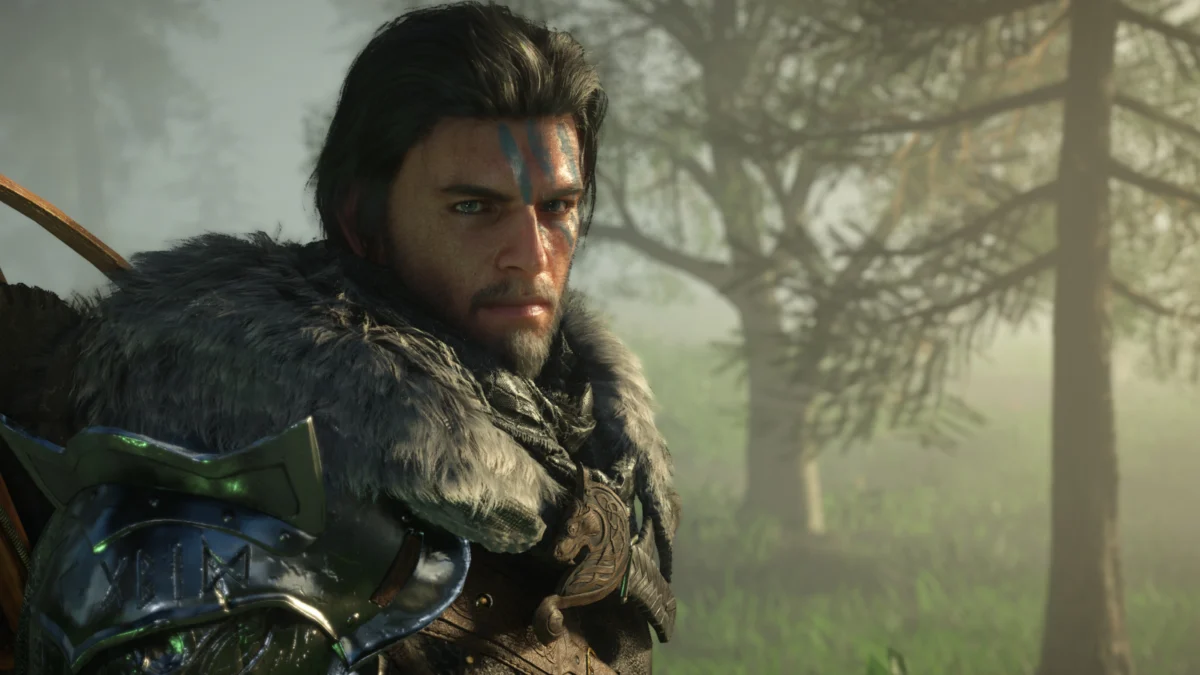
South Korean developer Pearl Abyss has officially deployed Patch 1.02.00 for its flagship open-world action-adventure title, Crimson Desert, signaling a significant shift in the post-launch support strategy for the game. This latest update, which began rolling out across PlayStation, Xbox, the Epic Games Store, and the Mac App Store on April 4, addresses several of the most vocal criticisms regarding player agency, inventory management, and character customization. By introducing a dual-mode movement system and a massive expansion to private storage capacities, Pearl Abyss aims to refine the experience of navigating the rugged continent of Pywel while maintaining the high-fidelity visual standards for which the studio is known.
Refining the Mechanics of Navigation: Basic vs. Classic Controls
Perhaps the most impactful addition in Patch 1.02.00 is the introduction of a dedicated "Movement Controls" toggle. Since the game’s debut, a segment of the player base had expressed dissatisfaction with the weight and momentum of the protagonist, Kliff, noting that the traversal often felt inconsistent with the fast-paced nature of the combat. In response, Pearl Abyss has implemented two distinct movesets: Basic and Classic.
The "Basic" moveset is designed for a more modern, streamlined experience. Under this configuration, sprinting consumes stamina at set, predictable intervals, allowing players to manage their long-distance travel with greater ease and less rhythmic button-mashing. Conversely, the "Classic" moveset caters to players who prefer the original launch mechanics, where stamina is consumed each time the sprint key is pressed. This granular level of control allows for more precise bursts of speed at the cost of higher manual input.
This update also includes "further control-related improvements" that remain unspecified in the brief notes but are reportedly aimed at reducing input latency and improving the transition between exploration and the game’s complex, physics-based combat. By offering these choices, Pearl Abyss is following a growing industry trend where developers provide "legacy" and "modern" control schemes to bridge the gap between different player demographics.
Infrastructure and Inventory: The Greymane Camp Expansion
Inventory management is a cornerstone of the Crimson Desert experience, given the game’s heavy emphasis on gathering materials, taming horses, and collecting gear. Prior to Patch 1.02.00, many players found the storage limitations to be a bottleneck for late-game progression. The new update addresses this by significantly expanding private storage capacity, now allowing players to unlock up to 1,000 slots.
However, this expansion is not granted automatically. In keeping with the game’s progression-heavy design, the storage capacity is tied directly to the expansion level of the Greymane camp. This mechanical link encourages players to engage more deeply with the camp-building aspects of the narrative, transforming the Greymane mercenary base from a mere plot device into a functional hub that rewards investment. As players upgrade their camp through various missions and resource contributions, their ability to hoard rare items and crafting components increases proportionally.
Aesthetic Agency and Character Fidelity
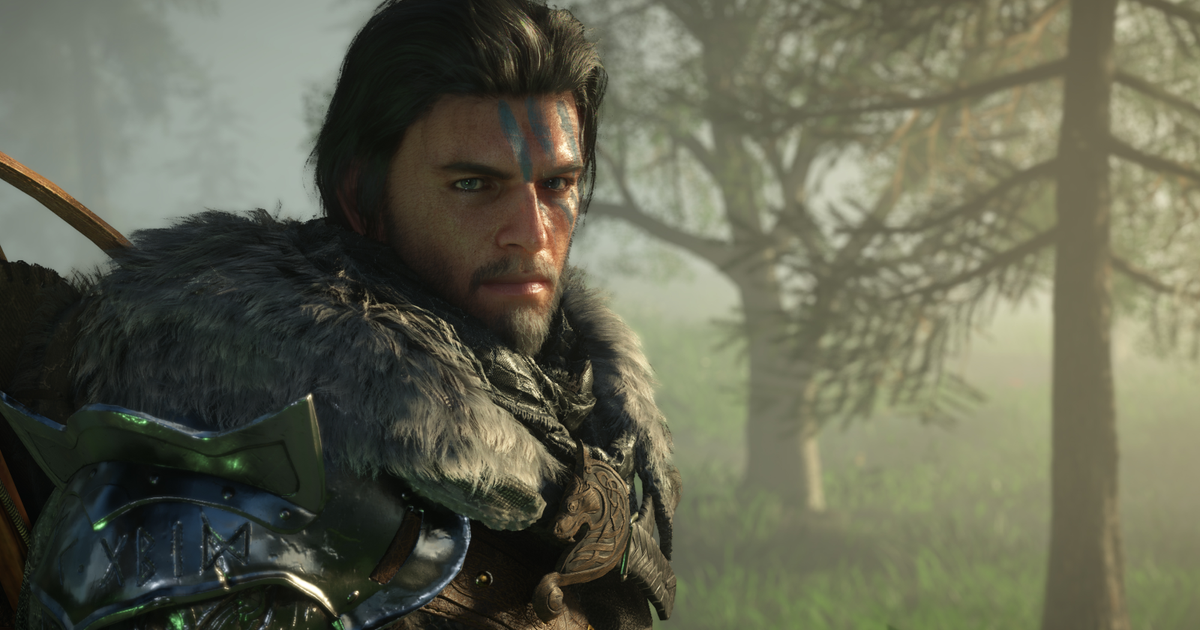
While Crimson Desert has been lauded for its technical prowess and the visual detail of its characters, players have frequently requested more control over the appearance of the protagonist, Kliff. Patch 1.02.00 introduces a "Headgear Visibility" option, allowing players to hide helmets and hoods during gameplay and cutscenes.
This addition is more than a simple cosmetic fix; it highlights the studio’s confidence in their facial animation technology. By allowing Kliff’s face to remain visible regardless of the armor stats equipped, players can better connect with the character’s emotional journey through the brutal political landscapes of Pywel. This change mirrors similar features found in other major RPGs like The Witcher 3 and Assassin’s Creed Valhalla, where the balance between "stats" and "style" is a frequent point of discussion among enthusiasts.
Contextualizing the Development of Crimson Desert
To understand the importance of Patch 1.02.00, one must look at the long and complex development history of Crimson Desert. Originally conceived as a prequel to the hit MMORPG Black Desert Online, the project underwent a radical transformation during development. Pearl Abyss eventually decided to pivot the title into a narrative-driven, single-player action-adventure game, though it retained many of the "MMO-lite" systems that define its identity—such as complex fishing mechanics, horse taming, and a living world economy.
The game is built on the proprietary "BlackSpace Engine," a successor to the engine used for Black Desert. This technology allows for seamless transitions between diverse biomes, from frozen mountain peaks to sun-drenched plains, with a level of environmental destructibility that is rare in the open-world genre. However, the ambition of the project led to several delays, with the developers citing the need for "deepening the game’s narrative" and "polishing the technical performance" as primary reasons for the extended timeline.
Critical Reception and the Path to Improvement
Upon its initial release, Crimson Desert received a polarized response from critics. While many praised its "glittering fidelity" and the sheer scale of its world, others felt the game lacked a distinct soul. Reviews, such as the three-star assessment from Eurogamer, pointed out that while the game offered a vast array of activities, it occasionally struggled with "character, texture, or charm."
Patch 1.02.00 appears to be a direct response to these types of critiques. By focusing on "Quality of Life" (QoL) improvements, Pearl Abyss is attempting to smooth over the friction points that hindered the player’s immersion. The update also includes a suite of UI fixes, graphical optimizations, and stability improvements aimed at ensuring the game runs smoothly across its multi-platform ecosystem.
Chronology of Recent Updates
- Launch Period: Initial release met with high sales but feedback regarding "clunky" movement and inventory constraints.
- Patch 1.01.00: Focused on critical bug fixes and initial server-side optimizations for the Mac and PC versions.
- April 4 (Patch 1.02.00): The current major update introducing Movement Control toggles, Headgear Visibility, and the 1,000-slot storage expansion.
- Future Outlook: Pearl Abyss has signaled that further patches will continue to refine NPC dialogue, localization accuracy, and high-end graphical settings like ray-tracing stability.
Implications for the Action-Adventure Genre
The release of Patch 1.02.00 demonstrates the evolving nature of game development in the "live-service" era, even for single-player titles. Developers are no longer viewing a game’s launch as the final product but as a baseline for iterative improvement. For Pearl Abyss, the success of Crimson Desert is vital for the company’s expansion beyond the MMO market.

The inclusion of features like the "Movement Controls" option suggests that the developer is listening to western audiences, who often prioritize "snappy" and responsive character handling over the more deliberate, animation-locked movement common in Eastern RPG designs. By bridging these two philosophies, Crimson Desert may find a more stable footing in the global market.
Technical Performance and Localization
Beyond the headline features, Patch 1.02.00 includes a significant number of under-the-hood changes. Localization has been a recurring issue for Pearl Abyss titles in the past, and this patch specifically targets "Localization Improvements" to ensure that the complex political intrigue of Pywel is correctly translated for English, European, and other Asian markets.
Performance and stability also receive a boost. The patch notes mention "Performance, Stability, and Gameplay" fixes that target frame-rate drops in densely populated areas like the Greymane camp and major cities. For Mac users specifically, the update aims to better utilize Apple Silicon’s architecture to maintain a consistent experience comparable to high-end PCs and consoles.
Conclusion and Future Support
As players continue to explore the world of Pywel, Pearl Abyss remains committed to a rigorous update schedule. The official notice for Patch 1.02.00 encourages players to check the official website for platform-specific deployment times, noting that while the patch is rolling out today, some platforms may see a slight delay due to regional certification processes.
For those currently navigating the complexities of the game, the developer continues to promote community-driven guides on essential mechanics such as horse taming, stealing, and fishing. These systems, combined with the new QoL improvements, suggest that Crimson Desert is gradually evolving into the polished, expansive epic that Pearl Abyss first envisioned years ago. Whether these changes are enough to sway the critics who found the game lacking in "charm" remains to be seen, but the technical and mechanical foundation is undoubtedly stronger today than it was at launch.