


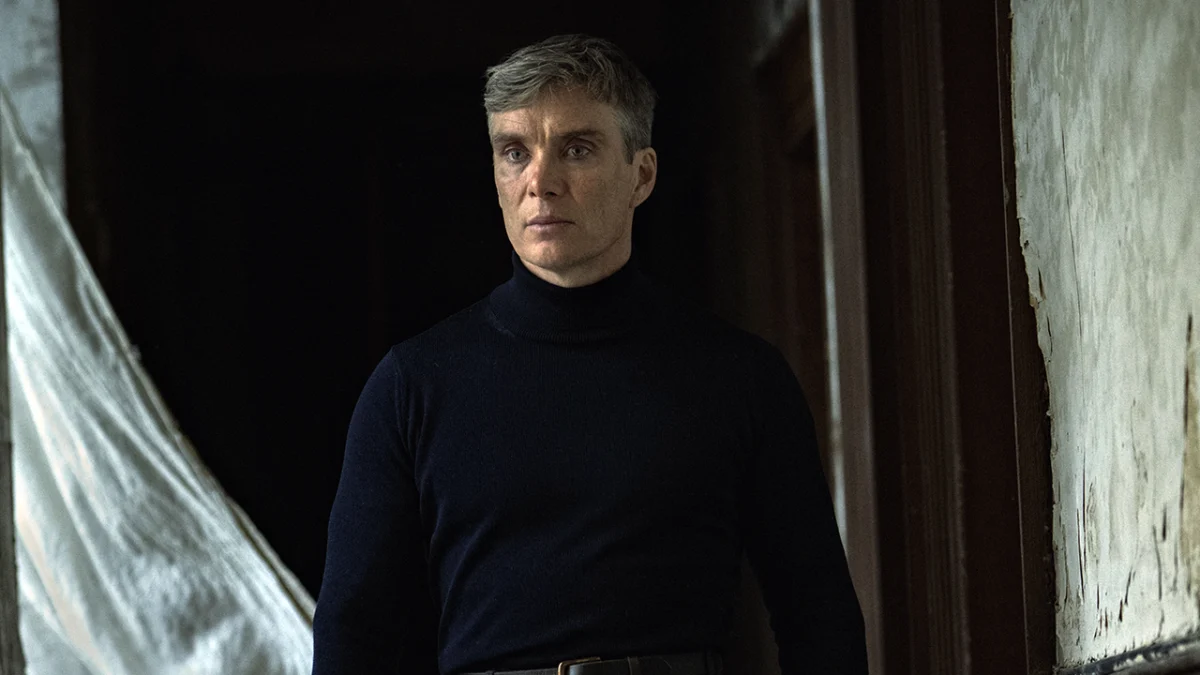
The highly anticipated cinematic conclusion to the global phenomenon, Peaky Blinders, arrives with Peaky Blinders: The Immortal Man, offering fans a poignant and explosive epilogue to the saga of Thomas Shelby. This feature film, helmed by series creator Steven Knight, delves back into the tumultuous world of the notorious Birmingham gang, several years after the dramatic events of the television series finale. It finds its enigmatic protagonist, Thomas Shelby, in a self-imposed exile, only to be drawn back into the fray by a new, more dangerous threat that intertwines family legacy with the fate of a nation embroiled in World War II. Starring the incomparable Cillian Murphy, alongside Oscar nominee Barry Keoghan as his formidable son Duke, and featuring Rebecca Ferguson and Tim Roth in pivotal roles, the film promises to deliver the brutal elegance, strategic brilliance, and deep emotional resonance that defined its acclaimed predecessor, while striving to provide a definitive sense of closure for its tortured hero.
A Legacy Forged in Fire: Recapping the Peaky Blinders Phenomenon
Before delving into the specifics of The Immortal Man, it is crucial to acknowledge the indelible mark left by the Peaky Blinders television series. Spanning six critically lauded seasons, the show captivated audiences worldwide with its gritty portrayal of a post-World War I Birmingham crime family. From its debut in 2013, the series, created by Steven Knight, transcended typical crime drama conventions, blending historical accuracy with a highly stylized aesthetic, compelling character development, and a haunting soundtrack. It chronicled the rise of the Shelby family from backstreet bookmakers to powerful industrialists and political manipulators, all under the calculating leadership of Thomas Shelby, brought to life with mesmerizing intensity by Cillian Murphy.
The series explored profound themes of class struggle, the psychological scars of war, loyalty, betrayal, and the intoxicating yet corrupting nature of power. Characters like Aunt Polly, Arthur Shelby, and Grace Burgess became iconic figures, their lives intricately woven into Thomas’s complex tapestry of ambition and moral compromise. The show’s distinctive visual style, characterized by slow-motion shots, atmospheric cinematography, and the signature flat caps, cemented its place in popular culture, influencing fashion, music, and storytelling. Its critical acclaim was matched by its immense popularity, garnering numerous awards and cultivating a passionate global fanbase eagerly awaiting this cinematic continuation.
The Lingering Shadow: Thomas Shelby’s Exile and the Series Finale
The conclusion of the six-season run of Peaky Blinders left Thomas Shelby at a crossroads, his future shrouded in ambiguity. In one of the most memorable final scenes, Thomas, believing himself to be terminally ill, toasts his remaining loyal friends and family with the poignant words: "To Family. Sometimes, it is shelter from the storm. Sometimes, it is the storm itself." This quote encapsulates the very essence of his journey – family as both his anchor and his greatest vulnerability.
The series finale saw Thomas contemplating suicide, a desperate act driven by a misdiagnosis orchestrated by his enemies. It was the spectral appearance of his departed daughter, Ruby, that pulled him back from the brink, revealing the deception and sparing him from a tragic self-inflicted end. As his caravan burned, a symbol of his past life and perceived impending demise, Thomas rode off into the unknown, a man freed from a fatal curse but still profoundly burdened by his past actions and the ghosts he carried. His fate was left deliberately open-ended, a tantalizing cliffhanger that fueled years of speculation and anticipation for this film.

The Immortal Man picks up this thread, finding Thomas Shelby in a self-imposed exile, far from the bustling streets of Birmingham he once dominated. He lives a stark, solitary existence alongside Johnny Dogs in a dilapidated house, a physical manifestation of his own withered soul. Cut off from his immediate family, his days are haunted by whispers of the past and the silent presence of those buried on his property. He exists as a phantom, never leaving, never receiving guests, yet perpetually tethered to the violence and betrayals that shaped him. This profound isolation underscores the series’ central theme of Thomas’s relentless pursuit of peace, a peace that has consistently eluded him. The film immediately establishes a protagonist stripped of his empire, grappling with internal demons, and searching for a redemption that seems perpetually out of reach.
Birmingham in Peril: The World War II Backdrop
The narrative shifts to 1940, plunging the audience into the grim reality of World War II. Birmingham, once a city of industrial might and burgeoning enterprise, is now scarred by the relentless aerial bombardments of the Luftwaffe. The backdrop of a nation under siege profoundly impacts the atmosphere of the film, adding a layer of pervasive despair and urgency. This historical context is not merely scenery; it is a critical element driving the plot.
During this period, England found itself in a desperate struggle against Nazi Germany, with the war effort consuming every aspect of national life. Against this backdrop of physical destruction and psychological strain, a sinister plot unfolds. The German high command, seeking to cripple the British economy and destabilize the war effort from within, devises a sophisticated plan: flooding the streets with millions of pounds in meticulously counterfeited currency. This economic warfare aims to erode public trust, incite chaos, and undermine the financial backbone of the resistance. To achieve this widespread distribution, the Germans require the assistance of the most powerful and ruthless criminal elements on the ground. It is into this volatile landscape that the new leader of the Peaky Blinders, Duke Shelby, unwittingly steps.
The Rise of a New Kingpin: Duke Shelby and the German Threat
With Thomas Shelby in exile, a power vacuum was inevitably created in Birmingham. Into this void steps Duke Shelby, Thomas’s illegitimate son, portrayed with compelling intensity by Oscar nominee Barry Keoghan. Duke has seized control of the Peaky Blinders, transforming them into an even more brutal and reckless organization than his father’s. His leadership is characterized by a shocking absence of morality and mercy, operating without the strategic foresight or the complex, albeit twisted, loyalty that often underpinned Thomas’s decisions. Duke’s actions are driven by a raw, unbridled ambition and perhaps a deep-seated resentment, forcing him to live perpetually in his father’s shadow, even in Thomas’s absence.
The film meticulously builds Duke’s character as a stark contrast to Thomas. While Thomas was a traumatized war veteran who used his brilliance to elevate his family, Duke appears to be a product of abandonment and unchecked power, embodying the "storm" aspect of the Shelby family dynamic. When a cunning German operative, chillingly brought to life by another Oscar nominee, Tim Roth, approaches Duke with an offer too lucrative to refuse – to be the primary distributor of the counterfeit money – Duke unwittingly places his remaining family and, indeed, the entire nation, on the precipice of collapse. This reckless decision serves as the ultimate catalyst, creating a crisis so profound that it threatens to draw the mythical figure of Thomas Shelby back to the very streets he vowed to leave behind. The clash between father and son, amplified by the high stakes of wartime espionage, forms the central conflict, promising a dramatic confrontation rooted in legacy and survival.
A Family Divided: Dynamics and New Faces
The narrative of The Immortal Man is deeply entrenched in the complex web of family relationships that has always been the heart of Peaky Blinders. While the focus is primarily on the strained dynamic between Thomas and Duke, the film skillfully weaves in the influence of other key figures, both familiar and new, emphasizing the enduring power of the Shelby lineage.

Ada Shelby, Thomas’s fiercely intelligent and morally grounded sister, emerges as a critical conscience and a silent catalyst. Throughout the series, Ada consistently served as a voice of reason, a counterbalance to Thomas’s darker impulses, and a source of guidance. Her sharp intellect and unwavering moral compass are once again brought to the forefront, reminding audiences that while many might believe only Thomas Shelby could destroy himself, it was often the strong-willed women in his life who could reason with him and guide him. Her potential efforts to steer Duke away from his destructive path, or to mediate the inevitable confrontation, are pivotal. Duke, unfortunately, is depicted as learning the hard way that he should heed such counsel.
Adding a layer of mysticism and cultural depth is Kaulo, Duke’s gypsy aunt, portrayed by the always spellbinding Rebecca Ferguson. Her character taps into the rich Romani heritage of the Shelby family, a spiritual dimension often explored in the series through dreams and premonitions. Kaulo offers Thomas a path to peace, a promise of freedom from the guilt, the blood on his hands, the curses that plague his family, and the burdens of his patriarchal position. Her presence underscores the film’s thematic pursuit of redemption and solace for Thomas, connecting it to his roots and the ancient wisdom of his ancestry. The inclusion of new characters like Kaulo and the German operative (Tim Roth) enriches the existing universe, providing fresh perspectives and heightened dramatic tension while staying true to the established tone.
Cillian Murphy’s Triumphant Return: The Immortal Thomas Shelby
The emotional core and undeniable strength of Peaky Blinders: The Immortal Man rest firmly on the shoulders of Cillian Murphy’s portrayal of Thomas Shelby. Murphy, now an Oscar winner, effortlessly slides back into the iconic role, demonstrating once again why he is considered the definitive embodiment of the character. His performance is a masterclass in nuanced acting, capturing the brooding passion, the strategic brilliance, and the profound weariness that define Thomas.
Murphy’s Thomas Shelby is a man etched with the ravages of his past, his piercing blue eyes still reflecting a turbulent inner world, yet now imbued with a quiet resignation. He conveys the immense burden of leadership and the psychological toll of his choices with a command that few actors could match. The intensity and tenderness that lie beneath Thomas’s stoic exterior, his identity as a chess master, an architect of schemes, a tortured genius, and a patriarch, all fall perfectly within Murphy’s wheelhouse. He performs with an unparalleled blend of authority and vulnerability, making Thomas’s journey toward peace and redemption deeply resonant.
The film’s narrative arc for Thomas Shelby bears striking parallels to Christian Bale’s Bruce Wayne in The Dark Knight Rises. Both characters are initially presented as men removed from the societies they once ruled, haunted by past failures and unable to achieve peace in their prime. They are reluctantly thrust back into their fabled heroic lives to save their communities from an existential threat. Murphy’s ability to convey this transition – from isolated, broken figure to the tactical genius of old – is seamless. Even after years away from the character, Murphy imbues Thomas with the same magnetic presence and complex internal struggle that made him one of television’s most compelling figures. His return is not just a reprisal; it is a profound re-exploration of a character who has achieved a mythical status, demonstrating that even in exile, Thomas Shelby’s legend endures.
The Path to Redemption: Thematic Depth and Closure
The Immortal Man functions as the much-needed closure that the original six-season run, for all its brilliance, couldn’t entirely provide. It offers a unique opportunity to explore Thomas Shelby’s character without the direct influence of his primary familial anchors like Polly, Arthur, or Grace. The film poses a crucial question: what would a Shelby be like without guardrails, without the stabilizing forces that often tempered Thomas’s darker impulses? It showcases the potential for deep moral decay and reckless abandon, particularly through the character of Duke, highlighting the destructive path a Shelby can take when untethered. This Shakespearean dynamic, rife with bittersweet tragedy, is delivered with the characteristic brutality, mysticism, and underlying hope for redemption that is the hallmark of Steven Knight’s writing.

For Thomas himself, the film culminates in a truly sentimental and, arguably, more satisfying ending to his story. The recurring theme of peace, something Thomas has yearned for since his return from the trenches of France, is finally within reach. He grants peace to the doctor who betrayed him, a powerful act of forgiveness that speaks to his evolution. More significantly, the promise of peace is offered by Kaulo, Duke’s gypsy aunt, after she helps save his son. Thomas Shelby’s ultimate desire is to be freed from the crushing weight of guilt, the blood on his hands, the curses believed to plague his family, the immense burdens of his patriarchal position, and the indelible horrors of his past.
In the film’s climax, the decorated soldier returns to his former glory, his tactical genius resurfacing to outwit his formidable enemies. This final act allows him to make good on the promise he once uttered: "From this bad will come some good." He achieves not only peace for himself but also secures the future of his family and home. The film powerfully asserts what truly made Thomas Shelby feel immortal: "But throughout it all, I had my family." His immortality isn’t literal, but rather the enduring legacy and strength derived from his familial bonds, however complicated and fraught they may have been. The film thus provides a profound sense of catharsis, allowing Thomas to find a semblance of what he was before the war and offering a glimpse of the father he could have been, unburdened by the trauma that defined his early life.
Beyond the Blinders: Legacy and Future Prospects
While Peaky Blinders: The Immortal Man may not aim to surpass the absolute heights of the television series at its peak, it succeeds magnificently in its primary objective: delivering a fitting and emotionally resonant conclusion to Thomas Shelby’s epic journey. It serves as a powerful reminder that Thomas’s extraordinary achievements and his survival were intrinsically linked to the family that backed his plays, challenged his decisions, and ultimately gave him a reason to live. The movie grants him a hard-earned redemption, allowing him to reconcile with his past and embrace a future where he is no longer solely defined by his demons.
The film’s exploration of generational conflict through Thomas and Duke also opens avenues for thought regarding the Shelby legacy. Does Duke’s arc suggest a potential for future spin-offs, exploring the darker, more untamed side of the family’s criminal enterprise in a post-Thomas world? While this film firmly closes Thomas’s chapter, the rich universe Steven Knight has created holds immense potential for further narratives, perhaps focusing on other characters or exploring different periods of the Shelby family’s influence.
For the legions of fans who have followed Thomas Shelby’s tumultuous life for over a decade, The Immortal Man is an essential watch. It is a heartfelt and brutal ode to a character who became a cultural icon, honoring his complexity and providing a satisfying resolution that feels earned. By order of the Peaky Blinders, this cinematic farewell ensures that the legend of Thomas Shelby, and the enduring power of family, will continue to resonate for years to come.
Conclusion: A Fitting Farewell
Peaky Blinders: The Immortal Man stands as a powerful testament to the enduring appeal of its characters and the richness of its world. It offers a meticulously crafted narrative that respects the legacy of the series while pushing its central protagonist towards a definitive, albeit bittersweet, resolution. Cillian Murphy’s performance is, as expected, nothing short of masterful, anchoring the film with his inimitable presence and profound understanding of Thomas Shelby. The film successfully navigates the delicate balance between delivering the gritty action and intricate plotting expected of the Peaky Blinders universe, and providing the emotional depth necessary for a truly satisfying conclusion. It is a film that will undoubtedly be celebrated by fans as a worthy final chapter, sealing the fate of Thomas Shelby with grace, violence, and, finally, a hard-won peace.