


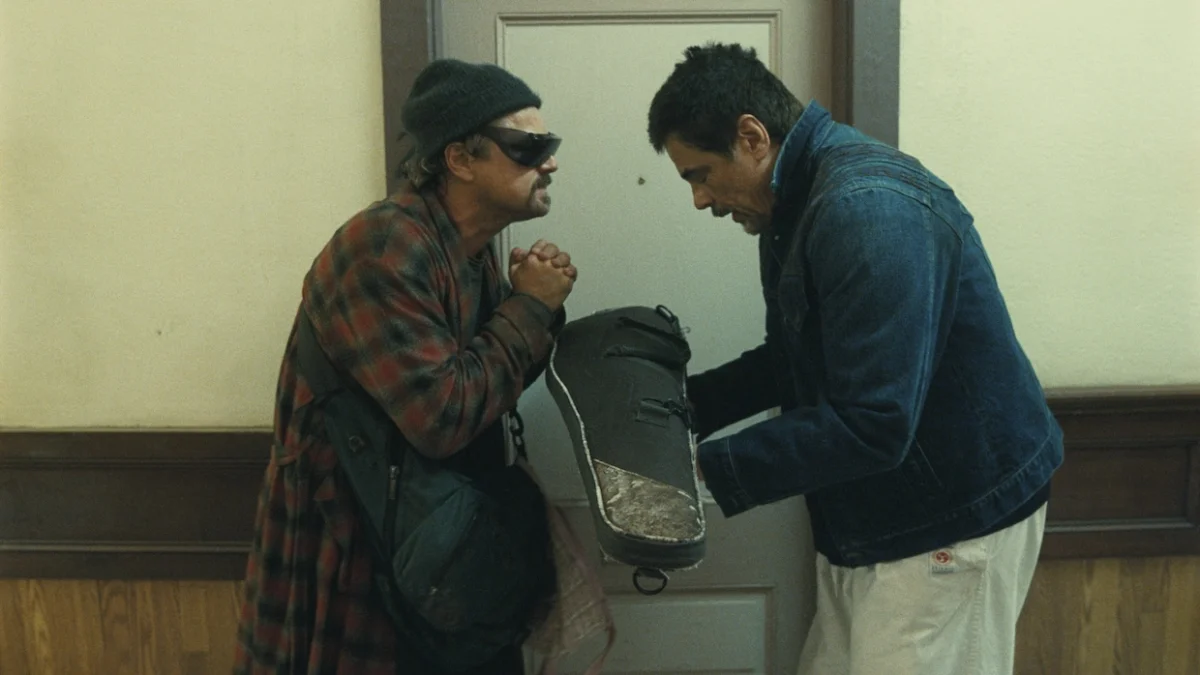
The 98th Academy Awards concluded with a historic sweep for filmmaker Paul Thomas Anderson, whose latest feature, One Battle After Another, claimed six Oscars, including the night’s most prestigious prize, Best Picture. After a career spanning ten feature films and numerous nominations over three decades, Anderson secured his first, second, and third Academy Awards in a single evening, winning for Best Director and Best Adapted Screenplay in addition to the top honor. The film’s success was bolstered by wins in the Best Supporting Actor, Best Editing, and Best Casting categories, cementing its status as the definitive cinematic achievement of the year.
Accepting the Best Picture trophy alongside producer Sara Murphy, Anderson delivered a reflective speech that paid homage to the history of American cinema. He specifically invoked the five Best Picture nominees from 1976—Barry Lyndon, Dog Day Afternoon, Jaws, Nashville, and One Flew Over the Cuckoo’s Nest—noting that the quality of such a cohort transcends the concept of a single "best" film. "There is no best among them," Anderson stated. "There is just what that mood might be that day." Industry analysts noted that the influence of these 1970s masterpieces was evident across the ten films competing for the top prize this year, marking a return to character-driven, auteur-led storytelling in the Academy’s preferences.
Sinners Breaks Nomination Records but Finds Mixed Results
The evening’s most nominated film, Sinners, directed by Ryan Coogler, entered the ceremony with a record-breaking 16 nominations. Despite the high expectations, the film concluded the night with four awards. However, these wins were significant in both their prestige and historical impact. Ludwig Göransson secured his third Academy Award for Best Original Score, while Ryan Coogler took home the Oscar for Best Original Screenplay.
The film also made history in the Best Cinematography category. Autumn Durald Arkapaw became the first woman to win the Oscar for cinematography, a milestone that was met with a standing ovation from the audience at the Dolby Theatre. Arkapaw’s win follows years of gradual progress for women in the camera department, following previous nominations for pioneers like Rachel Morrison and Ari Wegner.
In the acting categories, Michael B. Jordan secured his first Academy Award for Best Actor for his leading role in Sinners. Jordan, who has been a prominent figure in the industry since his debut as a child actor in the late 1990s, was widely considered the frontrunner after winning at the Screen Actors Guild Awards earlier in the season. His victory came amidst a highly competitive field that included Timothée Chalamet, Leonardo DiCaprio, and Wagner Moura. The 39-year-old veteran received a sustained standing ovation, reflecting the industry’s deep-seated respect for his career longevity and recent performance.
Acting Triumphs for Jessie Buckley and Amy Madigan
The Best Actress category followed the season’s established trajectory, with Jessie Buckley winning for her performance in Chloe Zhao’s Hamnet. This win marks the third Academy Award for a film directed by Zhao, who previously won Best Picture and Best Director for Nomadland. Notably, Zhao has now directed two different performers to Best Actress wins, further establishing her reputation as a premiere director of actors. Buckley’s win was the sole victory for Hamnet, despite the film’s critical acclaim and strong presence throughout the awards circuit.
One of the night’s most celebrated moments occurred early in the broadcast when Amy Madigan won Best Supporting Actor for the horror-thriller Weapons. Madigan, an industry legend whose career spans over forty years, delivered a performance that critics compared to Ruth Gordon’s iconic turn in Rosemary’s Baby. Her acceptance speech provided a moment of levity in an otherwise formal evening. Madigan recounted her preparation for the night, stating, "I was in the shower last night trying to think of something to say as I was shaving my legs. And I went, ‘I’ll have pants on, I don’t have to worry about that.’"
The Best Supporting Actor award was presented to Sean Penn for his role in One Battle After Another. This marks Penn’s third Oscar, following his Best Actor wins for Mystic River and Milk. Penn was notably absent from the ceremony, continuing a trend of minimal participation in the traditional awards campaign cycle. Observers suggested that Penn’s win, despite his lack of public campaigning, might signal a shift in how veteran actors approach the grueling "awards season" in the future. Penn had previously made headlines for gifting one of his statuettes to Ukrainian President Volodymyr Zelensky as a gesture of support during the ongoing conflict in the region.
Studio Performances and the Streaming Landscape
The 98th Academy Awards served as a major victory for Warner Bros., which emerged as the most successful studio of the night. Between One Battle After Another, Sinners, and other contenders, the studio amassed a total of 11 Oscars. This performance reaffirmed the studio’s dominant position in the prestige film market.

Netflix, while not clinching the top categories, maintained a strong presence through technical and craft wins. The streamer’s production of Frankenstein secured three awards for Costume Design, Makeup and Hairstyling, and Production Design. Additionally, the animated feature KPop Demon Hunters won two Oscars, including Best Animated Feature and Best Original Song for the track "Golden." Netflix also performed well in the short film categories, winning Best Documentary Short and sharing the Best Live Action Short prize. In a rare occurrence, the Live Action Short category resulted in a tie between The Singers and Two People Exchanging Saliva, a result that surprised many Oscar pool participants.
In the Best Documentary Feature category, the Academy delivered a significant upset. While The Perfect Neighbor was widely expected to win, the prize went to Mr. Nobody Against Putin. Analysts attributed the win to a strong geopolitical sentiment among the Academy’s growing international membership, particularly European voters. The win prompted one of the evening’s most overtly political moments, which was later amplified by presenter Javier Bardem. Before announcing the International Feature winner, Bardem took a moment to state, "No to war, and free Palestine," a sentiment that was met with cheers from the attendees.
Technical Awards and International Recognition
The technical categories saw a distribution of awards across several high-profile blockbusters. The racing drama F1 took home the Oscar for Best Sound, while James Cameron’s Avatar: Fire and Ash secured the award for Best Visual Effects. The VFX award was presented by Sigourney Weaver, a longtime collaborator of Cameron, providing a sentimental highlight for fans of the franchise.
In the International Feature Film category, the Oscar was awarded to Sentimental Value. The category was noted for its exceptional competitiveness this year, featuring four nominees distributed by NEON, all of which had received multiple nominations across various categories. The victory for Sentimental Value underscores the increasing integration of international cinema into the primary Academy Award categories.
In the animation field, The Girl Who Cried Pearls won the Oscar for Best Animated Short, complementing the feature-length win for KPop Demon Hunters.
Ceremony Production and Technical Difficulties
Despite the high-profile winners, the telecast itself, hosted by Conan O’Brien, received mixed reviews due to significant production issues. The show opened with an elaborate filmed sequence featuring O’Brien in "Aunt Gladys" drag, being pursued by children through parodies of the Best Picture nominees. While the opening was high-energy, the subsequent monologue and various comedic segments were described by critics as inconsistent.
The broadcast was plagued by technical mishaps, including erratic camera angles and instances where acceptance speeches were abruptly cut short by the orchestra. The most notable failure occurred during the "In Memoriam" segment. The tribute featured Billy Crystal, Rachel McAdams, and Barbra Streisand honoring industry icons Rob and Michelle Reiner, Diane Keaton, and Robert Redford. The segment culminated in Streisand performing "The Way We Were," but the emotional impact was severely diminished by persistent sound malfunctions that distorted the audio for home viewers.
Further criticism was directed at the show’s producers for the handling of the Best Original Song category. Only two of the five nominated songs—"Golden" from KPop Demon Hunters and "I Lied to You" from Sinners—were performed during the live broadcast. Viewers were instead directed to scan an on-screen QR code to listen to the remaining three nominees, a decision that drew immediate backlash on social media for marginalizing the other songwriters.
Conclusion and Industry Outlook
The 98th Academy Awards will likely be remembered as the night Paul Thomas Anderson finally achieved "Oscar legend" status, joining the ranks of directors who have swept the major categories. The event also highlighted the ongoing tension between traditional theatrical studios like Warner Bros. and streaming giants like Netflix, with the former reclaiming the spotlight in the major categories.
As the industry reflects on the night’s results, the historic win for Autumn Durald Arkapaw and the veteran recognition for Michael B. Jordan and Amy Madigan suggest an Academy that is increasingly interested in balancing historical milestones with the celebration of long-term career achievement. Despite the production flaws of the telecast, the 2026 awards season concluded on a note of artistic validation for some of cinema’s most respected contemporary voices. With the ceremony now concluded, the industry’s focus shifts toward the upcoming festival season, where the first contenders for next year’s awards are expected to emerge.