



Paramount Global, through its newly integrated Skydance Media arm, announced on Tuesday a significant enhancement to its unsolicited bid for Warner Bros. Discovery (WBD), introducing a "ticking fee" and other financial incentives designed to lure shareholders away from a rival agreement with Netflix. This move marks the latest escalation in a high-stakes corporate battle for control over one of Hollywood’s most storied media empires. While Paramount maintained its offer price at $30 per share in an all-cash deal, the revised terms are intended to address concerns regarding regulatory delays and the financial penalties associated with breaking WBD’s existing engagement with Netflix.
The announcement comes as Paramount and its backers, including RedBird Capital Partners and the Ellison family, attempt to disrupt a pending transaction between Warner Bros. Discovery and Netflix. That deal, initially structured as a mix of cash and stock, was recently revised to an all-cash offer of $27.75 per share for WBD’s streaming and studio assets. By contrast, Paramount’s hostile tender offer targets the entirety of the company, seeking to keep WBD’s diverse portfolio of assets intact rather than spinning off its linear television networks.
The Mechanics of the Enhanced Offer
The cornerstone of Paramount’s revised bid is the introduction of a "ticking fee." In the world of mergers and acquisitions, a ticking fee is a mechanism used to compensate the target company’s shareholders for the time elapsed between the signing of a deal and its eventual closing. Paramount has set this fee at 25 cents per share for every quarter the transaction remains unclosed following the end of 2026. Given WBD’s current share count, this equates to approximately $650 million in additional cash value per quarter for shareholders.
Paramount CEO David Ellison emphasized that the ticking fee is a signal of the company’s confidence in navigating the federal regulatory landscape. "The additional benefits of our superior $30 per share, all-cash offer clearly underscore our strong and unwavering commitment to delivering the full value WBD shareholders deserve for their investment," Ellison stated. "We are making meaningful enhancements—backing this offer with billions of dollars, providing shareholders with certainty in value, a clear regulatory path, and protection against market volatility."
In addition to the ticking fee, Paramount has pledged to cover the $2.8 billion termination fee that Warner Bros. Discovery would be obligated to pay Netflix if WBD were to abandon their current agreement. Furthermore, Paramount has offered to eliminate an estimated $1.5 billion in potential debt refinancing costs, effectively removing several of the "clerical" and financial obstacles that the WBD board has cited as reasons to prefer the Netflix deal.
Financial Backing and Capital Structure
The scale of the Paramount-Skydance bid is supported by a massive consortium of equity and debt providers. The company confirmed on Tuesday that the revised offer is "fully financed," backed by $43.6 billion in equity commitments. These commitments come primarily from the Ellison family—led by Oracle co-founder Larry Ellison and his son, David—alongside Gerry Cardinale’s RedBird Capital Partners.

On the debt side, Paramount has secured $54 billion in commitments from a trio of heavyweight financial institutions: Bank of America, Citigroup, and the private equity firm Apollo Global Management. This capital structure is designed to provide WBD shareholders with the "certainty of value" that Paramount argues is missing from the Netflix proposal, which involves a complex separation of WBD’s linear networks—such as CNN, TBS, and Discovery—into a standalone entity.
Chronology of the Hostile Takeover Attempt
The battle for Warner Bros. Discovery has unfolded rapidly over the last several months, reflecting the intense pressure on traditional media companies to consolidate in the face of shifting consumer habits.
- December 2025: Netflix and Warner Bros. Discovery announce a landmark deal. Under the proposal, Netflix would acquire WBD’s premium content engines—including Warner Bros. Pictures and the Max streaming service—while WBD’s linear cable networks would be spun off into a separate, debt-laden company.
- Late December 2025: Paramount, having recently completed its own merger with Skydance Media, launches a hostile all-cash tender offer for WBD at $30 per share, valuing the company significantly higher than the implied value of the Netflix deal.
- January 2026: The WBD board of directors formally recommends that shareholders reject the Paramount offer, citing regulatory uncertainty and the strategic benefits of the Netflix partnership. Paramount responds by filing a lawsuit against WBD, seeking greater transparency regarding the valuation of the Netflix deal.
- February 2026: Netflix amends its offer to $27.75 per share, all-cash, to match the simplicity of Paramount’s cash structure while remaining below Paramount’s price point.
- Present Day: Paramount introduces the ticking fee and termination fee coverage to further pressure the WBD board and appeal directly to institutional investors.
Strategic Divergence: Integration vs. Separation
The primary point of contention between the two competing bids lies in the future of Warner Bros. Discovery’s assets. The Netflix deal is predicated on a "clean break" strategy. Netflix is interested in WBD’s vast library of intellectual property—ranging from the DC Universe to Harry Potter—and its production capabilities. However, Netflix has no interest in the declining linear television business. Under the Netflix plan, WBD shareholders would receive cash for the "growth" assets but would likely remain holders of a new company composed of the "legacy" cable networks, which face significant headwinds from cord-cutting.
Paramount’s strategy, conversely, is one of total integration. By acquiring the whole company, Paramount-Skydance aims to create a "mega-major" studio that rivals Disney in scale. David Ellison’s vision involves leveraging WBD’s assets to bolster Paramount+, creating a unified streaming powerhouse while using the cash flow from linear networks to service the debt required for the acquisition.
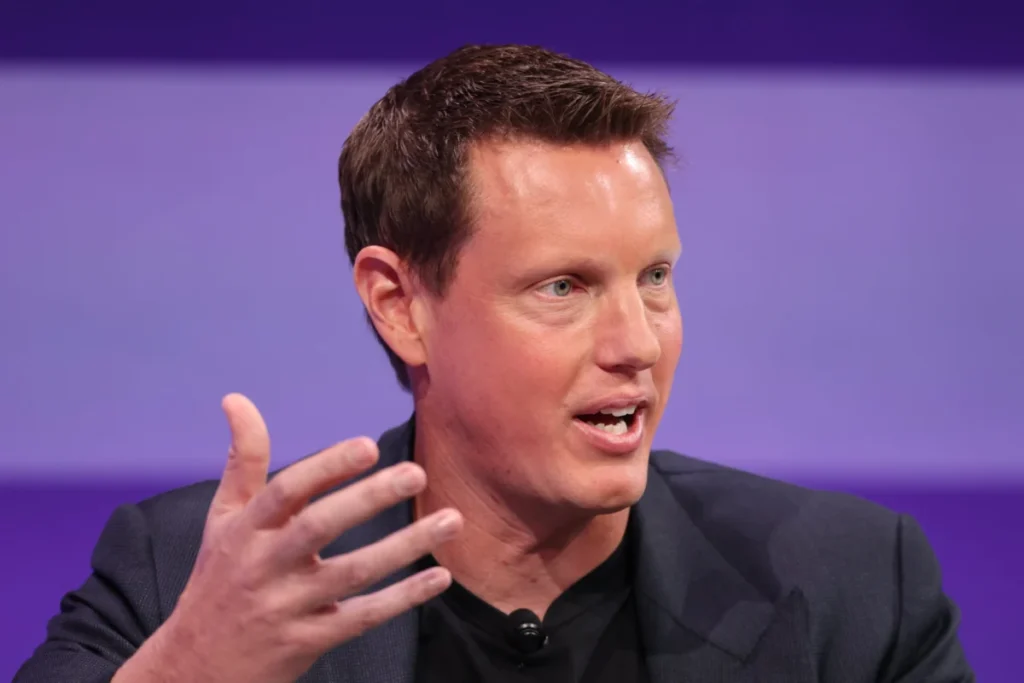
Gerry Cardinale, founder of RedBird Capital Partners, spoke to CNBC’s David Faber on Tuesday to clarify this position. Cardinale argued that the WBD board has been using minor technicalities to avoid engaging with Paramount. "What we’ve done is we’ve perfected it by taking off the table all of the, what I call, more clerical items that they have been using to suggest that they are not going to engage with us," Cardinale said. He added that if the board continues to resist, Paramount will continue to take its case directly to the shareholders.
Regulatory Hurdles and Antitrust Concerns
The potential for a Paramount-WBD merger or a Netflix-WBD deal has drawn intense scrutiny from Washington. Antitrust regulators under the current administration have been aggressive in challenging horizontal mergers that could reduce competition in the media and tech sectors.
Netflix co-CEO Ted Sarandos has expressed confidence that the Netflix-WBD deal will pass muster, arguing that it is "pro-consumer" and "pro-worker" because it ensures the long-term viability of the studio assets. However, Paramount is banking on the idea that a Netflix acquisition of WBD’s studios would consolidate too much power in the hands of the world’s largest streaming service, potentially leading to a "monopsony" where Netflix becomes the sole gatekeeper for high-end content production.

By offering the ticking fee, Paramount is putting its money where its mouth is regarding the regulatory timeline. The fee essentially penalizes Paramount if the Department of Justice or the Federal Trade Commission drags its feet on approval, providing WBD shareholders with a form of "insurance" against a blocked deal.
Market Implications and the Road Ahead
The outcome of this corporate struggle will have profound implications for the media industry. If Paramount succeeds, it will represent one of the largest media mergers in history, creating a behemoth with unparalleled reach across film, television, and streaming. It would also mark a triumphant moment for David Ellison, positioning him as a central figure in the next generation of Hollywood moguls.
If WBD stays the course with Netflix, it will signal the definitive end of the "conglomerate" era for Warner Bros., as its assets are carved up to satisfy the demands of the streaming age. This would likely trigger further consolidation among the remaining "linear-only" companies, which would find themselves increasingly isolated in a digital-first world.
Warner Bros. Discovery confirmed on Tuesday that it has received the amended offer from Paramount and stated that its board would review the proposal. However, the board’s previous rejections suggest a deep-seated preference for the Netflix path, possibly due to concerns about the high debt load Paramount would carry following the merger.
As the Q3 2026 deadline for the separation of WBD’s networks approaches, the window for a deal is narrowing. Shareholders now face a choice between the immediate, higher cash value of Paramount’s $30 bid—fortified by regulatory guarantees—and the strategic pivot offered by Netflix. With Paramount’s threat to nominate its own directors to the WBD board, this "sweetened" offer may be the final precursor to a full-scale proxy war.