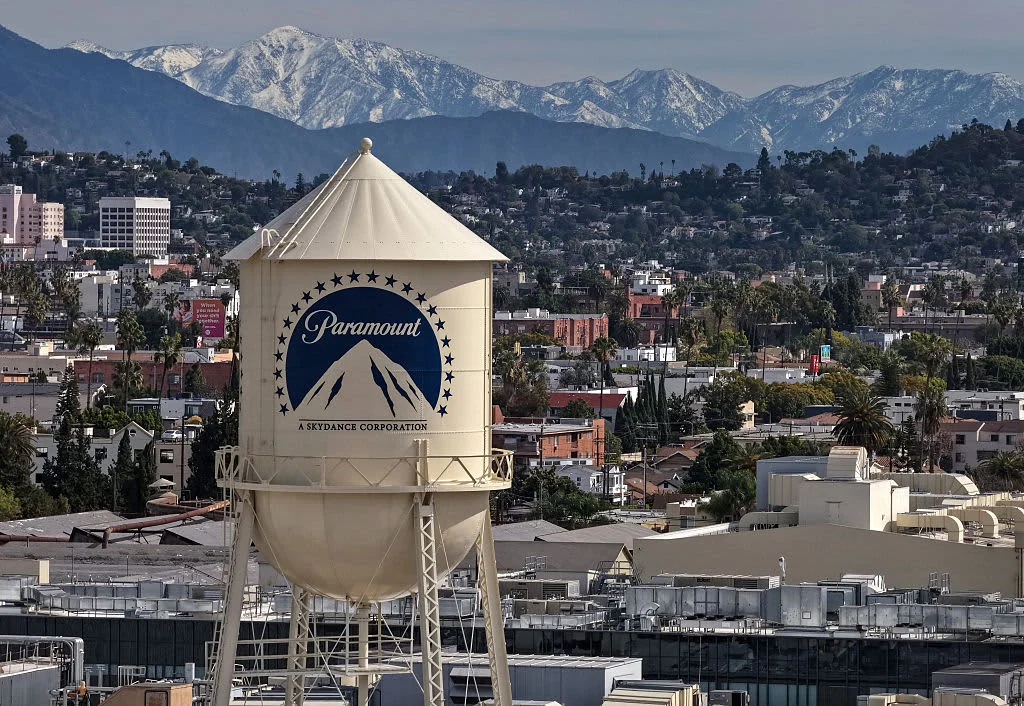



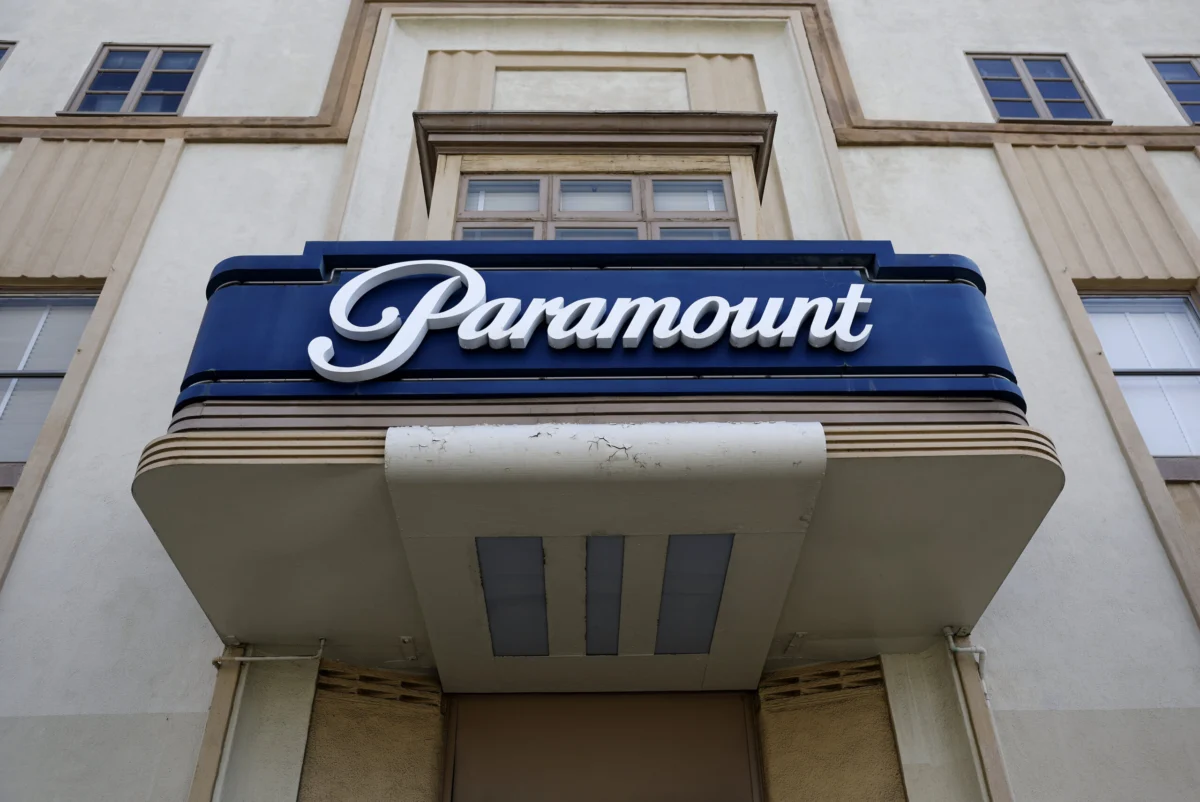
The media landscape underwent a seismic shift this week as Paramount Skydance emerged as the victor in a high-stakes pursuit of Warner Bros. Discovery, signaling a massive consolidation of Hollywood’s most storied assets. Following months of aggressive bidding and strategic maneuvering, the board of Warner Bros. Discovery (WBD) formally accepted a revised offer from Paramount Skydance valued at $31 per share. This pivotal decision prompted Netflix, which had previously been positioned as the frontrunner for WBD’s premium studio and streaming assets, to officially withdraw its candidacy. The resulting merger, if approved by federal regulators, will unite two of the "Big Five" film studios and create a media behemoth with an unprecedented grip on streaming, linear television, news, and sports.
The conclusion of the bidding war marks the end of a volatile period for WBD, which has been the subject of intense takeover speculation since late 2025. While Netflix’s earlier bid of $27.75 per share had initially gained traction, Paramount Skydance’s willingness to acquire the entirety of WBD—including its debt-laden linear cable networks—and its subsequent price hike to $31 per share proved too compelling for the WBD board to ignore. The financial commitment from Paramount is substantial; according to recent Securities and Exchange Commission (SEC) filings, Paramount has already facilitated the payment of a $2.8 billion breakup fee owed to Netflix and has committed to a staggering $7 billion "reverse breakup fee" should the deal fail to clear regulatory hurdles.
A Chronology of the Mega-Merger: From Hostile Bid to Definitive Agreement
The path to this week’s announcement began in December 2025, when Paramount Skydance, led by CEO David Ellison, launched a surprise hostile bid for Warner Bros. Discovery. At the time, the industry was already reeling from shifts in consumer behavior and the continued decline of the traditional cable bundle. Paramount’s initial overtures were met with resistance from WBD leadership, who were simultaneously entertaining a more surgical proposal from Netflix.
By January 2026, the competition had intensified into a public bidding war. Netflix, seeking to bolster its content library to defend its dominant market position, sought to carve out WBD’s production studios and the Max streaming service. However, Netflix remained wary of WBD’s legacy cable assets, including CNN, TBS, and TNT, which continue to face secular headwinds. In contrast, David Ellison’s vision for a combined Paramount-WBD entity centered on "total horizontal integration," arguing that the scale of a combined linear and streaming portfolio would provide the necessary leverage to compete with tech giants like Apple and Amazon.
On February 23, 2026, the momentum shifted decisively. Paramount raised its offer from $30 to $31 per share, a move that WBD’s board characterized as "superior in both value and certainty." By the following day, Netflix co-CEOs Ted Sarandos and Greg Peters issued a joint statement announcing the company’s withdrawal, noting that matching the elevated price was "no longer financially attractive" for Netflix shareholders. This exit cleared the way for the formalization of the Paramount-WBD agreement, though it also shifted the industry’s focus toward the formidable task of gaining government approval.
Analyzing the Scale: Streaming Dominance and IP Concentration
The combined entity resulting from a Paramount-WBD merger would command a staggering share of the global entertainment market. According to the most recent quarterly earnings reports, Paramount+ currently serves 78.9 million subscribers, while HBO Max (under WBD) reported 131.6 million subscribers at the close of 2025. A unified streaming platform would boast over 210 million global subscribers, placing it in direct competition with Disney+ and trailing only Netflix in total reach.
Beyond subscriber counts, the concentration of intellectual property (IP) is perhaps the most significant aspect of the deal. The merger would place the following iconic franchises under a single corporate umbrella:
- Warner Bros. Assets: The DC Universe (Batman, Superman, Wonder Woman), Harry Potter, Game of Thrones, The Lord of the Rings, and the Looney Tunes library.
- Paramount Assets: Star Trek, Mission: Impossible, Yellowstone, Transformers, SpongeBob SquarePants, and the extensive Nickelodeon catalog.
Industry analysts suggest that this level of IP concentration provides the new entity with unparalleled bargaining power against distributors and advertisers. However, this same strength is precisely what has drawn the attention of antitrust advocates. Critics argue that a single company controlling such a vast swath of American cultural output could lead to higher subscription costs for consumers and reduced licensing opportunities for third-party platforms.
The Regulatory Gauntlet: Political Connections vs. Antitrust Law
While the financial terms of the deal are settled, the regulatory path forward is far from certain. The merger must undergo rigorous scrutiny from the U.S. Department of Justice (DOJ) and the Federal Trade Commission (FTC). Historically, horizontal mergers between direct competitors in the same industry—such as two major film studios or two major news organizations—face the highest level of scrutiny.

Paramount executives have expressed optimism that their bid will encounter less resistance than the proposed Netflix-WBD tie-up. Their argument rests largely on the "palatability" of a traditional media merger compared to a tech-streaming powerhouse expansion. Furthermore, the political landscape of 2026 plays a crucial role. David Ellison, the son of Oracle co-founder Larry Ellison, enjoys a degree of political insulation. Larry Ellison is a known associate of President Donald Trump, and SEC filings indicate that Jared Kushner, the President’s son-in-law, is among the financial backers of the Paramount deal.
Despite these connections, the deal faces significant bipartisan and state-level opposition. California Attorney General Rob Bonta has already signaled a "vigorous review" by the state’s Department of Justice, emphasizing that the merger is "not a done deal." On the federal level, Senator Elizabeth Warren (D-Mass.) issued a scathing critique, labeling the merger an "antitrust disaster" that threatens to diminish choices for American families and drive up prices.
The Role of International Capital and National Security
Adding another layer of complexity to the regulatory review is the involvement of foreign investment. Paramount’s bid is partially supported by sovereign wealth funds from Saudi Arabia, Abu Dhabi, and Qatar. In an era of heightened sensitivity regarding foreign influence over American media and infrastructure, these ties have raised red flags in Washington.
To mitigate these concerns, Paramount has proactively filed disclosures stating that these sovereign wealth funds have agreed to forgo all governance rights. This includes a commitment that these entities will not hold seats on the board of directors nor have any say in editorial decisions for news outlets like CNN or CBS News. Whether these assurances will satisfy the Committee on Foreign Investment in the United States (CFIUS) remains to be seen, as the combination of two of the country’s primary news providers under a partially foreign-funded entity is unprecedented.
Impact on News, Sports, and the Linear Ecosystem
One of the most delicate aspects of the merger is the consolidation of news and sports broadcasting. The deal would bring CBS News and CNN—two of the most influential news organizations in the world—under the same corporate leadership. This raises immediate questions regarding editorial independence and the potential for staff reductions through "synergies."
In the realm of sports, the combined company would control a dominant share of premium broadcast rights. A single entity would hold the rights to the NFL (via CBS), the NBA (via TNT), and various Major League Baseball and NCAA tournament packages. This concentration of live sports—the last remaining "glue" holding the linear television bundle together—gives the combined Paramount-WBD immense leverage in negotiations with cable and satellite providers.
Joseph Kalmenovitz, an assistant professor of finance at the University of Rochester’s Simon Business School, notes that the timing of the deal is strategic. "The deal-friendly establishment is back in," Kalmenovitz observed, suggesting that the current administration may be more inclined to view media consolidation as a necessary survival tactic against the encroachment of Big Tech.
Financial Outlook and Market Reaction
Wall Street’s reaction to the definitive agreement has been cautiously optimistic. Analysts at Raymond James noted that while the regulatory path is "meaningfully easier" than it would have been for Netflix, it is by no means a "cakewalk." The $7 billion breakup fee committed by Paramount underscores the company’s confidence, but it also highlights the massive financial risk involved if the DOJ moves to block the merger.
Morningstar analysts suggested that the $31 per share price represents the "best outcome for Warner shareholders," particularly given the uncertainty surrounding WBD’s significant debt load. By offloading the entire company to Paramount Skydance, WBD shareholders receive a cash premium and exit a volatile market, while Paramount takes on the challenge of integrating a massive, complex portfolio.
As the legal teams for Paramount and WBD prepare their filings for the DOJ, the broader entertainment industry remains in a state of flux. If successful, this merger will likely trigger a final wave of consolidation among the remaining mid-tier media players, as they scramble to achieve the scale necessary to survive in an era dominated by a few global giants. For now, the focus remains on Washington, where the future of American media will be decided in the coming months.