

Paramount Skydance on Tuesday announced a significant enhancement to its unsolicited, hostile bid for Warner Bros. Discovery (WBD), introducing a series of financial incentives and regulatory safeguards intended to sway shareholders and the company’s board of directors. The revised proposal maintains the $30-per-share all-cash valuation first introduced in December but adds a "ticking fee" to mitigate risks associated with regulatory delays, while also committing to cover billions in potential breakup costs and debt refinancing. This move intensifies the high-stakes battle for control of one of Hollywood’s most storied media empires, as Paramount seeks to disrupt a pending transaction between Warner Bros. Discovery and the streaming giant Netflix.
The core of the updated offer centers on what Paramount CEO David Ellison describes as "certainty in value" and a "clear regulatory path." By adding a ticking fee of 25 cents per share for every quarter the deal remains unclosed after the end of 2026, Paramount is effectively placing a $650 million quarterly bet on its ability to navigate the federal antitrust landscape. The fee is designed to compensate WBD shareholders for the time value of money and the opportunity cost of a prolonged transition period, addressing a primary concern for institutional investors during large-scale media consolidations.
Strategic Financial Engineering and Financing Commitments
Paramount’s revised offer is backed by a massive capital structure totaling nearly $100 billion in combined equity and debt commitments. According to the company, the deal is "fully financed" through a combination of $43.6 billion in equity from the Ellison family—led by Oracle co-founder Larry Ellison—and RedBird Capital Partners, a private investment firm with deep ties to the sports and media sectors. Furthermore, Paramount has secured $54 billion in debt commitments from a consortium of major financial institutions, including Bank of America and Citigroup, alongside the private equity firm Apollo Global Management.
Beyond the purchase price, Paramount has moved to eliminate several "clerical" and financial obstacles that the WBD board has cited as reasons for its continued rejection of the hostile bid. Most notably, Paramount has pledged to fund the $2.8 billion termination fee that Warner Bros. Discovery would be obligated to pay Netflix if the current deal between those two entities is scrapped. Additionally, the revised bid includes a provision to cover $1.5 billion in potential debt refinancing costs, ensuring that WBD’s existing balance sheet—which has been burdened by debt since the 2022 merger of WarnerMedia and Discovery—is protected during the acquisition process.
A Chronology of the Hostile Takeover Attempt
The current corporate tug-of-war began in earnest in early December 2025, when Paramount Skydance launched a surprise hostile tender offer for the entirety of Warner Bros. Discovery. This move followed months of industry speculation regarding WBD’s future as it struggled with a declining linear television market and the high costs of scaling its Max streaming service.

The timeline of the conflict highlights the rapid escalation of the bidding war:
- December 5, 2025: Warner Bros. Discovery announces a deal with Netflix. The proposed transaction involves Netflix acquiring WBD’s streaming and studio assets, while WBD’s linear TV networks (CNN, TBS, Discovery) would be spun off into a separate entity.
- December 8, 2025: Paramount Skydance launches a hostile all-cash bid of $30 per share for the whole company, challenging the Netflix deal as undervalued and structurally inferior.
- January 7, 2026: The WBD board formally rejects Paramount’s offer for the first time, citing regulatory uncertainty and recommending that shareholders stick with the Netflix agreement.
- January 12, 2026: Paramount files a lawsuit against WBD, seeking more transparency regarding the valuation process used to approve the Netflix deal and announcing its intent to nominate a new slate of directors to the WBD board.
- Late January 2026: Netflix amends its offer to $27.75 per share in cash, moving away from its original cash-and-stock proposal valued at approximately $72 billion.
- Tuesday, February 2026: Paramount unveils the "ticking fee" and termination fee coverage in an effort to break the stalemate.
The Regulatory Battle: Paramount vs. Netflix
A central theme in the competing bids is the likelihood of gaining approval from the Department of Justice (DOJ) and the Federal Trade Commission (FTC). Paramount’s inclusion of a ticking fee is a direct challenge to the WBD board’s assertion that a Paramount-WBD merger would face insurmountable antitrust hurdles. Paramount contends that a merger with Skydance would be "pro-consumer" and "pro-innovation," whereas a Netflix acquisition of WBD’s studio assets would consolidate an unprecedented amount of content production power within a single dominant streaming platform.
Lawmakers and industry watchdogs have already expressed concerns regarding the Netflix-WBD deal. Critics argue that allowing the world’s largest streaming service to absorb the Warner Bros. film and television library could lead to reduced competition for independent creators and higher prices for subscribers. Netflix co-CEO Ted Sarandos has pushed back against these claims, stating that the deal would "preserve jobs" and foster a more stable environment for the media industry during a period of significant labor unrest and layoffs.
Paramount’s strategy relies on the argument that its offer is not only higher in price ($30 vs. $27.75) but also "cleaner" because it does not require the complex separation of linear and streaming assets. The Netflix deal is predicated on a "spin-merge" structure that would see WBD’s legacy cable networks separated in the third quarter of 2026—a process fraught with tax implications and operational risks.
Official Responses and Market Sentiment
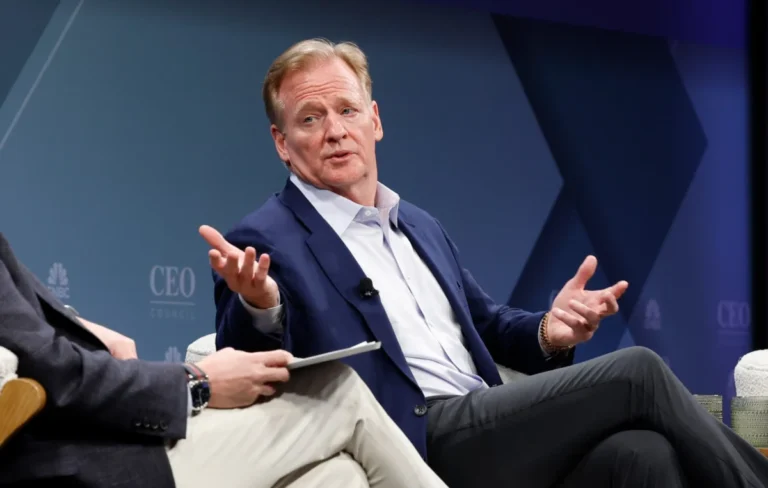
Gerry Cardinale, founder of RedBird Capital Partners, appeared on CNBC to defend the amended bid, characterizing the new terms as an effort to remove any remaining excuses for the WBD board’s lack of engagement. "What we’ve done is we’ve perfected it by taking off the table all of the, what I call, more clerical items that they have been using to suggest that they are not going to engage with us," Cardinale said. He emphasized that if the board continues to refuse negotiations, Paramount and RedBird are prepared to bypass management and take their case directly to the shareholders through a proxy fight.
For its part, Warner Bros. Discovery issued a brief statement on Tuesday confirming receipt of the amended offer. The company noted that its board would review the proposal "consistent with its fiduciary duties." However, the board has remained steadfast in its support of the Netflix deal thus far, leading some analysts to speculate that the resistance may be rooted in long-term strategic preferences rather than short-term valuation.

Industry analysts have noted that the $30-per-share offer represents a significant premium over WBD’s recent trading range, which has been hampered by broader market volatility and concerns over the future of the traditional cable bundle. The all-cash nature of the Paramount bid is particularly attractive to shareholders who may be wary of the stock-heavy components seen in previous media mergers.
Broader Impact and Industry Implications
The outcome of this battle will have profound implications for the future of the global media landscape. If Paramount Skydance is successful, it would create a massive vertically integrated content powerhouse, combining Skydance’s production capabilities with WBD’s vast library and Paramount’s existing distribution infrastructure. This would signal a return to the "Big Studio" era, albeit one adapted for a digital-first world.
Conversely, if the Netflix deal proceeds, it would cement Netflix’s transition from a tech-led distributor to a traditional studio titan, effectively ending the independence of one of Hollywood’s "Big Five" studios. The separation of WBD’s linear networks would also serve as a bellwether for the rest of the industry, potentially triggering a wave of similar divestitures as media conglomerates seek to shed declining cable assets to focus exclusively on streaming.
The introduction of the ticking fee also sets a new precedent for hostile takeovers in the media sector. By putting a specific dollar value on regulatory delays, Paramount is forcing the WBD board to quantify the risks it claims are inherent in the offer. If the board continues to reject a $30 cash bid in favor of a lower $27.75 offer, it may face increased legal pressure from shareholders who could argue that the board is failing to maximize value.
As the 2026 deadline for the proposed Netflix closing approaches, the pressure on all parties is expected to intensify. With Paramount now offering to cover termination fees and debt refinancing, the financial gap between the two offers has widened, leaving the WBD board with a narrowing set of arguments to justify its current course of action. The coming months will likely see further legal maneuvering and public campaigning as David Ellison and Gerry Cardinale attempt to win over the institutional investors who will ultimately decide the fate of Warner Bros. Discovery.