


The landscape of the global entertainment industry shifted significantly on Thursday as Netflix officially withdrew its bid to acquire the studio and streaming assets of Warner Bros. Discovery (WBD). This decision followed a determination by the Warner Bros. Discovery board of directors that a revised, all-cash offer from Paramount Skydance represented a superior proposal for shareholders. The withdrawal concludes a months-long bidding war that pitted the world’s largest streaming service against a legacy media giant undergoing a complex transformation. Paramount Skydance’s winning bid, valued at $31 per share for the entirety of the company, effectively unseated Netflix’s more targeted $27.75 per share offer, which had focused specifically on WBD’s production studios and Max streaming platform.
The conclusion of this high-stakes corporate saga marks a pivotal moment for David Zaslav’s Warner Bros. Discovery, which has struggled with a heavy debt load and the industry-wide decline of linear television since its formation via merger in 2022. By choosing the Paramount Skydance offer, WBD’s board has opted for a total company buyout rather than a piecemeal divestiture of its most prized creative assets.
The Financial Mechanics of the Rival Bids
The bidding war reached its crescendo earlier this week when Paramount Skydance amended its proposal for the third time in as many months. The final offer of $31 per share in cash represents a substantial premium over WBD’s recent trading price and surpassed the $30 per share offer previously on the table. Crucially, Paramount Skydance’s bid encompasses the whole of Warner Bros. Discovery, including its volatile but cash-generating pay-TV networks such as CNN, TBS, TNT, and Discovery Channel.
Netflix’s proposal, by contrast, was narrower in scope. The streaming giant had offered $27.75 per share to acquire WBD’s "content engine"—the historic Warner Bros. film and television studios—alongside its streaming infrastructure. This "asset-lite" approach would have allowed Netflix to absorb iconic franchises like Harry Potter, DC Comics, and Game of Thrones without the burden of managing declining cable networks. However, the WBD board ultimately favored the certainty and higher valuation of the Paramount Skydance "all-in" offer.

To secure the deal, Paramount Skydance included significant financial safeguards. The agreement features a $7 billion breakup fee, a massive sum intended to protect WBD shareholders should the merger fail to pass regulatory muster. Furthermore, Paramount Skydance has committed to covering the $2.8 billion breakup fee that WBD now owes Netflix for terminating their preliminary negotiations.
A Chronology of the Bidding War
The road to Thursday’s announcement was marked by aggressive corporate maneuvering and strategic waivers. The timeline of the acquisition process highlights the intensity of the competition:
- December 2025: Paramount Skydance launches a hostile bid for Warner Bros. Discovery after initial friendly merger talks stalled. The move sent shockwaves through Hollywood and Wall Street, signaling a desperate need for consolidation among legacy media players.
- January 2026: Netflix enters the fray, submitting a proposal to buy WBD’s studio and streaming units. Investors reacted positively to the idea of Netflix owning one of the world’s premier content libraries.
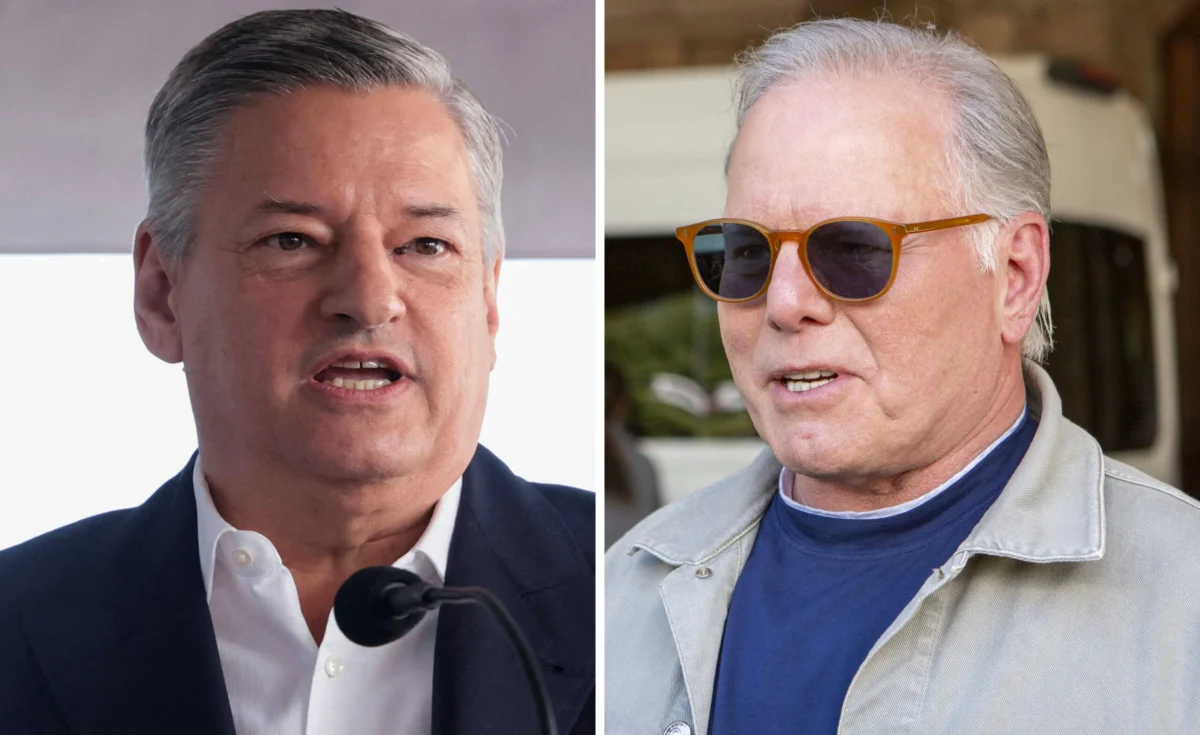
- February 17, 2026: In a surprising move, Netflix grants WBD a seven-day waiver. This legal window allowed WBD’s board to re-engage with Paramount Skydance to see if the latter would improve its offer. Netflix co-CEO Ted Sarandos characterized this move as an effort to provide "shareholder clarity" amidst "noise and confusion" generated by Paramount’s hostile tactics.
- February 24, 2026: Paramount Skydance raises its bid to $31 per share, all cash, for the entire company. This revision was deemed "superior" by the WBD board, triggering a four-day window for Netflix to match or exceed the offer.
- February 26, 2026: Netflix leadership, including co-CEOs Ted Sarandos and Greg Peters, officially declines to raise their bid. Following the announcement, Netflix shares surged 10% in after-hours trading as investors cheered the company’s fiscal discipline. Paramount shares rose 5%, while WBD shares dipped 2%, reflecting market concerns over the complexities of the upcoming merger.
Strategic Discipline vs. Content Ambition
For Netflix, the decision to walk away was rooted in a philosophy of financial prudence. In a joint statement, Sarandos and Peters emphasized that while WBD’s assets were "nice to have," they were not a "must-have at any price." The company’s refusal to engage in a bidding war suggests a confidence in its existing content pipeline and a reluctance to overleverage its balance sheet.
Analysts suggest that Netflix’s $27.75 bid was already at the top end of what the company considered a value-accretive deal. By declining to match the $31 offer, Netflix avoided the "winner’s curse"—paying so much for an acquisition that the debt or dilution outweighs the strategic benefits. The 10% spike in Netflix stock serves as a clear endorsement from Wall Street that investors prefer Netflix as a disciplined, high-margin streaming leader rather than a debt-heavy conglomerate.
Conversely, for Paramount Skydance, the acquisition is an existential play. Led by David Ellison, Skydance has long sought to scale its operations to compete with the "Big Three" of streaming (Netflix, Disney, and Amazon). By merging with Paramount and now absorbing Warner Bros. Discovery, Ellison is attempting to create a "New Media" titan that combines the legacy of two of the "Big Five" Hollywood studios with modern, tech-forward management.

Official Responses and Leadership Perspectives
The leadership of Warner Bros. Discovery expressed optimism regarding the tie-up with Paramount Skydance. CEO David Zaslav, who has spent the last two years cutting costs and streamlining WBD, praised Netflix for their partnership during the process but focused his future outlook on the combined entity.
"Once our Board votes to adopt the Paramount merger agreement, it will create tremendous value for our shareholders," Zaslav stated. "We are excited about the potential of a combined Paramount Skydance and Warner Bros. Discovery and can’t wait to get started working together telling the stories that move the world."
From the Netflix camp, the tone was one of respectful exit. Sarandos and Peters thanked the WBD board for a "fair and rigorous process." They noted that their proposed deal would have provided a "clear path to regulatory approval," perhaps a subtle nod to the significant antitrust hurdles that a combined Paramount-WBD entity will likely face.
In a notable development on the day of the announcement, Ted Sarandos was spotted at the White House. While the specific details of his meetings were not disclosed, industry insiders suggest the discussions likely touched on the broader implications of media consolidation and the regulatory environment under the current administration.
Regulatory Outlook and Industry Implications
The merger of Paramount Skydance and Warner Bros. Discovery will create a behemoth with unprecedented control over film, television, and news. However, this scale will almost certainly invite intense scrutiny from the Federal Trade Commission (FTC) and the Department of Justice (DOJ).

The $7 billion breakup fee included in the Paramount bid is a direct response to these regulatory fears. It serves as a form of insurance for WBD shareholders, ensuring that even if the government blocks the deal, the company receives a massive infusion of cash. The regulatory concerns center on several key areas:
- Monopoly in Production: A combined Paramount and Warner Bros. studio would control a vast percentage of soundstage space and production talent in the United States.
- Sports Broadcasting: The combination of CBS Sports (Paramount) and TNT/TBS Sports (WBD) would create a dominant player in sports rights, potentially driving up costs for consumers and limiting competition for broadcast rights to the NBA, NFL, and NCAA.
- News Consolidation: Bringing CBS News and CNN under the same corporate umbrella would be a historic consolidation of the American news landscape, raising questions about editorial independence and media diversity.
The Future Landscape of Media
The withdrawal of Netflix from the WBD deal signals a shift in the "Streaming Wars." Netflix has signaled that it no longer feels the need to acquire legacy libraries to maintain its dominance. With over 260 million subscribers, the company is pivoting toward live events (such as its recent WWE and NFL deals) and organic growth rather than massive M&A.
For the rest of the industry, the Paramount-WBD merger represents a "consolidation of necessity." As linear advertising revenue continues to evaporate and the costs of streaming content remain high, legacy players are finding that they can no longer survive as standalone entities.
As the dust settles on this bidding war, the focus now turns to the integration of these two storied companies. If the merger survives regulatory challenges, the resulting entity will own the most formidable library of intellectual property in the history of Hollywood. However, the success of the deal will depend on whether the new leadership can manage a massive workforce and a diverse portfolio of assets while servicing the debt required to fund the $31-per-share cash payout. For now, Netflix remains the king of streaming, while Paramount Skydance prepares to become the new titan of the legacy studio system.