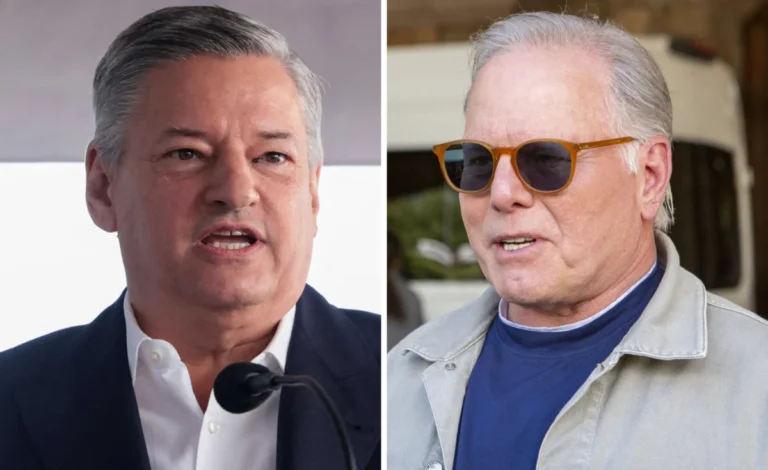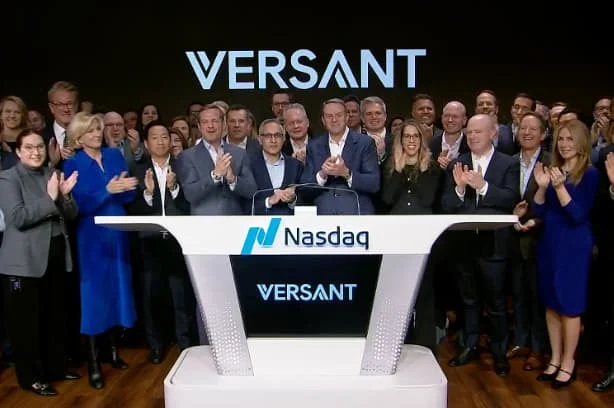


The landscape of American media underwent a seismic shift this week as Paramount Skydance emerged as the definitive winner in the high-stakes pursuit of Warner Bros. Discovery (WBD). On Thursday, the board of Warner Bros. Discovery formally designated Paramount’s revised $31-per-share offer as "superior" to a competing bid from streaming pioneer Netflix. The decision prompted Netflix to officially withdraw from the process, effectively ending a months-long bidding war that has captivated Wall Street and Hollywood alike. The victory for Paramount Skydance, led by CEO David Ellison, marks a pivotal moment in the consolidation of the entertainment industry, though the path to final regulatory approval remains fraught with political and antitrust challenges.
The financial components of the deal underscore the aggressive nature of Paramount’s strategy. The $31-per-share offer represents a significant premium over Netflix’s previous bid of $27.75 per share. To secure the agreement, Paramount also committed to a $7 billion breakup fee, a massive financial guarantee intended to reassure WBD shareholders in the event that federal regulators block the merger. Furthermore, a Friday SEC filing revealed that Paramount has already moved to settle WBD’s existing obligations, paying a $2.8 billion breakup fee that was owed to Netflix following the termination of their prior negotiations.
A Chronology of the Media Mega-Merger
The road to this week’s announcement began in late 2025, when Paramount launched an unexpected hostile bid for Warner Bros. Discovery. At the time, the media industry was already reeling from a period of cooling growth in the streaming sector and a volatile advertising market. Paramount’s initial overtures were met with resistance from the WBD board, which initially favored a deal with Netflix. By December 2025, Netflix appeared to be the frontrunner, offering a cash-heavy deal that focused primarily on acquiring WBD’s premium studio assets and its streaming platform, HBO Max.
However, the tide began to turn in early 2026. Paramount, backed by the financial resources of Skydance Media and its various investment partners, returned to the table with a more comprehensive offer. Unlike Netflix, which sought to cherry-pick WBD’s most profitable divisions, Paramount proposed a full-scale merger of the two entities. This inclusive approach appealed to WBD leadership, who were concerned about the long-term viability of the company’s remaining "linear" assets—such as cable networks CNN, TBS, and TNT—if the studios were sold off separately.
In February 2026, Paramount raised its bid from $30 to $31 per share, a move that proved to be the breaking point for Netflix. On Thursday, Netflix co-CEOs Ted Sarandos and Greg Peters issued a joint statement explaining their decision to walk away, noting that the escalating price point made the acquisition "no longer financially attractive" for their shareholders.
The Netflix Retreat and Regulatory Calculations
While financial considerations played a role in Netflix’s withdrawal, industry analysts suggest that the looming threat of a "brutal" regulatory review was the primary deterrent. A merger between Netflix and Warner Bros. Discovery would have combined the world’s largest streaming service with HBO Max, creating a titan with unprecedented control over the digital distribution of film and television.
In late 2025, the political climate added further complexity. President Donald Trump initially signaled skepticism toward a Netflix-WBD tie-up, citing concerns over Netflix’s dominant market share. Although he later clarified that the Department of Justice (DOJ) would have independent discretion over the matter, the perceived lack of political alignment between Netflix leadership and the current administration created an atmosphere of uncertainty.
By contrast, Paramount Skydance is viewed by some as having a more navigable political path. David Ellison, the CEO of Skydance and the architect of the deal, is the son of Oracle co-founder Larry Ellison, a prominent figure with established ties to the Trump administration. Furthermore, SEC filings indicate that Jared Kushner, the President’s son-in-law, is among the backers of the Paramount bid. These connections have led many analysts to conclude that the Paramount-WBD merger may face less resistance from the executive branch than a deal involving Netflix.
Market Share and the Power of Combined Libraries
The scale of the combined Paramount-WBD entity is staggering. According to the most recent quarterly earnings reports, Paramount+ boasts 78.9 million subscribers, while HBO Max (under WBD) counted 131.6 million subscribers at the end of 2025. A combined service would command over 210 million global subscribers, placing it in direct competition with Netflix’s industry-leading numbers.

Beyond subscriber counts, the merger brings a massive portfolio of intellectual property (IP) under one roof. The combined company would control legendary franchises such as:
- Warner Bros. Assets: The DC Universe (Batman, Superman), Harry Potter, Game of Thrones, and the vast Turner Sports library.
- Paramount Assets: Star Trek, Mission: Impossible, Top Gun, Yellowstone, and the NFL broadcasting rights held by CBS.
This concentration of IP is a double-edged sword. While it provides the new company with significant leverage in licensing and distribution, it also triggers "horizontal consolidation" concerns. Unlike a vertical merger (where a distributor buys a content creator), this is a horizontal merger between two direct competitors in the fields of cable television, news, sports, and streaming.
Mounting Antitrust and Political Opposition
Despite the perceived political advantages of the Ellison family, the deal is far from a "cakewalk," according to Raymond James analysts. The merger faces vigorous opposition from consumer advocacy groups and high-profile Democratic politicians.
Senator Elizabeth Warren of Massachusetts issued a scathing statement on Friday, characterizing the merger as an "antitrust disaster" that threatens to reduce choices for American families while driving up monthly subscription costs. "Consolidating the newsrooms of CNN and CBS, and the sports broadcasting power of TNT and Paramount, creates a monopoly on information and entertainment that the American public cannot afford," Warren stated.
On the state level, California Attorney General Rob Bonta confirmed that his office has an open investigation into the merger. Bonta warned that the California Department of Justice would be "vigorous" in its review, focusing on how the consolidation would affect the thousands of industry workers in Hollywood and the potential for reduced competition in the production of original content.
Ownership Structure and Foreign Investment Concerns
Another layer of complexity involves the funding of the Paramount bid. To reach the $31-per-share valuation, Paramount Skydance leveraged significant capital from sovereign wealth funds in the Middle East, including entities from Saudi Arabia, Abu Dhabi, and Qatar.
Critics have raised questions about whether these foreign entities will exert influence over American media content, particularly through news outlets like CNN and CBS News. Paramount has attempted to get ahead of these concerns by filing documents with the SEC stating that these sovereign wealth funds have agreed to forgo all governance rights, including seats on the board of directors. However, this has not entirely satisfied skeptics in Washington, who remain wary of foreign involvement in the domestic news cycle.
Implications for the Future of Media
If the deal successfully passes regulatory hurdles, it will likely trigger a final wave of consolidation across the remaining mid-sized media companies. Analysts from Morningstar noted that this outcome is arguably the "best-case scenario" for WBD shareholders, who were facing a precarious future as an independent entity in a market dominated by tech giants like Amazon, Apple, and Alphabet.
For the broader industry, the merger signifies the end of the "streaming wars" era defined by fragmented services and the beginning of a "super-platform" era. Joseph Kalmenovitz, an assistant professor of finance at the University of Rochester’s Simon Business School, noted that David Ellison’s timing was strategic. "The populist, big-is-bad philosophy is being tested by a more deal-friendly establishment," Kalmenovitz observed. "This deal isn’t just about movies; it’s about who controls the infrastructure of American culture."
The coming months will be defined by negotiations between Paramount Skydance and federal regulators. To win approval, the companies may be forced to make significant concessions, such as divesting certain cable networks or guaranteeing price freezes for streaming subscribers. As the Department of Justice begins its formal review, the entertainment world remains in a state of suspended animation, waiting to see if the largest media merger of the decade will be allowed to cross the finish line.