



The Academy Software Foundation (ASWF) has officially welcomed OpenPGL, the Open Path Guiding Library, into its expanding ecosystem of open-source tools. This significant addition, originally developed by Intel, marks a pivotal moment for the motion picture industry, aiming to revolutionize realistic lighting workflows in computer graphics while ensuring high rendering performance and artistic control. OpenPGL’s integration into the ASWF portfolio underscores a growing industry commitment to collaborative development and the advancement of production-ready technologies.
Advancing Realistic Lighting Through Path Guiding
At its core, OpenPGL addresses a fundamental challenge in computer graphics: accurately simulating how light interacts with virtual environments to create photorealistic images. Traditional rendering methods, while capable, often require extensive computational resources and can struggle with complex lighting scenarios, such as those involving indirect illumination, caustics, or volumetric effects. Path guiding represents a sophisticated sampling strategy designed to overcome these limitations.
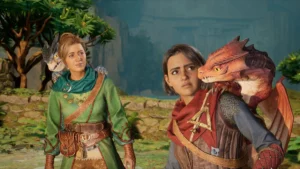
Path guiding works by intelligently directing the rendering process. Instead of randomly tracing light paths through a scene, it leverages information about the scene’s lighting characteristics. This includes understanding the distribution of light sources, the distances light travels, and how light bounces off surfaces (scattering). By incorporating this knowledge into the sampling process, renderers can more efficiently converge on the final image, reducing noise and accelerating the rendering time. This is particularly crucial for productions that demand photorealism, such as the visually stunning worlds seen in films like Zootopia 2 and The Super Mario Galaxy Movie.

While the theoretical underpinnings of path guiding have been explored extensively in academic research for decades, translating these complex algorithms into robust, production-ready software has historically presented significant hurdles. The integration into existing rendering pipelines often required substantial engineering effort and specialized knowledge. OpenPGL emerges as a critical solution to this challenge, providing a standardized, open-source library that bridges the gap between cutting-edge research and practical application in professional animation and visual effects studios.
A Production-Ready Solution for Diverse Renderers
OpenPGL is engineered for seamless integration into any path tracing-based renderer, supporting both interactive visualization during the creative process and final-frame rendering for film and television. A key design principle of the library is its architectural separation of the integration process from the underlying guiding structures and training algorithms. This modularity empowers developers to adopt advanced path guiding techniques without needing to deeply understand the intricacies of each guiding method. It also allows for the straightforward incorporation of new, state-of-the-art path guiding algorithms as they emerge from research.
The practical impact of OpenPGL is already evident in its adoption by several leading renderers and studios. Industry benchmarks and case studies highlight its successful integration into:
- Blender’s Cycles: A widely used open-source renderer, Cycles has incorporated OpenPGL, enabling a broader community of artists to benefit from enhanced rendering capabilities.
- Chaos’s V-Ray: A powerhouse in professional rendering, V-Ray’s integration signifies a significant endorsement of OpenPGL’s production readiness and performance benefits.
- SideFX’s Karma: As the next-generation production renderer for Houdini, Karma’s adoption of OpenPGL signals its commitment to pushing the boundaries of visual fidelity.
- Walt Disney Animation Studios’ Hyperion: The proprietary renderer developed by Walt Disney Animation Studios, a leader in feature animation, has also integrated OpenPGL, showcasing its utility in demanding, large-scale productions.
This widespread adoption across different renderers and studios underscores OpenPGL’s versatility and its proven ability to deliver tangible improvements in rendering efficiency and image quality across a diverse range of lighting scenarios, from subtle character illumination to complex environmental lighting.

The ASWF’s Role and Community Impact
The Academy Software Foundation, a neutral foundation hosted by the Linux Foundation, plays a crucial role in fostering collaboration and open-source development within the film and animation industry. By hosting projects like OpenPGL, the ASWF provides a framework for shared development, governance, and distribution, ensuring that these tools are accessible, well-maintained, and evolve in response to industry needs.
The decision to bring OpenPGL under the ASWF umbrella is a strategic move to democratize access to advanced rendering technology. It allows professional rendering communities to actively participate in the future development of the library. Sebastian Herholz, OpenPGL Maintainer and Senior Developer and Researcher at Blender, articulated this sentiment: "As an ASWF project, the professional rendering community will have the opportunity to participate in OpenPGL’s future development and push the limits of rendering even further. In addition, it will provide rendering researchers with a platform to experiment with new path guiding ideas and lower the barriers to test them in production contexts."
This collaborative model is expected to accelerate innovation. Researchers can propose and test new path guiding algorithms within a standardized framework, and production artists and developers can provide feedback and contribute to refining these methods for real-world use. This synergy between research and production is vital for driving the industry forward.
Real-World Production Success Stories
The effectiveness of OpenPGL is not merely theoretical; it has been validated in the creation of major animated features. Studios such as Walt Disney Animation Studios and Illumination Studios Paris have reported successful production use of OpenPGL. They highlight its capability in handling exceptionally complex lighting challenges, improving rendering efficiency, and, importantly, reducing the need for time-consuming manual workarounds that artists often resort to when dealing with difficult lighting conditions.

Specific examples include the application of OpenPGL in productions like Zootopia 2 and The Super Mario Galaxy Movie. These films, known for their intricate visual details and demanding lighting requirements, benefited from OpenPGL’s ability to accurately simulate light interactions in challenging scenarios, such as dense volumetric effects or scenes with highly reflective and refractive surfaces. This directly contributes to the visual richness and believability of the animated worlds.
Chaos, a prominent player in the rendering software market, has also showcased the impact of OpenPGL. Their rendered comparisons visually demonstrate how enabling path guiding can drastically reduce noise and improve the overall quality of renders, often with a significant reduction in render times. For instance, a common rendering scenario involving a barber shop scene, when rendered with path guiding enabled versus disabled, shows a marked improvement in detail and clarity in the latter, as illustrated in accompanying visual evidence.
Future Development and ASWF Sandbox Initiative
OpenPGL will initially operate as a sandbox project within the Academy Software Foundation. The sandbox stage is the earliest phase for new initiatives, providing foundational support and structure for continued development. The primary goal for OpenPGL during this phase is to demonstrate its value and potential, with the aim of advancing to incubation within a year.
During its tenure in the sandbox, OpenPGL will be guided by a Technical Steering Committee, with Sebastian Herholz at the helm. This committee will oversee the project’s technical direction, ensure adherence to ASWF standards, and facilitate community engagement. The ASWF’s structured approach to project development ensures that new technologies are nurtured effectively and are on a clear path to becoming robust, industry-standard tools.

The ASWF’s commitment to open-source development for the film and animation industry is a testament to the power of collaboration. By bringing together leading studios, software developers, and researchers, the foundation accelerates the adoption of innovative technologies that benefit the entire ecosystem. OpenPGL’s journey within the ASWF represents a significant step forward in making advanced rendering techniques more accessible, efficient, and powerful for creators worldwide, ultimately leading to more visually stunning and immersive cinematic experiences.
The implications of OpenPGL’s integration into the ASWF are far-reaching. It signifies a continued trend towards open standards and collaborative development in a historically proprietary industry. This fosters greater interoperability between different software tools and pipelines, reducing vendor lock-in and empowering smaller studios and independent artists with access to cutting-edge technology. The increased efficiency and reduced render times also translate to faster iteration cycles for artists and potentially lower production costs, allowing for more creative exploration within budgetary constraints. As the technology matures within the ASWF framework, it is poised to become an indispensable component of modern rendering workflows, shaping the future of visual storytelling in film, television, and beyond.