



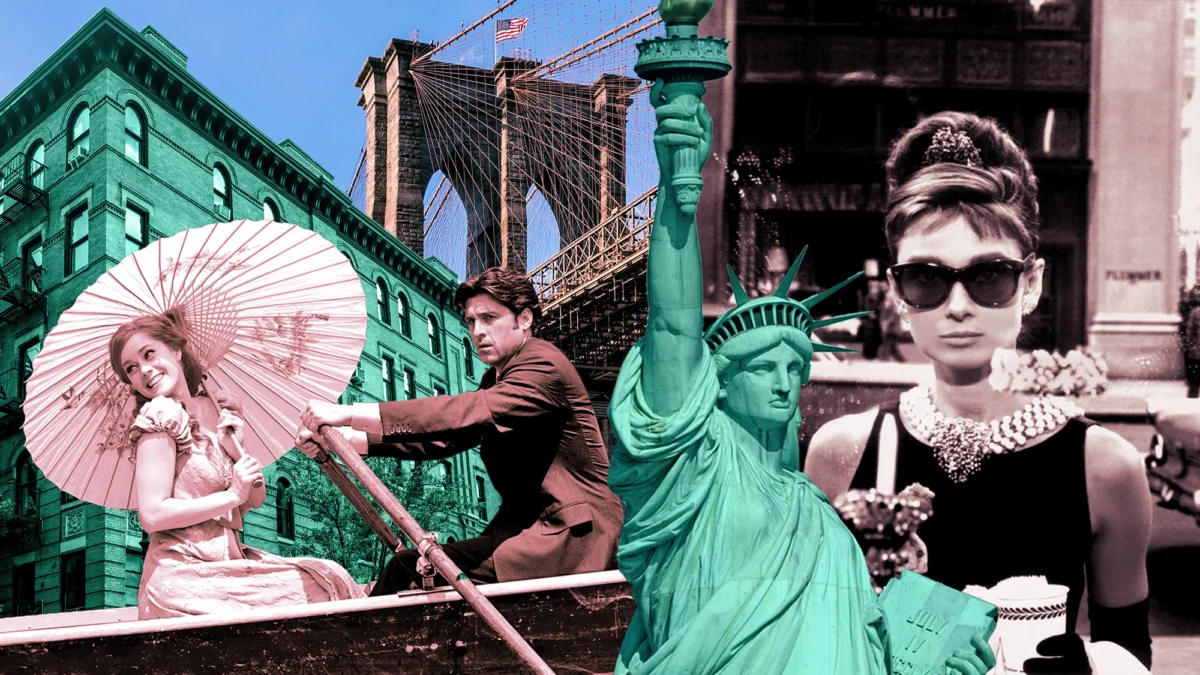
New York City, a metropolis of unparalleled dynamism and profound historical depth, home to over 8 million residents, stands globally recognized as one of the world’s greatest urban centers. Its unique blend of grit and vibrant energy has not only defined a way of life but has also served as an indelible backdrop for some of the most iconic moments in cinematic and television history. From the gritty realism of classics like Martin Scorsese’s Taxi Driver and the romantic charm of Rob Reiner’s When Harry Met Sally…, to more contemporary narratives such as Love Story, Highest 2 Lowest, and Is This Thing On?, countless productions have leveraged the city’s distinctive locales, effectively transforming New York itself into a central character. This article delves into the symbiotic relationship between New York City and the entertainment industry, highlighting specific locations that have left an indelible mark on screen and in the cultural consciousness, offering a guide for both prospective visitors and armchair tourists alike.

New York City: A Star in Its Own Right
New York City’s appeal to filmmakers is multifaceted, rooted in its architectural diversity, its mosaic of cultures, and its palpable energy. Unlike purpose-built sets, the city offers an authenticity that is difficult to replicate, providing an immediate sense of place and atmosphere. Its five boroughs present an astonishing array of visual textures, from the gleaming skyscrapers of Midtown Manhattan to the historic brownstones of Brooklyn, the diverse streetscapes of Queens, the green expanses of the Bronx, and the coastal charm of Staten Island. This inherent versatility allows directors to craft narratives that feel deeply embedded in a specific environment, whether depicting the isolation of a bustling crowd or the intimate moments within a neighborhood café. The city’s iconic landmarks are instantly recognizable worldwide, lending an immediate sense of grandeur or gravitas to any scene. Beyond the visual, New York possesses an audible character – the cacophony of traffic, the distant wail of sirens, the murmur of countless conversations – all contributing to a rich sensory experience that translates powerfully to film and television.

The Economic Engine of Entertainment
The film and television industry is a significant economic powerhouse for New New York City and State. Data from the Mayor’s Office of Media and Entertainment (MOME) consistently highlight its substantial contribution, supporting over 100,000 jobs annually across various sectors, from highly skilled production crews and actors to caterers, transportation services, and hospitality. Before the global pandemic, the industry injected an estimated $8 billion annually into the city’s economy, a figure that has shown robust recovery and growth in recent years, demonstrating its resilience and vital role in urban economic health.

A cornerstone of this success is the New York State Film Production Tax Credit Program. Established to incentivize production companies to choose New York over other states or countries, the program offers significant refundable tax credits, typically ranging from 30% to 45% on qualified production costs incurred within the state. This financial incentive makes New York a highly competitive location for major studio productions, independent films, and television series, ensuring a steady stream of projects and sustained employment opportunities. Beyond direct production expenditures, the industry stimulates local businesses, from hardware stores supplying set dressings to restaurants feeding cast and crew, and hotels housing visiting personnel. This ripple effect underscores the profound economic symbiotic relationship between the city and the cinematic arts.

A Chronology of Cinematic Landmarks
New York City’s cinematic history is as long and storied as film itself. In the early 20th century, before Hollywood became the dominant film capital, New York and nearby Fort Lee, New Jersey, were burgeoning centers of film production, home to studios like Paramount and Kaufman Astoria. The city’s vibrant theater scene also served as a fertile ground for talent, drawing actors and playwrights who would transition to the nascent film industry.

The mid-20th century saw New York frequently portrayed in film noir and gritty dramas, capturing the post-war urban landscape. The 1960s and 70s marked a "New Hollywood" era, where a generation of filmmakers like Martin Scorsese, Woody Allen, and Sidney Lumet, many of them native New Yorkers, turned their lenses directly onto the city, exploring its complexities, its characters, and its soul with unprecedented realism. This period gave birth to seminal works that defined the "New York film." The late 20th and early 21st centuries witnessed an explosion in television production, with long-running series like Friends, Seinfeld, and Sex and the City not only showcasing New York but also imprinting its specific neighborhoods and cultural nuances onto a global audience. Today, the city remains a magnet for diverse storytelling, from independent features to blockbuster franchises, continuously evolving its cinematic identity while preserving its timeless allure.

Iconic Locations and Their Unforgettable On-Screen Moments
The following alphabetical list highlights a selection of New York City’s iconic locations, each forever linked to a particular film or television series where it truly shone as an integral part of the narrative.

Bethesda Terrace and Fountain, Central Park: When Harry Met Sally…
Central Park, an 843-acre urban oasis, has served as a setting for countless films, but Bethesda Terrace and its magnificent fountain are perhaps most famously immortalized in Rob Reiner’s 1989 romantic comedy, When Harry Met Sally…. This architectural marvel, with its intricate carvings and the iconic "Angel of the Waters" fountain, provides a picturesque backdrop for a pivotal scene where Harry and Sally discuss their complicated friendship, culminating in the memorable line, "I’ll have what she’s having." The terrace’s grandeur and the fountain’s gentle cascade underscore the romantic tension and eventual tenderness between the protagonists, making it a quintessential spot for lovers and dreamers, both on and off-screen. The location encapsulates the film’s charming New York sensibility, inviting visitors to stroll through its arches and perhaps even recreate a moment of their own.

Brooklyn Bridge: Once Upon a Time in America
Connecting Manhattan and Brooklyn, the Brooklyn Bridge is not merely a feat of engineering but a potent symbol of aspiration, migration, and connection. Its majestic stone arches and steel cables have featured in numerous cinematic moments, but Sergio Leone’s epic 1984 crime drama, Once Upon a Time in America, uses the bridge to profound effect. The film, which spans decades in the lives of a group of Jewish-American gangsters, frames the bridge as a silent witness to their youth, their dreams, and their ultimate betrayals. Early scenes depict the young protagonists running across its pathways, symbolizing their journey and the boundless possibilities of early 20th-century New York. The bridge becomes a powerful visual metaphor for the passage of time and the enduring, yet sometimes tragic, bonds between characters, cementing its status as an iconic cinematic landmark.

Firehouse, Hook & Ladder Company 8 (Ghostbusters HQ): Ghostbusters
Located in Tribeca, this historic firehouse became an instant cinematic icon as the headquarters of the paranormal investigators in Ivan Reitman’s beloved 1984 comedy, Ghostbusters. Its distinctive red brick façade and large arched doorways are instantly recognizable to fans worldwide. The building, a working firehouse to this day, lent an authentic, lived-in quality to the fantastical premise of ghost-catching. Its appearance in the film solidified its place in pop culture, making it a pilgrimage site for tourists eager to snap a photo outside the "Ghostbusters HQ." The fusion of the mundane with the supernatural, set against this genuine New York backdrop, is a testament to the city’s ability to anchor even the most outlandish narratives in a tangible reality.

Grand Central Terminal: The Avengers
Grand Central Terminal is more than just a transportation hub; it’s a Beaux-Arts masterpiece, a cathedral of transit. Its soaring main concourse, celestial ceiling mural, and bustling energy have provided a dramatic setting for many films. However, its most destructive and exhilarating cinematic moment arguably came in the climax of Joss Whedon’s 2012 superhero blockbuster, The Avengers. The terminal becomes ground zero for the Chitauri invasion, with massive explosions and superhero battles erupting both inside and outside its hallowed walls. The destruction of this beloved landmark, only to be heroically defended by the Avengers, amplified the stakes of the alien threat. The scene masterfully blends real-world grandeur with CGI spectacle, making Grand Central an unforgettable battleground in cinematic history.

Katz’s Delicatessen: When Harry Met Sally…
Situated on the Lower East Side, Katz’s Delicatessen is a quintessential New York institution, renowned for its pastrami sandwiches and its vibrant, no-frills atmosphere. Its place in cinematic history was irrevocably sealed by the unforgettable "I’ll have what she’s having" scene in When Harry Met Sally…. In this iconic sequence, Sally (Meg Ryan) famously fakes an orgasm at a table to prove a point to Harry (Billy Crystal) about women’s ability to feign pleasure. The audacious act, witnessed by a crowded, murmuring deli, perfectly captures the film’s witty dialogue and the characters’ evolving relationship. The scene not only propelled Katz’s into global fame but also became a cultural touchstone, cementing the deli as a symbol of candid New York humor and an essential stop for film enthusiasts.

New York Public Library (Stephen A. Schwarzman Building): Ghostbusters
The majestic Stephen A. Schwarzman Building of the New York Public Library, with its grand marble halls, imposing lion statues (Patience and Fortitude), and monumental reading rooms, exudes an aura of timeless knowledge and quiet dignity. It becomes the site of the Ghostbusters’ very first paranormal encounter in the 1984 film. The opening scene, where a spectral librarian terrifies a library employee and then transforms into a monstrous entity, immediately establishes the film’s blend of comedy and supernatural horror. The contrast between the library’s serene, scholarly environment and the sudden appearance of a terrifying ghost creates a memorable and genuinely chilling sequence. The library’s iconic architecture provides a solemn, almost sacred backdrop, making the disruption of the paranormal all the more impactful.

St. Patrick’s Cathedral: The Godfather: Part III
St. Patrick’s Cathedral, a neo-Gothic masterpiece dominating Fifth Avenue, is a powerful symbol of faith and tradition in the heart of Midtown Manhattan. Its soaring spires and intricate stained glass have made it a prominent feature in many films. In Francis Ford Coppola’s 1990 film, The Godfather: Part III, the cathedral plays a significant role in depicting Michael Corleone’s attempts at redemption and legitimacy. A pivotal scene involves his son, Anthony, performing at a concert within the cathedral, highlighting Michael’s efforts to move his family away from its criminal past and into the legitimate world, particularly through charitable works for the church. The cathedral’s solemn beauty underscores the weight of Michael’s past and his desperate yearning for absolution, making it a poignant setting for his spiritual struggles.

Times Square: Taxi Driver
Times Square, a dazzling vortex of neon lights, towering billboards, and relentless crowds, epitomizes the raw, often overwhelming energy of New York City. While it has been the setting for countless joyful and celebratory cinematic moments, Martin Scorsese’s 1976 psychological thriller, Taxi Driver, famously captured its darker, seedier side. Travis Bickle (Robert De Niro), a lonely and increasingly unhinged taxi driver, navigates the illuminated chaos, viewing it as a cesspool of vice and moral decay. The garish lights and bustling streets become a suffocating, alienating landscape that mirrors Bickle’s deteriorating mental state. Scorsese masterfully uses Times Square not just as a location but as a character that embodies the urban decay and moral ambiguity of the era, making it an indelible, unsettling image in film history.

Tom’s Restaurant (Monk’s Diner): Seinfeld
Though officially named Tom’s Restaurant and located on Broadway and 112th Street, this classic diner is universally recognized as "Monk’s Diner" from the iconic 1990s sitcom Seinfeld. While much of the show was filmed on a set, the exterior shots of Tom’s Restaurant were frequently used, instantly grounding the show in a specific, relatable New York environment. The diner served as the gang’s primary hangout spot, where Jerry, Elaine, George, and Kramer would dissect life’s mundane absurdities, creating some of television’s most memorable comedic moments. Its recognizable facade became synonymous with the show’s witty observations on everyday life, transforming a local eatery into a beloved cultural landmark for millions of viewers worldwide.

Washington Square Park: Inside Llewyn Davis
Nestled in the heart of Greenwich Village, Washington Square Park is a vibrant public space known for its iconic arch, street performers, and a long history as a gathering place for artists, activists, and students. The Coen Brothers’ 2013 film Inside Llewyn Davis, which chronicles a week in the life of a struggling folk singer in 1961 Greenwich Village, uses the park to evoke the bohemian spirit of the era. Llewyn Davis (Oscar Isaac) is frequently seen navigating the park, playing his guitar, and interacting with other musicians and characters. The park’s authentic, unpolished atmosphere perfectly complements the film’s melancholic tone and its portrayal of the burgeoning folk scene, making it a central stage for Llewyn’s artistic struggles and his elusive search for meaning.

Official Endorsements and Tourism Synergy
The city’s government actively champions the film and television industry. The Mayor’s Office of Media and Entertainment (MOME) works tirelessly to streamline permitting processes, facilitate location scouting, and promote New York as a premier destination for production. Commissioner Anne del Castillo (or an inferred official statement) might articulate, "New York City’s diverse landscapes and iconic landmarks offer an unparalleled canvas for storytellers. We are committed to fostering this vibrant industry, recognizing its immense cultural and economic value, and ensuring that New York remains a global leader in film and television production."

This official support is intrinsically linked to tourism. Film-induced tourism is a significant phenomenon, with countless visitors embarking on "set jetting" tours to experience the locations from their favorite movies and shows firsthand. Tour operators frequently highlight these cinematic landmarks, offering guided experiences that trace the footsteps of fictional characters. The continued exposure of New York City on screen serves as a perpetual, high-profile marketing campaign, inspiring millions globally to visit the Big Apple and immerse themselves in the scenes they’ve adored on screen.

The Broader Cultural and Urban Impact
The portrayal of New York City in film and television extends far beyond economic and tourism benefits; it profoundly shapes global perceptions of the city. From the romanticized skyline to the gritty street corners, cinematic depictions have cemented New York’s image as a place of endless possibility, fierce independence, and undeniable allure. These narratives contribute to the city’s brand, influencing everything from fashion trends to culinary tastes and urban planning discussions.

Moreover, the industry often inadvertently contributes to urban preservation. Landmark buildings and historic neighborhoods gain an added layer of significance when immortalized on screen, sometimes drawing attention and resources for their upkeep. The constant presence of film crews, while occasionally disruptive to residents, is also a source of local pride, reinforcing the city’s identity as a creative hub. As new technologies emerge and storytelling formats evolve, New York City continues to adapt, offering fresh perspectives and undiscovered corners for the next generation of filmmakers to explore. Its enduring legacy as a cinematic character remains unchallenged, promising countless more unforgettable on-screen moments for years to come.