


Sumo Digital has officially introduced Nutmeg!, a strategic football management title that diverges from contemporary sports simulations by integrating card-based mechanics with a distinct 1980s retro aesthetic. Unlike the dominant franchises in the genre, such as EA Sports FC or eFootball, Nutmeg! eschews modern monetization models, focusing instead on a premium, single-player experience devoid of microtransactions and loot-box mechanics. The game positions itself as a nostalgic homage to the era of Panini sticker albums and tactile office technology, offering a gameplay loop that emphasizes long-term club development over real-time match control.
Core Gameplay Mechanics and Management Systems
Nutmeg! operates as a hybrid of a traditional football management simulation and a collectible card game (CCG). Players assume the role of a manager tasked with overseeing the comprehensive operations of a football club, beginning in the lower tiers of the professional pyramid, specifically the fourth division. The management layer includes several traditional pillars of the genre: the acquisition and sale of players through a transfer market, the implementation of training regimes to improve squad attributes, stadium infrastructure upgrades, and the management of commercial interests, such as club merchandise.
The match-day experience in Nutmeg! is notably different from industry standards. Rather than providing direct control over every fixture, the game employs a "broadcast" system. Players are permitted to manually intervene in approximately one out of every five matches—roughly one "broadcast" game per month. The remaining fixtures are resolved via an automated simulation engine that calculates outcomes based on the relative card-point strengths of the competing squads and invisible mathematical variables. This design choice is intended to accelerate seasonal progression, allowing players to focus on the high-level strategic decisions of club ownership rather than the minutiae of every individual match.
When a match is "broadcast," the gameplay shifts to a card-driven sequence of events. The match progresses through various phases, moving from defensive play to midfield transitions and ultimately to attacking opportunities. Each phase presents a percentage-based probability of success. Players utilize a hand of cards to apply "buffs" or modifiers to these events. For instance, if an attacking move has a base 30 percent chance of resulting in a goal, a player may deploy a specific card to increase that probability, theoretically ensuring a successful outcome through strategic intervention rather than manual dexterity.
The Retro-Futuristic Aesthetic and User Interface
A central component of the Nutmeg! experience is its commitment to 1980s nostalgia, which is reflected in both its visual design and its user interface (UI). The manager’s headquarters serves as a tactile, interactive hub modeled after a late-20th-century office. This "command center" is populated with functional representations of period-accurate technology, each serving a specific gameplay purpose:
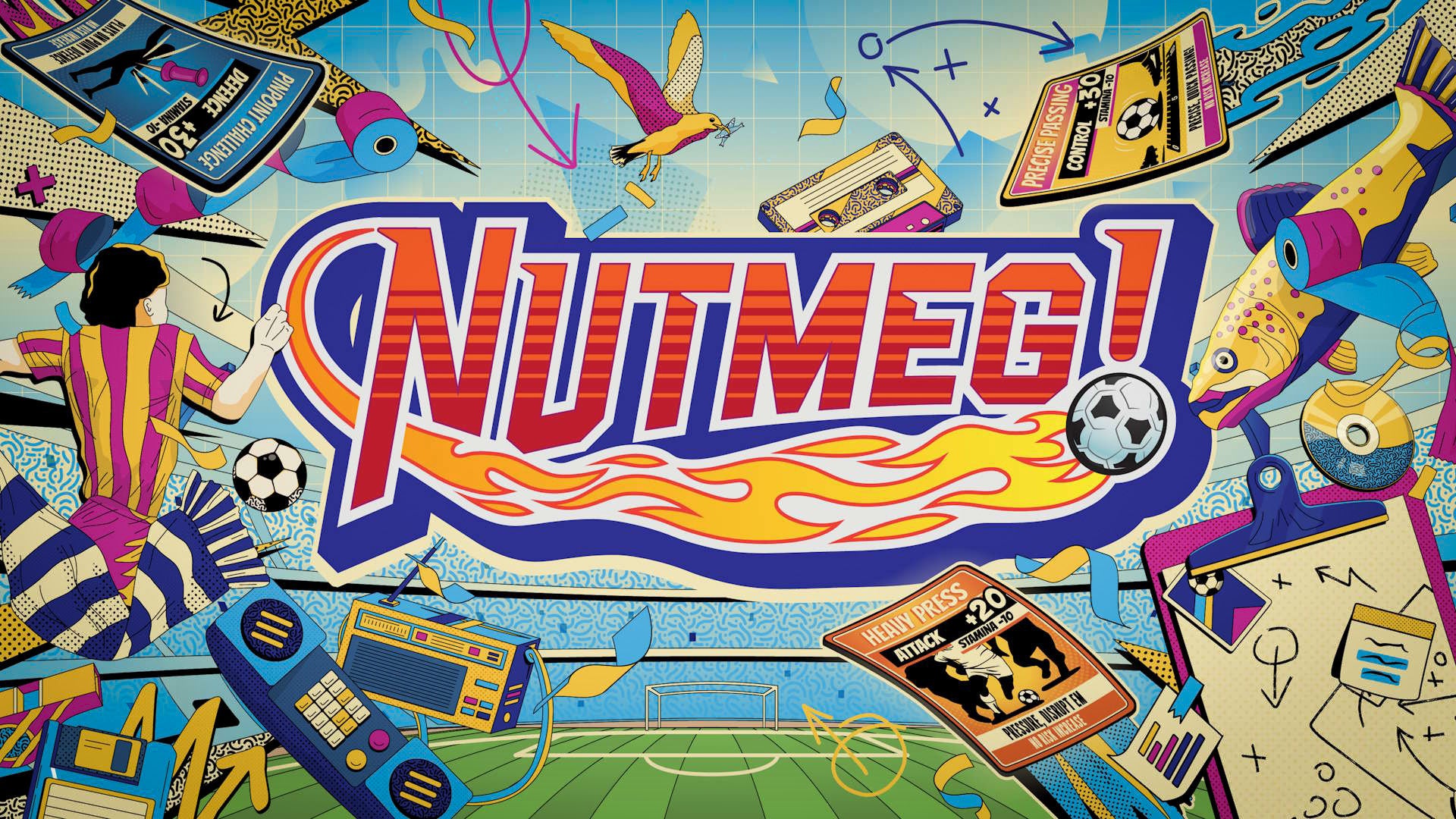
- Fax Machine: Used for the transmission and receipt of player contracts and transfer negotiations.
- Ceefax-style Television: A primary source for news updates, fixture results, and league standings, mimicking the teletext services prevalent in the UK during the 1980s and 90s.
- Early Computing Hardware: A low-resolution computer monitor facilitates data management and squad analysis.
- Analog Communication Tools: The office features a rotary-dial landline telephone, a browning intercom system, and an FM radio, all of which contribute to the game’s immersive atmosphere.
This tactile approach extends to the match visuals. While the card art remains static, the game utilizes orchestral scores that escalate in pitch and intensity to mirror the unfolding drama on the pitch. The developer’s intent is to evoke the feeling of browsing a physical sticker book, such as those historically produced by Panini, which were a staple of football culture during the era.
Chronology of Football Management Games and the Rise of Nutmeg!
The development of Nutmeg! can be viewed as a reaction to the evolving landscape of sports gaming over the last four decades. To understand its position in the market, it is necessary to examine the timeline of the genre:
- 1982–1990 (The Foundation): Early titles like Football Manager by Kevin Toms on the ZX Spectrum established the core loop of buying players and managing finances with text-based interfaces.
- 1992–2000 (The Simulation Era): The rise of Championship Manager (now Football Manager) introduced deep databases and realistic simulations, while Sensible Soccer and International Superstar Soccer focused on arcade-style action.
- 2010–Present (The Monetization Era): The introduction of "Ultimate Team" modes in major franchises shifted the focus toward digital card collection paired with aggressive microtransactions and "live service" models.
- Present Day (The Retro-Indie Movement): Nutmeg! enters the market as part of a growing trend of titles that reject the complexity and monetization of modern AAA games in favor of stylized, focused experiences.
By returning to the aesthetic of the 1980s, Sumo Digital is targeting a demographic of players who grew up during the "simpler times" of the sport, while also offering a unique mechanical twist for younger fans of card-based strategy games.
Technical Analysis of Card Mechanics and Strategic Depth
The strategic depth of Nutmeg! is rooted in its deck-building and training systems. The cards available to a player during a broadcast match are not randomized in a vacuum; they are influenced by pre-match preparations. Before a game, players open card packs generated by their chosen training regime. For example:
- Defensive Training: Yields a higher frequency of defensive intervention cards, such as "Ankle-Breaking Tackle" or "Offside Trap."
- Attacking Tactics: Increases the likelihood of pulling cards that buff shooting accuracy or crossing success.
- Formation Influence: The tactical setup (e.g., 4-4-2 vs. 3-5-2) dictates the distribution of cards across different phases of the pitch.
Furthermore, individual players within the squad possess unique traits that can unlock specific buff cards. A notable inclusion is the "Hand of God" card, an explicit reference to Diego Maradona’s infamous goal in the 1986 World Cup. This card significantly boosts the chance of scoring but carries the inherent risk of a yellow card, illustrating the game’s blend of historical wit and risk-reward mechanics.
However, the system also presents challenges. Players have noted that the reliance on temporary, training-dependent decks can sometimes lead to "dead hands," where a manager has few playable options during a match. Unlike traditional CCGs like Hearthstone or Magic: The Gathering, Nutmeg! does not currently offer a permanent deck-building interface, leaving players at the mercy of their weekly training results and squad stamina levels.

Industry Context and Economic Implications
The release of Nutmeg! comes at a time of significant scrutiny regarding the ethics of sports video games. In recent years, regulatory bodies in several European countries, including Belgium and the Netherlands, have categorized certain "loot box" mechanics in sports games as forms of unlicensed gambling. By opting for a traditional purchase model, Sumo Digital avoids these legal complexities and positions Nutmeg! as a "clean" alternative for parents and players wary of predatory monetization.
Industry analysts suggest that Nutmeg! represents a "AA" (Mid-market) approach to the sports genre. While it lacks the billion-dollar licensing budgets of EA Sports, it compensates through art direction and niche mechanical innovation. This strategy allows the developer to capture a specific segment of the market—those interested in "fantasized management"—without competing directly with the hyper-realistic simulations that dominate the charts.
Broader Impact and Future Outlook
Nutmeg! serves as a testament to the enduring appeal of football’s cultural history. By focusing on the "muddier" era of the 1980s, the game taps into a collective memory of the sport that predates the hyper-commercialized Premier League era. The inclusion of figures like veteran broadcaster Jim Rosenthal in promotional materials further reinforces its commitment to authentic British football heritage.
While the long-term sustainability of its strategic depth remains to be seen, the initial reception highlights a demand for sports games that prioritize charm, tactility, and rapid progression over the "slog" of modern simulations. As the gaming industry continues to grapple with the balance between realism and fun, Nutmeg! stands as a colorful, fax-machine-powered reminder of the sport’s simpler roots. Whether it will inspire a broader trend of retro-themed management titles will likely depend on its performance in the competitive indie and mid-tier markets over the coming fiscal quarters.