




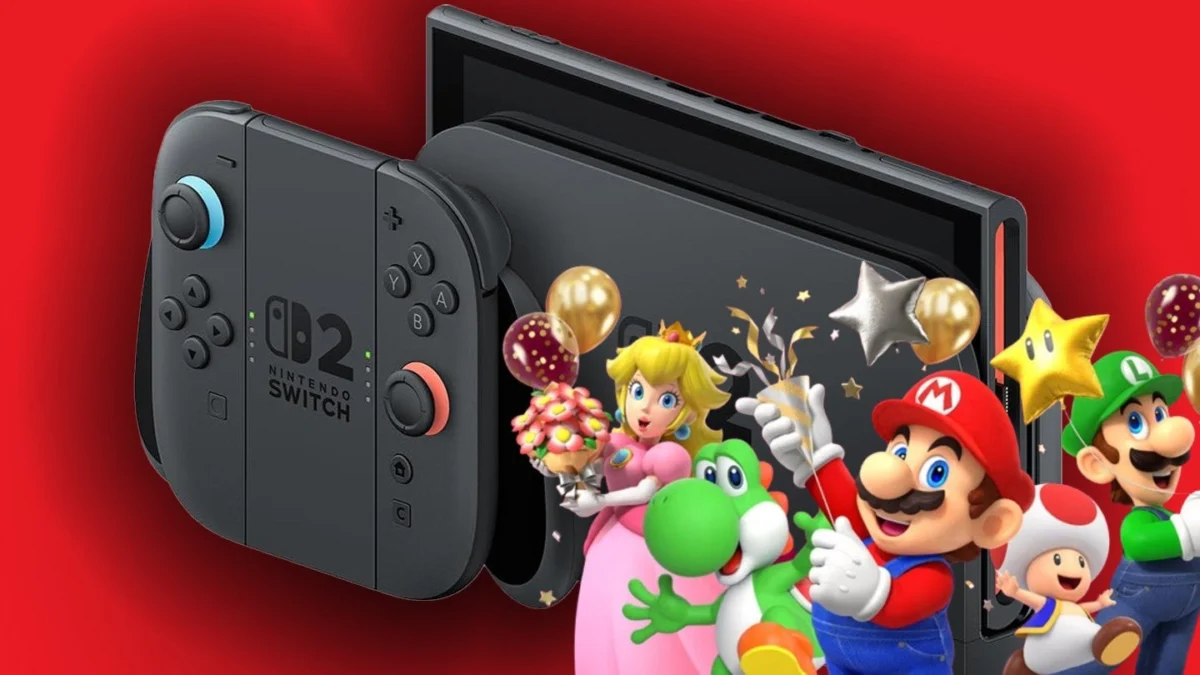
Nintendo has officially signaled a significant shift in its hardware design philosophy for the European market, confirming that the upcoming Switch 2 and its associated peripherals will feature user-replaceable batteries. This strategic pivot, first reported by Nikkei, comes as a direct response to the European Union’s increasingly stringent environmental and consumer protection frameworks, specifically the Right to Repair directive and the European Battery Regulation. These legislative measures are designed to curb electronic waste and empower consumers by ensuring that portable devices are not rendered obsolete simply because of a degraded power cell. Under the new regulations, all rechargeable battery-powered consumer electronics sold within the EU must allow for easy battery removal and replacement by the end-user by the year 2027. This change marks a departure from the integrated, adhesive-heavy designs that have characterized the mobile electronics industry for the last decade, potentially setting a new standard for global hardware manufacturing.
The Legislative Catalyst: EU Regulation 2023/1542
The primary driver behind Nintendo’s design overhaul is the European Battery Regulation (Regulation 2023/1542), which was formally adopted by the European Council in July 2023. The regulation seeks to create a circular economy for batteries, covering their entire life cycle from the sourcing of raw materials to disposal and recycling. A key provision of this law stipulates that "portable batteries incorporated into appliances should be removable and replaceable by the end-user or by independent operators during the lifetime of the appliance."
While the 2027 deadline provides a grace period for manufacturers to transition their assembly lines, Nintendo appears to be integrating these requirements into the foundational design of the Switch 2 to ensure long-term compliance in one of its most lucrative markets. The Right to Repair directive further reinforces this by requiring manufacturers to provide spare parts and repair manuals at reasonable prices, discouraging the "planned obsolescence" that often leads consumers to discard functional devices when the internal battery begins to fail. For Nintendo, this means the Switch 2 console and the Joy-Con controllers must be redesigned to allow players to safely swap batteries without the need for specialized heat guns or hazardous solvents to dissolve industrial-grade adhesives.
Technical Implications for the Switch 2 and Joy-Con Hardware
The transition to a user-replaceable battery system presents unique engineering challenges for Nintendo’s hardware team. Since the launch of the original Nintendo Switch in 2017, the company has utilized internal lithium-ion batteries that are secured deep within the chassis, often requiring the removal of the heat sink and motherboard to access. The Joy-Con controllers are even more compact, with batteries nestled tightly against delicate ribbon cables and the much-discussed analog stick assemblies.
By moving toward a modular battery design, Nintendo must balance structural integrity with accessibility. Industry analysts suggest that this may result in a slightly thicker chassis or the introduction of a dedicated battery compartment secured by standard screws. Such a move would be a return to form for Nintendo; the original Game Boy line relied on user-swappable AA batteries, and even the Nintendo DS and early 3DS models featured battery covers that could be opened with a simple screwdriver. The return to this "open-access" philosophy is expected to significantly extend the lifespan of the Switch 2, allowing it to remain functional for decades, much like the retro consoles of the 1990s.
Battery Longevity and the Handheld Mode Boost
The timing of this design shift coincides with growing consumer concerns regarding the Switch 2’s power consumption. Following the release of the system, users and critics alike noted that the increased graphical fidelity and processing power required for next-generation titles placed a heavy burden on the internal cells. Reports from early adopters in mid-2025 highlighted that while the hardware delivered impressive performance in titles such as "Mario Kart World" and "Fast Fusion," the battery life often struggled to exceed three to four hours during intensive gameplay sessions.
Furthermore, the recent rollout of System Update Version 22.0.0 has introduced a feature known as "Handheld Mode Boost." This software enhancement allows the Switch 2 to utilize its advanced hardware to upscale and stabilize the frame rates of legacy Nintendo Switch titles. While this has been hailed as a major win for backward compatibility, the increased clock speeds required for the boost inevitably accelerate battery drain and thermal wear. By allowing users to replace their own batteries, Nintendo provides a practical solution for "power users" who may experience faster-than-average cell degradation due to frequent charging cycles and high-performance gaming.
A Chronology of Nintendo’s Battery Integration
To understand the magnitude of this change, one must look at the evolution of Nintendo’s power solutions over the last four decades:
- 1989–2001 (The Modular Era): The Game Boy, Game Boy Color, and Game Boy Advance utilized external AA or AAA batteries. Users had total control over their power source, and e-waste was largely limited to the batteries themselves.
- 2003–2014 (The Accessible Lithium Era): With the Game Boy Advance SP, Nintendo DS, and Nintendo 3DS, the company moved to internal lithium-ion packs. However, these were designed to be easily accessible via a single screw on the exterior casing.
- 2017–2024 (The Integrated Era): The Nintendo Switch, Switch Lite, and Switch OLED models moved to a fully integrated design. Replacing a battery required significant technical skill and voided warranties, aligning Nintendo with the broader tech industry’s trend toward "sealed" devices.
- 2025–Beyond (The Right to Repair Era): Driven by EU mandates, Nintendo is returning to a design that prioritizes repairability, starting with the Switch 2 in the European region.
Global Market Impact and Regional Variations
While the replaceable battery model is currently confirmed for Europe, its availability in other major markets remains a subject of intense speculation. Nikkei reports that Nintendo is monitoring consumer protection legislative trends in the United States and Japan. In the U.S., several states, including California, New York, and Minnesota, have recently passed "Right to Repair" laws. If these laws expand to include specific mandates on battery accessibility similar to the EU’s 2027 deadline, Nintendo will likely standardize the replaceable battery design globally to streamline manufacturing and reduce the costs associated with maintaining two different hardware versions.
Industry experts believe that maintaining separate assembly lines for "European" and "Rest of World" Switch 2 models would be logistically inefficient. Consequently, the EU’s regulations are acting as a "Brussels Effect," where European standards effectively become the global default for multinational corporations. This would be a major victory for environmental advocates who argue that standardized, repairable hardware is the only way to combat the millions of tons of electronic waste generated annually.
Official Responses and Industry Sentiment
While Nintendo has historically been protective of its hardware ecosystem, the company has recently shown a greater willingness to accommodate repairability. In 2023, Nintendo of Europe expanded its "Joy-Con repair program" to offer free repairs for "drift" issues even outside of the warranty period. The move toward user-replaceable batteries is seen as a continuation of this consumer-friendly trend.
In statements regarding the EU Battery Regulation, European Parliament representatives have emphasized that the law is not intended to hinder innovation but to ensure that innovation is sustainable. "We are giving consumers back the power to maintain the products they own," stated one EU spokesperson during the 2024 legislative session. "A console that works perfectly but has a dead battery should not be a paperweight."
Third-party peripheral manufacturers are also expected to benefit from this shift. A standardized battery compartment opens the door for licensed and high-capacity third-party batteries, providing consumers with more choices for how they power their gaming sessions. However, Nintendo is expected to implement strict authentication protocols to ensure that third-party batteries meet safety standards and do not pose a fire risk to the console.
Broader Implications for the Gaming Industry
Nintendo’s compliance with the EU mandate sets a significant precedent for other hardware manufacturers, including Sony and Microsoft. Currently, the PlayStation DualSense and Xbox Wireless controllers (with the exception of the standard Xbox controller’s use of AA batteries) utilize internal packs that are not easily user-serviceable. As the 2027 deadline approaches, the industry at large will be forced to follow Nintendo’s lead.
The shift also reflects a broader change in consumer values. As the gaming demographic ages, there is an increasing demand for "evergreen" hardware—devices that can be maintained and kept in working order for decades. By embracing the Right to Repair, Nintendo is not only complying with the law but also appealing to a growing segment of the market that prioritizes sustainability and long-term value.
As the Switch 2 enters its next phase of global distribution, the "replaceable battery" feature may transition from a legal necessity in Europe to a major selling point worldwide. For now, European gamers can look forward to a future where their hardware’s longevity is no longer dictated by the chemical lifespan of a lithium-ion cell, but by their own ability to perform a simple, five-minute repair.