


The National Football League is preparing to engage in formal discussions with non-traditional media companies as it explores the potential sale of live game rights to a broader array of digital partners. Hans Schroeder, the Executive Vice President and Chief Media Officer of NFL Media, confirmed the league’s intent to diversify its distribution portfolio during an interview with CNBC Sport at Radio Row ahead of Super Bowl LX in San Francisco. This move signals a strategic pivot for the most powerful sports entity in North America, as it looks to capitalize on the shifting habits of domestic and international viewers while maximizing the valuation of its content ahead of a critical contract opt-out period.
According to Schroeder, the league is actively seeking to understand how non-traditional players—ranging from tech giants to specialized streaming platforms—can fit into the NFL’s long-term media ecosystem. While the league remains committed to its long-standing broadcast partners, the success of recent digital-only experiments has emboldened leadership to consider "one-off" packages or smaller, specialized rights bundles that could attract companies not currently holding full-season broadcast windows.
The Evolution of the NFL’s Media Strategy
The NFL’s current media rights portfolio is the most lucrative in the history of professional sports, valued at approximately $110 billion over an 11-year period. Signed in 2021, the agreements involve heavyweights such as Disney (ESPN/ABC), Paramount Global (CBS), Comcast’s NBCUniversal (NBC/Peacock), Fox, and Amazon (Prime Video). Despite the longevity of these contracts, which are slated to run through the 2033 season, the league secured a crucial "opt-out" clause that becomes effective in 2029.
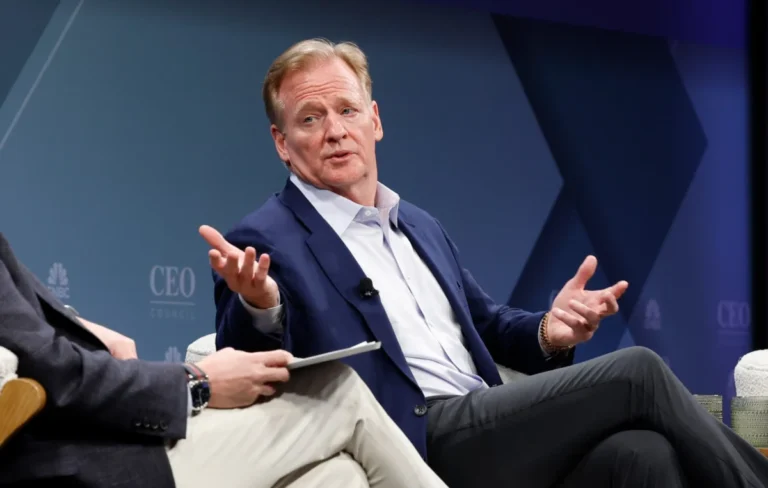
As the four-year mark prior to that opt-out approaches, the league is signaling that it will not wait until the deadline to begin reshaping its future. NFL Commissioner Roger Goodell previously indicated in September that the league was open to accelerating talks, a sentiment echoed by Schroeder. The goal is to remain agile in a media landscape where "legacy" and "digital" boundaries are rapidly blurring. Schroeder noted that the emergence of massive digital platforms capable of reaching broadcast-level audiences has fundamentally changed the league’s "optionality," allowing them to consider partners that were previously deemed too niche or technically incapable of handling the NFL’s massive viewership spikes.
The Success of Digital Experiments: From YouTube to Netflix
The catalyst for this renewed interest in non-traditional partners is a series of successful digital-only broadcasts that have proven the viability of streaming as a primary distribution method. Last season, the NFL sold the rights to a single Week 1 game to YouTube for an estimated $100 million. This "one-off" strategy allowed the league to test the technical infrastructure and audience appetite of a platform that already manages the "NFL Sunday Ticket" out-of-market package.
Furthermore, the league’s partnership with Amazon for "Thursday Night Football" has demonstrated that a digital-native platform can maintain high production standards while attracting a younger, tech-savvy demographic that traditional linear television often struggles to reach. The 2024 season also saw the NFL reach an agreement with Netflix to stream high-profile Christmas Day games, a move that placed the league’s content on the world’s largest subscription video-on-demand service.
These data points suggest that the NFL no longer views digital platforms as secondary "add-ons" but as core pillars of its strategy. The ability of these platforms to provide granular data on viewer behavior, coupled with their willingness to pay premium prices for live "tentpole" events, makes them formidable competitors to traditional broadcasters.

The International Expansion and the "Nine-Game" Milestone
A significant portion of the upcoming negotiations will focus on the NFL’s aggressive international expansion. The league has officially announced plans to increase its international regular-season schedule to a record nine games next season. This expansion includes a return to Mexico City in 2026, alongside established and emerging markets in London, Munich, Frankfurt, Sao Paulo, and Madrid.
Schroeder revealed that the league is considering the creation of a dedicated "international package" of games. This bundle could be sold to a single global media partner or broken up by region. By decoupling international games from the traditional domestic broadcast packages (which are typically tied to Sunday afternoon, Sunday night, Monday night, or Thursday night windows), the NFL creates a new asset class that can be auctioned off to the highest bidder.
"That’ll be one of the things we look at," Schroeder said, referring to the potential for a new media partner to take over the international slate as soon as next year. This strategy not only increases revenue but also ensures that the NFL can tailor its broadcast experience to local markets, potentially utilizing digital partners with global footprints like Apple, Google, or Netflix to bypass the complexities of regional cable and satellite deals.
Traditional Partners and the Changing Landscape of "Legacy Media"
While the NFL is courting new suitors, it is also recalibrating its relationships with existing partners. The distinction between "legacy media" and "digital platforms" is becoming increasingly irrelevant. For instance, Disney is currently in the process of transitioning ESPN into a full direct-to-consumer (DTC) service, while NBCUniversal’s Peacock and Paramount Global’s Paramount+ have used exclusive NFL games—such as the record-breaking Peacock-exclusive Wild Card game in early 2024—to drive massive spikes in subscriber growth.
The upcoming discussions, expected to begin in earnest later this year, will likely involve renegotiating how games are "simulcast" or "exclusive" to streaming. The league’s current partners are under immense pressure to balance the high costs of sports rights with the declining revenues of traditional cable bundles. However, the NFL remains the ultimate "must-have" content; in 2023, NFL games accounted for 93 of the top 100 most-watched television broadcasts in the United States. This unparalleled dominance gives the league significant leverage in any negotiation.
Data and Implications: Why the NFL Holds the Advantage
The shift toward non-traditional media is driven by several key data trends:
- Audience Reach: While broadcast TV still offers the highest total reach, digital platforms are closing the gap. Major streaming events now routinely pull in 15 million to 25 million concurrent viewers, proving that the infrastructure can handle "NFL-sized" crowds.
- Demographics: The median age of an NFL viewer on linear television is approximately 55, whereas the median age on streaming platforms like Amazon Prime Video is significantly lower (around 47). To ensure long-term viability, the league must meet younger fans where they are.
- Monetization: Digital platforms offer advanced advertising opportunities, including targeted ads and interactive shopping features (e.g., "shoppable" ads during Amazon broadcasts), which can generate higher revenue per viewer than traditional broad-reach commercials.
- Global Growth: With a goal of reaching $25 billion in annual revenue by 2027, the NFL must look beyond the saturated U.S. market. International rights are the most logical avenue for significant growth.
Chronology of Recent NFL Media Milestones
- March 2021: NFL signs historic 11-year media rights deals with CBS, NBC, Fox, ESPN/ABC, and Amazon, totaling $110 billion.
- December 2022: Google/YouTube secures "NFL Sunday Ticket" rights in a deal worth approximately $2 billion per year.
- January 2024: The first-ever streaming-exclusive NFL playoff game airs on Peacock, attracting 23 million viewers and accounting for 30% of all internet traffic in the U.S. during the broadcast.
- May 2024: NFL announces a multi-year deal with Netflix for Christmas Day games.
- February 2025: Hans Schroeder confirms the league will hold talks with non-traditional partners for new game packages and international rights ahead of the 2026 season and 2029 opt-out.
Conclusion: A New Era of Sports Distribution
The NFL’s willingness to "listen and have a conversation" with anyone in the media landscape reflects a league that is operating from a position of absolute strength. By inviting tech companies to the table, the NFL is not just looking for the highest bidder; it is looking for the most innovative ways to distribute its product in a fragmented world.
As Super Bowl LX approaches, the focus remains on the field, but the real maneuvers are happening in the boardrooms of New York, Silicon Valley, and San Francisco. Whether it is a "Week 1" special on a social media platform or a dedicated "International Sunday" package on a global streamer, the way fans consume the NFL is about to undergo its most significant transformation since the advent of cable television. The league’s "engage button" is ready to be pressed, and the results will likely redefine the sports media economy for the next decade.