



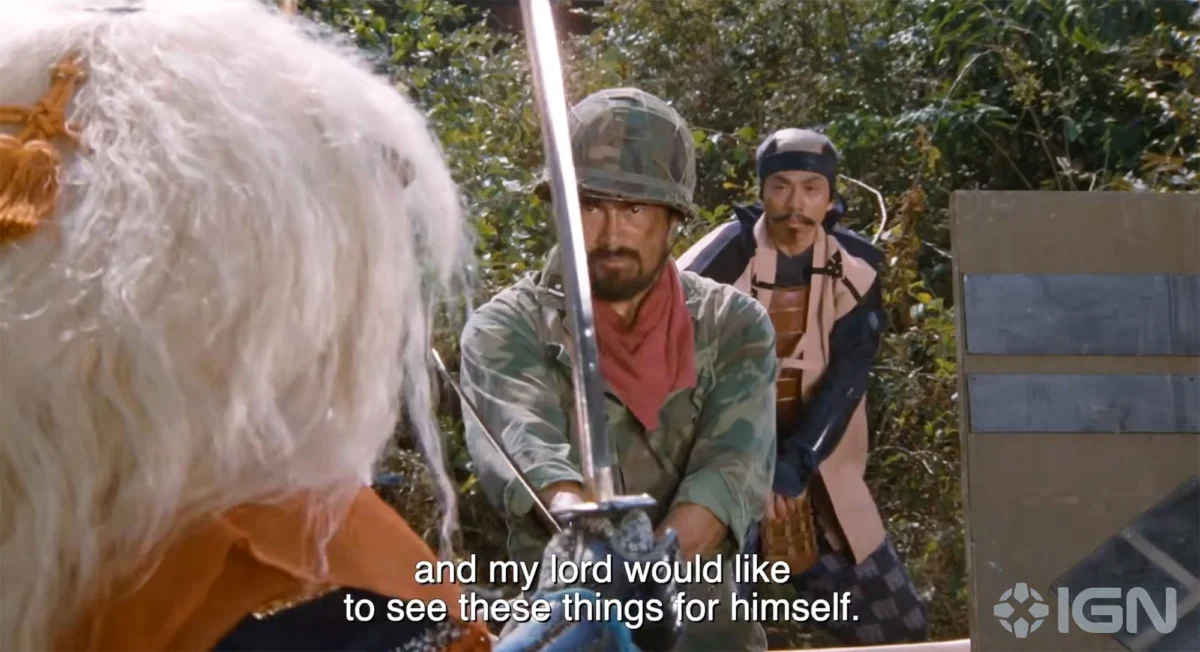
The cinematic landscape is poised for a significant historical rediscovery with the announcement of a brand new 4K restoration of the 1979 Japanese action classic, G.I. Samurai. Spearheaded by Arrow Video, this meticulously revived version of the film, starring the legendary action superstar Sonny Chiba, is scheduled for release on Blu-ray in the US and Canada on May 5, 2026. This re-release promises to introduce a new generation to a genre-bending spectacle while offering long-time fans an unparalleled viewing experience of a film renowned for its audacious premise and explosive action sequences.
A Clash of Eras: The Premise of G.I. Samurai
G.I. Samurai, known in Japan as Sengoku Jieitai (literally "Warring States Self-Defense Force"), catapults a modern-day Japanese Self-Defense Force unit, led by Second Lieutenant Iba (portrayed by Sonny Chiba), into the tumultuous Sengoku period of feudal Japan. During what begins as a routine military exercise, their entire company—complete with tanks, helicopters, and automatic firearms—is inexplicably transported four centuries into the past. Stranded in an era defined by constant warfare between rival samurai clans, these contemporary soldiers, accustomed to peace and a rigid command structure, find themselves embroiled in one of the bloodiest and most decisive periods of Japanese history.
The narrative skillfully explores the profound cultural and technological shockwaves created by this temporal displacement. The film vividly contrasts the advanced weaponry and tactical thinking of modern warfare with the traditional martial prowess of katana-wielding samurai and horseback warriors. This confrontation forms the core of the film’s appeal, creating a unique spectacle where machine guns face off against feudal armies, and modern strategic thinking must adapt to the brutal realities of a bygone era. The moral and ethical dilemmas faced by the soldiers, as they grapple with the possibility of altering history and their own survival, add layers of thematic depth to the high-octane action. The film famously poses the questions: "We must change the path of history," and "Are we allowed to change history?"
The Enduring Legacy of Sonny Chiba
Central to the film’s enduring appeal is the magnetic presence of Sonny Chiba. Born Shin’ichi Chiba, he was a pivotal figure in Japanese action cinema, known globally for his intense physicality, martial arts expertise, and charismatic screen presence. Chiba’s career spanned decades, establishing him as one of Japan’s most recognizable international stars and a profound influence on countless filmmakers and martial artists worldwide. His rigorous training in various martial arts disciplines, including karate, judo, and kendo, allowed him to perform his own elaborate stunts, lending an authenticity and visceral impact to his action roles that few could match.

Chiba rose to prominence in the 1970s, a golden age for martial arts cinema, particularly with films like The Street Fighter series (1974), which cemented his reputation as a no-holds-barred action hero. His raw, uncompromising style was a stark contrast to the more polished martial arts films of the era, earning him a dedicated cult following. Quentin Tarantino, a vocal admirer, notably cast Chiba in Kill Bill: Volume 1 (2003) as Hattori Hanzo, a legendary sword maker, a testament to Chiba’s iconic status and influence on contemporary cinema.
In G.I. Samurai, Chiba delivers a performance that balances his signature action prowess with a nuanced portrayal of a leader facing an impossible situation. His character, Second Lt. Iba, embodies the internal conflict of a soldier torn between duty, survival, and the ethical implications of their predicament. The 4K restoration will undoubtedly highlight the dynamic range of Chiba’s performance, bringing his formidable presence to the forefront with unprecedented clarity.
Kōsei Saitō’s Vision and the Birth of a Cult Classic
The film was directed by Kōsei Saitō, a prolific Japanese filmmaker whose diverse career included a range of genres from samurai epics to horror and science fiction. Saitō, who had previously helmed films like Ninja Wars (1982) and Death of a Ninja (1981) and Devil’s Flute (1979), brought a distinct vision to G.I. Samurai. His direction adeptly manages the large-scale battle sequences, meticulously choreographing the clashes between modern firepower and ancient combat techniques. The film’s epic scope, ambitious for its time, was a significant factor in its initial success and continues to be a highlight of its legacy.
Saitō’s ability to blend high-concept science fiction with historical drama and intense action was a hallmark of his approach. He ensured that despite the fantastical premise, the human element—the fear, the friction among soldiers, and the desperate struggle for survival—remained grounded. This balance contributed significantly to G.I. Samurai‘s enduring appeal, allowing it to transcend mere genre novelty and become a genuinely compelling narrative.
The Literary Roots: Ryo Hanmura’s Sengoku Jieitai
G.I. Samurai is based on the novel Sengoku Jieitai by Ryo Hanmura, a celebrated Japanese author known for his science fiction, horror, and historical works. Hanmura’s novel provided a robust framework for the film’s ambitious narrative, blending intricate historical detail with speculative fiction. The book’s popularity laid the groundwork for the film’s enthusiastic reception, appealing to an audience already familiar with the gripping concept. Hanmura’s original work delved deeper into the psychological and philosophical implications of time travel and historical intervention, themes that the film successfully translates into a visually spectacular format. The adaptation by screenwriter Toshio Kamata condensed and streamlined many of these complex ideas into a cinematic narrative that maintained the spirit of the original while optimizing it for the big screen.

The Significance of the 4K Restoration
The announcement of a 4K restoration by Kadokawa Pictures and its distribution by Arrow Video marks a pivotal moment for G.I. Samurai. A 4K restoration involves scanning the original film negative at an ultra-high resolution (typically 4000 pixels across), followed by a meticulous process of digital cleaning, color grading, and stabilization. This process addresses years of wear and tear, including scratches, dust, and color degradation, breathing new life into the film’s visuals and audio.
For G.I. Samurai, this means audiences will experience the film’s epic battle scenes, the intricate details of samurai armor, the gritty realism of the feudal landscape, and Sonny Chiba’s dynamic performance with unprecedented clarity and fidelity. The 4K format significantly enhances the viewing experience, allowing for richer colors, deeper blacks, and finer detail than previous home video releases. This commitment to preservation by Kadokawa Pictures, the original production company, ensures that a crucial piece of Japanese cinematic history is not only preserved but presented in a manner that honors its original artistic intent.
Arrow Video, known for its dedication to cult, classic, and genre cinema, is the ideal partner for this release. Their reputation for delivering high-quality restorations and comprehensive collector’s editions ensures that the G.I. Samurai Blu-ray will be more than just a film; it will be a curated experience. While specific bonus features for this limited edition Blu-ray are yet to be fully detailed, Arrow releases typically include extensive supplementary materials such as critical essays, interviews with cast and crew, behind-the-scenes footage, and audio commentaries, further enriching the contextual understanding of the film.
Chronology and International Release
G.I. Samurai first premiered in Japan in December 1979, where its unique premise and large-scale action sequences quickly captivated domestic audiences. Its success prompted an international release, with the film making its way to US screens in January 1981. For its international debut, the film was often re-titled Time Slip and featured an English dub, a common practice at the time to broaden its appeal to non-Japanese speaking audiences. While the English dub offered accessibility, many purists and film historians advocate for the original Japanese version with subtitles, believing it preserves the authentic performances and artistic integrity. The Arrow Video release will cater to both preferences, offering the original Japanese version and the uncut English-language version titled Time Slip.
Cultural Impact and Subsequent Adaptations

The innovative concept of modern military forces encountering historical warriors proved to be highly influential. G.I. Samurai laid significant groundwork for subsequent works exploring similar "time-slip" or "isekai" (other world) themes, particularly within the military science fiction genre. Its impact can be seen in various media, from manga and anime to other films and television series that play with the idea of technological disparity across historical periods.
The film’s enduring popularity in Japan led to a remake in 2005 titled Samurai Commando: Mission 1549 (Sengoku Jieitai 1549). This remake, while updating the special effects and narrative for a contemporary audience, largely adhered to the core premise of the original, serving as a testament to the timeless appeal of Hanmura’s story and Saitō’s initial cinematic adaptation. The existence of a remake underscores the film’s continued relevance and its status as a significant cultural touchstone in Japanese genre cinema.
Broader Implications for Film Preservation and Accessibility
The 4K restoration of G.I. Samurai is not merely a treat for fans; it also highlights the critical importance of film preservation. Many films from the 1970s and earlier faced challenges with deteriorating film stock, inadequate archiving, and the lack of digital formats. Companies like Kadokawa Pictures and distributors like Arrow Video play a vital role in ensuring that these cinematic treasures are not lost to time but are meticulously restored and made accessible to future generations. This work allows for the re-evaluation of films that might have been overlooked or only available in suboptimal quality, cementing their place in film history and enriching the global cinematic discourse.
The May 5, 2026, release date for the G.I. Samurai Limited Edition Blu-ray on Arrow Video is eagerly anticipated by collectors and enthusiasts of Japanese action cinema, cult films, and genre-bending spectacles. It represents an opportunity to revisit a seminal work in its finest possible presentation, celebrating the audacious vision of Kōsei Saitō, the literary genius of Ryo Hanmura, and the unparalleled star power of Sonny Chiba. This restoration ensures that the chaotic energy, unique premise, and unforgettable action of G.I. Samurai will continue to captivate and inspire audiences for years to come.