


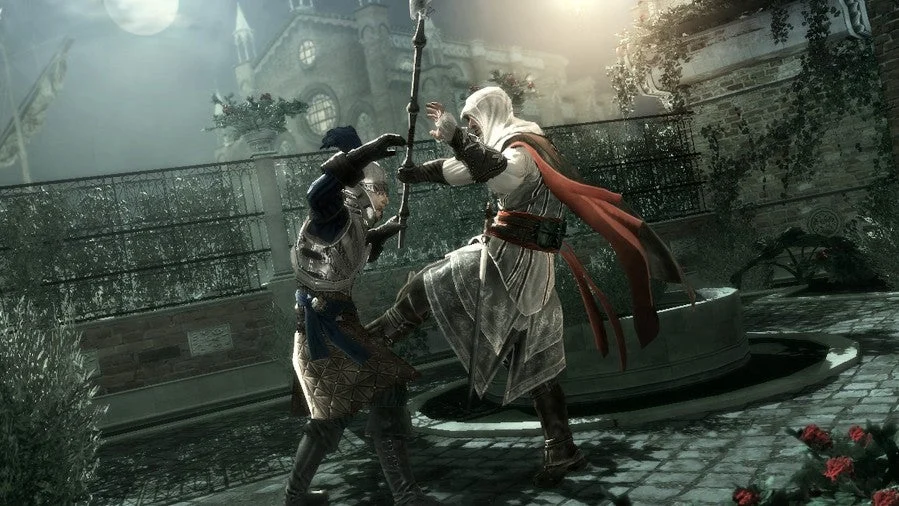
Netflix and Ubisoft have officially commenced principal photography on the long-anticipated live-action adaptation of the Assassin’s Creed franchise, marking a significant milestone for a project that has remained in development for nearly four years. Production is currently underway on location in Italy, with the creative team confirming that the series will be set in Ancient Rome during the year 64 AD. This chronological placement positions the narrative more than 1,400 years before the events of Assassin’s Creed II, the critically acclaimed 2009 video game that first introduced players to the Italian Renaissance and the iconic protagonist Ezio Auditore da Firenze.
The choice of 64 AD as a narrative backdrop is a calculated move that aligns with the franchise’s penchant for weaving fictional secret societies into the fabric of real-world historical turning points. In the established lore of the video games, this era follows the founding of the "Hidden Ones" (the precursors to the Assassin Brotherhood) as depicted in Assassin’s Creed Origins. By setting the series in the heart of the Roman Empire during the 1st century, Netflix and Ubisoft are poised to explore the early evolution of the conflict between the Assassins and the Order of the Ancients, the group that would eventually become the Templar Order.
Historical Context and Narrative Framework
The year 64 AD is one of the most volatile periods in Roman history, defined largely by the reign of Emperor Nero. Historians often characterize Nero’s rule by its extravagance, tyranny, and social upheaval. For the writers of the Assassin’s Creed series, this era provides a rich tapestry of political intrigue and atmospheric tension.
The most significant event of this year was the Great Fire of Rome, a conflagration that began on the night of July 18 and raged for six days, destroying or severely damaging ten of Rome’s fourteen districts. While historical accounts vary—with some suggesting Nero played the lyre while the city burned and others claiming he organized relief efforts—the aftermath of the fire led to the first major state-sponsored persecution of Christians. Nero allegedly used the burgeoning religious group as a scapegoat to deflect rumors that he had ordered the fire himself to make room for his "Golden House" (Domus Aurea).
Within the context of Assassin’s Creed, these events offer a fertile ground for "secret history" storytelling. The series is expected to explore whether the Great Fire was an accident, a tool of imperial expansion, or a strategic maneuver orchestrated by the Order of the Ancients. The persecution of minority groups and the internal power struggles of the Roman Senate provide a logical setting for the "Hidden Ones" to operate from the shadows, mirroring the gameplay loop of social stealth and political assassination that defined the original games.
A High-Profile Cast and Creative Leadership
The announcement of the production’s start also brought the revelation of a full ensemble cast, blending established international stars with rising talent. Leading the series are Toby Wallace (Babyteeth, The Society) and Lola Petticrew (Bloodlands, Tuesday), who were previously linked to the project as its primary leads. They are joined by Noomi Rapace, known for her breakout role in the original The Girl with the Dragon Tattoo trilogy and Prometheus, and Claes Bang, who gained acclaim for his performances in The Square and the BBC’s Dracula.
The supporting cast is equally robust, featuring Sean Harris (Mission: Impossible – Fallout), Ramzy Bedia (South Park), and Corrado Invernizzi (The Leopard). Newly announced additions to the roster include Louis McCartney, Mirren Mack (The Witcher: Blood Origin), Youssef Kerkour (House of Gucci), and Sandra Guldberg-Kampp. While specific character details remain under wraps, the diversity of the cast suggests a narrative that spans different social strata of the Roman Empire, from the elite corridors of the Palatine Hill to the crowded subura.
Behind the scenes, the series is being spearheaded by showrunners Roberto Patino and David Wiener. Patino brings experience from high-stakes genre storytelling, having worked on HBO’s Westworld and FX’s Sons of Anarchy. Wiener’s credits include the television adaptation of Halo and the psychological thriller Homecoming. Their involvement indicates a shift toward a more mature, character-driven approach to the material, moving away from the purely action-oriented style of the 2016 Assassin’s Creed feature film starring Michael Fassbender.
Production Timeline and Strategic Release
Filming is scheduled to continue for approximately seven months, with a projected wrap date in October 2024. Given the extensive post-production requirements for a series of this scale—including complex visual effects to recreate the architecture of 1st-century Rome—Netflix is reportedly targeting a 2027 release window.
This long lead time reflects the streaming giant’s commitment to high-budget "tentpole" programming. Since the initial partnership between Netflix and Ubisoft was announced in 2020, the project has undergone several creative iterations to ensure it meets the expectations of both the gaming fanbase and a general television audience. The 2027 release would place the show in a window where it could potentially cross-promote with future Ubisoft gaming titles, maintaining the franchise’s cultural relevance.
The production in Italy is expected to utilize a mix of historical locations and soundstage environments. Italy’s tax incentives for international productions and its wealth of preserved Roman ruins make it a logical choice for a series seeking visual authenticity.
The Broader Impact on the Assassin’s Creed Franchise
The Netflix series is a cornerstone of Ubisoft’s broader transmedia strategy. Following the mixed critical reception of the 2016 film, Ubisoft has become more selective and hands-on with its adaptations. The Assassin’s Creed brand is currently in a state of expansion; alongside the live-action series, Ubisoft is developing Assassin’s Creed Shadows, set in feudal Japan, and Assassin’s Creed Infinity, a platform intended to serve as a hub for future franchise entries.
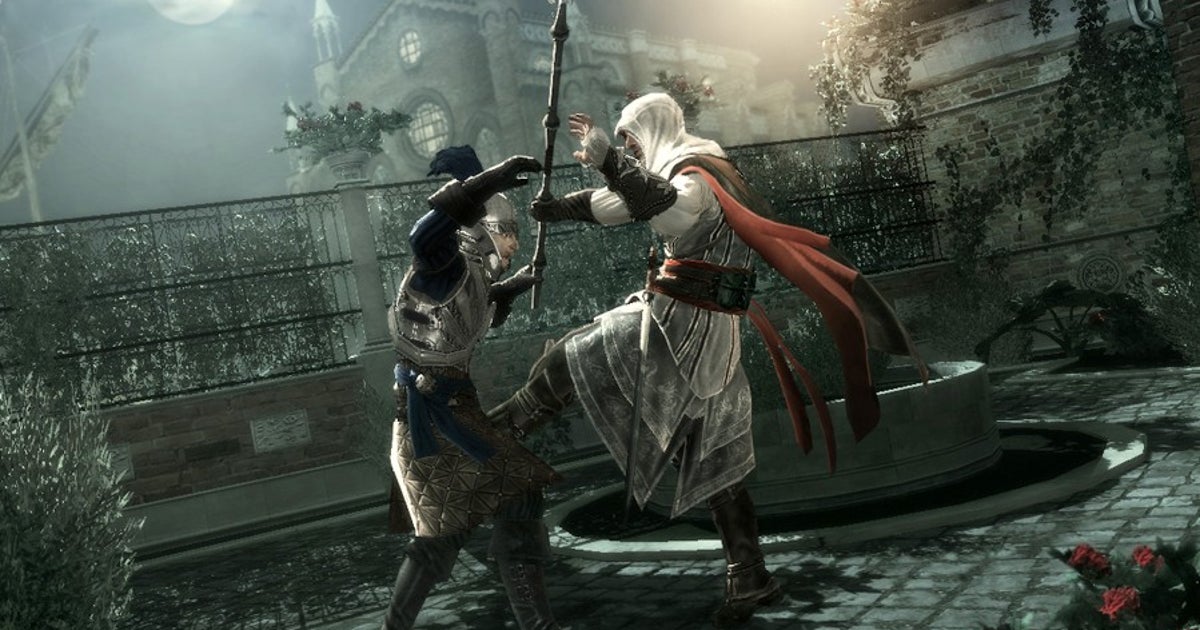
The decision to return to Italy—albeit a version of Italy 1,400 years older than the one explored by Ezio Auditore—is a nod to the franchise’s most successful era. Assassin’s Creed II, Brotherhood, and Revelations (often called the "Ezio Trilogy") are credited with cementing the series as a global phenomenon. By revisiting the Italian peninsula, the Netflix series taps into the nostalgic core of the brand while offering a fresh historical period that has never been fully explored in the main gaming series.
Furthermore, the 64 AD setting allows the show to function as a standalone epic. While it shares the DNA of the games, the massive time gap ensures that it does not need to rely on the complex modern-day "Animus" storylines that have sometimes polarized audiences. This allows the showrunners to focus on a grounded, historical drama that happens to feature the philosophical conflict of the Assassins and Templars at its center.
Analysis of Implications for the Streaming Landscape
For Netflix, the Assassin’s Creed series represents another attempt to secure a dominant position in the "prestige video game adaptation" market. Following the massive success of HBO’s The Last of Us and Amazon’s Fallout, the bar for live-action gaming content has been raised significantly. Netflix has seen its own successes with animated adaptations like Arcane and Castlevania, but a live-action hit of this scale would provide a necessary counterweight to its competitors’ offerings.
The 2027 release window suggests that Netflix is prioritizing quality over speed, a lesson likely learned from previous attempts at adapting massive IPs that suffered from rushed production cycles. By hiring showrunners with backgrounds in gritty, serialized drama, the production appears to be leaning into the political and philosophical themes of the Assassin’s Creed universe—specifically the tension between total security (Templars) and absolute freedom (Assassins).
As production continues through the summer and autumn months in Italy, more details regarding the plot and character names are expected to surface. For now, the combination of a high-profile cast, veteran showrunners, and one of the most dramatic periods in human history suggests that the Assassin’s Creed live-action series is aiming to be a definitive entry in the modern era of television epics.
The historical significance of 64 AD, the tragedy of the Great Fire, and the looming shadow of Nero’s Rome provide a backdrop that is as dangerous as it is visually stunning. For fans who have waited since 2020 for concrete news, the start of production in Italy signals that the leap of faith taken by Netflix and Ubisoft is finally moving toward a tangible reality.