


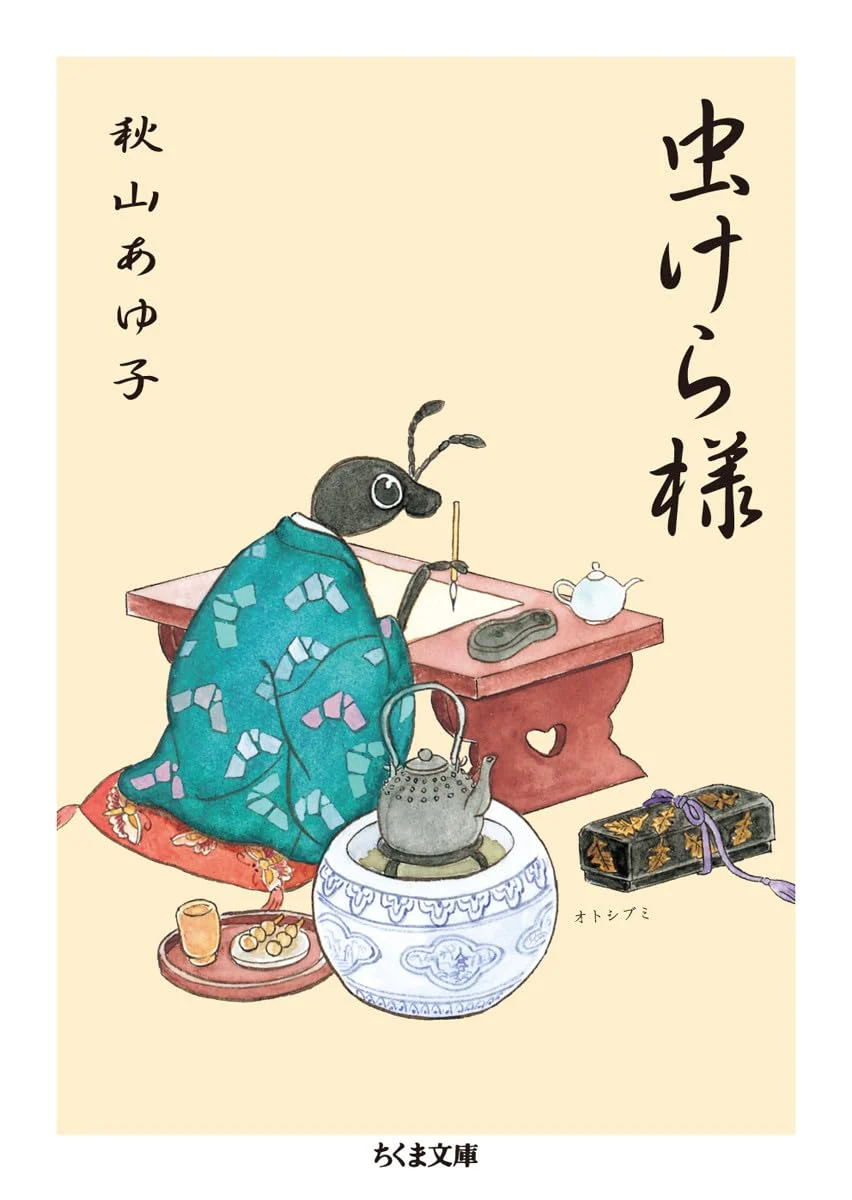
The recent publication of Ayuko Akiyama’s Mushikera-sama (literally translating to "Their Majesties, the Insignificant Ones") in tankobon format marks a significant literary debut for the Tokyo-born artist, whose work is deeply rooted in the contemplative beauty of the countryside. This collection of sixteen short stories transcends its seemingly humble subject matter—the minute details of insect, arachnid, and other small life forms—to serve as a profound exploration of human nature and the enduring function of art as a form of documentation. Akiyama, a notable figure within the contemporary "Garo" artistic lineage, a historically significant independent manga magazine known for its avant-garde and experimental approaches, demonstrates a masterful ability to weave intricate narratives from the observation of the overlooked.
A Tapestry of Miniature Lives and Universal Truths
Mushikera-sama is not merely a menagerie of entomological observations; it is a meticulously crafted examination of existence, drawing parallels between the ephemeral lives of its minuscule protagonists and the broader human condition. Each story, while distinct in its narrative arc, contributes to a larger thematic resonance, exploring concepts of impermanence, societal structures, and the often-unseen dramas that unfold in the natural world.
One compelling narrative, "Yama no sachi" (Blessings from the Mountain), transports readers to a secluded village nestled within the Yamagata prefecture. Here, a deeply held secret permeates the atmosphere, prompting two curious children to venture into a forbidden forest. Local lore dictates that the spirits of their ancestors reside within this ancient woodland, imbuing the setting with an aura of mystery and spiritual significance. The children’s journey into this sacred space serves as a metaphor for the human quest for knowledge and connection to ancestral legacies, highlighting the universal drive to understand one’s origins and the unseen forces that shape communities.
Another poignant tale, "Inamushi" (Rice Pest), introduces a solitary boy on his homeward journey. He encounters a quiet, seemingly lost child, who claims to be awaiting his mother. Driven by a humanitarian impulse, the boy offers assistance, concerned for the child’s well-being as night approaches. His act of kindness leads him to a startling revelation: the "stray" child belongs to a family of human-sized insects residing in the nearby rice paddies. This story cleverly subverts expectations, using the guise of a simple act of compassion to unveil a hidden, extraordinary world, prompting reflection on how readily we accept the familiar while remaining blind to the fantastical realities that might coexist alongside our own.
A particularly striking piece, "Nezumi no soushi" (The Mouse’s Notes), offers a direct homage to the Heian period literary masterpiece, Makura no Soshi (The Pillow Book) by Sei Shonagon. In Akiyama’s rendition, an elderly mouse, Gonnokami, fervently prays to the bodhisattva Kannon for the opportunity to marry a human noblewoman. His wish is miraculously granted, yet the ensuing happiness of the newlyweds is tragically marred by a transgression of the original vow made to the goddess. This narrative delves into themes of ambition, divine intervention, and the consequences of defying sacred pacts, echoing classical Japanese literary motifs while reinterpreting them through the lens of the animal kingdom. The deliberate reference to Makura no Soshi is significant, aligning Akiyama’s work with a tradition of personal observation and subjective experience, contrasting with more objective historical chronicles.
Ayuko Akiyama and the "Garo" Legacy
Ayuko Akiyama’s artistic journey is deeply intertwined with the influential independent manga magazine, Garo. She emerged as part of the "new guard" of artists associated with the publication, making her debut approximately a decade before the magazine’s significant editorial restructuring in 2002. Throughout her career, Akiyama has consistently harbored a profound fascination with the minutiae of the natural world, particularly its smallest inhabitants. This fascination predates and extends beyond Mushikera-sama, as evidenced in earlier works like "Kumo no su oyabun torimonochou" (The Spiderweb Kingpin—Detective Stories). In this work, the traditional Edo period torimonocho genre, a precursor to the modern detective novel, is revitalized with a bossy spider as the officer tasked with solving crimes against the city’s populace. This recurring motif underscores Akiyama’s unique perspective, where the seemingly insignificant are elevated to positions of narrative prominence, challenging conventional hierarchies of importance.
Metaliterary Depth and Buddhist Philosophy
The title Mushikera-sama itself carries a dual meaning. While literally translating to "insects," the term "mushikera" is idiomatically used in Japanese to denote someone insignificant or lowly. This deliberate choice of title signals that Akiyama’s ambitions extend beyond a simple depiction of insect life. The collection engages with profound philosophical and artistic traditions. The concept of impermanence, a cornerstone of Buddhist philosophy, is a pervasive theme, mirrored in the fleeting lives of the insects. Furthermore, Akiyama masterfully integrates elements of Japan’s classical artistic and literary heritage, including the visual tradition of emaki (illustrated scrolls) and the literary forms of monogatari (tales) and zuihitsu (miscellaneous writings). Through this synthesis, Mushikera-sama offers a rich compendium of the traditional Japanese worldview, one that embraces the ephemeral nature of existence.
The characters within Mushikera-sama are depicted as accepting the precariousness of their lives with a certain grace. Their existence, though brief, is imbued with significance, as every small event can hold meaning. This resonates with the introspective nature of private diaries penned by prominent female writers of the Heian period, such as Murasaki Shikibu, Sei Shonagon, and Izumi Shikibu. Their literary contributions offered a counterpoint to the more chronicle-like accounts of "great" events, focusing instead on the intimate details of daily life and personal reflection. Akiyama’s work, in this regard, champions the value of the seemingly minor and the personal narrative.
A Juxtaposition of Gentleness and Brutality
A striking characteristic of Mushikera-sama is the juxtaposition of its insect characters and their human counterparts. The insects are rendered with anthropomorphic gentleness, appearing as if drawn from a children’s storybook, while the human figures are often depicted in a more cartoonish and exaggerated manner. This visual contrast belies the often brutal realities of the insects’ lives. Akiyama does not shy away from portraying death and disease as integral aspects of life, rather than antithetical forces. This commitment to realism is evident in certain panels that depict the stark reality of a spider’s demise or the transformative process of chrysalis formation. These moments of unvarnished truth are juxtaposed with meticulously recreated scenes from classical emaki, where human figures are replaced by mice and insects, further blurring the lines between the human and the natural world and highlighting the universality of life’s cycles.
The meticulousness of Akiyama’s approach is underpinned by extensive bibliographic research across the fields of natural sciences, visual arts, and literature. This scholarly foundation allows Mushikera-sama to transcend the boundaries of a typical manga collection, emerging as a work of gekiga—a style of manga often characterized by its dramatic and realistic storytelling. The result is a collection of rare intensity, one that simultaneously evokes deep emotional responses and compels the reader to engage in a deeper, intertextual decipherment of its many layers.
Broader Implications and Artistic Significance
The publication of Mushikera-sama arrives at a time when there is a growing global appreciation for nuanced storytelling and the exploration of often-overlooked perspectives. Akiyama’s work, by elevating the minuscule to the monumental, offers a timely reminder of the intricate interconnectedness of all living things and the profound philosophical insights that can be gleaned from the natural world. The collection’s success in tankobon format signals a growing market for sophisticated manga that engages with complex themes and draws upon rich cultural traditions.
The implications of Mushikera-sama extend beyond literary circles. In an era often dominated by grand narratives and the pursuit of the spectacular, Akiyama’s dedication to the “insignificant” serves as a powerful artistic and philosophical statement. It suggests that true insight and profound emotional resonance can be found not in the pursuit of power or fame, but in the quiet observation of the world around us, in the understanding of life’s inherent fragility, and in the documentation of its often-unseen beauty and brutality. The work challenges readers to reconsider their own perceptions of importance and to find meaning in the small, the fleeting, and the seemingly mundane. The meticulously researched integration of scientific observation with classical Japanese artistic and literary forms creates a unique and intellectually stimulating experience, solidifying Ayuko Akiyama’s position as a vital voice in contemporary manga.