



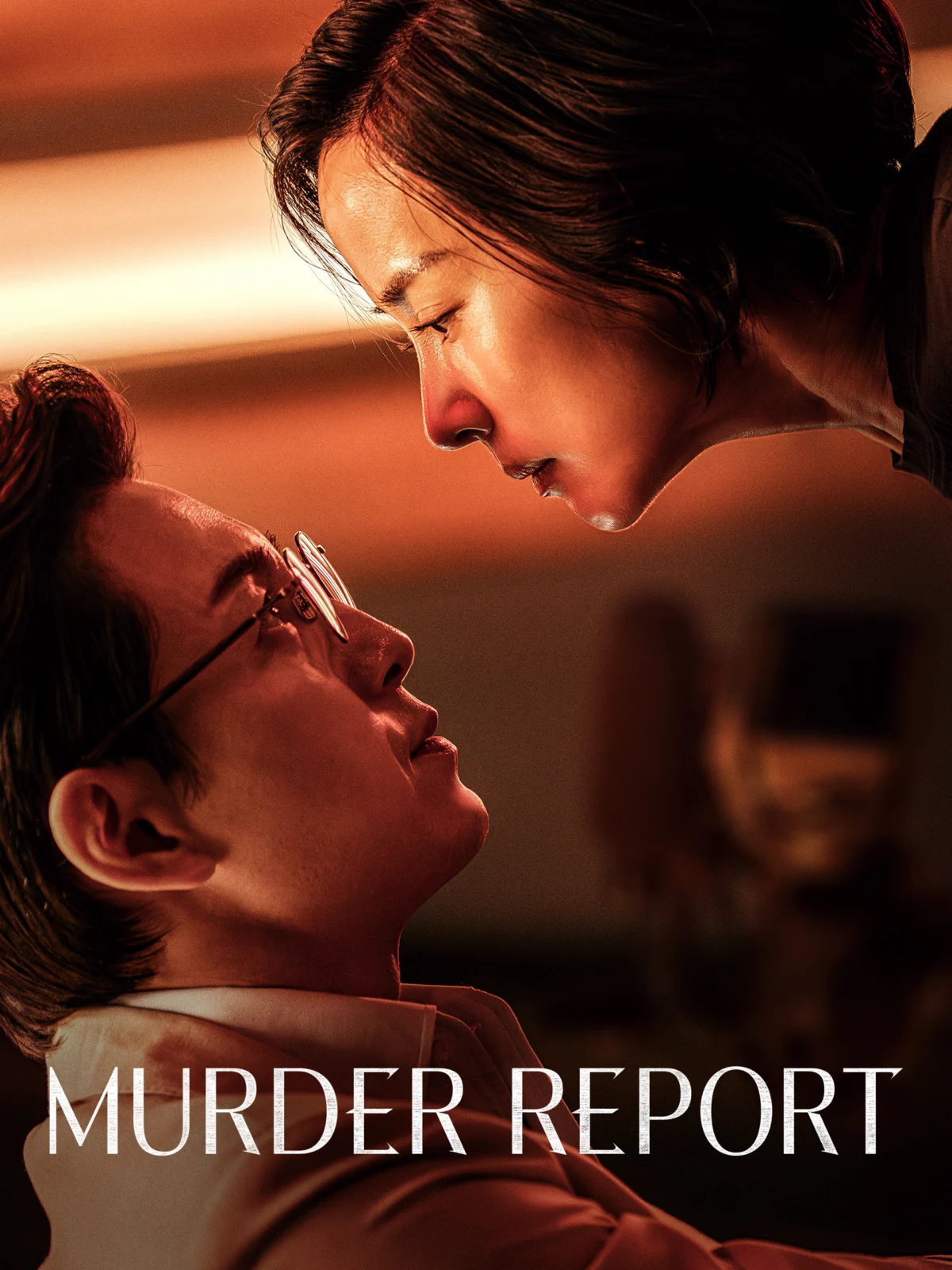
The stark confines of a single hotel room serve as the unsettling stage for "Murder Report," a meticulously crafted psychological thriller that delves into the dark psyche of a confessed serial killer. Director and writer Cho, whose initial spark of inspiration reportedly ignited from a childhood observation of a child’s gaze meeting that of a tiger through zoo bars, has translated this primal curiosity about the dissolution of barriers into a taut narrative. His exploration of what transpires when perceived safety gives way to raw vulnerability forms the thematic core of this film, which eschews grand spectacle for an intense, character-driven confrontation within an unexpectedly potent setting. The film, a testament to the power of focused storytelling and atmospheric tension, has garnered attention for its sophisticated portrayal of a mind that meticulously orchestrates both murder and its confession.
Genesis of a Gripping Narrative: From Zoo Enclosure to Psychological Chamber
The genesis of "Murder Report" can be traced to a seemingly innocuous yet profoundly thought-provoking moment observed by director Cho. He recounted an instance where he witnessed a child intently observing a tiger confined within a zoo enclosure. This image of innocence juxtaposed with primal danger, separated by an artificial barrier, sparked a profound contemplation: what if that barrier were to vanish? What primal instincts would surface, and how would such an encounter redefine the relationship between the observer and the observed? This conceptual seed, planted in the fertile ground of Cho’s imagination, ultimately blossomed into the chilling premise of "Murder Report." The film meticulously reconstructs this hypothetical scenario, albeit in a far more controlled and deliberate manner, by placing a journalist and a confessed serial killer in a shared, intimate space, thereby exploring the psychological warfare that ensues when societal norms and physical safety are deliberately eroded. The decision to confine the narrative almost entirely to a single hotel room amplifies this sense of claustrophobia and heightened tension, forcing both characters and the audience to confront the escalating psychological stakes without the distraction of external environments.
The Unfolding Encounter: A Journalist’s Desperate Gambit
The narrative propels forward with the arrival of a cryptic telephone call to journalist Baek Sun-ju. The voice on the other end identifies himself as Lee Young-hun, a man who claims responsibility for the deaths of eleven individuals. His proposition is as audacious as it is terrifying: an exclusive interview, to be conducted in person, with the implicit threat of further violence if his request is denied. Faced with the dual imperative of securing a career-defining story and preventing another life from being extinguished, Baek makes the fateful decision to accept the chilling invitation. She arranges to meet Lee in a secluded hotel room, a decision fraught with peril, and discreetly enlists the support of her detective boyfriend, Han, to provide clandestine backup. This initial setup immediately establishes the high-stakes nature of the encounter, positioning Baek as a protagonist walking a razor’s edge between professional ambition and personal safety, while Lee Young-hun emerges as a calculated antagonist who wields his confession as a weapon.
The Hotel Room as a Character: An Immersive and Sinister Space
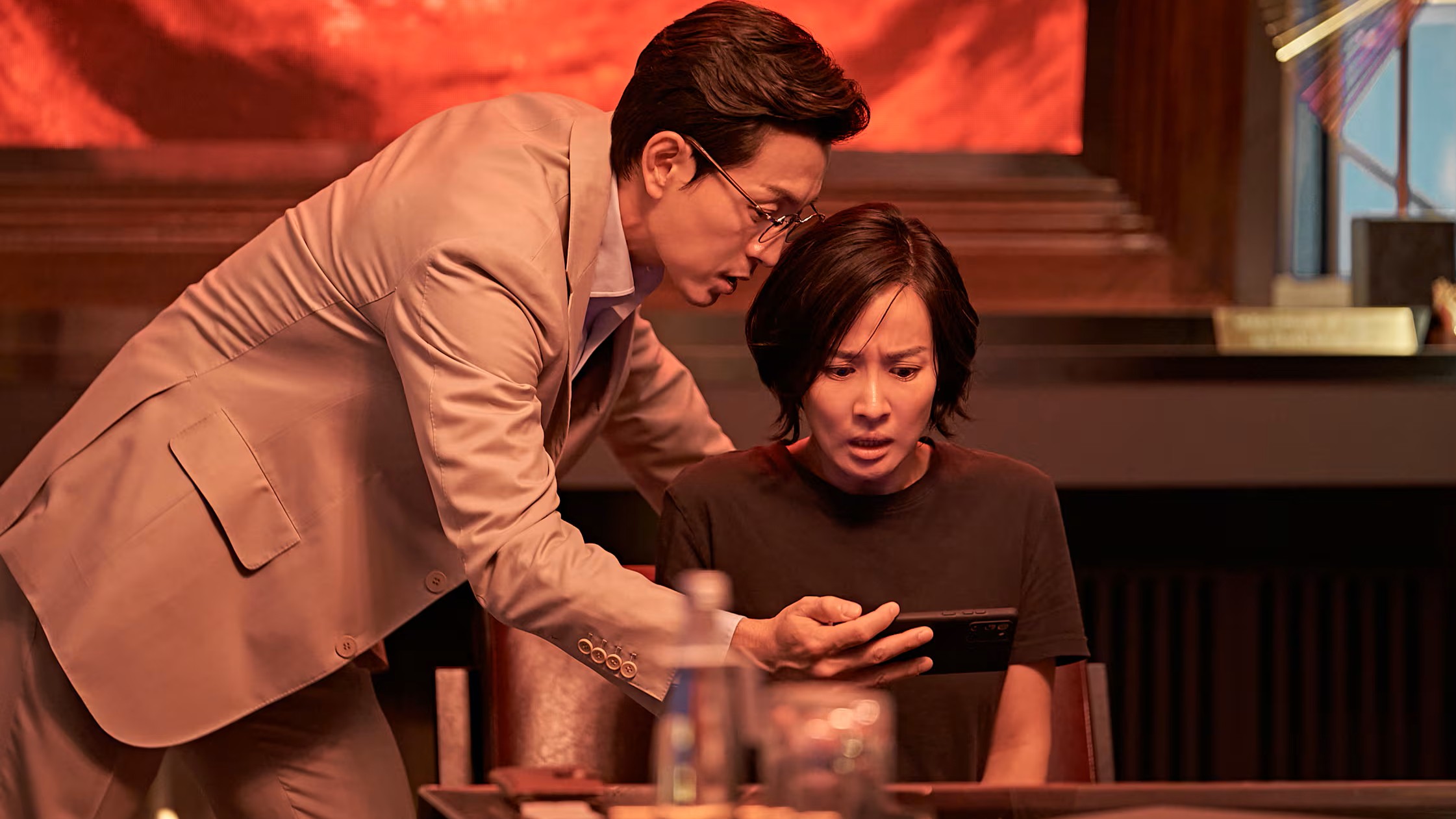
"Murder Report" masterfully transforms its primary setting, a tastefully furnished hotel suite, into a character in its own right. Far from being a mere backdrop, the room becomes an active participant in the unfolding psychological drama. Large, integrated electronic wall panels are not merely decorative; they are dynamic interfaces that reflect and influence the shifting emotional landscape of the characters. As these panels display an array of patterns and colors, the atmosphere within the room undergoes a palpable transformation, oscillating between moments of tense stillness and suffocating pressure. For Baek, the environment often becomes imposing, mirroring her growing unease and the psychological weight of her precarious situation. The meticulous design of this space, with its subtle visual cues like the eye motif etched into the interview room table, underscores the pervasive sense of being watched and analyzed, contributing to the film’s pervasive unease.
The potential monotony of a single-location film is skillfully circumvented through the strategic interspersion of scenes depicting Detective Han, positioned in the room directly below, covertly monitoring the proceedings. These interludes serve a dual purpose: they inject crucial narrative progression by providing an external perspective and reveal subtle nuances in the characters’ dialogue and expressions that might otherwise be missed. Furthermore, the use of overhead shots offers a broader, almost clinical view of the room’s layout, emphasizing the spatial dynamics and the deliberate arrangement of elements designed to heighten psychological impact. This layered approach to mise-en-scène ensures that the visual storytelling remains as compelling as the dialogue, immersing the audience in the claustrophobic tension of the confined space.
A Symphony of Light and Color: Reflecting the Unraveling Psyche
The film’s visual language extends beyond its set design, with a deliberate and sophisticated use of color and lighting that mirrors the psychological trajectory of the narrative. The initial encounter between Baek and Lee is bathed in a muted, predominantly grey palette. This deliberate choice reflects the nascent stages of their interaction, characterized by a carefully maintained restraint as both parties engage in a delicate dance of concealment, each guarding their true intentions. As the layers of their identities and motivations are gradually peeled back, so too does the lighting begin to evolve. Lee, revealed to be a psychiatrist who targets individuals he deems to have wronged his patients, presents a complex persona. His justifications for his actions, however warped, are articulated with a chilling logic that further blurs the lines of morality. The narrative’s progression is marked by a corresponding shift in the lighting, which becomes increasingly dramatic, culminating in a visceral blood-red hue that saturates the room during the climax. This intense chromatic shift serves to amplify the raw emotion and heightened stakes of the film’s most pivotal moments, driving home the terrifying reality of the situation.
Performances Under Pressure: Anchors of a Tense Drama
Despite its relatively modest production budget, "Murder Report" shines due to its compelling narrative arc and, crucially, the exceptional performances of its lead actors. Jung Sung-il, bringing a profound depth forged from his background in theatre, delivers a standout portrayal of Lee Young-hun. He navigates the complexities of a character shaped by profound trauma with a captivating blend of composure and underlying menace. This role, marking his first leading part in a feature film, showcases his remarkable ability to convey intricate emotional states with confidence and nuanced subtlety.
Complementing Jung’s performance is Cho Yeo-jeong, a familiar face to audiences from her impactful role in the critically acclaimed "Parasite." In "Murder Report," she convincingly embodies Baek Sun-ju, a journalist driven by a desperate need for a professional breakthrough. Her portrayal captures the character’s vulnerability, her intellectual acuity, and the immense courage required to navigate such a perilous situation. The palpable chemistry and dynamic interplay between Jung and Cho form the bedrock of the film’s success, elevating the viewing experience significantly. Kim Tae-han provides a solid and understated performance as Detective Han, Baek’s boyfriend, whose own hidden complexities add another layer to the unfolding drama. Director Cho’s directorial acumen is equally commendable; he masterfully orchestrates the transformation of the interview room into a third, central presence—a sinister entity that gradually exerts its psychological dominion over its occupants.
Echoes of Cinematic Precedents: Familiar Tropes and Distinctive Execution
While "Murder Report" demonstrates considerable originality in its execution, certain narrative elements and character archetypes evoke recognizable precedents in cinematic history. The core dynamic of the central interview, featuring a seemingly intelligent and composed antagonist engaging with an investigator or journalist, bears a striking resemblance to the iconic prison encounter between Hannibal Lecter and Clarice Starling in "The Silence of the Lambs." The chilling intellectual sparring and the exploration of a disturbed mind within a confined setting are shared thematic territories.
Furthermore, Lee Young-hun’s refined demeanor and elegant presentation, while contributing to his character’s distinctiveness, can also be perceived as echoing certain portrayals of serial killers in popular culture. His measured composure and sophisticated appearance, while making him less overtly menacing in a conventional sense, may also recall the calculated charm and methodical approach of characters like Dexter Morgan from the acclaimed television series "Dexter," particularly in the visual motif of victims being prepared or presented in a specific manner, such as being wrapped in plastic. These comparisons, while valid, do not detract from the film’s overall impact but rather highlight how "Murder Report" engages with established genre conventions and reinterprets them through its unique lens. The film’s strength lies not in reinventing these tropes but in its focused and atmospheric application, allowing these familiar elements to serve its specific narrative purpose within its tightly controlled environment.
A Slow-Burn Success: Enduring Psychological Thrills
Despite the acknowledged echoes of prior cinematic works, "Murder Report" ultimately stands as a triumph of deliberate storytelling and atmospheric tension. The film’s success lies in its ability to sustain a gripping, slow-burning psychological thriller narrative without relying on excessive action or overt violence. The potent performances delivered by the lead actors, particularly Jung Sung-il and Cho Yeo-jeong, are instrumental in anchoring the film’s emotional core. Their compelling portrayals, coupled with the striking and intentionally designed atmosphere of the hotel room, create an immersive and unsettling experience for the audience. The film’s layered twists and turns, meticulously woven into the fabric of the narrative, ensure that the viewer remains engaged and intellectually stimulated throughout. "Murder Report" is a testament to the enduring power of psychological suspense when crafted with precision, focus, and a deep understanding of the human psyche. It offers a compelling case study in how confined spaces and intense character interactions can yield profound and memorable cinematic experiences, leaving a lasting impression long after the credits roll.