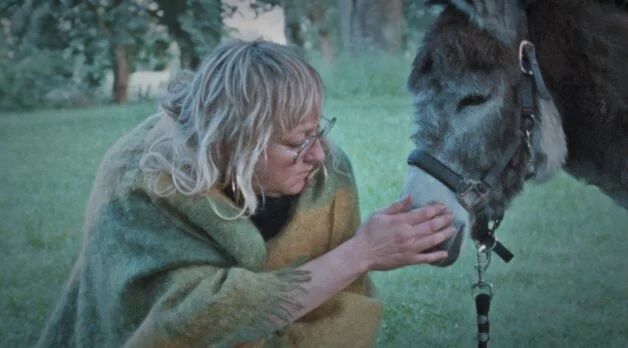



Christian Petzold’s latest feature film, Miroirs No. 3, marks a significant evolution in the career of the German auteur, blending his signature preoccupation with historical trauma and social structures with a surrealist, "Alice in Wonderland" aesthetic. Currently in a limited theatrical run through distributor 1-2 Special, the film reunites Petzold with his frequent collaborator Paula Beer and veteran actress Barbara Auer, exploring the psychological aftermath of a fatal car accident in the German countryside. The production serves as a centerpiece for contemporary German cinema, particularly as it follows Petzold’s highly acclaimed "Elements" trilogy, which included Undine (2020) and Afire (2023). Through its meticulous construction of space and its subversion of traditional narrative expectations, Miroirs No. 3 examines the intersection of personal grief and the physical environments that house it.
Narrative Structure and the "Looking Glass" Motif
The film’s premise centers on Laura (Paula Beer), a concert pianist from Berlin whose life is upended by a violent car crash that kills her boyfriend. Injured and isolated, she is taken in by Betty (Barbara Auer), a woman living in a secluded, seemingly dilapidated house near the crash site. The relationship that develops between the two women is the narrative engine of the film, as Betty’s altruism slowly reveals itself to be a complex, perhaps desperate, need for companionship. Petzold has described the film as a departure into the fantastical, noting that while his previous works often dealt with the "ghosts" of German history—specifically the legacy of the Holocaust and the Cold War—Miroirs No. 3 operates within the logic of a fairy tale.
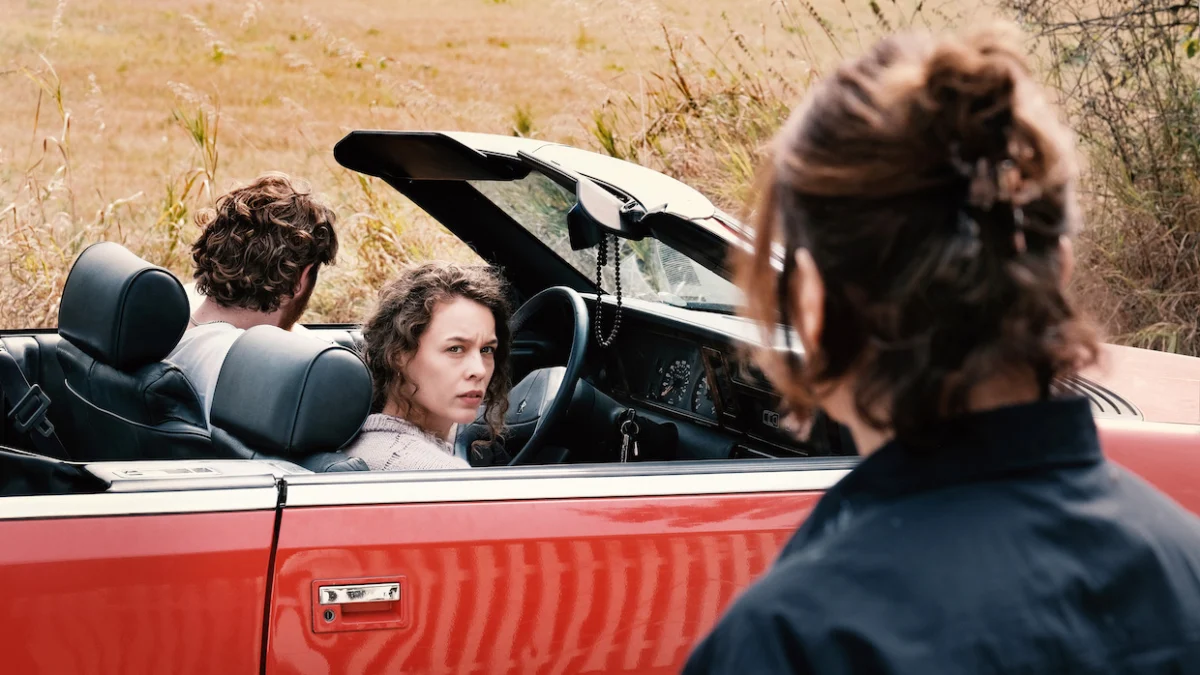
The director frequently cites Lewis Carroll’s Alice’s Adventures in Wonderland and Through the Looking-Glass as primary inspirations. In Petzold’s view, the car accident serves as the "rabbit hole," a violent transition from a recognizable reality into a distorted world where the rules of social engagement have shifted. This is emphasized by the film’s title, which references both the literal mirrors found within the set and the metaphorical reflection of the characters’ internal states. By utilizing motifs like a lost shoe—reminiscent of Cinderella—and a vibrant red convertible that evokes the cinematic history of the French New Wave, Petzold creates a world that is both hyper-real and deeply symbolic.
The Morality of the Camera: Collaboration with Hans Fromm
A defining characteristic of Petzold’s filmmaking is his long-standing partnership with cinematographer Hans Fromm. Their collaboration, which spans over two decades, is built upon a shared philosophy regarding the "morality" of camera placement. This approach, heavily influenced by the writings of Éric Rohmer and Jacques Rivette, posits that where a director places the lens is a moral decision that dictates the relationship between the viewer and the subject.
In Miroirs No. 3, Petzold and Fromm explicitly rejected the use of handheld cameras or "Direct Cinema" techniques, which Petzold argues lack a definitive perspective. Instead, the film utilizes static shots and carefully choreographed movements that emphasize surveillance and the boundaries of physical space. The production process involves a rigorous rehearsal schedule; Petzold typically spends the first several hours of a shooting day rehearsing with actors in costume without any crew or cameras present. Only after the emotional and physical logic of the scene is established does Fromm enter to observe and finalize the storyboards. This method ensures that the camera remains a deliberate observer rather than an intrusive participant, a technique Petzold previously perfected in his 2012 film Barbara, which dealt with the pervasive atmosphere of surveillance in East Germany.
Architectural Symbolism and Abandoned Spaces
The setting of Miroirs No. 3 is not a found location but a meticulously constructed set designed to reflect the internal lives of its inhabitants. Petzold has long maintained that cinema has a natural affinity for "abandoned places" because they represent failed projects—whether those projects are failed loves, failed families, or failed social ideologies. The house where Betty resides was built from the ground up for the production, including the porch, the piano room, and the surrounding white fence.
The architectural design of the house is central to the film’s themes of transparency and isolation. Unlike traditional German residential architecture, which Petzold describes as "cave-like" with private back porches and heavy doors, Betty’s house is filled with windows and doors that allow light and wind to pass through the entire structure. This design was intended to signify a "project of transparency" once undertaken by Betty’s family—a desire to live an open, fantastic life that ultimately met with "total defeat." By showing the ruined state of this once-aspirational space, the film visualizes the "broken minds and broken souls" of the characters. The camera often lingers on open windows in the background, a technique used by Petzold and Fromm to suggest that the world is constantly intruding upon the characters’ grief.

The Soundscape of Trauma: Musical Influences
Music serves as a vital connective tissue in Miroirs No. 3, particularly through the use of Frankie Valli and the Four Seasons’ 1972 track "The Night." Petzold’s interest in the song was sparked by its use in Miguel Gomes’s The Tsuga Diaries (2021), leading him to explore the visceral energy of the Four Seasons’ discography. The inclusion of the song is a deliberate nod to Michael Cimino’s The Deer Hunter (1978), a film Petzold cites as a masterclass in portraying the working class and the way their collective energy is often channeled into tragedy.
The final scene of Miroirs No. 3—featuring characters drinking coffee and eating eggs on a porch—is a direct visual reference to the ending of The Deer Hunter. In both films, the act of communal eating serves as a somber acknowledgment of trauma and a quiet commitment to survival. Additionally, the film incorporates classical elements, such as Frédéric Chopin’s nocturnes, to provide moments of "relief and comfort" amidst the narrative’s darker themes. This juxtaposition of high art (Chopin) and popular soul (Valli) mirrors the film’s blend of high-concept allegory and raw emotional realism.
Chronology of Production and the Final Reshoot
The production of Miroirs No. 3 followed a complex timeline, notably marked by a significant creative pivot regarding the film’s conclusion. During the initial scripting phase, Petzold envisioned an ending where Laura remains with Betty’s family, effectively becoming a surrogate daughter. However, lead actors Paula Beer and Enno Trebs expressed concerns that this resolution felt unearned and psychologically inconsistent.
Despite Petzold’s initial confidence in his script, the feedback was echoed by his longtime editor, Bettina Böhler, during the post-production phase. After a period of creative reflection, Petzold decided to reshoot the finale several months after principal photography had wrapped. This decision was logistically challenging, as Paula Beer was eight months pregnant at the time of the reshoot. The new ending, which cost approximately 20,000 Euros to produce, depicts Laura leaving the family to forge an independent life. Petzold has since stated that this change was essential for the character’s arc, transforming the film from a story of stagnation into one of maturation and autonomy.
Broader Impact and Future Collaborations
Miroirs No. 3 arrives at a time when Christian Petzold’s influence on the international arthouse circuit is at an all-time high. Retrospectives of his work, such as the recent "Christian Petzold in Person" series at Film at Lincoln Center, have consistently sold out, indicating a robust appetite for his brand of intellectual, visually rigorous cinema. The film also reunites Petzold with Barbara Auer for the first time since his 2000 debut, The State I Am In. In that earlier film, Auer played a former Red Army Faction militant living in hiding; in Miroirs No. 3, her role as a woman grieving a dead daughter acts as a thematic companion piece, exploring the "muscle memory" of mother-daughter dynamics.
Looking forward, Petzold has a prolific slate of projects in development. He is scheduled to film another project with Barbara Auer in the summer of 2024. Furthermore, he is currently drafting a screenplay for a project set to film in 2026, which will feature both Paula Beer and Nina Hoss. This upcoming film is described as a "Chekhovian conflict" set within a failing German theater troupe. The plot involves a musical company attempting to buy out a traditional theater, forcing the ensemble to stage a final performance of Anton Chekhov’s The Cherry Orchard.
As Miroirs No. 3 continues its theatrical run, it stands as a testament to Petzold’s ability to weave together disparate influences—from 1920s German Expressionism (Nosferatu) to 1940s Hollywood noir (Rebecca)—into a cohesive study of modern existence. The film’s success reinforces the vitality of the Berlin School of filmmaking, emphasizing slow-burn tension, architectural precision, and the enduring power of the human face in the wake of catastrophe.