
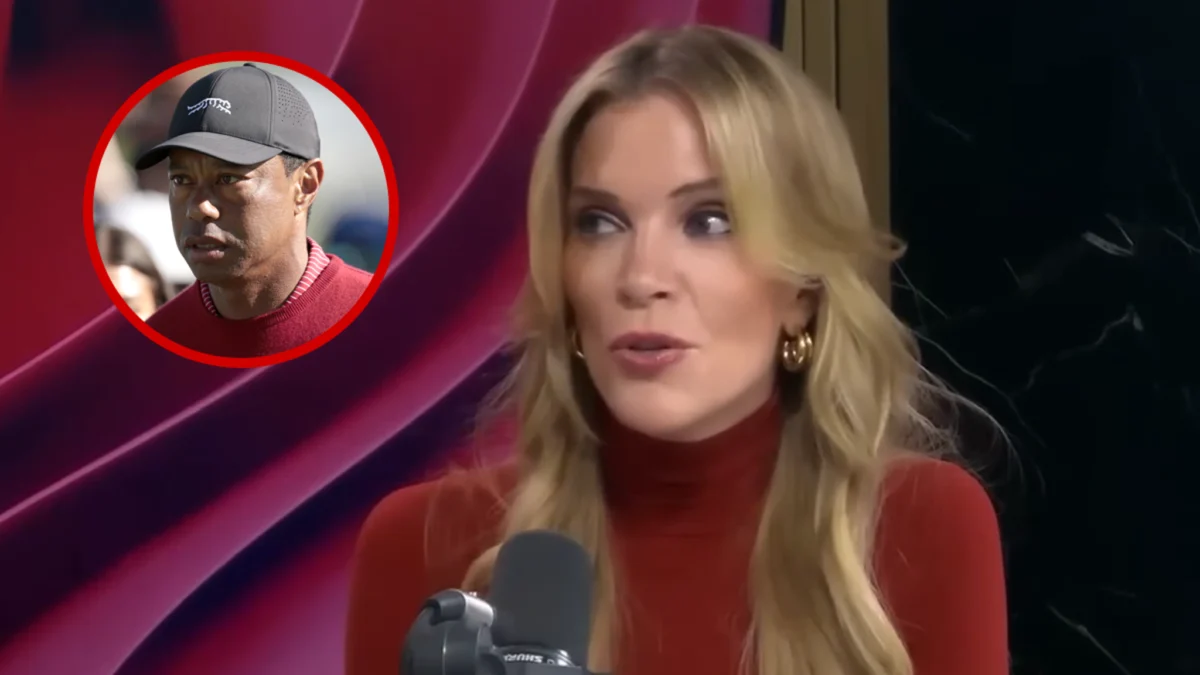
Megyn Kelly, the prominent media personality and host of "The Megyn Kelly Show," has launched a scathing critique against legendary golfer Tiger Woods following reports that Woods attempted to contact then-President Donald Trump during his arrest for driving under the influence (DUI) last month. Kelly, known for her sharp commentary, did not mince words, characterizing Woods’ alleged actions as a "douche move" and openly speculating that the call was an attempt to leverage influence to avoid legal repercussions. This incident has ignited a firestorm of public debate, intertwining celebrity legal woes with political connections and the intense scrutiny that high-profile figures face.
The Incident: A Chronology of Events
The controversy stems from an incident on March 27, 2026, when Tiger Woods was involved in a single-vehicle accident in Jupiter Island, Florida. According to initial reports from law enforcement, Woods’ Range Rover flipped over following a collision with a truck hauling a trailer. Details emerging from the scene indicated that Woods was subsequently arrested on suspicion of DUI. This arrest marked another significant public relations crisis for the golf icon, who has faced various personal and professional challenges throughout his illustrious career. The incident occurred in the early hours of the morning, with emergency services responding to the scene before law enforcement initiated the DUI investigation. Woods, a resident of Jupiter Island, was reportedly found alone in his vehicle at the time of the crash.
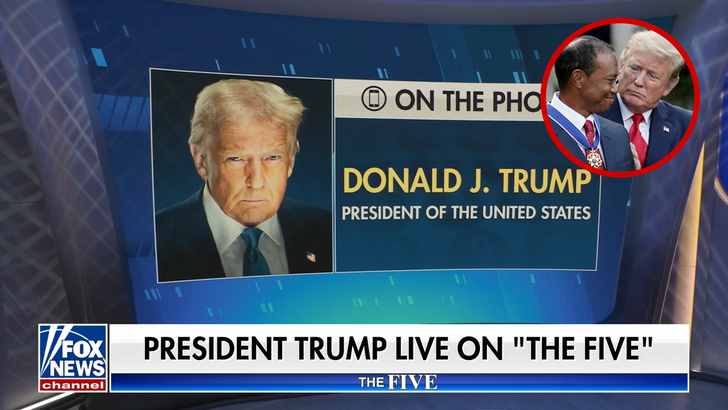
During the arrest, bodycam footage and police reports reportedly indicated that Woods made an attempt to contact President Donald Trump. This detail immediately raised eyebrows and fueled speculation across media outlets and social media platforms. The timing and context of such a call—while being processed for a serious legal infraction—became the focal point of discussions about celebrity privilege and potential abuse of power. It is understood that law enforcement protocols typically restrict a detainee’s access to external communication until certain booking procedures are completed, adding to the unusual nature of the alleged attempt. Woods was later booked into county jail, where he subsequently bonded out on his own recognizance. He is currently facing charges of DUI with property damage, refusal to submit to a urine test (both misdemeanors), and a careless driving citation. Woods has formally pleaded not guilty to all charges, setting the stage for ongoing legal proceedings that will undoubtedly draw significant public attention. His legal team has not yet commented publicly on the alleged call to President Trump, focusing instead on the specifics of the DUI charges.
Adding another layer of complexity to the narrative, Woods reportedly told officers at the scene that President Trump had contacted him shortly before the incident to apologize for comments made the previous night. Trump had allegedly disclosed sensitive information by suggesting that Woods would not be participating in The Masters tournament that year. This revelation by Trump, if true, could be seen as an uncharacteristic breach of privacy regarding an athlete’s health or participation status, particularly from a sitting president. For an event as globally significant as The Masters, a premature announcement from such a high-profile source could create considerable media frenzy and undue pressure on the athlete. In this context, an apology from the President would be a plausible, if somewhat unusual, gesture, aimed at mitigating potential political or personal fallout from the gaffe. However, the exact nature of Trump’s comments and the timing of the alleged apology remain subject to ongoing public debate.
Megyn Kelly’s Scathing Critique
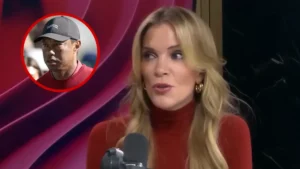
Megyn Kelly wasted no time in addressing the unfolding drama on her widely syndicated "The Megyn Kelly Show." Known for her no-holds-barred approach to commentary, Kelly delivered a powerful denunciation of Woods’ alleged actions. During an episode aired around April 5, 2026, she unequivocally stated that Woods’ behavior was "a douche move." Her criticism was rooted in the strong belief that Woods’ primary motivation for reaching out to the President was to exploit his high-level connections to circumvent the legal process. The segment, which garnered significant viewership and social media engagement, highlighted Kelly’s consistent stance on accountability for public figures.
"It’s very clear he called to try to get out of this somehow," Kelly asserted on her show. Her interpretation of the events suggested a cynical attempt by Woods to leverage his relationship with the President to influence the outcome of his arrest, or at the very least, to mitigate the public relations fallout. Kelly’s stance reflects a broader public sentiment that often expresses disdain for perceived special treatment afforded to celebrities and influential figures when they face legal trouble. She elaborated, "I’m gonna go with Tiger called him and asked for some help because he knew this was going to be a PR disaster and potentially a legal one — and both were correct." This statement underscored her conviction that Woods was acutely aware of the gravity of his situation and sought an extraordinary intervention. Kelly’s commentary was delivered with a tone of exasperation and firm conviction, characteristic of her broadcasting style, which often challenges perceived injustices or hypocrisies among the elite.
Kelly’s background as a former attorney and her tenure as a prominent news anchor on Fox News and NBC have shaped her journalistic style, which often involves direct, sometimes provocative, commentary on current events and public figures. Her show provides a platform for robust discussion, and her views on the Woods-Trump incident resonated with many who believe in the principle of equal justice under the law, regardless of fame or political connections. Her critique highlighted not just the act of calling the President, but the perceived intent behind it, framing it as an attempt to bypass standard legal procedures. This sentiment is often echoed in public discourse, where high-profile arrests are scrutinized for any indication of preferential treatment, leading to widespread calls for fairness and equality in the application of the law.
The Presidential Connection: Speculation vs. Apology
The core of the controversy revolves around the ambiguity of the communication between Woods and President Trump. While Megyn Kelly firmly believes Woods initiated the call to seek assistance, the alternative narrative, as reportedly conveyed by Woods to the arresting officers, presents a different scenario. Woods allegedly told police that Trump had called him to apologize for prematurely revealing that Woods would not be competing in The Masters. This counter-narrative introduces an element of presidential gaffe, potentially explaining the unusual interaction.
The Masters, held annually at Augusta National Golf Club, is one of golf’s four major championships and is steeped in tradition and prestige. For a President to reveal a participant’s status before an official announcement, especially concerning an athlete of Woods’ stature, would indeed be a significant gaffe. Such an act could be interpreted as a breach of trust or an insensitive disclosure of private information, potentially affecting Woods’ public image or even his mental preparation for future events. In this context, an apology from the President would be a plausible, if somewhat unusual, gesture. Presidents often engage with prominent athletes, and informal conversations are common; however, leaking sensitive information about an athlete’s participation in a major event, particularly if related to health or injury, would be considered a misstep.
However, Kelly quickly dismissed this alternative explanation. Her skepticism was evident in her analysis, where she posited that while such an apology might have occurred, it was far more likely that Woods was the initiator, driven by the immediate crisis of his DUI arrest. The public, too, has been divided on which narrative holds more weight. On one hand, a President apologizing for a public gaffe is conceivable. On the other, a high-profile individual in legal jeopardy attempting to pull strings is a trope that often plays out in public perception, fueled by numerous historical examples of influence peddling. The lack of direct confirmation from either Woods or Trump regarding the exact nature and initiator of the call has only fueled the speculation, leaving room for various interpretations, with Megyn Kelly’s being among the most forceful. Neither the White House nor representatives for Donald Trump have issued an official statement regarding the alleged call, further obscuring the true sequence of events.
The interaction between prominent figures, especially when one holds the highest office in the land, invariably attracts intense scrutiny. The implications of a President’s involvement, even indirectly, in a citizen’s legal entanglement are significant. It raises questions about the separation of powers, the perception of fairness, and the potential for undue influence, whether intended or not. The incident serves as a stark reminder of the unique challenges and heightened expectations placed upon both public officials and beloved celebrities. It also highlights the intricate web of relationships that often exist between the worlds of sports, entertainment, and politics, and how easily these can become entangled in times of crisis.
Legal Ramifications and Public Image
Tiger Woods’ DUI arrest and the subsequent charges carry substantial legal weight, regardless of any alleged presidential contact. The charges of DUI with property damage and refusal to submit to a urine test are serious misdemeanors in Florida, and a careless driving citation adds to the list of infractions. While Woods has pleaded not guilty, the legal process will involve court appearances, potentially a trial, and could result in penalties ranging from fines and probation to license suspension and mandatory substance abuse treatment programs. In Florida, a first-time DUI conviction can carry penalties including a fine of $500 to $2,000, up to six months imprisonment, and mandatory substance abuse courses. The refusal to submit to a urine test can lead to an automatic driver’s license suspension, adding a further layer of legal complexity. The fact that he refused a urine test can often be interpreted negatively by prosecutors and the public, potentially complicating his defense, as it can be used as evidence of guilt.
Beyond the courtroom, the impact on Woods’ public image and career is undeniable. Tiger Woods has long been a global icon, celebrated for his unparalleled achievements in golf. His career boasts 15 major championships, second only to Jack Nicklaus, and a record-tying 82 PGA Tour wins. However, his career has also been punctuated by personal scandals and injuries that have tested his resilience and public favor. This DUI incident, particularly with the added layer of the alleged presidential call, represents another significant blow to his meticulously crafted public persona. Previous incidents, such as the 2009 infidelity scandal and a prior DUI arrest in 2017 (for which he pleaded guilty to reckless driving), have already demonstrated the fragility of his public image.
For athletes of Woods’ caliber, endorsements and sponsorships form a substantial part of their income and brand value. Major corporations, such as Nike, Bridgestone Golf, and Rolex, often have strict clauses regarding the conduct of their sponsored athletes, and incidents like a DUI can lead to temporary suspensions or even termination of lucrative deals. The public’s perception of Woods’ character, integrity, and judgment is crucial for maintaining these relationships and for his overall marketability. The narrative of attempting to use political connections to escape legal trouble could erode public trust and severely damage his brand equity, which has been carefully rebuilt over years following previous controversies. The financial implications alone could run into millions of dollars if sponsors decide to distance themselves.
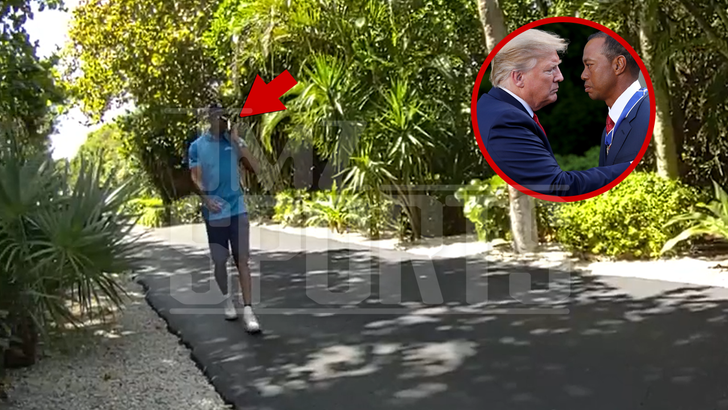
Moreover, the incident places a spotlight on the broader issue of celebrity accountability. When high-profile individuals face legal challenges, the public often expects them to be held to the same standards as any other citizen. Any hint of special treatment, real or perceived, can lead to widespread public outcry and diminish faith in the justice system. Woods’ situation thus transcends a mere personal legal matter, evolving into a case study on celebrity privilege and the societal expectation of fairness. Public opinion polls often show a strong desire for equal application of the law, irrespective of an individual’s status or wealth.
Broader Implications: Celebrity, Power, and Media Scrutiny
The intersection of celebrity status, political power, and intense media scrutiny, as exemplified by the Megyn Kelly-Tiger Woods-Donald Trump saga, offers a rich landscape for analysis of contemporary public discourse. The incident underscores several broader implications that resonate within modern society.
Firstly, it highlights the pervasive nature of celebrity culture and the constant surveillance that accompanies immense fame. Every action, particularly those involving legal infractions, is magnified and dissected in the public sphere. The instant dissemination of information, often fueled by social media, ensures that such events become global topics of conversation within hours. For figures like Tiger Woods, who live much of their lives in the public eye, privacy is a luxury they rarely afford, and mistakes carry exponentially greater consequences for their brand and legacy. The insatiable appetite for celebrity news means that every detail, however minor, is scrutinized and debated, often eclipsing more significant societal issues.
Secondly, the alleged involvement of a sitting President, even in a tangential manner, in a celebrity’s legal trouble raises significant questions about the nature of power and influence. While Presidents often maintain relationships with various public figures, the context of an arrest introduces a complex ethical dimension. It invites speculation about the boundaries of presidential reach and whether such relationships can, or should, be leveraged during personal crises. The optics alone can be damaging, regardless of the actual intent or outcome. It feeds into narratives about a two-tiered justice system, where the powerful might operate under different rules than the average citizen. This perception can erode public trust in institutions and reinforce cynicism about the fairness of the legal system. Historically, instances of perceived political interference in legal matters have drawn fierce criticism and have often led to investigations or public outcry.
Thirdly, the role of media personalities like Megyn Kelly in shaping public opinion is critically important. In an era of fragmented media and polarized political views, hosts with strong platforms can significantly influence how events are perceived. Kelly’s strong condemnation of Woods’ alleged actions not only provided a particular interpretation but also served to galvanize a segment of the audience that shares her view on accountability and the rejection of celebrity privilege. Her commentary contributes to the ongoing national dialogue about ethics, responsibility, and the behavior of those in the public eye. Such analyses by media figures can reinforce or challenge prevailing narratives, guiding public sentiment and holding powerful individuals accountable, at least in the court of public opinion. The emergence of digital media and podcasts has further amplified the voices of commentators like Kelly, allowing them to reach vast audiences directly and shape narratives with greater immediacy.
Finally, the incident serves as a poignant reminder of the vulnerabilities of even the most celebrated individuals. Despite immense success and wealth, public figures are not immune to personal struggles, legal challenges, or the consequences of their actions. The pressure cooker environment of fame can exacerbate these issues, making recovery and rehabilitation a public spectacle. Tiger Woods, a figure who has repeatedly faced immense public pressure, embodies this vulnerability. His DUI case, with its unusual presidential connection, stands as a complex and multi-faceted example of these dynamics at play, prompting reflection on justice, privilege, and the relentless demands of modern celebrity. As Woods’ legal battle continues, and the public continues to digest the implications of this unusual episode, the scrutiny on all parties involved will undoubtedly persist, shaping public discourse for the foreseeable future. The long-term impact on Woods’ legacy, beyond his sporting achievements, will be intrinsically linked to how he navigates these challenges and the public’s ultimate judgment.
The narrative surrounding Tiger Woods’ DUI arrest and his alleged contact with President Trump is far from over. With Woods pleading not guilty to the charges, the legal battle will unfold in the coming months, promising further media attention. Meanwhile, the public discourse, heavily influenced by commentators like Megyn Kelly, will continue to weigh the balance between celebrity privilege, political influence, and the fundamental principles of justice. This incident will likely be remembered not just for the legal outcome for Tiger Woods, but for the wider questions it raised about power, accountability, and the relentless gaze of the modern media.