
The cinematic landscape of 2024 and 2025 has seen a resurgence of interest in classic horror archetypes, but few projects have carried the stylistic ambition or the thematic weight of Maggie Gyllenhaal’s second directorial effort, The Bride! Following the critical success of her 2021 debut, The Lost Daughter, Gyllenhaal has transitioned from the intimate, psychological nuances of an Elena Ferrante adaptation to a high-concept, big-budget reimagining of the Frankenstein mythos. Produced by Warner Bros. Pictures, the film serves as both a period-piece thriller and a contemporary socio-political commentary, utilizing the framework of the 1930s Jazz Age to explore modern anxieties regarding autonomy, gender dynamics, and the nature of human connection.
Narrative Architecture and the Rebirth of the Bride
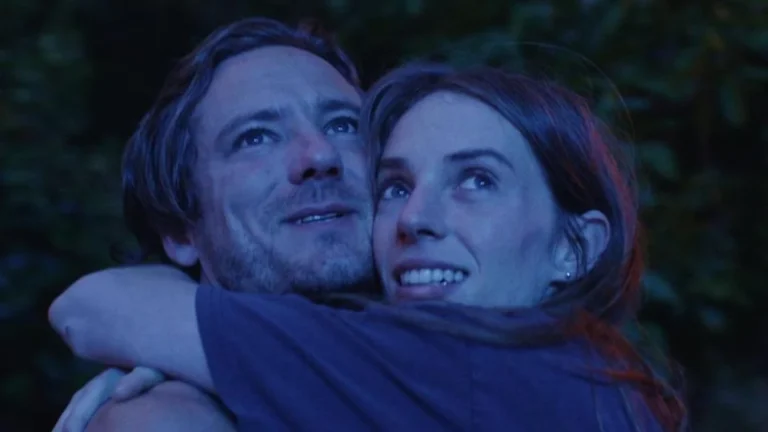
The Bride! opens with a surrealist framing device: the ghost of Mary Shelley, portrayed by Jessie Buckley, ruminating on the sequel she never wrote before her death in 1851. This spectral presence sets the tone for a narrative that is less a remake of the 1935 James Whale classic and more a spiritual completion of Shelley’s original literary intentions. The plot follows Frank—the creature commonly known as Frankenstein’s monster, played by Christian Bale—as he seeks a companion to alleviate a century of existential solitude.
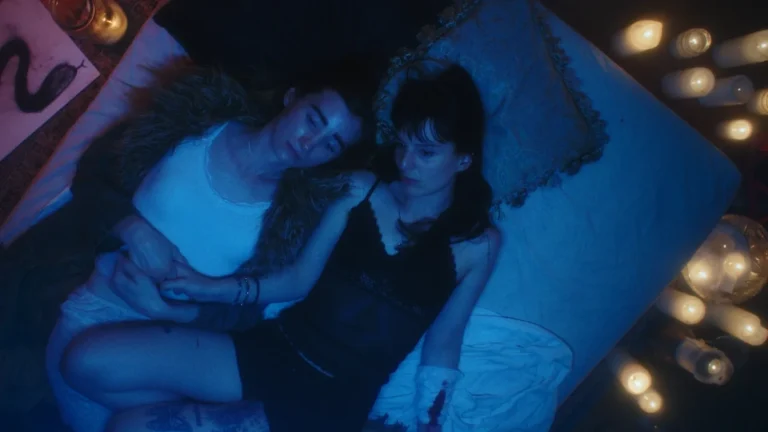
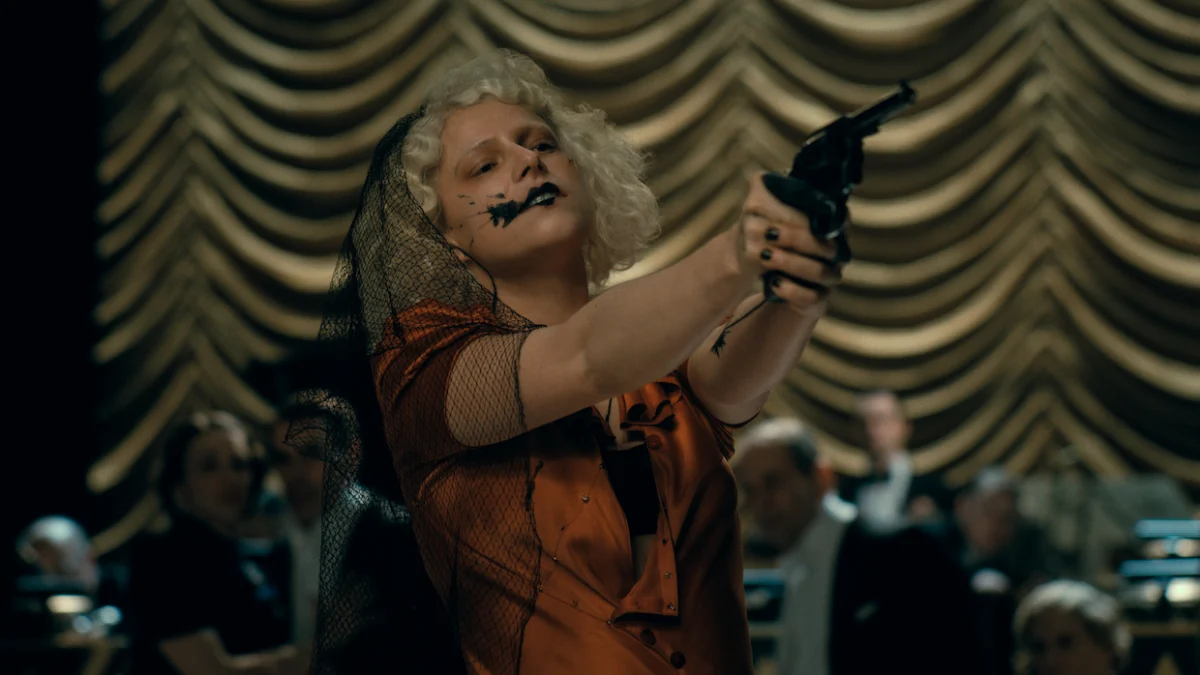
Set against the backdrop of 1936 Chicago and New York, the film transforms into a "cat-and-mouse road movie." Frank enlists the help of Dr. Euphronious, played by Annette Bening, to resurrect a young woman named Ida (also played by Buckley). Upon her "reinvigoration," Ida is reborn as the Bride, a character defined by a frizzy bleached bob, a black-stained tongue, and ink-splatter markings reminiscent of avant-garde Berlin aesthetics. Unlike previous iterations of the character, Gyllenhaal’s Bride is not a passive recipient of life but an active, often volatile participant in her own destiny. Her journey becomes a "romantic caper" punctuated by violence, as she and Frank navigate a world that views them as both marvels and monsters.
Technical Evolution and Production Scope
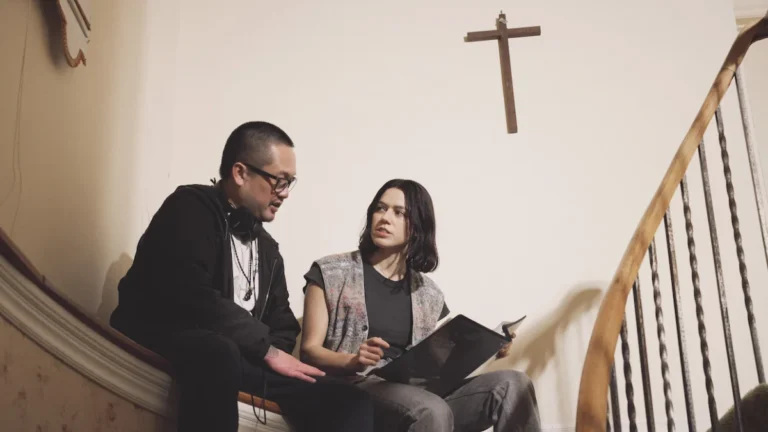
The transition from The Lost Daughter to The Bride! represents a significant escalation in Gyllenhaal’s technical resources. While her debut was characterized by a minimalist approach—notably lacking a dolly track and limited to a handful of lenses—The Bride! utilizes the full breadth of modern cinematic tools, including IMAX-certified cameras. This shift in scope allows for a "jewel-toned" visual palette that contrasts the gritty reality of the Great Depression with the heightened, often garish glamor of the Jazz Age ballroom scene.
Gyllenhaal’s decision to employ IMAX technology for a character-driven genre piece reflects a broader trend in Hollywood where "auteur" directors are increasingly given access to large-format tools previously reserved for action blockbusters. According to industry reports, the production involved complex set designs and period-accurate costuming, intended to ground the supernatural elements of the story in a tangible, historical reality. The director noted that the availability of these tools allowed for a more expansive "cinematic language," enabling the film to oscillate between the intimacy of a love story and the visceral impact of a high-stakes thriller involving getaway cars and machine-gun showdowns.
The Literary and Historical Context of the Frankenstein Mythos
To understand the significance of Gyllenhaal’s interpretation, one must look at the history of the source material. Mary Shelley’s 1818 novel, Frankenstein; or, The Modern Prometheus, famously includes the creature’s demand for a mate: "Shall each man find a wife for his bosom, and each beast have his mate, and I be alone?" In the novel, Victor Frankenstein begins creating a female creature but destroys it before completion, fearing that the two might breed a "race of devils."
In the 1935 film Bride of Frankenstein, Elsa Lanchester’s titular character appears only in the final minutes, famously hissing at her intended mate before the laboratory is destroyed. Gyllenhaal’s version seeks to fill this historical vacuum. By giving the Bride a voice and a central narrative role, the film addresses what Gyllenhaal describes as the "unthinkable" thoughts Mary Shelley might have harbored but felt unable to publish in the early 19th century. This meta-textual approach positions the film as a dialogue between two centuries of female creative struggle.
The Collaborative Creative Process and Cast Dynamics
The production of The Bride! is notable for its ensemble cast of high-profile collaborators and Gyllenhaal’s own family members. Christian Bale’s portrayal of Frank is described as "ruggedly handsome" yet "stitched up," a performance that balances the character’s traditional physical imposition with a "tenor of total devotion." Bale, known for his transformative physical roles, reportedly brought a vulnerability to the monster that centers the film’s romantic core.

The inclusion of Peter Sarsgaard, Gyllenhaal’s husband, and her brother, Jake Gyllenhaal, adds a layer of personal history to the production. Jake Gyllenhaal plays Ronnie Reed, a fictional Hollywood star who serves as a foil to Frank’s monstrousness, representing an "ideal masculinity" that eventually proves hollow. Maggie Gyllenhaal has emphasized that working with family and frequent collaborators fosters an environment of mutual respect, allowing actors to "push themselves to the edge." This sense of safety on set is particularly relevant given the film’s heavy themes of sexual harassment and societal rejection.
Feminist Undercurrents and the Influence of #MeToo
A defining characteristic of The Bride! is its overt alignment with contemporary feminist movements. The film’s protagonist adopts mantras such as "I would prefer not to" and "Me too," lines that intentionally bridge the gap between 1936 and the present day. These references serve as a reminder of Gyllenhaal’s active involvement in the #MeToo and #TimesUp movements.
In the film, the Bride’s outbursts of frustration become a "battle cry" for women across the country, leading to headlines like "Killer Bride Ignites A Revolution." The violence she and Frank perpetrate is framed as self-defense against a society that views the Bride as an object to be groped or controlled. By enacting "consequences for disrespecting women," Gyllenhaal’s script functions as a cathartic exploration of female rage. The Bride’s transition from a victim of a mob boss’s henchmen (in her previous life as Ida) to a "terrorist" hunted by a detective (Sarsgaard) and his assistant (Cruz) mirrors the systemic pushback faced by women who challenge traditional power structures.
Industry Statistics and the Landscape for Female Directors
Despite the high profile of Gyllenhaal and her cast, the film enters a market where female directors still face significant statistical hurdles. According to recent industry data cited by Gyllenhaal, only 7% to 8% of major films last year were helmed by women. This disparity highlights the "rarity" of a woman being entrusted with a project of this scope and technical complexity.
Furthermore, the initial critical reception of The Bride! has been more polarized than that of The Lost Daughter. While her debut was a consensus critical darling, earning three Academy Award nominations and winning Best Screenplay at the Venice Film Festival, The Bride! has faced harsher critiques from some outlets. The New York Post, for instance, dismissed the film with the headline "Leave her at the altar!" This divide often characterizes films with a "punk sensibility," which may alienate traditionalists while deeply resonating with audiences seeking unconventional narratives.
Broader Implications and the Future of Genre Cinema
The Bride! stands as a testament to Gyllenhaal’s commitment to portraying "messy" and "bad" women—characters who refuse to adhere to social conventions. By reworking a foundational myth of Western literature, Gyllenhaal is not just telling a horror story; she is challenging the very foundations of cinematic language, much of which was historically developed without female input.
The film’s focus on the "monstrous aspects" of love and connection suggests that true intimacy requires a frightening level of bravery—the courage to be seen in one’s entirety, including the parts that are "terrified and ashamed." As the film rolls out to global audiences, its success will likely be measured not just by box office returns, but by its ability to spark conversation about the roles women are permitted to play both in front of and behind the camera.
Gyllenhaal’s provocation to the audience—"Everyone says they want something new. Well, alright. Can you take it?"—serves as a fitting coda for a film that refuses to be ignored. Whether The Bride! becomes a cult classic or a divisive outlier, it marks a significant moment in the evolution of the Gothic thriller, proving that even a century-old monster can be reinvigorated with new, and perhaps more dangerous, life.