



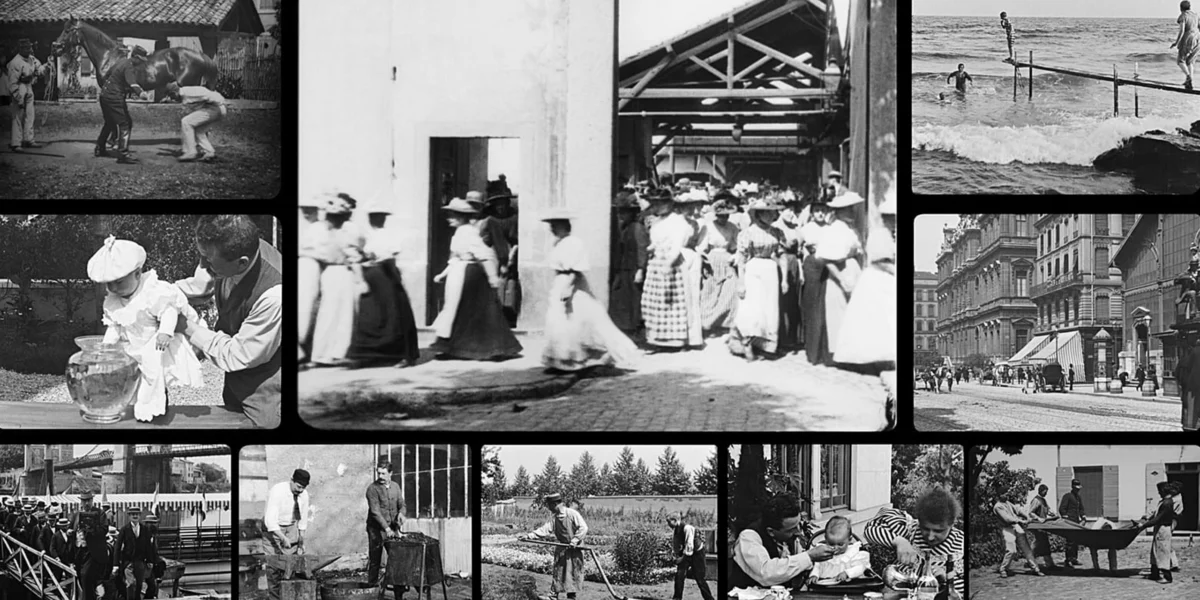
Thierry Frémaux, a luminary in the world of cinema and the driving force behind prestigious institutions like the Lumière Institute, the Lumière Film Festival, and the Cannes Film Festival, presents a profound exploration into the nascent days of filmmaking with his documentary, "Lumière, Le Cinéma!". This cinematic endeavor is not merely a film; it is a meticulously curated journey guided by Frémaux himself, offering audiences an intimate look at over 100 short films created by the pioneering Lumière brothers, Auguste and Louis, alongside their collaborators. The documentary meticulously unearths both celebrated and seldom-seen works, positioning itself as an essential text for understanding the very genesis of cinema.
At its core, "Lumière, Le Cinéma!" delves into the foundational innovations that the Lumière brothers introduced to the world. Their early films, often characterized by their brevity and observational nature, were groundbreaking in their establishment of fundamental filmmaking techniques. Frémaux highlights their pioneering work in framing, demonstrating how they learned to compose shots and guide the viewer’s eye. The concept of staging, even in its simplest form, was explored, showing how they arranged their subjects and environments to create compelling visual narratives. Crucially, the film underscores the brothers’ early experiments with narrative storytelling, revealing how they began to craft sequences of images that conveyed meaning and evoked emotional responses, laying the groundwork for the cinematic language we understand today.
The documentary serves as both a historical chronicle and a philosophical reflection on the medium. It traces the lineage of film from its humble beginnings to its current status as a global art form and powerful cultural force. By presenting the Lumière brothers’ work through the lens of Frémaux’s expertise, the film becomes a meditation on cinema’s enduring capacity to capture the ephemeral nature of reality while simultaneously unlocking the boundless realms of imagination. It underscores the profound and lasting legacy of the Lumières, acknowledging their foundational impact on the art and industry of filmmaking.
The Genesis of Cinema: A Curated Retrospective
The Lumière brothers, Auguste (1862-1954) and Louis (1864-1948), are widely credited with the invention of the cinematograph, a device that served as both a camera and a projector, and with staging the first public film screening on December 28, 1895, at the Salon Indien du Grand Café in Paris. This historic event is often cited as the birth of cinema as a commercial and artistic enterprise. Their early films, typically less than a minute long, captured everyday life with remarkable realism. Titles such as "Workers Leaving the Lumière Factory" (La Sortie de l’usine Lumière à Lyon, 1895), "The Sprinkler Sprinkled" (L’Arroseur arrosé, 1895), and "The Arrival of a Train at La Ciotat Station" (L’Arrivée d’un train en gare de La Ciotat, 1896) are not just historical artifacts; they are seminal works that demonstrated the power of moving images to engage and fascinate audiences.
Frémaux’s selection of over 100 films for "Lumière, Le Cinéma!" provides an unparalleled opportunity to witness the evolution of these early techniques. The documentary doesn’t just present the films; it contextualizes them, offering insights into the specific choices made by the filmmakers. For instance, the careful consideration of camera placement in "Workers Leaving the Lumière Factory" not only documents the end of a workday but also establishes a sense of scale and activity. The comedic staging and simple narrative arc of "The Sprinkler Sprinkled" showcase the brothers’ early understanding of how to create humor through visual gags and relatable situations. Even the seemingly simple act of filming a train arriving at a station, as in "The Arrival of a Train," had a profound impact, creating a visceral experience for audiences who had never before seen such a spectacle on screen, famously leading to apocryphal tales of viewers fleeing the theater in terror.
Thierry Frémaux: A Guardian of Cinematic Heritage
Thierry Frémaux’s role as director of the Lumière Institute and the Lumière Film Festival in Lyon, France, places him at the very heart of the legacy of the Lumière brothers. The Institute, founded to preserve and promote the work of the pioneers, houses an extensive archive of their films and equipment. Frémaux’s deep immersion in this archive, coupled with his extensive knowledge of film history and his leadership at Cannes, provides him with a unique perspective to curate and present this material.
His involvement in "Lumière, Le Cinéma!" is not that of an outsider looking in, but rather an insider guiding the audience through a deeply personal and scholarly engagement with the origins of his passion. He acts as both curator and narrator, his presence in the film lending an authoritative and intimate tone. The documentary features an interview with Frémaux, offering a direct connection to the filmmaker’s thoughts and motivations behind this ambitious project. This personal touch is crucial in demystifying the early days of cinema, transforming what could be a dry historical account into an engaging and accessible exploration.

The Enduring Impact: From Innovation to Art Form
The implications of the Lumière brothers’ work extend far beyond their immediate technological achievements. They not only invented a new medium but also began to define its aesthetic and narrative possibilities. Their focus on capturing reality, albeit in short, observational bursts, established a documentary impulse that continues to be a vital strand in filmmaking. Simultaneously, their experiments with staged scenes and simple narratives laid the foundation for fiction filmmaking, demonstrating the power of cinema to entertain, to tell stories, and to evoke emotions.
"Lumière, Le Cinéma!" highlights how these early innovations were not isolated incidents but rather the bedrock upon which all subsequent cinematic developments were built. The concept of a "shot," the importance of editing (even in its rudimentary form), the power of visual storytelling – all these elements can be traced back to the Lumière brothers’ foundational experiments. Their work democratized filmmaking, making it accessible through the cinematograph, and in doing so, they sparked a global phenomenon that would transform culture, communication, and art.
Context and Presentation: The MoMA Engagement
The film’s current screening at the Museum of Modern Art (MoMA) in New York City, distributed by Janus Films, signifies its importance within the broader landscape of film exhibition and preservation. MoMA, renowned for its extensive film collection and commitment to showcasing cinematic heritage, provides an ideal venue for a documentary that delves into the very roots of the medium. Janus Films, a leading distributor of art-house and foreign films, further underscores the film’s artistic and cultural significance.
This engagement at MoMA is more than just a theatrical run; it’s an affirmation of the enduring relevance of the Lumière brothers’ work and Frémaux’s interpretation of it. It offers New York audiences a unique opportunity to engage with the origins of cinema in a way that is both educational and profoundly moving. The curated nature of the film, combined with Frémaux’s insightful guidance, transforms a viewing experience into an active learning process, connecting contemporary audiences with the very first moments of cinematic wonder.
A Look Ahead: The Continuous Adventure of Cinema
The subtitle "The Adventure Continues" is not merely a marketing tagline; it encapsulates the spirit of the documentary and the ongoing evolution of cinema. The Lumière brothers’ innovations were not an end point but a beginning. Their work ignited a fire that has continued to burn and evolve for over a century, leading to the diverse and sophisticated cinematic landscape we know today.
Frémaux’s documentary serves as a powerful reminder that even as technology advances and artistic forms diversify, the fundamental principles established by the Lumière brothers remain relevant. The ability to capture light, to frame a moment, to tell a story through images – these are the core elements that continue to define cinema. "Lumière, Le Cinéma!" invites audiences to appreciate the foundations of this extraordinary art form and to recognize that the adventure of cinema, from its earliest flickering images to its most ambitious modern productions, is a continuous and ever-expanding journey.
The film’s presentation at MoMA and its availability through Janus Films ensures that this vital exploration of cinematic origins is accessible to a wide audience. It is a testament to the enduring power of the Lumière legacy and Thierry Frémaux’s dedication to sharing it with the world. As audiences engage with these early films, they are not just witnessing history; they are participating in the ongoing story of cinema, a story that began with the Lumière brothers and continues to unfold with each new film that graces the screen. The documentary is an invitation to revisit the magic of those first moving images and to understand how they paved the way for the art form that continues to captivate and inspire us today.