

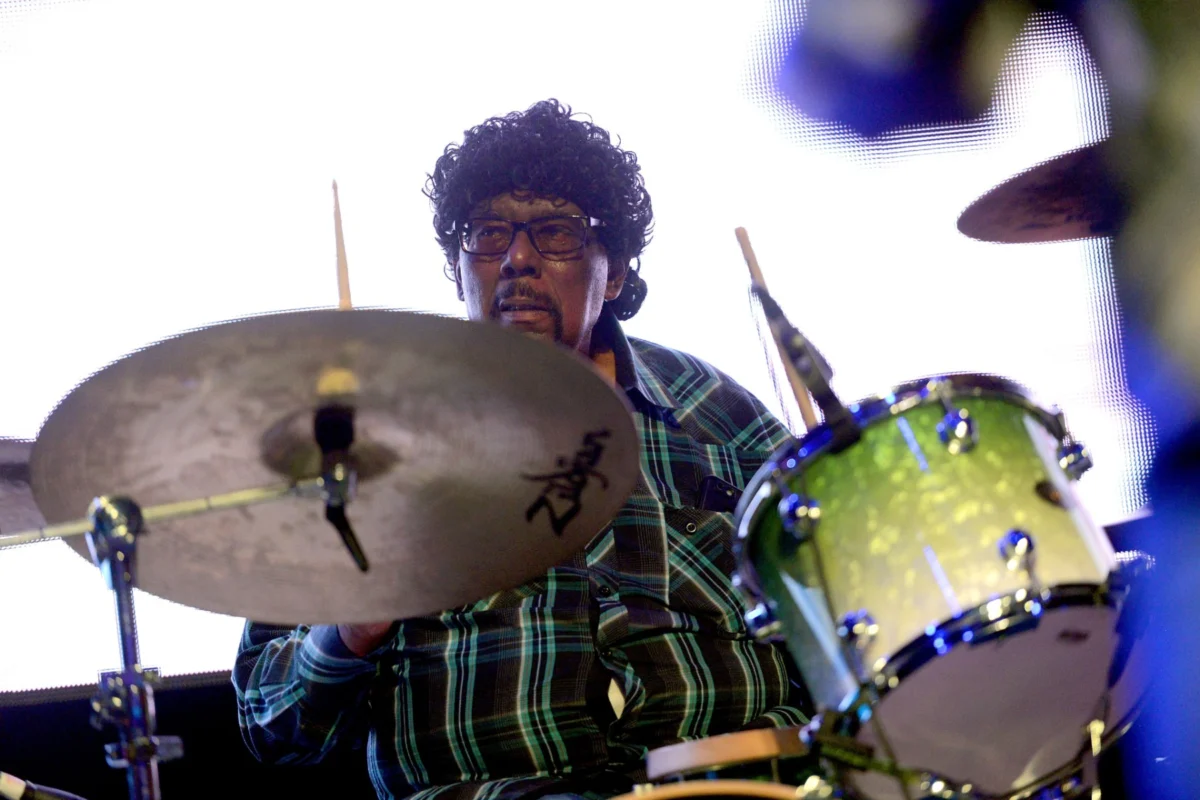
The music world is in mourning following the passing of James Gadson, a drummer whose unparalleled talent and distinctive groove provided the heartbeat for countless iconic songs across genres ranging from soul and funk to disco and beyond. He was 86. His wife, Barbara Gadson, confirmed his death on Thursday, April 2, stating that he had recently been facing health challenges, including surgery and a fall that resulted in a back injury. Gadson’s profound impact on the sonic landscape of popular music was widely acknowledged, with tributes quickly pouring in from a constellation of artists he collaborated with and inspired.
A Career Defined by Groove and Versatility
James Gadson’s career spanned over six decades, establishing him as one of the most sought-after and respected session drummers in the industry. His ability to lay down a perfect, danceable groove, coupled with his innate musicality, made him an indispensable collaborator for a staggering roster of legendary artists. He was the rhythmic backbone for enduring hits by Bill Withers, including the anthemic "Lean on Me" and the gritty "Use Me." His infectious beats propelled The Jackson 5’s "Dancing Machine" and Diana Ross’s disco-infused "Love Hangover" into chart-topping successes.
Gadson’s contributions extended to Marvin Gaye’s sensual masterpiece "I Want You," Thelma Houston’s powerhouse rendition of "Don’t Leave Me This Way," and Charles Wright & the Watts 103rd Street Rhythm Band’s enduring call to action, "Express Yourself." This period, primarily the 1970s, solidified Gadson’s reputation as a master of funk, soul, and disco rhythms, defining the sound of an era.
The Philosophy of the Groove
Gadson himself articulated a deep understanding of the essence of his craft. In a 2007 interview with Modern Drummer, he explained his approach to creating danceable rhythms: "Most grooves, especially for dance music, are very simple," he stated. "Even so, to learn them, you have to slow them down. A lot of times we do all these rudimental things to see how fast we can play. I think you have to slow it all down and simplify it. Then you can kind of feel whether it’s danceable or not." This philosophy underscores his ability to imbue even the most straightforward beats with an irresistible, infectious quality that resonated with audiences worldwide.
A Pantheon of Collaborators
The sheer breadth of Gadson’s recorded output is a testament to his versatility and enduring appeal. Beyond the artists already mentioned, his drumming graced recordings by The Temptations, Leonard Cohen, Bobby Womack, B.B. King, Barbra Streisand, Ray Charles, Gladys Knight, Patti LaBelle, Herbie Hancock, Paul McCartney, D’Angelo, Beck, Kelly Clarkson, Justin Timberlake, Lana Del Rey, and Harry Styles. This extensive list highlights his ability to adapt his unique style to a diverse range of musical landscapes, earning him the respect of artists across generations and genres.
Early Life and Musical Genesis
Born James Gadson on June 17, 1939, in Kansas City, Missouri, his immersion in music began early. He hailed from a musical family, with his father, also a drummer, fostering his early interest. Gadson and his brother were given cornets, leading them to participate in their school’s drum and bugle corps. During his teenage years, he sang doo-wop with a local group called The Carpets. His musical journey took a pivotal turn while he was stationed in Louisiana with the Air Force, where he discovered the burgeoning sounds of funk music. After his military service, he joined his brother’s band, initially playing keyboards and singing, but concurrently teaching himself the drums. This period of self-discovery and immersion in different musical roles laid the groundwork for his future success.
Gadson’s early professional experiences included playing with Charles Wright & the Watts 103rd Street Rhythm Band, where he contributed to several albums. He also served as a drummer for touring artists passing through Kansas City, including luminaries like Hank Ballard & the Midnighters, Jimmy Reed, Sam Cooke, and Otis Redding. Reflecting on these formative experiences, he admitted to Modern Drummer that his early attempts at R&B drumming were challenging. "At first, during the time I didn’t really know how to play R&B, it was awful," he confessed. "I wouldn’t even charge them, it was so bad. I felt bad about wasting their studio time. I couldn’t keep a steady pattern because I was coming from a free-jazz mindset." This honest self-assessment reveals a dedication to honing his craft and a commitment to continuous improvement.

Tributes from the Music Community
The news of Gadson’s passing elicited widespread sorrow and heartfelt tributes from across the music industry. His influence and the joy he brought through his drumming were evident in the messages shared by his peers and admirers.
Musician Beck, a frequent collaborator, expressed his profound sadness on Instagram: "My heart is heavy at the passing of my old friend the legendary drummer James Gadson," he wrote. "He played drums on many of my records over the decades, from Midnite Vultures on, and has been a significant part of the sound of so many of my songs." Beck further reflected on Gadson’s legacy, stating, "I feel fortunate to have known this gentle giant of a man who was such a musical force and left his mark on so much classic music, from Bill Withers to ‘I Will Survive.’" This statement underscores Gadson’s broad reach and the deep personal connection he forged with those he worked with.
Questlove, drummer for The Roots and a respected music historian, also paid homage on Instagram, highlighting Gadson’s unique contribution to rhythm. "Some drummers are soulful. Some drummers are funky. Some drummers are rockin’. Some drummers are swinging—but NO drummer has impacted the art of breakbeat drumming (danceable drums) like James Gadson," he declared. His assessment emphasizes Gadson’s mastery of creating grooves that were not only technically proficient but also inherently designed to make people move.
Ray Parker Jr., another artist who shared a long history with Gadson, commented on Instagram, stating, "We played together over 50 years. He changed the world." This sentiment speaks to the transformative power of Gadson’s drumming and its enduring influence on the trajectory of popular music.
The Significance of Gadson’s Contribution
James Gadson’s legacy is not merely defined by the number of hit songs he played on, but by the quality and consistency of his rhythmic contributions. In an era where electronic drums and programmed beats have become increasingly prevalent, Gadson represented the pinnacle of organic, human-powered groove. His ability to translate emotion and energy into percussive patterns was a rare gift. He understood that a drum beat was more than just a tempo; it was the foundation upon which melodies and lyrics were built, the pulse that connected artist to audience.
His career also highlights the crucial, often unsung, role of session musicians. These individuals are the architects of sound behind the scenes, lending their expertise to shape the sonic identity of countless records. Gadson’s extensive discography serves as a masterclass in the art of drumming, offering invaluable lessons in feel, timing, and musicality. His influence can be heard in the work of contemporary drummers who strive to capture the same soulful swagger and undeniable groove that characterized his playing.
The fact that his playing on tracks like "I Will Survive," a disco anthem of empowerment, is remembered alongside his work on Bill Withers’ introspective ballads demonstrates the remarkable range and adaptability of his talent. He could deliver the driving force for a dance floor classic and provide the subtle, nuanced support for a deeply personal ballad with equal mastery.
Broader Implications and Enduring Influence
The passing of James Gadson marks the end of an era for a certain kind of musical artistry. While his physical presence is gone, his rhythmic imprint on music history is indelible. His recordings will continue to be studied, admired, and enjoyed by musicians and fans for generations to come. His life’s work serves as a powerful reminder of the profound impact that a skilled and dedicated drummer can have on the cultural landscape. The conversations around his legacy will undoubtedly focus on his ability to elevate any song he played on, imbuing it with a life and energy that only his touch could provide. His contributions are a permanent fixture in the soundtrack of modern life, a testament to a true master of his instrument.