

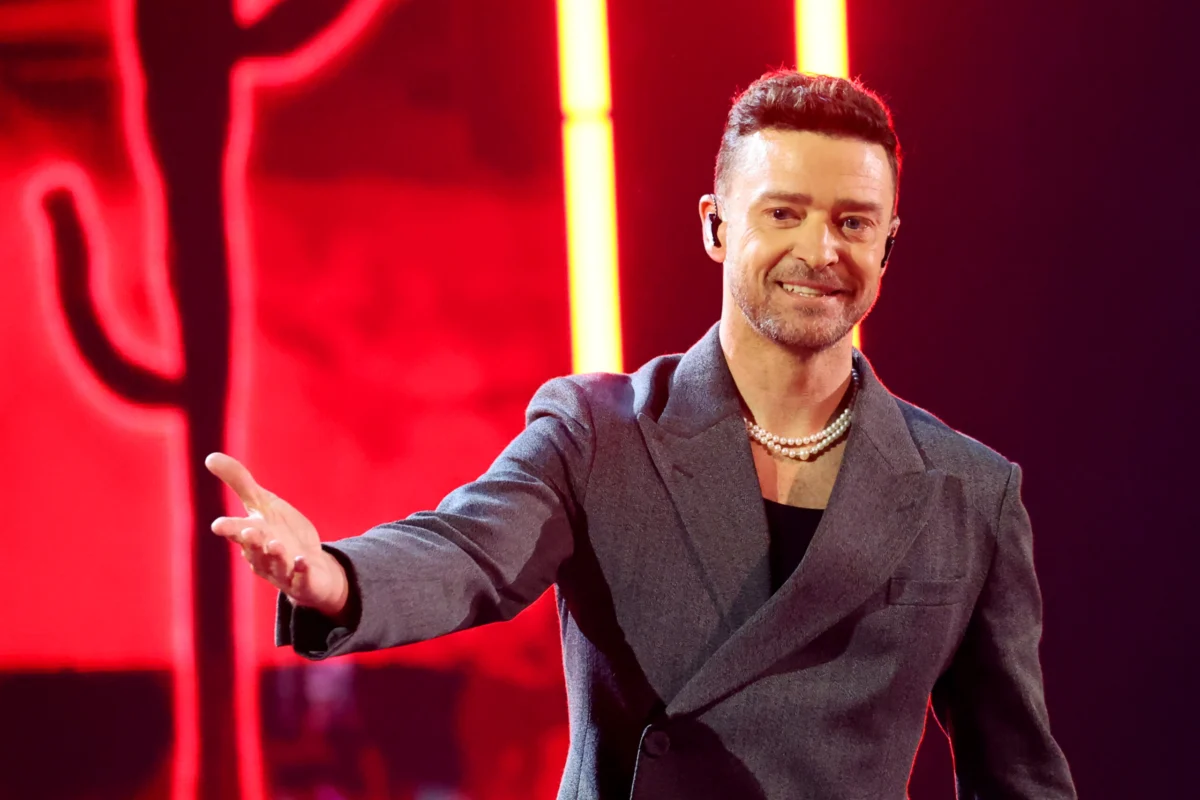
The highly anticipated and controversial police body-camera footage capturing pop superstar Justin Timberlake’s June 2024 arrest for driving under the influence (DUI) in Sag Harbor, an affluent village on eastern Long Island, was released late last week. This public disclosure followed a protracted legal struggle waged by the Grammy-winning artist against the small former whaling town, aiming to suppress what his legal team deemed "embarrassing" and "highly personal" material. The dispute culminated in a negotiated release, which included the redaction of specific moments that his attorneys argued constituted a significant violation of the singer’s privacy, but nevertheless unleashed a torrent of viral content and sparked widespread online discussion regarding celebrity treatment by law enforcement and the implications of public transparency.
The Arrest in Sag Harbor: A June 2024 Incident
The incident unfolded during the summer of 2024, a period when the Hamptons are abuzz with high-profile visitors. Justin Timberlake, then visiting the tony beach enclave of Sag Harbor, was pulled over by Sag Harbor Police officers in the early hours of June 18, 2024, after reportedly committing several traffic infractions. Police records indicated he failed to stop at a stop sign and was observed drifting into oncoming traffic. Upon interaction, officers suspected intoxication.
The initial encounter, now seen in the widely circulated bodycam footage, shows Timberlake attempting to assert his celebrity status. "I’m on a world tour," he reportedly told an officer who inquired about his activities. When met with a puzzled "A what?", Timberlake clarified, "A world tour… I’m Justin Timberlake." This exchange quickly became one of the most memorable and memeable moments from the footage, highlighting the contrast between his perceived status and the standard procedures of law enforcement.
Following the initial stop, Timberlake was asked to perform a series of field sobriety tests. The footage depicts him visibly inebriated, struggling to complete a simple heel-to-toe, nine-step walk, a key indicator often used by officers to assess impairment. His inability to successfully perform this test reportedly solidified the officers’ decision to place him under arrest for driving while intoxicated. He was subsequently handcuffed and transported to the Sag Harbor Police Department precinct, where he underwent further questioning and was eventually placed alone in a holding cell for the remainder of the night. These moments, including his questioning while handcuffed to a table and his eventual solitary confinement, were all captured by police body cameras, leading to the extensive footage that became the subject of the recent legal battle.
A Contentious Legal Battle for Privacy
The path to the footage’s release was anything but straightforward. Beginning shortly after the June 2024 arrest, several news outlets, exercising their rights under the Freedom of Information Act (FOIA) — or more specifically, New York’s Freedom of Information Law (FOIL) — filed requests for the body-camera footage. For 21 months, these requests remained unfulfilled as the legal machinery slowly turned.
In early March of this year, when the Sag Harbor Village Police Department announced its intention to release the eight hours of footage, Timberlake’s legal team, led by attorney Edward Burke Jr., swiftly initiated legal action. They filed for a temporary restraining order and a preliminary injunction to prevent the town from making the footage public, arguing that its release would constitute a severe invasion of privacy. On a Monday in early March, Burke and his team met with a Sag Harbor judge, presenting a robust argument that an unedited release would "devastate" Timberlake’s privacy by exposing "intimate, highly personal and sensitive details." They contended that such a disclosure would cause "severe and irreparable harm" to the singer’s reputation, subjecting him to "public ridicule and harassment." From a legal perspective, they sought either an outright block on the release or a private judicial review to ensure that any content not strictly subject to disclosure under New York’s FOIL was excluded.
The core of the legal argument revolved around the balance between public transparency, enshrined in FOIL, and an individual’s right to privacy. New York’s FOIL generally mandates that government records, including police bodycam footage, be made available to the public unless specific exemptions apply. These exemptions often include information that, if disclosed, would constitute an unwarranted invasion of personal privacy, endanger life or safety, or reveal confidential investigative techniques. Timberlake’s attorneys aimed to leverage these privacy exemptions, arguing that the footage went beyond mere public record to expose deeply personal and potentially humiliating moments.
Despite the fervent legal challenge, the village and its police department maintained their obligation to comply with statutory disclosure requirements. The law firm of Vincent Toomey, representing the Village, issued a statement following the resolution: "Since Justin Timberlake’s arrest, the Village and Police Department have attempted to comply with the mandates of the Freedom of Information Law. We are pleased the litigation regarding the release of video footage related to Mr. Timberlake has been resolved and the Village is able to comply with its statutory obligation to release the material that is subject to disclosure under FOIL." The eventual outcome was an agreement on a partially redacted version, allowing for the footage’s release on Friday, after a heated back-and-forth. Timberlake’s attorneys, notably, did not issue a public statement or respond to inquiries from The Hollywood Reporter following the footage’s release.
Freedom of Information vs. Celebrity Rights: A Broader Discussion
The legal battle over Timberlake’s bodycam footage reignites a perennial debate about the scope of public access to information, particularly when it concerns public figures. Police body cameras, increasingly prevalent in law enforcement, are hailed as tools for accountability and transparency, offering an objective record of police-citizen interactions. However, their use also raises complex questions about individual privacy, especially for those in the public eye.
For public figures like Justin Timberlake, an arrest, even for a common offense like DUI, becomes a global spectacle. The release of raw, unedited footage can amplify the personal humiliation inherent in such situations. Lawyers specializing in media law and privacy often point out that while public figures forfeit some degree of privacy by virtue of their fame, this does not grant carte blanche for the dissemination of every intimate detail of their lives, especially during moments of vulnerability or legal distress. The argument is that FOIL laws, while vital for governmental transparency, were not designed to serve as tools for public shaming or to satisfy prurient interest, but rather to ensure accountability and inform public discourse on matters of governance.
Conversely, proponents of full disclosure argue that transparency applies equally to all citizens, regardless of their celebrity status. They contend that any attempt by a public figure to suppress footage, even with privacy claims, could be perceived as an attempt to leverage their influence to avoid public scrutiny that an ordinary citizen would face. This perspective emphasizes the principle that the law should be applied uniformly, and police interactions, being a matter of public record, should be accessible to all, providing insight into how law enforcement operates and ensuring fairness. The negotiated redactions in Timberlake’s case suggest a compromise, attempting to balance these competing interests, though the precise nature of the redacted material remains undisclosed.
Viral Moments and Public Scrutiny
Upon its release, the redacted footage quickly became a sensation across social media platforms over the weekend. Several moments, both awkward and illuminating, "caught fire," generating memes, sparking debates, and reigniting discussions about Timberlake’s public image and celebrity culture.
One of the most widely shared clips features Timberlake, handcuffed to a table at the precinct, expressing his disbelief at his treatment. "You boys treat me like a criminal," he tells two officers. The officers, in response, calmly assure a seemingly baffled Timberlake that this is standard procedure for any member of the public accused of drunk driving, underscoring the legal system’s impartiality, at least in principle. This exchange resonated with many, drawing attention to the disparity between how celebrities often live and the realities faced by ordinary citizens interacting with the law.
Another moment that gained significant traction online was an exchange involving an unidentified woman who was with Timberlake at the time of his arrest. As he was being placed in the squad car, the woman rushes up to officers, expressing shock and insisting that Timberlake be given his cell phone. "Stop it. No way. Don’t say it," she exclaims, before questioning, "You’re arresting Justin Timberlake right now? Stop it. Why?" She then attempts to appeal to the officers’ potential fandom, asking, "Can you guys please just do me a favor, because you loved ‘Bye Bye Bye’ or ‘SexyBack’?" This plea, an attempt to invoke celebrity influence, further highlighted the perceived disconnect between the celebrity world and the everyday realities of law enforcement.
Perhaps one of the most unexpected and debated moments occurred when Timberlake was handed a booking form. After examining it, he turns to an officer and, referring to his listed race, exclaims, "White?!" This moment played awkwardly online, with many interpreting it as highlighting his apparent surprise at an interaction with law enforcement that people of color experience far more frequently, often with graver consequences. It unintentionally spurred conversations about racial privilege and systemic biases within the justice system, even in a seemingly innocuous context.
Broader Context: Timberlake’s Public Image
This incident and the subsequent viral spread of the bodycam footage arrive at a particularly sensitive time for Justin Timberlake’s public image. Over the past few years, the singer has faced renewed scrutiny and a significant reevaluation of his past actions and public persona.
The fallout from the Super Bowl XXXVIII halftime show controversy in 2004, involving Janet Jackson, has been revisited with a more critical lens in recent years, with many accusing Timberlake of failing to adequately support Jackson and benefiting from a narrative that disproportionately harmed her career. More recently, the release of Britney Spears’ bestselling memoir, "The Woman in Me," in late 2023, brought a fresh wave of public discussion and criticism regarding their highly publicized relationship in the late 1990s and early 2000s. Spears’ account reshaped public perceptions, painting a picture that challenged Timberlake’s long-held "good guy" image and led to accusations of misogyny and manipulative behavior.
Against this backdrop, the DUI arrest and the candid, unvarnished portrayal in the bodycam footage further complicate Timberlake’s public narrative. The viral moments, particularly his apparent expectation of special treatment and the "White?!" exclamation, feed into existing critiques of celebrity privilege and an alleged lack of self-awareness. For a public figure attempting to navigate a career in an era of heightened social consciousness and accountability, such incidents can have a profound and lasting impact on public perception and commercial viability. Managing such a crisis requires careful public relations strategy, often involving transparent communication and demonstrable accountability, neither of which has been fully evident in the immediate aftermath of this footage release.
The Plea Deal and Legal Ramifications
While the release of the bodycam footage is a recent development, the legal proceedings for the DUI charge itself concluded earlier. In the summer of 2024, a Suffolk County judge accepted Justin Timberlake’s guilty plea as part of a deal that mitigated his punishment and allowed him to avoid further jail time. As part of his plea agreement, the pop star was required to complete 25 to 40 hours of community service and pay a fine. This outcome is a common resolution for first-time DUI offenders, particularly those who demonstrate cooperation with authorities and whose cases do not involve serious injury or extensive property damage.
The plea deal, reached months ago, separated the legal consequences of the arrest from the ongoing battle over the footage’s public release. While the plea addressed the immediate legal ramifications of the DUI, the fight over the bodycam material was a separate, albeit related, struggle centered on reputation and privacy in the digital age.
The Darker Side: DUI Statistics and Consequences
Amidst the celebrity drama and viral memes, it is crucial not to lose sight of the serious underlying issue: driving under the influence. According to statistics from the National Highway Traffic Safety Administration (NHTSA) and other safety organizations, drunk driving remains a significant public health and safety concern. In the first quarter of 2025 (a projection based on the original text’s data point for 2025, assuming a similar trend), an average of 37 people were killed each day in drunk-driving crashes across the United States. This translates to over 13,000 fatalities annually, a number that has remained stubbornly high despite decades of public awareness campaigns and stricter enforcement.
Beyond fatalities, drunk driving leads to hundreds of thousands of injuries, billions of dollars in economic costs (due to medical expenses, lost productivity, legal fees, and property damage), and untold emotional suffering for victims and their families. Law enforcement agencies, like the Sag Harbor Police Department, are tasked with enforcing DUI laws precisely to prevent these tragic outcomes. The "standard procedure" that Timberlake encountered, including field sobriety tests, arrest, and temporary detention, is a critical component of these efforts, designed to deter impaired driving and hold offenders accountable, regardless of their social standing.
Implications for Public Figures and Transparency
The Justin Timberlake bodycam footage saga serves as a compelling case study on the evolving landscape of celebrity, law enforcement, and media in the digital age. It underscores the dual-edged sword of transparency: while body cameras offer crucial accountability for police and invaluable information for the public, they also pose significant challenges to the privacy of individuals, especially those whose lives are under constant public scrutiny.
For public figures, the incident highlights the diminishing control they have over their image in an era where every interaction can be recorded and instantly disseminated. The internet’s capacity to magnify, dissect, and meme moments of vulnerability means that even meticulously crafted public personas can be swiftly undermined. It reinforces the notion that fame no longer offers an impenetrable shield from the consequences of public behavior or the scrutiny of a hyper-connected audience.
For law enforcement, the episode reaffirms the importance of consistent policies regarding bodycam footage release, balancing legal mandates for transparency with legitimate privacy concerns. The negotiated redaction in this case may set a precedent or at least inform future discussions on how such sensitive material involving high-profile individuals should be handled. Ultimately, the release of Timberlake’s footage, though legally compelled, has transcended a simple news item, becoming a cultural touchstone that prompts broader reflection on accountability, privilege, and the relentless gaze of the public eye.