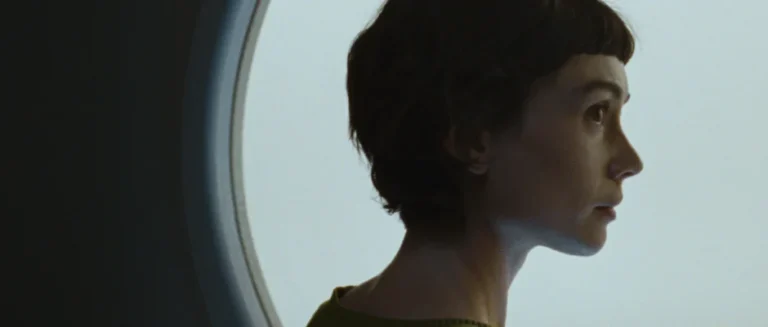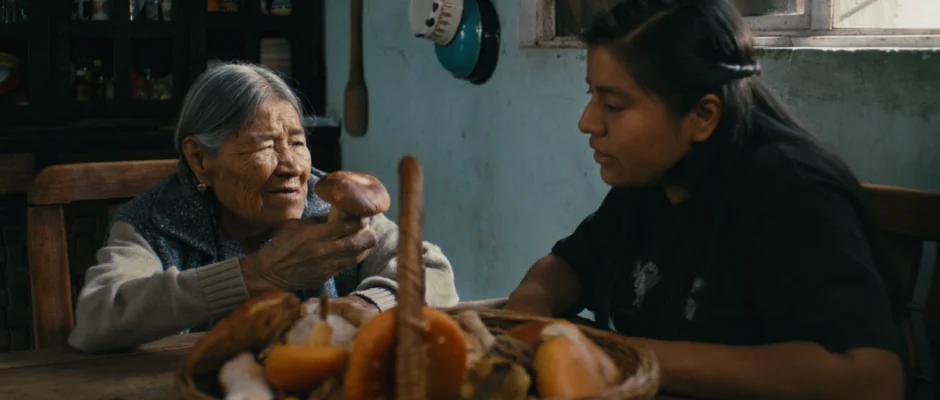



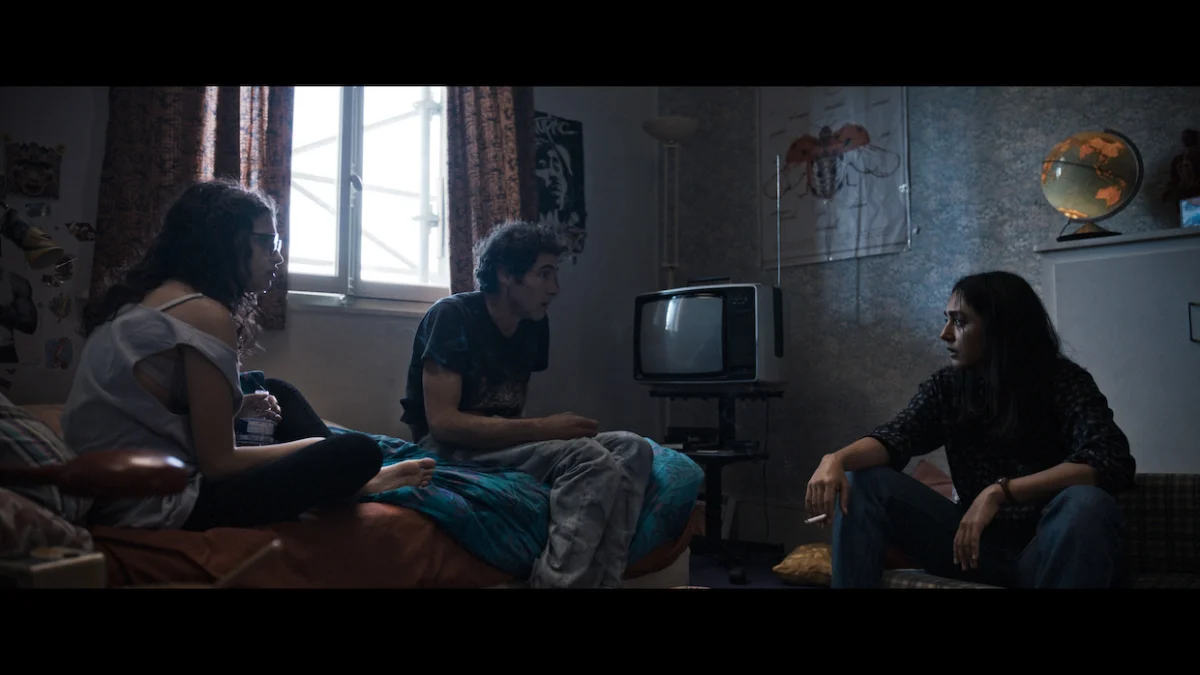
The landscape of contemporary international cinema is set to witness a significant evolution with the release of Alpha, the third feature film from French writer-director Julia Ducournau. Following the visceral success of her 2016 cannibalistic coming-of-age story Raw and her 2021 Palme d’Or-winning body horror Titane, Ducournau has established herself as a premiere voice in the "New French Extremity" movement. In a comprehensive dialogue with fellow filmmaker Robert Eggers, director of The Lighthouse and Nosferatu, Ducournau detailed the creative and personal motivations behind Alpha, a project she describes as a "grounded family drama" despite its fantastical and transformative elements. Distributed by NEON, Alpha is scheduled for a theatrical release on March 27, marking a pivotal moment in Ducournau’s exploration of human connection, societal stigma, and the physical manifestations of grief.
The Narrative Core and the Marbleization Pandemic
Alpha centers on its titular character, a 13-year-old girl portrayed by newcomer Mélissa Boros. The film’s setting is a heightened reality gripped by a peculiar public health crisis: a viral outbreak that causes human organic tissue to gradually turn into marble, while the blood of the infected morphs into red sand. This physical transformation serves as a central metaphor for the film’s exploration of social exclusion and the fragility of the human body.
The protagonist’s mother, played by Golshifteh Farahani, is a physician working in a specialized hospital ward dedicated to treating those afflicted by the "marbleization" disease. The environment is one of clinical neglect and profound social stigma, reflecting historical real-world medical crises. Ducournau has explicitly stated that the film’s pandemic serves as a mirror to the AIDS epidemic that impacted France throughout the 1980s and 1990s. The film portrays the "forgotten" nature of these patients, where basic care is overlooked due to the fear of contagion and the marginalization of the affected populations, which include queer men and individuals struggling with substance abuse.
The family dynamic is further complicated by the presence of Alpha’s uncle, Amin, portrayed by Tahar Rahim. Amin is a long-term heroin user who has lived with the disease for years. When Alpha receives an illicit tattoo at a party, her mother’s anxiety regarding her daughter’s health and the family’s proximity to Amin’s condition triggers a convergence of past and present traumas. The narrative focuses on the co-existence of these three individuals under one roof, analyzing how repressed grief and the fear of mortality shape their interpersonal bonds.
A Chronology of Directorial Evolution
To understand the significance of Alpha, one must look at the trajectory of Julia Ducournau’s career. Born in 1983 to a family of doctors, Ducournau’s work has consistently fixated on the intersection of biology and psychology. Her debut feature, Raw, debuted at the Cannes Film Festival in 2016, gaining notoriety for its graphic depictions of cannibalism and its sharp analysis of female adolescence. The film was a critical success, earning the FIPRESCI Prize and establishing Ducournau as a formidable genre filmmaker.
In 2021, Ducournau made history with Titane, becoming only the second woman to win the Palme d’Or at Cannes. Titane pushed the boundaries of body horror, featuring a protagonist with a titanium plate in her head who develops a supernatural connection with an automobile. While Titane was celebrated for its audacity and its subversion of gender norms, it also faced criticism for its extreme violence.
Ducournau views Alpha not as a departure from these themes but as a refinement of them. In her conversation with Eggers, she noted that while Titane required a feature-length buildup to express "unconditional love," Alpha attempts to confront that emotion frontally. She acknowledged a personal resistance to the vulnerability inherent in the phrase "I love you," a hurdle she sought to overcome through the script for Alpha. By moving away from the "genre spectacle" and focusing on the "grounded" reality of the characters, Ducournau aims to strip away the artifice of horror to reach a more direct emotional truth.
Casting and the Dynamics of Performance
The casting of Alpha reflects Ducournau’s preference for blending established international talent with undiscovered performers. Tahar Rahim, known for his breakout role in A Prophet (2009) and his acclaimed performance in The Mauritanian (2021), was a primary choice for the role of Amin. Ducournau cited Rahim’s "physical approach to character" as a deciding factor. Similarly, Golshifteh Farahani, an Iranian-French actress known for her work in Paterson (2016) and her activism for women’s rights, was cast to bring a sense of grounded compassion to the role of the mother.

The casting of Mélissa Boros as the 13-year-old Alpha was a strategic decision. Ducournau intentionally avoided casting an actual minor due to the dark subject matter and the film’s exploration of burgeoning sexuality. Boros, who was 19 at the time of filming, was selected for her "quirky" and "awkward" physicality, which Ducournau felt accurately captured the discomfort of adolescence and the sensation of inhabiting a body that is rapidly changing.
During the production, Ducournau’s rehearsal process differed significantly from the meticulously pre-blocked approach favored by Robert Eggers. While Eggers utilizes extensive rehearsals to lock in pacing and physical grammar—most notably in his 2019 film The Lighthouse—Ducournau prefers an organic approach. She avoids formal blocking to allow actors to experience the "bodily transformation" in real-time on set. She emphasized that pre-determining movement can lead to a director "fighting" the actors’ bodies rather than working with them. However, she does utilize choreography for specific non-dialogue sequences, such as a scene featuring Alpha and Amin sleeping in synchronization, which she likened to a dance.
Artistic Influences and Visual Symbolism
Alpha’s visual language is heavily influenced by classical art and photography rather than contemporary cinema. Ducournau and her longtime Director of Photography (DP) frequently utilize museum visits and art history as touchstones for their lighting and composition. The "marbleization" imagery itself was chosen for its historical connotations of nobility and immortality. By depicting marginalized patients as marble statues, Ducournau seeks to "memorialize" and "elevate" lives that society has deemed disposable.
Specific influences cited by Ducournau include:
- Winslow Homer: Particularly his use of "freakishly modern" light in 19th-century paintings of night scenes.
- Francis Bacon: Whose visceral depictions of the human form have long influenced Ducournau’s approach to body horror.
- Robert Mapplethorpe: Known for his sculptural approach to photography and his exploration of the queer body.
- Louise Bourgeois and Frida Kahlo: Artists whose work deals extensively with domesticity, trauma, and the female form.
These influences manifest in Alpha through a focus on light and shadow that prioritizes emotional resonance over narrative clarity. Ducournau noted that her goal is to challenge the viewer’s focus within a shot, often lighting the environment in a way that creates a "strange effect" or draws attention away from the primary subject to heighten the atmospheric tension.
Industry Implications and Distribution
The distribution of Alpha by NEON underscores the company’s continued commitment to challenging, auteur-driven international cinema. NEON has previously found immense success with international titles, most notably with Bong Joon-ho’s Parasite, which won the Academy Award for Best Picture in 2020. By positioning Alpha for a late-March release, NEON is signaling confidence in Ducournau’s ability to attract both genre fans and art-house audiences.
The film arrives at a time when the "New French Extremity" is undergoing a transformation. While the movement was originally defined by its transgressive violence in the early 2000s, directors like Ducournau are evolving the style to incorporate more complex social commentary and emotional depth. Alpha represents a maturation of this style, suggesting that the "horror" of the human condition is found not just in physical mutilation, but in the silence of neglected hospital wards and the complexities of familial love.
Conclusion: The "Two Percent of Ecstasy"
For Julia Ducournau, the process of creating Alpha has been one of "masochistic" dedication. She described the screenwriting process as "ninety-eight percent despair and chaos" and "two percent ecstasy." This small margin of creative breakthrough is what sustains her through the "alienating" and "lonely" phases of production.
Alpha stands as a testament to the idea that directing is an extension of writing—a process of "sculpting" a story from a rough rock into a finished, sharpened intention. By confronting her own fears of emotional vulnerability and utilizing the "noble" material of marble to depict the suffering of the marginalized, Ducournau has crafted a film that seeks to transcend the boundaries of genre. As Alpha prepares for its global debut, it invites audiences to look past the spectacle of transformation to find a story about the enduring, often painful, bonds of family.