

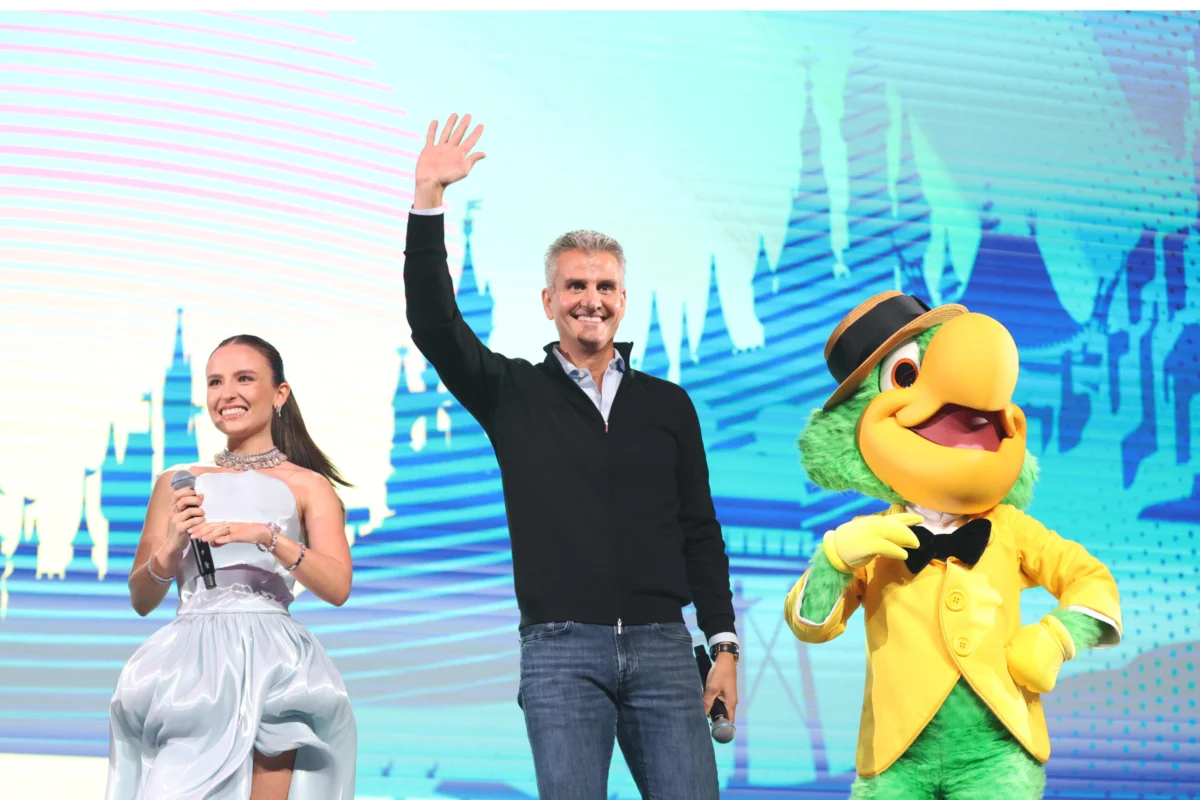
The Walt Disney Company has officially entered a new era of leadership as Josh D’Amaro assumes the role of Chief Executive Officer, succeeding the legendary Bob Iger during the company’s annual shareholder meeting this Wednesday. This transition marks the culmination of an intensive and highly scrutinized succession process intended to stabilize the century-old media conglomerate following years of executive volatility and shifting market dynamics. D’Amaro, who most recently served as the Chairman of Disney Experiences, inherits a sprawling empire that includes world-renowned theme parks, a massive streaming apparatus, a resurgent film studio, and a global consumer products division. As he steps into the top role, he faces the immediate challenge of reconciling Disney’s storied legacy with the demands of a digital-first entertainment landscape and a cautious Wall Street.
The appointment of D’Amaro is seen by many industry analysts as a move toward operational continuity and cultural revitalization. Having been with the company since 1998, D’Amaro is a veteran insider who has held pivotal roles across various divisions, most notably leading the theme parks through the unprecedented challenges of the global pandemic and the subsequent travel rebound. His tenure as Chairman of Disney Experiences was defined by significant capital investment and a focus on integrating popular intellectual property (IP) into physical environments, a strategy that has proven to be a primary engine for the company’s recent financial growth.
A Legacy of Leadership and the Path to the CEO Suite
Josh D’Amaro’s ascent to the chief executive position is the result of a deliberate search by the Disney Board of Directors to find a leader capable of balancing the company’s creative soul with its rigorous financial objectives. At 55 years old, D’Amaro represents a younger generation of leadership compared to his predecessor, yet he possesses nearly three decades of institutional knowledge. His career at Disney began in 1998 at the Disneyland Resort, and he steadily rose through the ranks, serving as President of the Disneyland Resort and later President of Walt Disney World Resort before taking over the entire Parks, Experiences, and Products division in 2020.
Under D’Amaro’s leadership, the Experiences division—which encompasses six resort destinations in the United States, Europe, and Asia, as well as the Disney Cruise Line and the company’s consumer products business—became Disney’s most reliable profit center. Even as the media division grappled with the costly transition to streaming, the parks delivered record-breaking revenue and operating income. D’Amaro’s ability to maintain high margins while navigating complex labor relations and rising operational costs earned him the respect of both internal "Cast Members" and external investors.
Bob Iger, who will remain with the company as a senior advisor and board member until his final retirement on December 31, has praised D’Amaro as an "exceptional leader" who understands the unique DNA of the Disney brand. Iger’s second stint as CEO, which began in late 2022 following the abrupt dismissal of Bob Chapek, was focused on "setting the house in order." This involved a massive corporate reorganization, significant cost-cutting measures totaling billions of dollars, and a renewed focus on creative excellence over content volume. D’Amaro is now tasked with building upon this foundation.
Navigating the Succession Timeline and Corporate Stability
The transition from Iger to D’Amaro is particularly significant given the "succession mess" that characterized the previous handoff in 2020. When Iger first stepped down and named Bob Chapek as his successor, the move was followed by a period of internal friction, public relations challenges, and a perceived disconnect between leadership and the company’s creative core. Iger’s return in 2022 was initially framed as a two-year temporary fix, which was later extended to ensure a more robust succession plan could be enacted.
Throughout 2024 and 2025, the race for the CEO spot was one of the most closely watched narratives in the business world. D’Amaro was often cited alongside other internal heavyweights, including Dana Walden and Alan Bergman (co-chairmen of Disney Entertainment) and Jimmy Pitaro (Chairman of ESPN). Ultimately, the Board’s decision to tap D’Amaro suggests a strategic prioritization of the "Experiences" side of the business, which serves as the physical manifestation of Disney’s IP and a hedge against the volatility of the box office and linear television.
The official announcement of D’Amaro’s appointment in February 2026 provided the market with much-needed clarity. However, the stock market reaction remains cautious. As of Tuesday’s market close, Disney’s stock was down more than 10% year-to-date, reflecting broader concerns about the long-term viability of traditional cable television and the high costs of maintaining a competitive edge in the streaming wars. D’Amaro’s first 100 days will be critical in articulating a vision that reassures shareholders of Disney’s growth trajectory.
Financial Performance and the Core Growth Engines
To understand the task ahead for D’Amaro, one must look at Disney’s recent financial performance. The company’s most recent quarterly earnings reports have highlighted a tale of two halves. On one side, the Disney Experiences division has continued to show strength. Revenue in this segment has been bolstered by increased guest spending at domestic parks and the expansion of the Disney Cruise Line fleet. The recent 70th-anniversary celebrations at the Disneyland Resort in California, where D’Amaro and Iger appeared together in July 2025, served as a high-profile reminder of the enduring appeal of Disney’s physical locations.

On the other side, the Disney Entertainment segment—which includes streaming services Disney+, Hulu, and ESPN+—has only recently reached a milestone of consistent profitability. After years of heavy losses as the company prioritized subscriber growth, a shift toward "path to profitability" has begun to pay off. D’Amaro will need to ensure that the streaming business not only remains profitable but also grows its average revenue per user (ARPU) through advertising-supported tiers and bundled offerings.
Furthermore, the 2025 box office has provided a significant tailwind. After a period of underperformance, Disney reclaimed its position at the top of the global box office with a string of hits. Live-action adaptations like "Lilo & Stitch," animated sequels such as "Zootopia," and the continued expansion of the "Avatar" franchise have demonstrated that Disney’s theatrical "tentpoles" still have the power to draw massive audiences. D’Amaro must ensure this momentum continues, as theatrical success feeds directly into park attractions and merchandise sales.
Global Expansion and Strategic Investments
One of the most ambitious components of D’Amaro’s agenda involves a massive $60 billion investment in the Parks, Experiences, and Products segment over the next decade. This capital expenditure plan is designed to expand capacity, integrate newer IP (such as Marvel, Star Wars, and Frozen) into more locations, and tap into emerging markets.
A cornerstone of this strategy is the expansion into Abu Dhabi. The development of a Disney-themed resort and park in the Middle East represents a significant move to diversify Disney’s geographic footprint and capture a growing market of international travelers. This project, alongside the continued expansion of Tokyo Disney Resort and Shanghai Disney Resort, highlights the "flywheel" effect that D’Amaro is expected to maximize: using global parks to deepen consumer engagement with Disney stories.
Closer to home, Disney is facing intensifying competition in Florida. Universal Destinations & Experiences is set to open its "Epic Universe" theme park in Orlando, posing a direct threat to Disney World’s market share. D’Amaro’s intimate knowledge of the Orlando market will be vital as Disney rolls out its own counter-expansions, including the reimagining of DinoLand U.S.A. at Animal Kingdom and new attractions based on the "Indiana Jones" and "Encanto" franchises.
Broader Implications and the Road Ahead
As Josh D’Amaro takes the helm, he does so at a time when the very definition of a "media company" is being rewritten. Beyond movies and theme parks, Disney is increasingly looking toward interactive entertainment and gaming. The company’s recent partnership with Epic Games—the creator of Fortnite—to create a "persistent universe" for Disney IP signals a move toward capturing the attention of younger demographics who spend more time in digital worlds than in front of a television.
D’Amaro’s leadership style is often described as "approachable" and "fan-forward." He is frequently seen walking the parks, talking to guests, and engaging with employees on the front lines. This "human touch" may be his greatest asset as he attempts to navigate the internal cultural shifts required to modernize a century-old institution.
However, the road ahead is not without obstacles. The decline of the linear television business remains a significant drag on the company’s bottom line, and the future of ESPN in a post-cable world is a complex puzzle that D’Amaro must solve alongside Pitaro. Additionally, the political and social climate continues to pose challenges for a company that strives to be "everything to everyone."
In his first address as CEO during Wednesday’s shareholder meeting, D’Amaro is expected to emphasize a message of "innovation through tradition." By leveraging Disney’s incomparable library of stories and its unmatched physical presence, he aims to create a seamless ecosystem where consumers can interact with Disney characters across every possible touchpoint. The Iger era was defined by acquisition and scale; the D’Amaro era will likely be defined by integration, technological evolution, and the relentless pursuit of operational excellence in a rapidly changing world. As the page turns on this new chapter, the eyes of the world remain fixed on the "House of Mouse" to see if its new architect can maintain the magic while delivering the growth that Wall Street demands.