

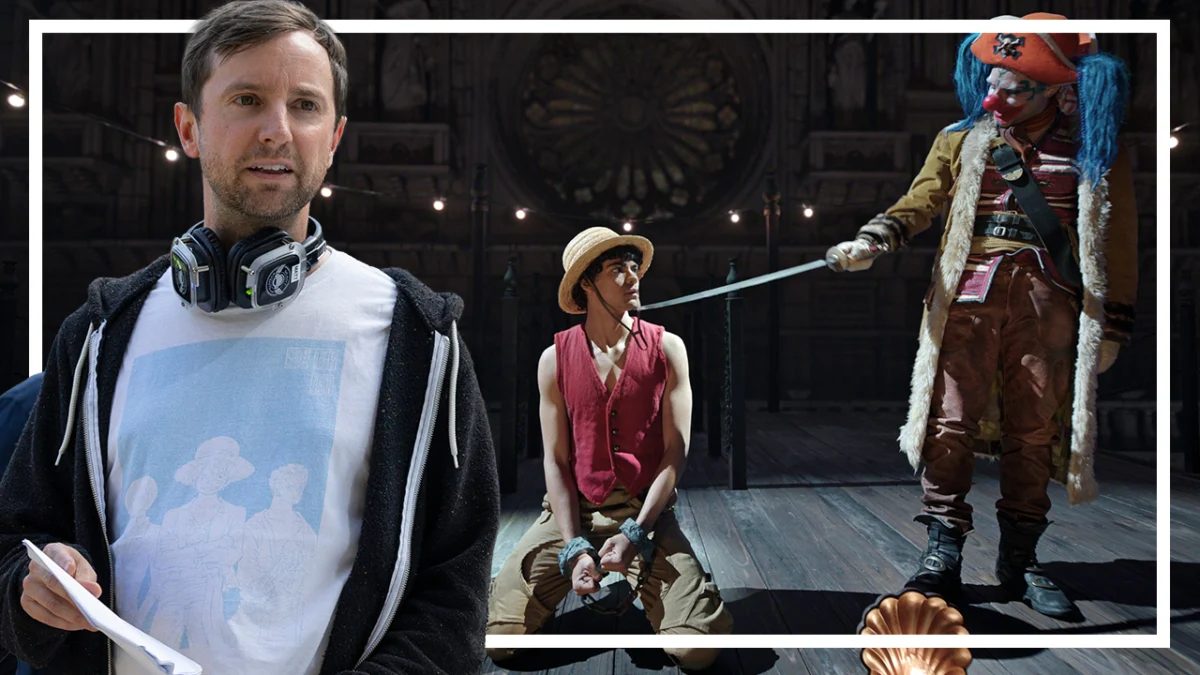
The second season of Netflix’s One Piece live-action adaptation has not only solidified its critical and popular success but has also proven that the initial triumph of its debut was far from a stroke of luck. Building upon the foundation laid by its predecessor, Season 2 has been lauded for its ability to capture the whimsical, often cartoonish essence of Eiichiro Oda’s sprawling manga, while simultaneously grounding its fantastical characters and narratives in a relatable human experience. This delicate balance, a challenge that has historically plagued many anime-to-live-action adaptations, has positioned One Piece as a benchmark for the genre. The latest season plunged viewers deeper into Oda’s vibrant world, introducing increasingly outlandish yet beloved elements such as music-loving whales, characters with improbable hairstyles, and the long-awaited debut of the Straw Hat Pirates’ adorable reindeer doctor, Tony Tony Chopper. Against all odds, these elements resonated with both long-time fans and new audiences, affirming the production’s profound understanding of its source material.
Adding another layer of intrigue to this remarkable feat, Season 2 achieved its elevated status even amidst a significant change in its creative leadership. Following the successful launch of Season 1, co-showrunner Steve Maeda departed the project, making way for Joe Tracz to step into the pivotal role alongside original co-creator Matt Owens. This transition, often a point of concern for ongoing series, appears to have been seamless, with Tracz evidently embracing the show’s core philosophy and collaborative spirit. In an exclusive interview, Tracz offered invaluable insights into his journey with One Piece, the unparalleled involvement of creator Eiichiro Oda, and the exciting prospects that lie ahead for the highly anticipated third season. His perspective illuminates the intricate process of adapting such a beloved and complex narrative for a global audience, highlighting the careful consideration given to every creative decision.
The Visionary Behind the Helm: Joe Tracz’s Journey into the Grand Line
Joe Tracz’s entry into the world of One Piece was, by his own admission, a whirlwind of discovery. Despite his background as an avid anime and manga enthusiast, Oda’s magnum opus had remained a "blind spot" due to its sheer scale. This changed dramatically when the opportunity to join the live-action adaptation arose. Tracz recounts a rigorous, immersive initiation: "There’s just so much of it that I always felt like, man, I just need that excuse to sit down and just binge it all. Then when this job came around, that was the excuse. I sat down, locked myself in my apartment and watched a hundred episodes in a weekend. I think literally just nonstop, and it was amazing." This intensive deep-dive provided him with an accelerated understanding of the series’ vast lore and intricate character dynamics, swiftly transforming him into a devoted admirer.
His appreciation for Oda’s storytelling extends beyond mere enjoyment, recognizing the profound depth and versatility embedded within the narrative. Tracz notes, "I think Oda is such an incredible storyteller. Like I just feel so lucky to get to adapt the story that has so many layers to it. You can read it as just fun and funny and joyful. And yet there’s a political complexity to it. There’s riches to the world. There’s literally any kind of genre you want." This observation is crucial to understanding the live-action’s success. Unlike many adaptations that struggle to maintain a consistent tone, One Piece thrives on its genre-bending nature. Tracz points to specific examples within Season 2’s narrative arcs: "In our season two, Whiskey Peak is our sort of Western meets Samurai movie, then you go to Little Garden and it’s Jurassic Park meets a Viking saga, then Drum Island is a fairy tale. You get to tell any kind of story you want within the framework of One Piece. And there’s just so few stories that let you do that." This adaptability is not just a stylistic choice but a fundamental aspect of Oda’s original vision, which the live-action series has meticulously strived to honor, offering audiences a constantly evolving narrative landscape that keeps them engaged and surprised. The ability to seamlessly transition between disparate genres while maintaining a cohesive overarching narrative is a testament to both Oda’s genius and the adaptation team’s skill.
Eiichiro Oda’s Unprecedented Involvement: A Blueprint for Adaptation
One of the most distinguishing and, arguably, most critical factors in the One Piece live-action’s success has been the unprecedented level of involvement from the manga’s creator, Eiichiro Oda. Far from a ceremonial title, Oda functions as an active executive producer, a rarity in adaptations of this magnitude. Tracz underscores this point, stating, "Oda is not just a producer in name only. He’s someone who’s really actively involved." This direct engagement from the original visionary provides an invaluable layer of authenticity and guidance that has been conspicuously absent in many past live-action adaptations of beloved anime and manga properties.
The production team, acutely aware of the privilege, does not take Oda’s contributions for granted. "He has a full-time job, he’s doing the manga. We’re lucky we get as much of his time as we do, and we don’t take that for granted," Tracz explains. This active participation ensures that every major creative decision is vetted through the lens of the creator’s original intent. Tracz highlights the team’s responsiveness to Oda’s feedback: "But no one knows this world and these characters more than he does. So, when he reads our scripts and gives us notes, we respond to those notes. We take those notes because we’d be foolish not to. His insights are impeccable. And he just has great instincts." This collaborative dynamic, where the adapters defer to the creator’s unparalleled understanding, has fostered a sense of trust among the fan base, who often express apprehension regarding adaptations that deviate too far from the source.
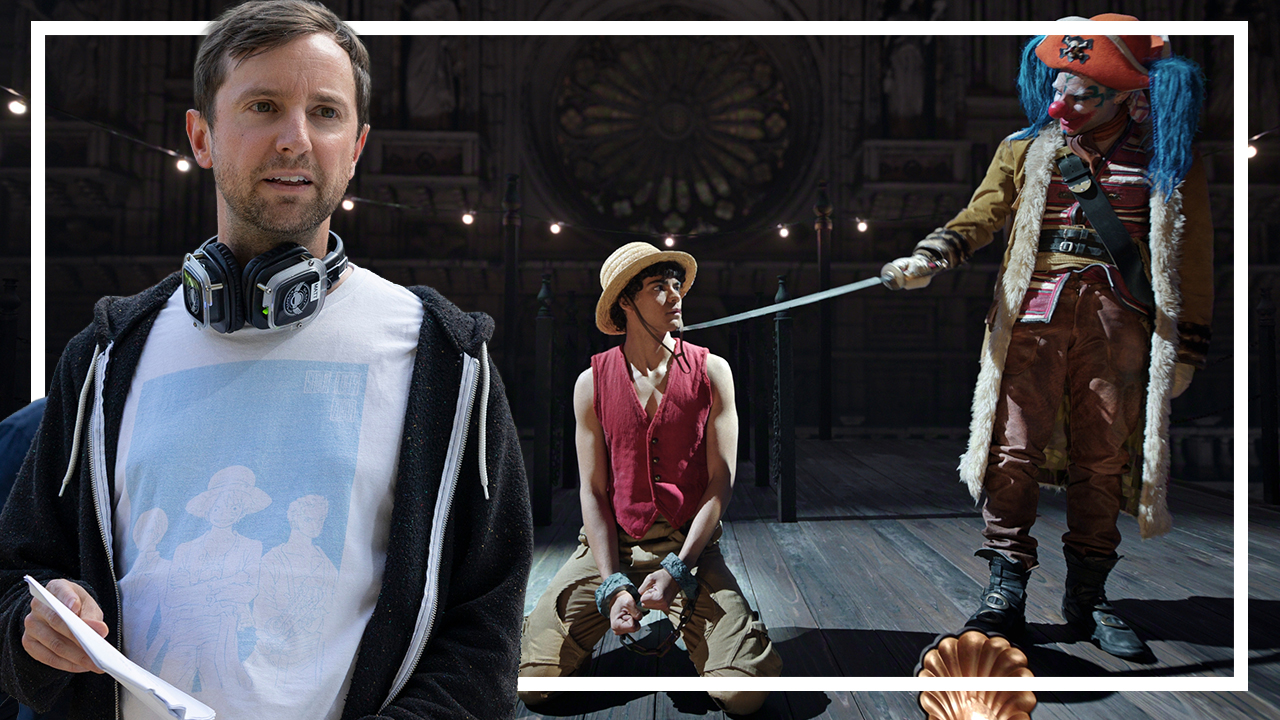
Oda’s unique creative process further enriches this partnership. As Tracz reveals, Oda often provides notes in a highly visual manner: "He draws on the scripts, which is really cool because those are Oda drawings. He’s such a visual thinker. I remember for the Little Garden scripts, he drew a story map, showing how each of the stories intersect in the manga, with visuals." This contrasts with the text-based thinking of many writers, creating a synergistic workflow where visual storytelling, crucial for television, is directly influenced by the master artist himself. This "great working partnership" between a textual and visual thinker ensures that the spirit of the manga’s unique aesthetic and narrative flow is preserved, setting a new standard for how creators can engage with adaptations of their work. Industry analysts often point to the lack of creator oversight as a common pitfall for live-action anime adaptations, leading to a disconnect from the source material. Oda’s hands-on approach with One Piece serves as a powerful counter-example, demonstrating that direct creator involvement can be a cornerstone of success and fan satisfaction.
Balancing Fantasy and Reality: Oda’s Guiding Principle
One of the most profound and consistently applied directives from Eiichiro Oda throughout the adaptation process revolves around the inherent fantastical nature of One Piece. Tracz shared a particularly insightful note from Oda that has shaped key creative decisions: "A note he’d often give, and I think it’s a really great note, is to not forget we’re telling a fantasy. Even though we are a live-action show and part of what we’re doing is trying to ground this story in a sense of realism so you believe in this world, it is still fantasy." This guiding principle is especially crucial when translating wildly imaginative characters and environments from a two-dimensional medium to live-action.
The introduction of Tony Tony Chopper in Season 2 presented a prime example of this philosophy in action. The challenge lay in rendering a talking, anthropomorphic reindeer-human hybrid in a way that felt authentic to the world without veering into the "uncanny valley." Tracz explains Oda’s specific guidance: "For Chopper, we could have gone hyper real, but Oda from the beginning always said, ‘Think teddy bear.’ A real reindeer is a little uncanny." This direction prioritized emotional connection and thematic resonance over strict biological accuracy. The aim was to evoke the cuddly, empathetic quality of a beloved stuffed animal rather than a potentially unsettling realistic creature. The decision reflects a deeper understanding that the emotional impact of a character like Chopper, and indeed much of One Piece, stems from its whimsical, fairy-tale qualities.
This philosophy extends to environmental design as well. Tracz elaborates on the choice for the iconic Drum Island cherry blossom scene: "When you see a cherry blossom tree made up of a mountain peak with spotlights on clouds that are pink from the powder, you either go for a realistic cloud on a mountain, or something that leans into what feels poetic about a tree." Oda consistently champions the latter, urging the team "to be true to the poetry more, sometimes more than the realism." This emphasis on poetic license over rigid adherence to realism allows the live-action series to retain the visual grandeur and emotional weight of the manga’s most iconic moments, even if it means departing from conventional live-action aesthetics. This strategic approach to fantasy has been pivotal in distinguishing One Piece from other live-action adaptations that have struggled by attempting to "ground" fantastical elements too heavily, often losing the charm and spirit of the original in the process. The show’s success in this regard demonstrates a mature understanding of its genre and source material, proving that authenticity in adaptation doesn’t always mean strict realism.
Creative Adaptation: Embracing Originality with Respect
While fidelity to the source material is a cornerstone of the One Piece live-action series, the production team has also demonstrated a willingness to introduce original elements, provided they enhance the narrative and align with Oda’s overarching vision. This nuanced approach to adaptation has been met with surprising approval from the creator himself. Tracz highlights a prime example from Season 2: "He’s very positive. In our podcast interview with Iñaki Godoy he spotlights Luffy singing to Laboon as one of his favorite moments, and that was entirely original to the show." This particular scene, where Luffy serenades the giant whale Laboon, resonated deeply with Oda, indicating that carefully crafted deviations can enrich the story rather than detract from it.
The success of this original moment lies in its organic integration and thematic consistency. Tracz explains, "And it’s one of my favorite moments, too. I love that it just feels like a surprising way to end that story. And yet it’s been set up even back in season one when young Luffy was listening to Shanks singing Bink’s Brew in the background." This demonstrates a sophisticated understanding of long-form storytelling, where new elements are not simply inserted but are foreshadowed and built upon existing narrative threads. The team recognized the importance of recreating iconic manga imagery, such as Luffy punching Laboon, but also sought to add emotional layers that would be both moving and surprising, even for those intimately familiar with the source material.
This strategy of respectful innovation is a significant departure from many live-action adaptations that either adhere too rigidly to the source, failing to leverage the new medium’s strengths, or deviate so wildly that they alienate the original fanbase. By striking a balance, the One Piece live-action series manages to satisfy both purists who cherish the manga’s core and new viewers who appreciate fresh storytelling. Oda’s endorsement of these original moments is a testament to the trust he places in the showrunners and writers, affirming that creative license, when executed with deep respect and understanding, can indeed elevate an adaptation. This approach signals a potential shift in how future adaptations might be conceived, moving beyond mere replication towards a more symbiotic relationship between source and adaptation.

Navigating the Grand Line: Season Three and Beyond
With Season 2 firmly established as a triumph, attention naturally shifts to the impending Season 3, particularly the challenges and opportunities presented by the iconic Alabasta arc. This segment of the One Piece saga is renowned for its expansive world-building and the introduction of numerous fantastical creatures, from the loyal Super Spot-Billed Duck, Karoo, to the comedic Kung Fu Dugongs. Tracz acknowledges the inherent difficulties in bringing such diverse fauna to live-action but reiterates the production’s commitment: "We’ll always rather do something than not do something." This philosophy prioritizes the imaginative scope of Oda’s world over budgetary or logistical constraints, ensuring that the live-action series remains true to the whimsical spirit of its source.
The approach involves strategic incorporation rather than wholesale cuts. Tracz explains, "It’s about finding what’s the best way for us to do this that feels like it’s the most fun. We have the Unluckies in season 2, but in the manga they have more appearances. So it felt like, if we can only use them once, let’s make the most of what little time we have with them." This demonstrates a pragmatic yet passionate commitment to including as many of Oda’s unique creations as possible, ensuring they contribute meaningfully to the narrative when they appear. Tracz emphasizes the creatures’ integral role: "These creatures are important to the world of One Piece. They add to the scale of the world, and add to the feeling of danger and the fun of our world." He starkly concludes, "One Piece without creatures would be a very boring show."
The dedication to these fantastical elements extends even to the most challenging designs. Tracz recalls a specific instance: "One thing that I was so sure we’d have to cut for budget at some point was the goldfish. We knew it was so important to the giants’ story, so we had to figure out a way we could pull off this goldfish." This anecdote highlights the team’s relentless problem-solving and creative resourcefulness in ensuring that no essential element of Oda’s world is left behind. The sheer scale of production required for such an ambitious series necessitates a highly organized and multi-faceted approach. Tracz details the mechanics: "What’s unique about the show is that the scale is so big that we have two units shooting everything at the same time, stunts, drama, spectacle. So it’s like you’re making two shows simultaneously, which really is why you need two showrunners." Furthermore, the emphasis on pre-visualization ("We pre-vis everything") and a dedicated third unit for stunts ensures efficiency and safety, managing the immense complexity of bringing One Piece‘s action-packed world to life. This meticulous planning is crucial for a production that aims for cinematic grandeur while maintaining the manga’s dynamic energy.
The Evolving Leadership: Co-Showrunner Dynamics
The transition of leadership for a major television production can often be fraught with challenges, yet for One Piece Season 2 and the forthcoming Season 3, the change appears to have been remarkably smooth. Following Steve Maeda’s departure, Joe Tracz stepped into the co-showrunner role alongside Matt Owens for Season 2, and now shares the mantle with Ian Stokes for Season 3. Tracz credits the existing team’s deep institutional knowledge for this seamless continuity. "I’m lucky because Ian Stokes has been in the show since the beginning. He was there with Matt from the ground level," Tracz explains. This long-standing involvement of Stokes ensures that the show’s core vision and established methodologies remain consistent, even with changes at the top.
The necessity of a dual showrunner structure for One Piece is a direct consequence of the series’ colossal scale and intricate production demands. Tracz elaborates on this operational reality: "The scale is so big that we have two units shooting everything at the same time, stunts, drama, spectacle. So it’s like you’re making two shows simultaneously, which really is why you need two showrunners." This multi-unit approach, encompassing simultaneous filming of various aspects of the production, from dramatic scenes to complex action sequences, demands a distributed leadership model to maintain efficiency and creative oversight.
The production’s emphasis on thorough pre-production, including extensive pre-visualization (pre-vis) and a dedicated third unit solely for stunts, underscores the meticulous planning required. "We pre-vis everything, and we have a third unit just for stunts so there are no surprises on the day and everything is safe," Tracz states. This level of organization is crucial for a show that consistently delivers on spectacle and action, ensuring that creative ambitions are realized safely and within budget. The collaborative spirit, fostered by Matt Owens’s initial vision and now carried forward by Tracz and Stokes, allows for a robust exchange of ideas and responsibilities. The continuity provided by individuals like Ian Stokes, who have been with the project since its inception, acts as a vital bridge, preserving the foundational lessons and creative ethos established in Season 1. This strategic leadership structure is not merely administrative but fundamental to the show’s capacity to translate Oda’s vast world onto the screen with the grandeur and detail it deserves.
Future Horizons: Untapped Arcs and Character Depths
Looking ahead, the creative team behind Netflix’s One Piece live-action series is already envisioning a long and ambitious future, with countless iconic story arcs and character developments awaiting their turn. While Joe Tracz remains understandably tight-lipped about specific future arcs, he confirms that long-term planning is a constant part of the creative process. "I have my arcs I really want to get to. I feel like I can’t say them in interviews just to be safe, but we do have conversations about how we get to tell a character story or how to get to a certain backstory," he teases, hinting at a roadmap that extends far beyond the immediate horizon of Season 3.

This forward-thinking approach is evident in how Season 2 already began laying groundwork for future character complexities. The introduction of Miss All Sunday, a key figure in the Baroque Works organization, is a prime example. "We meet Miss All Sunday this season and fans know that there’s more to her story," Tracz explains. "We gave her a slightly expanded role in season two, and she’s a face of Baroque Works for us, but she’s a character who has layers upon layers to dig into." This strategic decision to deepen her presence early on demonstrates a commitment to building rich, multi-dimensional characters over time, ensuring that their eventual pivotal roles resonate with greater impact. Fans of the manga will recognize Miss All Sunday as Nico Robin, a future member of the Straw Hat Pirates, whose intricate backstory is one of the series’ most compelling.
Similarly, Season 2 offered tantalizing glimpses into Sanji’s past, further enriching the character of the Straw Hats’ chivalrous cook. "We tease a little more of Sanji’s backstory this season. It was something we were really excited to do, because it informs the story," Tracz reveals. Initially, there were considerations for visual flashbacks, but the team ultimately chose a more intimate approach. "We had versions in the script where we actually saw young Sanji in a flashback, since we already had cast the young Sanji for season one. But then Taz Skylar is just such a good actor, we just had him speak about his mom, and he killed that monologue." This decision highlights the show’s confidence in its cast and its ability to convey profound emotional depth through performance, rather than solely relying on visual exposition. Such nuanced storytelling not only respects the source material but also enhances it, preparing audiences for the extensive and often tragic backstories that define many One Piece characters. These deliberate narrative choices underscore the showrunners’ long-term vision and their dedication to faithfully adapting the emotional core of Oda’s epic.
Conclusion
The enduring success of Netflix’s One Piece live-action series, particularly its highly acclaimed second season, marks a significant milestone in the often-treacherous landscape of anime and manga adaptations. It has not only defied widespread skepticism but has established a new gold standard, proving that with genuine respect for the source material, unparalleled creator involvement, and a visionary creative team, even the most fantastical narratives can be compellingly translated to live-action. Joe Tracz’s insights underscore the meticulous balancing act required: preserving the whimsical, genre-bending spirit of Eiichiro Oda’s original work while grounding its characters in believable human emotion.
Oda’s active role, offering guidance that prioritizes "poetry over realism" and even embracing original story elements like Luffy’s song for Laboon, has been instrumental in securing the trust of a devoted global fanbase. This unprecedented collaboration between creator and adapter provides a powerful blueprint for future projects, demonstrating that direct oversight can prevent the creative missteps that have plagued past adaptations. As the series prepares to embark on the grand challenges of Season 3, particularly the creature-filled world of Alabasta, the commitment to "always rather do something than not do something" and the robust, multi-unit production structure signal an unwavering ambition.
With showrunners like Tracz and Ian Stokes at the helm, leveraging deep institutional knowledge and a shared passion for Oda’s world, One Piece is poised to continue its remarkable journey. The strategic foreshadowing of complex character arcs, such as Miss All Sunday’s expanded role and the deepening of Sanji’s backstory, hints at a long-term narrative strategy that promises to explore the rich emotional tapestry of the manga. The live-action One Piece is more than just an adaptation; it is a cultural phenomenon that has successfully bridged the gap between mediums, captivating millions and setting a precedent for how beloved fantastical worlds can be authentically and spectacularly brought to life. Its continued success promises not only more thrilling adventures for the Straw Hat Pirates but also a renewed hope for the future of live-action anime adaptations.