

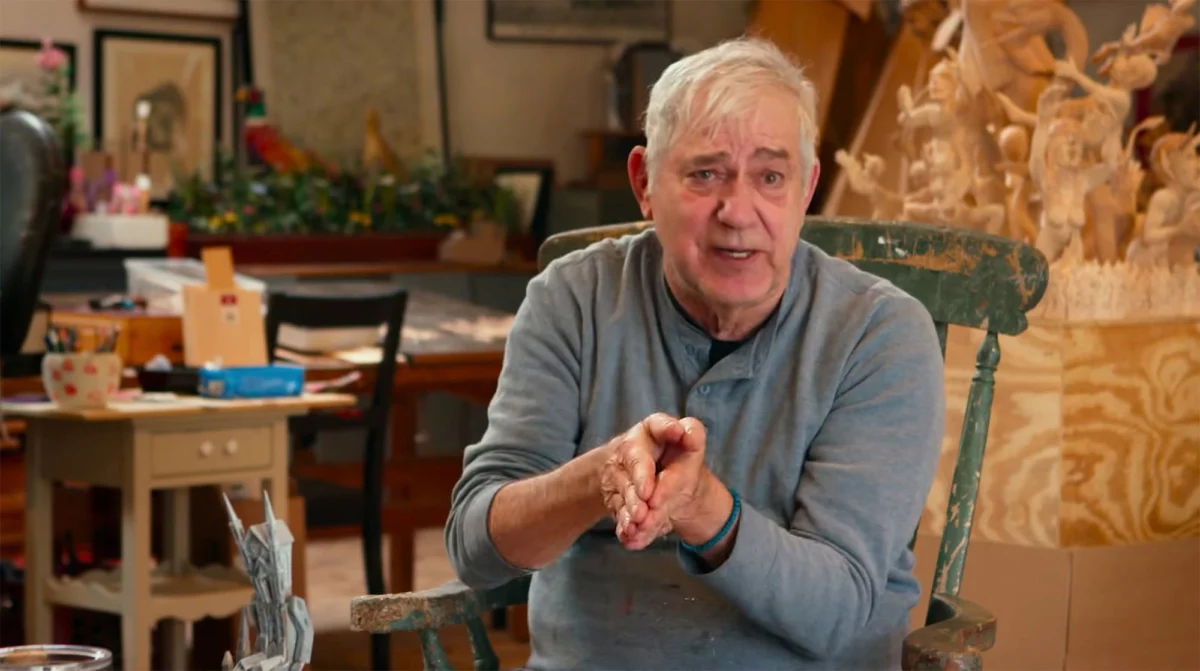
Cedar Creek Productions has officially released the much-anticipated trailer for Jimmy & The Demons, an independent documentary film poised to offer an intimate look into the life and creative process of celebrated sculptor and woodcut artist James Grashow. The film, which garnered significant attention following its premiere at the 2025 Tribeca Film Festival, is slated for a theatrical release beginning April 3rd, 2026. Directed by award-winning filmmaker Cindy Meehl, the documentary chronicles Grashow’s four-year odyssey to complete the most ambitious commission of his illustrious career, an endeavor that pushes the boundaries of his artistic and personal resilience, ultimately becoming a profound exploration of meaning, mortality, and the very act of creating a life.
The trailer, first unveiled on March 30, 2026, offers a compelling glimpse into Grashow’s world, characterized by both endearing humor and deep-seated angst. At 79 years old at the project’s inception, Grashow embarks on what the film describes as an "exhilarating challenge" that brings more than he initially "bargained for." The central piece of this monumental undertaking is an intricately carved sculpture depicting Jesus carrying a cathedral on his back, besieged by demons at his feet. This specific commission, from an art collector whose strong faith contrasts with Grashow’s own, serves as both a physical manifestation of his craft and a metaphorical mirror to his internal struggles.
The Artistic Legacy of James Grashow
James Grashow is a figure of considerable renown within the art world, with a career spanning over six decades that has left an indelible mark across various mediums. His intricate woodcuts and fantastical sculptures, predominantly crafted from cardboard, have graced the walls of prestigious galleries and museums, capturing the imaginations of audiences and critics alike. Beyond the traditional art spaces, Grashow’s distinctive aesthetic has permeated popular culture, featuring prominently on album covers for iconic bands and illustrating countless publications, including Rolling Stone, Esquire, and The New York Times. This widespread recognition underscores his unique ability to bridge the gap between fine art and accessible, often whimsical, visual storytelling.
However, beneath the surface of his "wildly inventive & irreverent works" lies a profound complexity. The documentary promises to delve into Grashow’s "inner dark side & fear of mortality," aspects that have reportedly haunted him since childhood. This duality — the outward brilliance and the inward struggle — forms the thematic bedrock of Jimmy & The Demons. Artists often grapple with existential questions, and for Grashow, approaching his eighth decade, these questions appear to converge powerfully in his final magnum opus. His work, while often playful in form, carries a significant weight of philosophical inquiry, inviting viewers to ponder the ephemeral nature of existence and the enduring power of creation.
The particular commission that anchors the film is especially poignant. Tasked with creating a sculpture with overtly religious iconography, Grashow navigates not only the technical demands of the piece but also the philosophical implications of its subject matter, particularly when his personal beliefs may diverge from those of his patron. This dynamic adds a layer of intellectual and emotional tension to the narrative, exploring the complex relationship between artist, patron, and the artwork itself. The sculpture’s eventual transformation into what the film describes as "almost a self-portrait" suggests a profound personal journey through the act of creation, where the artist imbues the work with his own spirit, fears, and triumphs.
Cindy Meehl’s Directorial Vision
At the helm of Jimmy & The Demons is Cindy Meehl, an acclaimed director known for her sensitive and insightful portrayals of unique individuals and their deep connections to their passions. Meehl’s previous works, Buck (2011) and The Dog Doc (2019), have established her reputation as a filmmaker adept at crafting character-driven narratives that resonate on a universal level.
Buck, her directorial debut, explored the life of Buck Brannaman, a legendary horse trainer whose gentle methods revolutionized the industry. The film garnered critical acclaim, winning the Audience Award at the 2011 Sundance Film Festival, and was lauded for its nuanced depiction of a man deeply committed to his craft and his philosophy. It offered not just a portrait of horsemanship but a broader meditation on compassion, communication, and the healing power of understanding.

Following Buck, Meehl directed The Dog Doc, a film that delved into the world of Dr. Marty Goldstein, a pioneering veterinarian who integrates conventional and holistic approaches to animal care. This documentary further showcased Meehl’s ability to explore specialized fields through the lens of compelling human (and animal) stories, focusing on the dedication, innovation, and emotional investment inherent in professional callings.
With Jimmy & The Demons, Meehl applies her signature style to the art world, once again focusing on an individual whose life is inextricably linked to their unique talent and philosophy. Her filmography suggests a consistent interest in subjects who possess an extraordinary mastery of their respective crafts and whose personal journeys offer profound insights into the human condition. Meehl’s track record indicates a directorial approach that prioritizes authenticity, emotional depth, and a meticulous exploration of her subjects’ inner lives, making her an ideal choice to unpack the complexities of James Grashow’s artistic and personal world. The narrative thread woven through her films often highlights how individuals dedicate their lives to a singular vision, often at great personal cost, echoing the dedication Grashow exhibits in Jimmy & The Demons.
A Deep Dive into the Creative Process
The documentary promises a "magical journey into the artistic life and inner mind" of Grashow, offering a rare opportunity to witness the genesis and painstaking execution of a magnum opus. For four years, Grashow dedicates "everything — time, labor, creativity, passion, love, at the expense of his health — to that singular vision." This level of commitment is a hallmark of truly dedicated artists, yet the film’s explicit mention of the toll on his health adds a poignant layer of sacrifice, underscoring the intensity of his artistic drive, especially at his age.
The film’s exploration extends beyond the mere technicalities of creation, delving into the emotional and philosophical underpinnings of Grashow’s work. It’s described as a "voyage into his creative genius & process, his family & supportive community," highlighting the broader ecosystem that sustains an artist. The inclusion of his family and community suggests that artistic endeavors are rarely solitary acts but are often shaped and supported by the relationships surrounding the creator. This provides a holistic view of the artist, not just as a solitary genius, but as an individual embedded within a social fabric.
The documentary’s central inquiry, articulated in the evocative quote, "What do you say after you’ve said everything you can say?", speaks to a profound moment of reflection for any artist nearing the culmination of a long and prolific career. For Grashow, at 79, this question resonates with particular intensity, encapsulating the challenge of finding new meaning and expression when one has already explored so much. It’s a question that transcends the art world, touching upon universal themes of legacy, purpose, and the human desire for ultimate expression. The film posits that Grashow’s journey is "as much about how we sculpt a meaningful life as it is about the artwork," elevating the narrative from a simple artist profile to a universal meditation on existence itself. The retrospective of his work woven into the film will provide vital context for understanding the evolution of his genius and the revelations into his "dark side," enriching the viewer’s appreciation for his lifelong artistic pursuit.
Festival Acclaim and Anticipated Release
Jimmy & The Demons first captivated audiences and critics at the 2025 Tribeca Film Festival, an esteemed platform known for championing independent cinema and often serving as a launchpad for documentary features. A premiere at Tribeca is a significant achievement for any film, conferring a level of prestige and generating early buzz that can be crucial for an independent release. While specific critical reactions from the festival are not detailed, its selection for such a prominent event suggests a compelling narrative, strong directorial vision, and a subject matter that resonated with festival programmers.
The release of the official trailer on March 30, 2026, marks the beginning of the film’s broader public rollout campaign. Trailers are vital marketing tools, designed to distill the essence of a film into a short, impactful preview, generating excitement and drawing potential viewers. The imagery and narrative fragments presented in the Jimmy & The Demons trailer effectively convey the film’s emotional depth, the visual splendor of Grashow’s art, and the personal struggles at its core.
The documentary is scheduled to open in select US theaters on April 3rd, 2026. A theatrical release, even a limited one, remains a significant milestone for documentaries in an era increasingly dominated by streaming platforms. It provides an opportunity for a communal viewing experience, often enhanced by post-screening discussions, and lends further legitimacy and visibility to the film. For cinephiles and art enthusiasts alike, the theatrical run offers a chance to engage with Grashow’s story on the big screen, allowing for a more immersive appreciation of his intricate works and the intimate journey captured by Meehl’s lens. The film’s official website, jimmyandthedemons.com, serves as a central hub for further information, screening schedules, and behind-the-scenes insights, facilitating engagement with the burgeoning audience.

The Intersection of Art, Faith, and Mortality
One of the most compelling dimensions of Jimmy & The Demons lies in its nuanced exploration of the intersection between art, faith, and mortality. The commission of a sculpture depicting Jesus carrying a cathedral, tormented by demons, is inherently steeped in religious symbolism. However, the film’s premise suggests that Grashow’s engagement with this subject matter is not necessarily one of devout adherence but rather a profound artistic and philosophical wrestling match. The contrast between the collector’s "strong faith" and Grashow’s own implied perspective creates a fascinating tension, inviting viewers to consider how artists interpret and recontextualize spiritual themes through their personal lenses.
For Grashow, the "demons" are not merely external figures in his sculpture but also potent metaphors for the inner struggles he has faced throughout his life, particularly his "fear of mortality." This internal battle, which has "haunted him since childhood," finds a powerful outlet in the creation of a physical artwork. The act of sculpting, carving, and bringing forth this complex image becomes a form of catharsis, a means of confronting and perhaps even transcending his deepest anxieties. His age, 79, imbues this struggle with an added layer of urgency and reflection, as artists often use their later works to synthesize a lifetime of experiences and contemplations on legacy and the finite nature of existence.
The film’s ability to weave together these disparate threads—religious iconography, personal demons, the aging process, and the relentless drive to create—promises a rich tapestry of human experience. It challenges simplistic interpretations of faith and art, instead presenting a more complex, often contradictory, relationship where personal truth is forged in the crucible of creative expression. The sculpture itself, becoming "almost a self-portrait," signifies a profound merging of the artist’s identity with his creation, transforming a commissioned piece into a deeply personal statement about his own journey and confrontations with the ultimate questions of life and death.
Broader Implications for Documentary Filmmaking and the Art World
Jimmy & The Demons stands to make a significant contribution not only to the discourse surrounding James Grashow’s individual legacy but also to the broader fields of documentary filmmaking and art appreciation. Documentaries like Meehl’s play a crucial role in preserving the stories and processes of artists, offering invaluable insights that might otherwise be lost to time. They provide a unique window into the creative mind, demystifying the artistic process while simultaneously highlighting its inherent magic and mystery.
In an increasingly visual and digitally saturated world, films that delve into the meticulous, often solitary, craft of traditional art forms like woodcutting and sculpture offer a refreshing counter-narrative. They remind audiences of the enduring value of physical creation, the dedication required for mastery, and the profound connection between an artist’s hands and their imaginative output. For aspiring artists, art historians, and general audiences, Jimmy & The Demons will serve as an educational and inspirational resource, shedding light on the challenges and rewards of a life devoted to art.
Furthermore, the film’s focus on an aging artist navigating a major project touches upon critical conversations within the art world regarding legacy, relevance, and the continued vitality of creators in their later years. It challenges perceptions that creativity diminishes with age, instead showcasing how accumulated experience and a deeper understanding of life can fuel some of an artist’s most profound and impactful works. The themes of mortality, resilience, and the relentless pursuit of meaning through creation are universally resonant, positioning Jimmy & The Demons as more than just an art documentary, but a compelling human story with broad appeal.
As Jimmy & The Demons prepares for its theatrical debut, it arrives as a testament to the enduring power of art to provoke, inspire, and illuminate the human condition. Through Cindy Meehl’s sensitive direction and James Grashow’s extraordinary journey, the film invites viewers to contemplate not only the intricacies of a singular masterpiece but also the universal quest for meaning in a life lived creatively, passionately, and with unwavering dedication.