




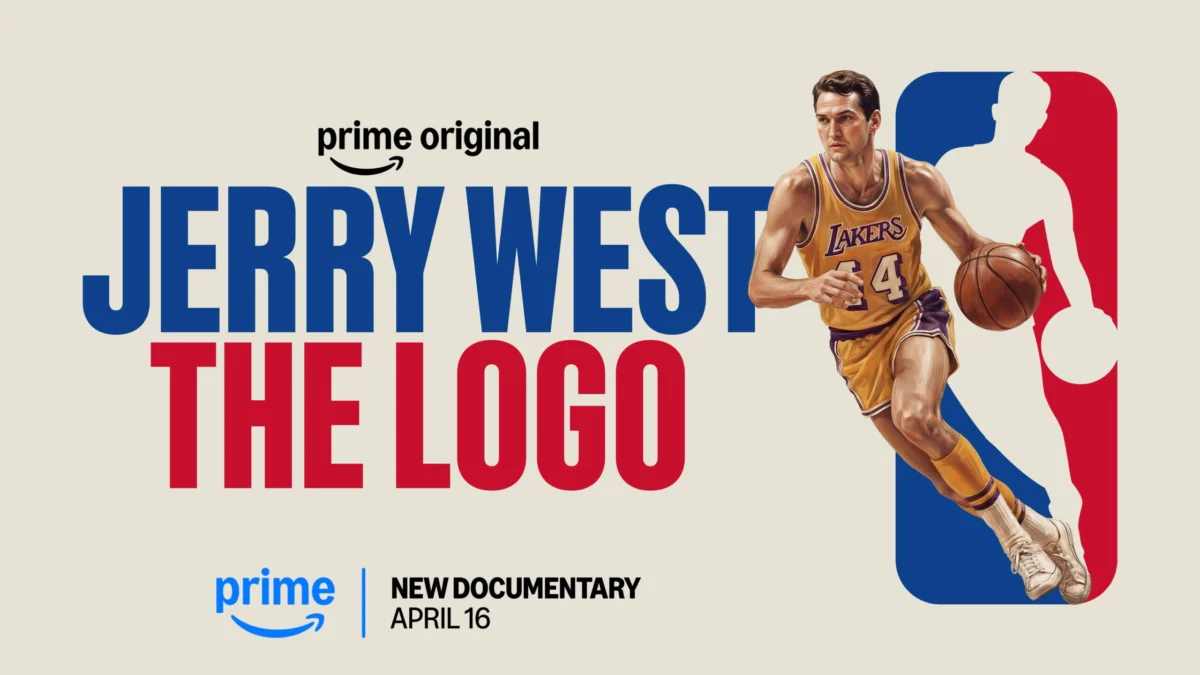
Prime Video has officially unveiled the trailer for "Jerry West: The Logo," a comprehensive documentary film that promises an intimate and unflinching examination of the legendary basketball player and executive whose silhouette famously defines the NBA logo. Directed by acclaimed filmmaker Kenya Barris, the documentary delves into the complex life and enduring legacy of Jerry West, moving beyond his iconic status to explore the man driven by an insatiable pursuit of perfection and the significant personal costs incurred along that path. Set to premiere on Prime Video on April 16, 2026, this film captures what would become West’s final interviews, imbuing it with a poignant, retrospective quality that offers audiences unprecedented access to his most vulnerable and reflective moments.
The documentary’s premise centers on the widely recognized, yet often misunderstood, fact that Jerry West is the inspiration behind the National Basketball Association’s iconic logo. Designed by Alan Siegel in 1969, the logo depicts a dynamic player dribbling a basketball, a pose that has become synonymous with the league itself. For decades, the NBA has never officially confirmed the identity of the player, maintaining an air of mystique. However, it has been an open secret within basketball circles that West, renowned for his fluid athleticism and signature dribble, was the model. The documentary aims to peel back the layers of this public persona, revealing the intricate tapestry of West’s life, marked by both extraordinary triumphs and profound personal struggles.
The Man Behind the Myth: A Legacy of Perfection and Pervasive Influence
Jerry West’s career in basketball spans over six decades, cementing his status as one of the most impactful figures in the sport’s history. His journey began as a prodigious talent at West Virginia University, where he led his team to the NCAA championship game in 1959. Drafted by the Los Angeles Lakers in 1960, West embarked on an illustrious playing career that saw him become a 14-time NBA All-Star, an Olympic Gold Medalist in 1960, and an NBA Champion in 1972. Despite his individual brilliance, including being named the Finals MVP in a losing effort in 1969—a testament to his unparalleled performance—West often battled the agony of defeat, reaching the NBA Finals nine times before securing his sole championship ring. This relentless pursuit of victory, often shadowed by agonizing near-misses, forms a crucial backdrop to the documentary’s exploration of his perfectionism.
Beyond his playing days, West’s influence grew exponentially as a visionary executive. He famously architected the "Showtime" Lakers dynasty of the 1980s, a team that captivated audiences with its fast-paced, glamorous style of play, securing five NBA championships. His executive prowess continued into the late 1990s and early 2000s, where he was instrumental in building another Lakers powerhouse featuring Shaquille O’Neal and Kobe Bryant, a duo that would go on to win three consecutive championships. In later years, West lent his expertise to the Memphis Grizzlies and, notably, the Golden State Warriors, contributing to their remarkable success in the 2010s, which included multiple NBA titles. His ability to identify talent, manage complex personalities, and build championship-caliber teams across different eras underscores his unparalleled acumen and strategic genius. This extensive and diverse career trajectory provides rich material for the documentary to explore the various facets of his leadership and the lasting impact he had on countless players and organizations.

An All-Star Cast of Voices: Testimonials from Basketball Royalty
One of the most compelling aspects of "Jerry West: The Logo" is the unprecedented roster of basketball legends and influential figures who share their insights. The documentary features dozens of never-before-told stories from friends, family members, teammates, and colleagues, painting a multifaceted portrait of West. Among the luminaries offering their perspectives are Kareem Abdul-Jabbar, Stephen Curry, Kevin Durant, Magic Johnson, Michael Jordan, Shaquille O’Neal, and NBA Commissioner Adam Silver. West’s own wife and several children also contribute, providing deeply personal accounts.
The participation of such high-caliber individuals underscores the profound respect and admiration West commanded across generations. Kareem Abdul-Jabbar and Magic Johnson, pillars of the "Showtime" Lakers, can offer firsthand accounts of West’s strategic brilliance as an executive and his mentorship. Shaquille O’Neal, whose dominant Lakers tenure was also facilitated by West, will likely provide insights into West’s ability to assemble a winning team and manage superstar egos. Michael Jordan, widely considered the greatest player of all time, and contemporary superstars like Stephen Curry and Kevin Durant, represent later eras of basketball that were still profoundly shaped by West’s executive decisions and his enduring legacy as a player. Their testimonies are expected to illuminate not only West’s profound impact on the game’s evolution but also his personal qualities, work ethic, and the challenges he faced. Commissioner Adam Silver’s contribution will likely provide an institutional perspective on West’s role in shaping the league’s identity and global brand, particularly through the ubiquity of the NBA logo itself. The inclusion of family members is crucial for humanizing the legend, offering glimpses into his private life, his struggles, and his relationships, thereby providing a more complete and nuanced understanding of the man behind the public figure.
The Dark Side of Greatness: Wrestling with Demons and Legacy
The documentary promises to be more than just a celebration of athletic and executive achievements; it delves into the "tremendous personal cost" that accompanied West’s pursuit of greatness. The film captures West in his most vulnerable and reflective moments, offering audiences a side of the legend they’ve never seen—the man behind the logo, wrestling with his demons, his legacy, and the fundamental question of "what it all meant." This exploration includes his private struggles with depression, a topic that, while increasingly discussed in sports, was largely taboo during much of West’s career. The film addresses the marriage that crumbled under the weight of his obsession, his complicated relationship with fatherhood, and the persistent feeling of being an outsider even after achieving what others only dream of.
This intimate examination positions "Jerry West: The Logo" as both a eulogy and a reckoning. The fact that these are West’s "final interviews" adds a layer of solemnity and significance, transforming the documentary into a powerful, posthumous self-reflection. It offers a tender, unflinching examination of what individuals sacrifice in pursuit of greatness and whether, in the end, it’s truly worth the cost. This narrative thread resonates far beyond the realm of sports, touching upon universal themes of ambition, mental health, and the search for personal fulfillment amidst public acclaim. It encourages viewers to look beyond the glittering trophies and Hall of Fame plaques to understand the internal battles fought by even the most outwardly successful figures. In doing so, the documentary contributes to a broader cultural conversation about the pressures faced by elite athletes and the importance of addressing mental well-being.
Kenya Barris’s Vision: A Director’s Touch
The documentary is directed by Kenya Barris, a prolific writer, producer, and filmmaker known for his distinctive voice in contemporary storytelling. Barris’s previous works, such as the critically acclaimed television series "Black-ish" and "#BlackAF," and films like "You People," "Entergalactic," and the recent "White Men Can’t Jump" remake, demonstrate his ability to craft narratives that are both culturally resonant and deeply personal. His background in exploring complex social dynamics, identity, and the human condition suggests a thoughtful and nuanced approach to West’s story. Barris’s experience with ensemble casts and character-driven narratives is particularly relevant for a documentary featuring so many prominent voices.

Barris’s involvement indicates that "Jerry West: The Logo" will likely eschew a purely chronological, fact-based recounting of events in favor of a more thematic and emotionally driven exploration. His filmography often blends humor with poignant social commentary, and while a sports documentary might lean more towards the latter, his signature style suggests a desire to humanize his subjects and explore the deeper psychological underpinnings of their actions and experiences. The documentary is produced by Kenya Barris and Jamie Nelsen of Khalabo Ink Society, along with Susana Santiago of Propagate Content. Executive producers include Mychelle Deschamps, Hale Rothstein, Ben Silverman, Howard T. Owens, Drew Buckley, Isabel San Vargas, Linh Le, Steven Leckart, and E Brian Dobbins, indicating a significant collaborative effort behind the project.
Chronology of an Icon and the Documentary’s Genesis
Jerry West’s journey to becoming an indelible part of American sports culture is marked by distinct phases:
- 1938: Born in Chelyan, West Virginia. His humble beginnings and difficult childhood are often cited as a source of his intense drive and competitive spirit.
- 1956-1960: Collegiate career at West Virginia University, where he became an All-American and led the Mountaineers to the 1959 NCAA championship game.
- 1960: Drafted by the Minneapolis Lakers, who soon relocated to Los Angeles. West’s professional career officially begins. He also co-captained the U.S. Olympic basketball team to a gold medal at the Rome Games.
- 1960-1974: Illustrious playing career with the Los Angeles Lakers. He earned 14 All-Star selections, 12 All-NBA team selections, and one NBA championship in 1972. In 1969, he became the only player from a losing team to win the NBA Finals MVP.
- 1969: The NBA logo, designed by Alan Siegel, is introduced, featuring West’s silhouette. This moment inadvertently immortalizes him in a way he would later express discomfort with, preferring anonymity.
- 1974: Retires as a player.
- 1976-1979: Coaches the Los Angeles Lakers for three seasons.
- 1979-1982: Works as a scout for the Lakers.
- 1982-1994: Serves as the General Manager of the Los Angeles Lakers, overseeing the "Showtime" era that won five championships.
- 1994-2000: Continues as Executive Vice President of Basketball Operations for the Lakers, orchestrating the acquisition of Shaquille O’Neal and the draft-day trade for Kobe Bryant, leading to three more championships.
- 2002-2007: Becomes General Manager of the Memphis Grizzlies, transforming them into a playoff contender.
- 2011-2017: Joins the Golden State Warriors’ executive board, contributing to their championship success.
- 2017-2024: Serves as an executive board member for the Los Angeles Clippers.
- 2026: The documentary "Jerry West: The Logo," featuring his final interviews, is released.
The timing of this documentary is particularly poignant, capturing West’s reflections near the end of his life. This allows for a comprehensive and mature retrospective on a career that shaped generations of basketball players and fans, offering a final, definitive statement on his life from his own perspective.
Broader Implications and Cultural Significance
"Jerry West: The Logo" is poised to be more than just a sports documentary; it’s a significant cultural artifact that explores themes relevant to a wide audience. Its release on Prime Video ensures global accessibility, bringing West’s complex story to millions.
One key implication is the continued humanization of sports icons. In an era where athletes are increasingly open about their mental health struggles, West’s candid discussions about depression and the toll of perfectionism offer a powerful historical perspective. It highlights that even figures who appear invincible on the public stage battle internal demons, fostering greater empathy and understanding for current and future generations of athletes. This narrative helps destigmatize mental health issues in sports, contributing to a more supportive environment for professional competitors.

Furthermore, the documentary reignites discussions about the symbolism of the NBA logo itself. While West’s silhouette is universally recognized, the film’s exploration of his complicated relationship with that anonymity may prompt viewers to reconsider the implications of such iconic branding. It also serves as a crucial historical document, preserving the stories and perspectives of basketball’s golden age from the very individuals who lived it. For younger fans, it provides essential context to understand the foundational figures who built the league into the global phenomenon it is today.
Ultimately, "Jerry West: The Logo" is expected to be a must-watch for sports enthusiasts, offering a deep dive into the life of a true legend. However, its exploration of ambition, sacrifice, personal struggle, and the search for meaning ensures its appeal extends far beyond the confines of basketball, offering a universal narrative about the human condition in the pursuit of greatness. The documentary promises to be a powerful and reflective capstone to the extraordinary life of Jerry West, forever cementing his multifaceted legacy in the annals of sports and beyond.