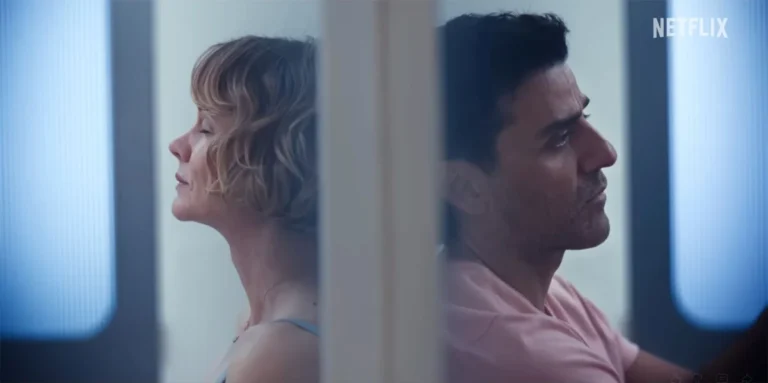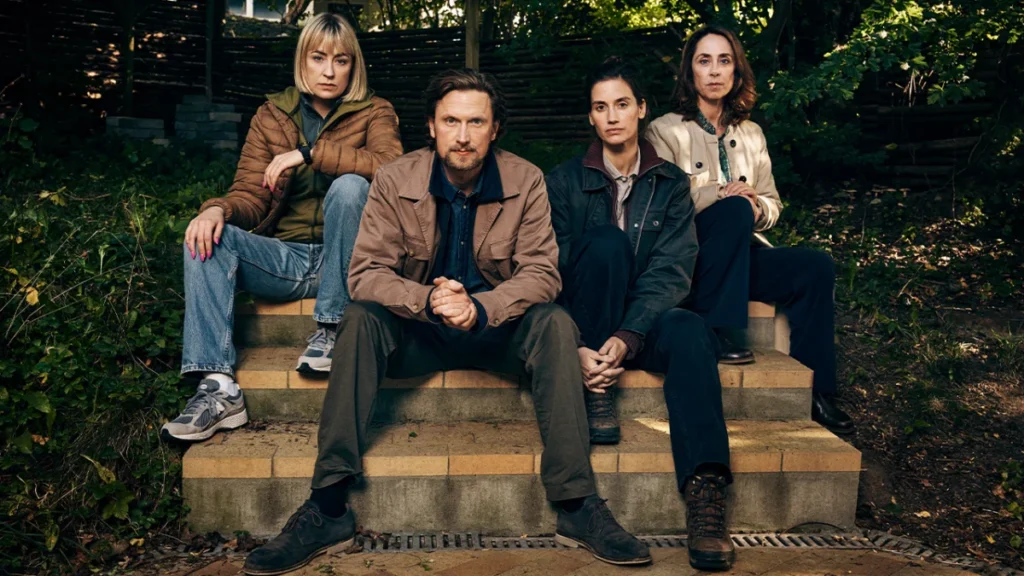



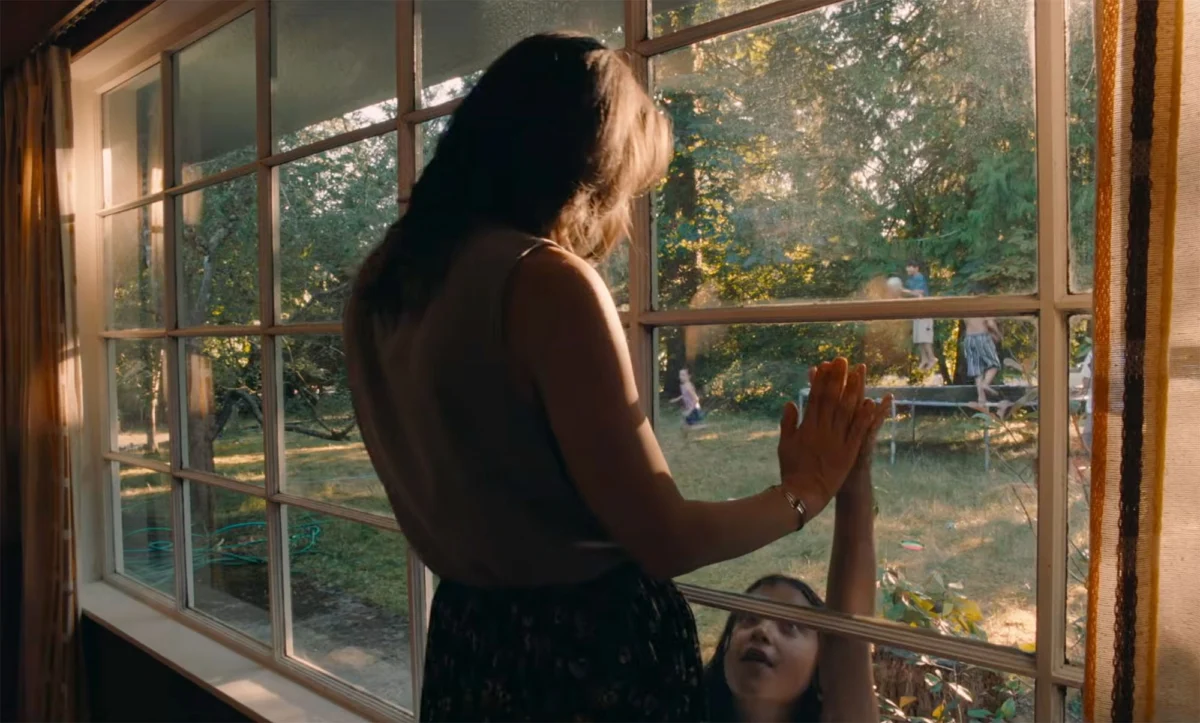
Janus Films has officially released the much-anticipated trailer for Blue Heron, the compelling feature directorial debut from the acclaimed Canadian-Hungarian filmmaker Sophy Romvari. This cinematic exploration of memory, family, and the complexities of upbringing, which garnered significant attention throughout its 2025 festival circuit, is slated for a limited theatrical release in the United States starting April 17th, 2026. The film, described by Romvari herself as her "most significant attempt to capture just how fallible memory is," promises a deeply personal yet universally resonant narrative rooted in her own experiences growing up on Vancouver Island as the child of Hungarian immigrants.
A Poignant Narrative of Family and Memory
Blue Heron delves into the intricate dynamics of a family of six, recently settled into a new life on the picturesque Vancouver Island. The narrative unfolds primarily through the innocent, yet increasingly perceptive, eyes of the youngest child, Sasha, portrayed by Eylul Guven. What begins as a hopeful fresh start for the immigrant family is progressively overshadowed by the escalating, and ultimately dangerous, behavior of the eldest son, Jeremy, played by Edik Beddoes. This internal strife forces the parents, portrayed by Iringó Réti and Ádám Tompa, to confront an agonizing choice that threatens to shatter the family’s fragile unity.
The film’s synopsis provided by Janus Films further elaborates on this core conflict: "In the late 1990s, eight-year-old Sasha (Eylul Guven) and her family relocate to a new home on Vancouver Island, but their fresh start is interrupted by increasingly dangerous behavior from the eldest son, Jeremy (Edik Beddoes). At wit’s end, the parents are presented with a shattering choice. Award-winning director Sophy Romvari’s feature debut is a lyrical & profound testament to things we carry with us, masterfully chronicling the haze of a languid summer and the hyaline clarity of the moments that defined it." This description underscores the film’s dual focus: the specific challenges faced by the family and the broader, more philosophical examination of memory and its influence on our understanding of the past.
Sophy Romvari: From Acclaimed Shorts to Feature Debut
Sophy Romvari’s transition to feature filmmaking with Blue Heron has been a keenly anticipated event within independent cinema circles. Prior to this debut, Romvari had established herself as a distinctive voice through a series of critically lauded short films, often characterized by their introspective nature, experimental narrative structures, and profound emotional depth. Her earlier works, such as Still Processing (2017), which explored themes of grief and photographic memory, and P.S. I Can’t Breathe (2018), a poignant examination of a childhood pet’s death, showcased her unique ability to intertwine personal history with broader existential questions. These shorts frequently utilized archival footage and unconventional storytelling techniques to explore the subjective nature of memory, laying foundational groundwork for the ambitious themes tackled in Blue Heron.

Romvari’s reputation as a filmmaker who "masterfully plays with the boundaries of fiction" is not new. Her previous projects have consistently blurred the lines between documentary and narrative, personal essay and fictionalized account, inviting audiences to question the very fabric of storytelling. This stylistic inclination is central to Blue Heron, where her own autobiographical experiences are transmuted into a cinematic narrative that feels both intimately personal and broadly allegorical. Critics have often praised Romvari for her sensitive direction, her ability to elicit nuanced performances from her cast, and her unflinching gaze into the complexities of human relationships, qualities that are evidently at the forefront of her first feature.
A Triumphant Festival Journey
The journey of Blue Heron through the international film festival circuit in 2025 was marked by significant critical acclaim and audience recognition. The film made its world premiere at the prestigious Locarno Film Festival, a crucial launchpad for independent and arthouse cinema, particularly for emerging talents. Locarno’s discerning programming committee often champions films that push artistic boundaries and offer fresh perspectives, making it an ideal platform for Romvari’s unique vision. The positive reception there immediately established Blue Heron as a film to watch.
Following its debut, the film continued its successful trajectory across a series of high-profile festivals, further solidifying its critical standing. It screened at the Toronto International Film Festival (TIFF), a vital showcase for Canadian cinema and a significant stop for films aiming for North American distribution. Its inclusion in TIFF’s lineup, often a strong indicator of a film’s artistic merit and commercial potential, was met with enthusiastic reviews from Canadian and international critics alike. Subsequent screenings at the San Sebastian Film Festival, known for its emphasis on European and Latin American cinema, the Chicago International Film Festival, and the Vancouver Film Festival, ensured a broad international exposure and sustained critical momentum. Each stop on the festival circuit contributed to the film’s growing reputation, with reviewers consistently highlighting Romvari’s directorial prowess, the compelling performances of the ensemble cast, and the film’s profound emotional resonance. This consistent positive feedback from diverse critical bodies across different cultural contexts underscores the film’s universal appeal and artistic strength.
The Significance of Janus Films Distribution
The involvement of Janus Films in distributing Blue Heron in the United States is a testament to the film’s artistic quality and potential impact. Janus Films holds an esteemed position in the landscape of American independent and arthouse cinema distribution. For over six decades, the company has been synonymous with bringing classic and contemporary international films, as well as significant American independent works, to discerning audiences. Their catalog boasts a remarkable collection of cinematic masterpieces from legendary directors, often forming the core of the Criterion Collection.
For an emerging filmmaker like Sophy Romvari, having Janus Films champion her debut feature is a significant endorsement. It signals that Blue Heron is regarded as a work of substantial artistic merit, aligning with Janus’s tradition of curating films that are culturally significant and enduring. This partnership not only ensures that the film will receive a thoughtful and strategic release in select arthouse theaters across the US but also lends it an immediate aura of prestige. The association with Janus often translates into a longer shelf-life for films, potentially through subsequent home video releases via the Criterion Collection, ensuring that Romvari’s work will reach a wider audience of cinephiles and remain accessible for years to come.

An Ensemble Cast Bringing Authenticity to the Screen
The emotional core of Blue Heron is brought to life by its talented ensemble cast, led by Eylul Guven as the young Sasha and Edik Beddoes as the troubled eldest brother, Jeremy. Their performances are central to conveying the nuanced family dynamics and the escalating tension that permeates the narrative. While specific biographical details about the younger actors are often limited, their ability to embody such complex roles at a nascent stage of their careers speaks volumes about Romvari’s direction and their innate talent.
The parental figures, Iringó Réti and Ádám Tompa, lend authenticity and gravitas to their roles as Hungarian immigrant parents grappling with immense challenges. Their performances are crucial in depicting the parental struggle to maintain stability amidst internal turmoil and cultural adaptation. The broader cast, including Amy Zimmer, Liam Serg, and Preston Drabble, contributes to the rich tapestry of the family unit and their interactions within the Vancouver Island community. Romvari’s personal connection to the story likely informed her casting choices, seeking actors who could embody the deep emotional truth of her autobiographical account, whether through shared cultural background, personal experience, or simply a profound understanding of the script’s emotional demands.
Thematic Exploration: Fallibility of Memory and the Immigrant Experience
At its heart, Blue Heron is a profound meditation on the nature of memory itself. Romvari’s assertion that the film is her "most significant attempt to capture just how fallible memory is" points to a narrative that likely avoids a straightforward, linear recounting of events. Instead, the film is expected to explore the fragmented, subjective, and often unreliable ways in which individuals recall their pasts, particularly traumatic ones. This could manifest through non-linear storytelling, dreamlike sequences, or shifts in perspective, mirroring how personal recollections often blur, distort, or selectively highlight certain moments. The film title itself, Blue Heron, might serve as a symbolic motif – perhaps representing something elusive, beautiful, yet also a harbinger of change or an ever-present, watchful observer of the unfolding drama.
Furthermore, the film deeply engages with the immigrant experience. The family’s relocation from Hungary to Vancouver Island is not merely a change of scenery but a profound cultural and psychological shift. The challenges of adapting to a new environment, coupled with the internal struggles of the family, add layers of complexity to the narrative. The parents’ identity as Hungarian immigrants likely informs their coping mechanisms, their aspirations for their children, and perhaps their reluctance or inability to fully address Jeremy’s escalating behavior, possibly stemming from cultural norms or a desire to present a united front in a new land. This intersection of personal trauma with the broader immigrant narrative provides a rich, multi-dimensional backdrop for the film’s emotional core.
Production Insights and Artistic Vision
Blue Heron was produced by a dedicated team including Ryan Bobkin, Gábor Osváth, Sophy Romvari herself, and Sara Wylie. As an independent Canadian production, the film likely navigated the typical challenges associated with indie filmmaking, including budget constraints and logistical complexities. However, these limitations often foster immense creativity and a resourceful approach to storytelling, which is a hallmark of Romvari’s work. The decision to film on Vancouver Island was not merely geographical convenience but a deliberate artistic choice. The island’s unique landscape, with its blend of lush forests, rugged coastlines, and often melancholic atmosphere, provides a potent visual metaphor for the family’s internal world – a place of natural beauty that can also feel isolated and imposing.

The cinematography, crucial for conveying both the idyllic setting and the underlying tension, is expected to play a significant role in establishing the film’s tone. Romvari’s previous short films demonstrated a keen eye for visual storytelling, often employing a naturalistic aesthetic combined with moments of striking visual poetry. For Blue Heron, this approach would serve to immerse the audience in Sasha’s perspective, capturing the subtle shifts in her understanding of her family and her surroundings as the summer progresses from languid tranquility to hyaline clarity of defining moments.
Anticipation for the Limited Theatrical Release
The impending limited theatrical release of Blue Heron on April 17th, 2026, marks a significant moment for Sophy Romvari and for independent Canadian cinema. For audiences who appreciate nuanced, character-driven dramas that delve into profound human experiences, Blue Heron offers a compelling cinematic journey. Its strong festival performance and distribution by Janus Films position it as a must-see for film enthusiasts seeking works that challenge conventional narratives and provoke thoughtful reflection.
The film’s exploration of memory’s fallibility, the complexities of family life, and the unique challenges faced by immigrant families resonates deeply in contemporary society. As Romvari invites viewers to consider how their own pasts are constructed and remembered, Blue Heron is poised to leave a lasting impression, cementing Sophy Romvari’s status as an important new voice in global cinema. Its theatrical run will provide an opportunity for audiences to engage with a deeply personal story that transcends its specific origins to touch upon universal truths about childhood, trauma, and the enduring bonds of family.