

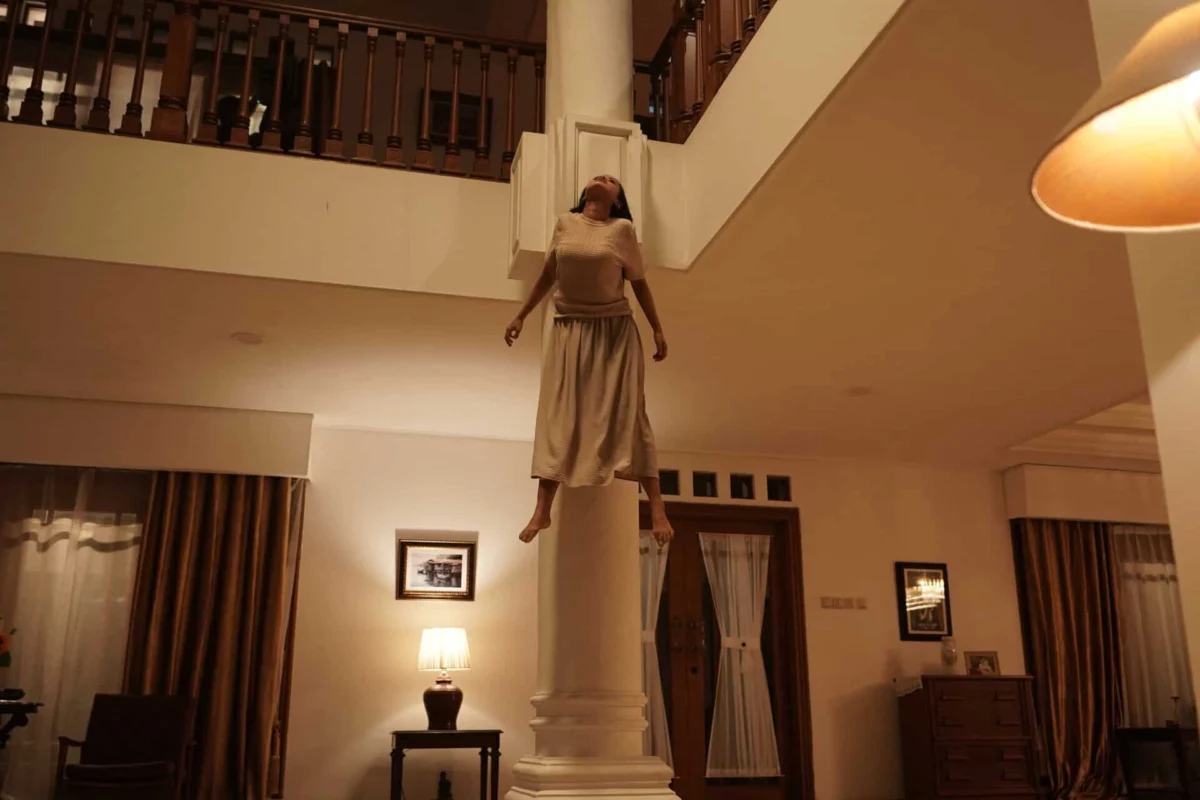
Indonesia’s cinematic landscape continues its impressive ascent in the global horror genre, a trajectory bolstered by the consistent output of talented filmmakers such as Joko Anwar, Timo Tjahjanto, Hadrah Daeng Ratu, Bobby Prasetyo, Awi Suryadi, and the veteran director Kimo Stamboel. Stamboel, a recognized force in the industry, has now delivered a compelling prequel to his critically acclaimed feature "Sewu Dino." This new offering, titled "Janur Ireng," reunites the original writing team, with Khalid Koshogi developing a story originating from SimpleMan, and is now available through EST N8. The film delves into the dark origins of a powerful curse, expanding the narrative universe established by its predecessor and further solidifying Indonesia’s reputation for delivering visceral and culturally rooted horror experiences.
The Genesis of a Curse: Unveiling the Narrative of "Janur Ireng"
"Janur Ireng" plunges audiences into a fractured family history, centered on the siblings Sabdo (Marthino Lio) and Intan (Ratu Rafa). Following the tragic demise of their father and the devastating destruction of their family home by fire, the siblings find themselves inextricably linked by a profound and ominous prophecy. Their lineage holds a deeply ingrained belief that any union between Sabdo and Intan would unleash an unstoppable and malevolent power. This ancient foreboding sets the stage for a conflict driven by external greed and internal fear.
Their manipulative uncle, Arjo Kuncoro (Tora Sudiro), and his equally avaricious wife, Lasmini (Masayu Anastasia), exploit this familial prophecy. Luring the unsuspecting siblings to their opulent mansion with deceptive promises of wealth and security, they instead ensnare Sabdo and Intan in a nightmarish trap. The lavish estate, a façade of prosperity, becomes a prison, concealing sinister intentions. The siblings’ only discernible path to survival is through the mastery of "Janur Ireng," a black magic ritual whispered to be the deadliest and most formidable sorcery known in the annals of Javanese occultism. The film meticulously builds this narrative, drawing upon traditional Indonesian folklore and supernatural lore to craft a compelling backstory for the horrors that plague the "Sewu Dino" universe.
Kimo Stamboel’s Signature Vision: Blending Gothic Atmosphere with Folk Horror Intensity
Kimo Stamboel’s direction in "Janur Ireng" positions it as a formidable entry within the contemporary Indonesian horror canon. The film adeptly navigates the intricate space between the traditional gothic atmosphere, characterized by its brooding settings and psychological tension, and the raw, visceral intensity of modern folk horror. This stylistic fusion is a hallmark of Stamboel’s work, particularly evident in his previous collaborations with the Mo Brothers. He has cultivated a reputation for mastering the "slow-burn-to-total-chaos" narrative arc, a technique that effectively ratchets up suspense before unleashing a torrent of terrifying events.
The film draws its foundation from the widely popular SimpleMan universe, a testament to the power of digital storytelling and its translation to the screen. "Janur Ireng" effectively leverages a seemingly simple family tragedy – the loss of a father and a home – as the catalyst for plunging Sabdo and Intan into a labyrinth of shadows and deeply buried secrets within the family mansion. The initial sequences, detailing the siblings’ arrival and their subsequent struggle to adapt to life under the watchful, menacing gaze of Arjo and Lasmini, are replete with exceptionally crafted haunting scenes. These moments offer atmospheric insights that feel both classically rooted in horror traditions and refreshingly contemporary in their execution.
A Visual Tapestry of Menace and Occult Power
The visual language employed in "Janur Ireng" stands out as one of its most significant strengths. Stamboel, in collaboration with screenwriter Khalid Koshogi, constructs a world where Arjo Kuncoro’s sprawling plantation transcends its role as a mere setting. Instead, it evolves into a tangible manifestation of his illicit occult dealings and the dark energies he commands. A palpable sense of impending dread permeates the film, underscored by the calculated and theatrical demeanor of Arjo and Lasmini. Their operatic performances, verging on the delightfully over-the-top, perfectly complement the film’s deliberate engagement with light and shadow across every meticulously designed setpiece.
This "old-school" aesthetic, which incorporates spectral beings and ancient, forgotten rites, is thoughtfully balanced with a modern sensibility regarding the film’s thematic concerns and its unapologetic brutality. Fans familiar with Stamboel’s previous contributions, especially those that showcase his collaboration with the Mo Brothers, will readily recognize his signature flair for rendering the supernatural not just as an ethereal threat, but as a force with tangible, physical consequences. This commitment to imbuing the supernatural with a sense of corporeal danger is a key element in the film’s effectiveness.
Escalating Terror: The Body Horror and Macabre Revelations
The film truly finds its stride in its unflinching embrace of brutality, particularly in its exploration of "body horror." This is a territory Stamboel navigated with remarkable success in "The Queen of Black Magic," and "Janur Ireng" sees him revisit and expand upon these thematic explorations. While the initial manifestations of the haunting are presented as conventional – an invisible force exhibiting its power by violently propelling Sabdo across a room – the horror quickly escalates into far more macabre and unsettling territory.
A particularly masterfully constructed sequence follows a failed ritual, wherein a demonic spirit, seeking retribution, races through the mansion. This segment is a masterclass in building and sustaining tension, effectively showcasing the escalating stakes. This climactic build-up culminates in a terrifying dream sequence that traps Intan within a desolate cornfield. Here, she becomes the target of a horrifying apparition: a disembodied, floating torso. By the time the film reaches its grand finale, audiences are treated to a spectacular and gruesome conclusion. This final act features an onslaught of graphic imagery, including ripped entrails, brutally gouged eyes, and a desperate chase orchestrated by a headless entity. These visceral elements firmly cement "Janur Ireng" as an immensely gruesome and bloody triumph, a testament to the genre’s capacity for shock and visceral impact.
Narrative Ambiguities and Technical Quibbles: Areas for Consideration
Despite its considerable strengths, "Janur Ireng" is not entirely without its narrative shortcomings. The primary drawback for some viewers may lie in its overall narrative clarity. While the film excels in cultivating a rich gothic ambiance and immersing the audience in its unsettling atmosphere, it offers comparatively little in terms of concrete explanations or comprehensive understanding of the underlying mechanics of the supernatural events. A notable absence of detailed information regarding the specific black magic rites Arjo is practicing, or the precise motivations behind his unwavering commitment to them, leaves certain aspects of the plot feeling underdeveloped.
This ambiguity can be partly attributed to the film’s nature as a prequel within a larger, established "shared universe." The narrative logic, when viewed as a standalone experience, can sometimes feel inconsistent or incomplete. This is a common challenge faced by films operating within such universes, where the exposition and lore may be deliberately parceled out across multiple installments to maintain intrigue and encourage further engagement with the franchise. Consequently, some narrative threads and internal consistencies might feel as though they are being intentionally reserved for subsequent entries.
Furthermore, while not enough to fundamentally derail the viewing experience, the film does exhibit some technical imperfections. Glaringly obvious CGI, particularly in certain creature or supernatural effect sequences, occasionally breaks the immersion. Additionally, jarring insert shots of a goat-headed demon, while thematically relevant, can feel abrupt and disrupt the carefully crafted atmosphere. These are minor technical quibbles, however, in the context of the film’s overall impact and artistic ambition.
A Masterclass in Genre Filmmaking: "Janur Ireng’s" Enduring Impact
Ultimately, "Janur Ireng" stands as a testament to Kimo Stamboel’s enduring status as one of the undisputed masters of modern genre cinema. The film showcases a wealth of quality factors, from its atmospheric direction and compelling performances to its unflinching commitment to visceral horror. While the narrative ambiguities might prove a minor sticking point for viewers unfamiliar with the preceding film, "Sewu Dino," it remains a standout effort that comfortably sits alongside Stamboel’s most accomplished works.
For enthusiasts of Asian folk horror, or for those who appreciated the relentless pacing and shocking intensity of "The Queen of Black Magic," "Janur Ireng" offers a deeply satisfying experience. It represents a bloody and atmospheric descent into the occult, a journey that is both terrifying and captivating, further solidifying Indonesia’s significant contributions to the global horror film landscape. The film’s success is not merely in its ability to shock and horrify, but in its capacity to weave a narrative that is deeply rooted in cultural lore while simultaneously pushing the boundaries of contemporary horror filmmaking.
Contextualizing "Janur Ireng" Within the Indonesian Horror Renaissance
The rise of Indonesian horror in recent years has been a remarkable phenomenon. A confluence of factors, including increased investment in the genre, a growing pool of talented filmmakers and writers, and a renewed appreciation for indigenous folklore and mythology, has propelled Indonesian horror onto the international stage. Films like "Satan’s Slaves," "The Queen of Black Magic," and "Impetigore" have garnered critical acclaim and commercial success, proving that Indonesian horror possesses a unique voice and a compelling visual aesthetic.
"Sewu Dino," released in 2023, was a significant contributor to this surge, becoming a box office success and a critical darling. Its narrative, which explored themes of black magic, curses, and family secrets, resonated deeply with audiences. The decision to produce a prequel, "Janur Ireng," was a strategic move to capitalize on the established popularity of the "Sewu Dino" universe and to further explore its rich mythology. The film’s release signifies a commitment to building a sustainable cinematic franchise, one that can continue to captivate audiences with its blend of traditional horror elements and modern sensibilities. The collaborative approach, involving writers like Khalid Koshogi and drawing inspiration from SimpleMan’s online narratives, reflects a dynamic and evolving filmmaking process within Indonesia. This interconnected approach to storytelling allows for deeper character development and world-building, promising a sustained engagement with these terrifying narratives for years to come.