




The recent Netflix success of Nuremberg, a visceral drama adapted from Jack El-Hai’s acclaimed book The Nazi and the Psychiatrist, has reignited public interest in one of history’s most pivotal legal proceedings and the enigmatic figure at its heart. El-Hai’s meticulously researched non-fiction work delves into the unprecedented role of U.S. Army psychiatrist Dr. Douglas M. Kelley, portrayed by Rami Malek in the film, who was tasked with assessing the psychological states of captured German war criminals, most notably the Reichsmarschall Hermann Wilhelm Göring, played by Russell Crowe. The film, penned by James Vanderbilt, condenses Kelley’s decades-long journey into a focused narrative, a creative decision that El-Hai acknowledges and largely endorses, stating it is "mostly factual, or it’s factual enough" for dramatic purposes. Following the film’s widespread viewership, Mr. El-Hai shared his insights into Dr. Kelley’s life, the intricacies of the Nuremberg Trials, and the profound questions he hopes the adaptation leaves with its audience.
The Genesis of "Nuremberg": From Book to Screen
Jack El-Hai, also the author of The Lobotomist and the forthcoming The Case of the Autographed Corpse, spent years immersing himself in the life and work of Dr. Douglas M. Kelley. His book, The Nazi and the Psychiatrist, provides a detailed account of Kelley’s time in Nuremberg, his interactions with the highest-ranking Nazi officials, and the profound impact this experience had on his subsequent life and career. The adaptation of such a dense historical and psychological narrative into a cinematic experience required careful choices. James Vanderbilt, known for his work on Zodiac, steered the film’s focus, a decision El-Hai understands. While cinematic adaptations often take liberties with historical accuracy for narrative flow, El-Hai believes Nuremberg successfully captures the essential truths and core messages of his research, prioritizing the thematic resonance over an exhaustive biographical account.
Unveiling Dr. Douglas M. Kelley’s Legacy: Intimate Archives and Chilling Artifacts
El-Hai’s research was significantly enriched by unparalleled access to Dr. Kelley’s personal archives, preserved by his son, Doug Kelley. This treasure trove of historical material offered an intimate glimpse into the mind of the psychiatrist and the men he evaluated. Among the most striking items were numerous books penned by the German defendants, many of which bore their signatures, collected by Kelley during their imprisonment. This act, seemingly innocuous, stands as a unique artifact, representing the only direct souvenirs Kelley actively sought from the war criminals.
Beyond these signed volumes, the archives contained fifteen boxes of materials, a staggering collection that included official paper records, detailed medical histories of the defendants, and their handwritten autobiographies. These personal accounts, compelled by Kelley, offered invaluable psychological data. The collection also comprised memos exchanged between Kelley and the court, prosecution teams, and, crucially, Kelley’s extensive interview notes and the results of psychiatric assessments, including the infamous Rorschach inkblot tests.
Perhaps most chillingly, El-Hai discovered a vial of small red pills labeled "Hermann Göring’s paracodeine." Decades after the trials, this tangible link to Göring’s addiction and Kelley’s therapeutic intervention served as a stark reminder of the psychiatrist’s multifaceted role and the personal connection he forged with some of history’s most reviled figures. These artifacts underscore the unprecedented nature of Kelley’s mission and the depth of his engagement with his subjects.
The Psychiatrist’s Dilemma: Professionalism Under Scrutiny

Dr. Kelley’s role at Nuremberg placed him in an entirely novel and ethically complex position. As El-Hai explains, Kelley was likely the first military psychiatrist ever embedded among suspected war criminals. This lack of precedent meant no established rules or guidelines existed for his conduct, forcing him to navigate uncharted waters. On one hand, Kelley genuinely viewed some of these men, including Göring, as patients. He played a crucial role in helping Göring overcome his severe paracodeine addiction and even improved his physical fitness prior to the trial. He extended similar medical assistance to other defendants for various ailments, fostering a doctor-patient dynamic.
However, Kelley was simultaneously a U.S. Army officer with clear obligations to the military and the tribunal that appointed him. His duties expanded to include assisting the prosecution, as depicted in the film. This confluence of roles—physician, military officer, and consultant to the prosecution—created inherent conflicts of interest that would be deemed unacceptable by modern psychiatric standards. Yet, El-Hai urges a degree of leniency in judging Kelley’s professionalism, recognizing the unique and pioneering nature of his assignment. He operated without a roadmap, grappling with professional ethics in an environment where no such framework had ever been applied.
A Shattered Worldview: Kelley’s Post-Nuremberg Transformation
The experience in Nuremberg irrevocably altered Dr. Kelley, both professionally and personally. While the film only hints at this profound transformation in its closing text, El-Hai’s research reveals the full extent of Kelley’s unraveling. A central conclusion Kelley drew from his extensive interactions with the defendants was that his beloved medical specialty, psychiatry, was insufficient to explain their actions. His tests and interviews consistently showed that these men did not suffer from a shared or specific psychiatric disorder; they largely fell within a normal range of personality.
This revelation was devastating to Kelley. If psychiatry could not explain such monumental evil, what could? This question became the driving force for the remainder of his life. He sought to understand how seemingly "normal" individuals could orchestrate and participate in such horrific atrocities.
The Tragic Aftermath: Dr. Kelley’s Downward Spiral
Kelley channeled his post-Nuremberg quest for answers into his book, 22 Cells in Nuremberg. However, the book proved to be a critical and commercial failure. The public, still reeling from the devastating human cost of World War II, was unwilling to accept Kelley’s central message: that these men were not madmen or monsters, but rather individuals whose personalities fell within a "normal range." His implication that others like them could exist in any society, possessing the capacity for similar evil, was a message the post-war world was desperate to reject.
Upon his return to the United States, Kelley viewed his home country through a newly sharpened, critical lens. He observed the rise of demagoguery in the Southern states, the enforcement of Jim Crow laws, and the systemic disenfranchisement of Black voters. These domestic developments echoed the authoritarian mechanisms he had witnessed and studied in Germany, leading him to believe that America itself harbored the potential for a homegrown authoritarian movement. He explicitly articulated these concerns in his book, further alienating a public that wanted to believe Nazism was a uniquely German pathology, permanently vanquished.
The book’s poor reception, coupled with the profound weight of his experiences, plunged Kelley into a severe downward spiral throughout the 1950s. He struggled with alcoholism, experienced marital difficulties, and, as his son Doug attested, became an increasingly challenging and distant father. Overwhelmed by depression and a sense of professional and personal failure, Dr. Douglas M. Kelley tragically took his own life in 1958, mirroring the suicide of Hermann Göring just before his scheduled execution.

Enduring Lessons from Nuremberg: El-Hai’s Core Messages
Despite the personal tragedy that befell Kelley, El-Hai finds deep satisfaction in Nuremberg successfully conveying two paramount messages from his book. The first underscores the historical significance and success of the initial Nuremberg Trials as an unprecedented international endeavor. The collaboration of the four major Allied powers to establish an international court to prosecute war crimes was a groundbreaking achievement. While flawed, the trial was fundamentally fair, allowing defendants a robust opportunity for defense. Its success lay not merely in securing convictions but in publicly presenting the overwhelming evidence against these men. Eighty years later, Nuremberg remains a defining moment in international law, illustrating the nature and consequences of Nazism. El-Hai laments the decline in similar international cooperation, noting that powerful nations often fail to support institutions like the International Criminal Court, thereby limiting their ability to hold leaders accountable.
The second crucial lesson, directly stemming from Kelley’s controversial conclusions, is that authoritarianism is not confined to a specific nationality or culture. It is a "human phenomenon" that can manifest periodically in any society. This stark warning compels vigilance and preparedness against its resurgence.
Nuremberg’s Echoes in the Modern Era
The film Nuremberg resonates particularly powerfully in the contemporary political landscape. El-Hai notes that the "modern perspective" has significantly shifted since his book’s publication in 2013. At that time, far-right extremist groups largely operated on the fringes of political discourse. Today, however, these ideologies have moved closer to the center, making the film’s themes of authoritarianism and the fragility of democracy disturbingly relevant.
A pivotal scene in the film depicts Justice Robert H. Jackson explaining to Kelley, amidst the ruins of the Nuremberg Stadium, the trial’s overarching importance for shaping a better future. Jackson’s idealistic vision, born from the ashes of war, aimed to replace cynical, non-empathetic thinking with a renewed commitment to justice and human dignity. El-Hai appreciates this scene, recognizing its depiction of idealism as a necessary counterpoint to the dehumanizing logic of war. The film effectively highlights the timeless struggle between empathy and self-interest, between collective humanity and narrow nationalism.
Artistic License and Historical Truth: The Film’s Approach
While striving for factual accuracy, Nuremberg occasionally employs artistic license to enhance its dramatic impact and thematic clarity. El-Hai points to the scene where Justice Jackson visits the Vatican to secure support for the trials as an example of a potentially invented scenario that nonetheless captures an essential truth. This scene, though not strictly factual, effectively illustrates Jackson’s profound motivations and the complex, often morally ambiguous position of institutions like the Vatican during World War II. It skillfully navigates the "gray areas" of complicity and resistance, acknowledging that support for or opposition to the Nazi regime was rarely a simple black-and-white matter. Such narrative choices, El-Hai believes, ultimately serve to illuminate deeper historical realities.
Crafting Authenticity: The Production Design of "Nuremberg"
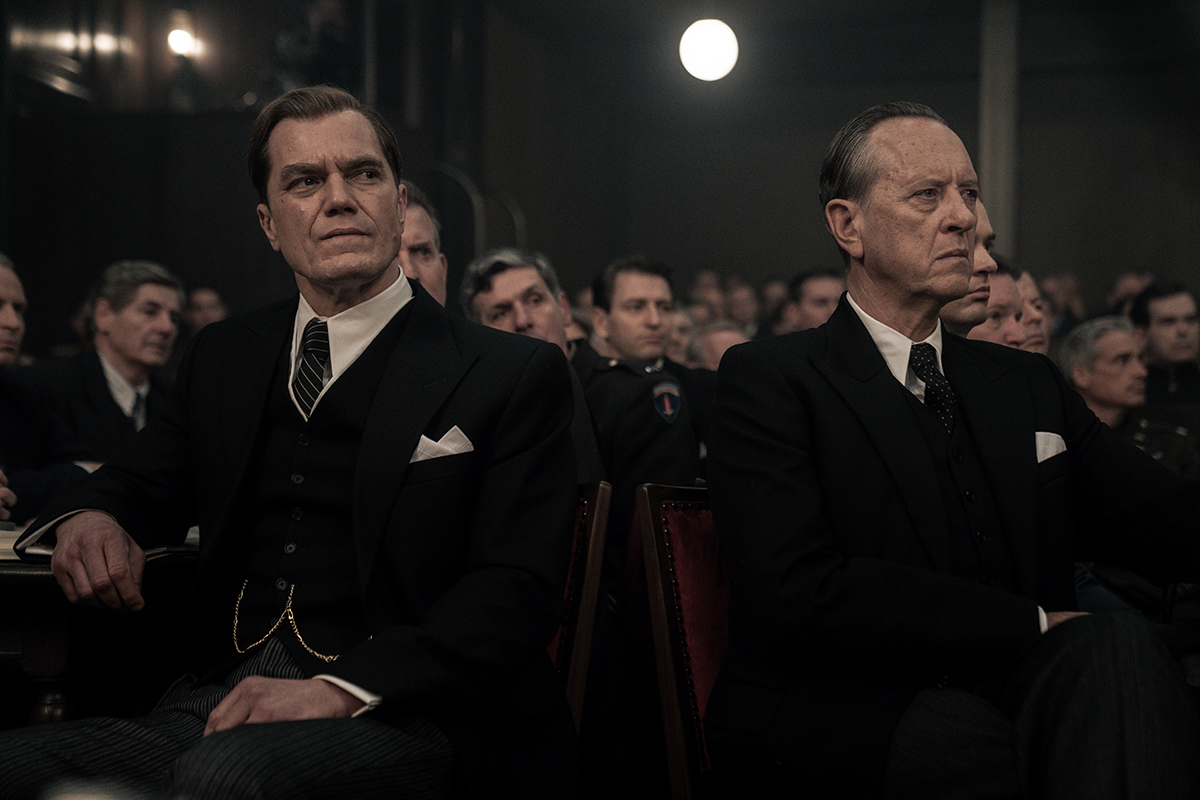
The commitment to historical authenticity extended to the film’s production design, a fact confirmed by El-Hai during his visit to the set in Hungary in spring 2024. Invited by James Vanderbilt, El-Hai witnessed the meticulous recreation of the Nuremberg courtroom and prison cells. He noted that the courtroom, though built to scale, appeared smaller than he had imagined, reflecting its actual dimensions.
The prison sets were particularly impressive. Unlike typical film sets with open fourth walls, these were fully enclosed cells, lending a palpable sense of claustrophobia and authenticity to scenes involving Rami Malek’s Kelley and Russell Crowe’s Göring. El-Hai specifically highlighted Göring’s cell as being indistinguishable from its historical counterpart, a testament to Eve Stewart’s incredible production design and the team’s dedication to immersive accuracy.
The Unspoken Truths of Hermann Göring
Hermann Göring, as depicted in the film, is a charismatic yet profoundly evasive figure. El-Hai emphasizes that Göring’s interactions with Kelley were always strategically calculated as part of his defense. Aware of his likely conviction and execution, Göring meticulously crafted a narrative for himself and the Nazi leadership, presenting their actions not as born of hatred or antisemitism, but misguided patriotism, nationalism, and unwavering loyalty to Hitler. This self-serving portrayal allowed him to sidestep the horrific realities of the Holocaust, which he undoubtedly knew about and enabled through his signed directives.
Göring was also notably guarded about his true feelings regarding the Holocaust and his relationships with other defendants. For instance, his genuine sentiments towards Rudolf Hess remain largely a mystery, despite his agreement to help Kelley assess Hess’s feigned amnesia. This deliberate withholding of deeper truths, common among all the defendants, underscores the profound challenge Kelley faced in penetrating their psychological defenses and uncovering their true motives.
Reflections for a Contemporary Audience: Questions for the Viewer
Ultimately, El-Hai hopes Nuremberg provokes profound introspection in its viewers. He aims for audiences to grapple with fundamental questions: "What makes people do evil? What do we think of people who do evil? What do we do when we see others doing evil?" The film’s dialogue, particularly Leo Woodall’s character’s late-movie reflections on societal complicity, is crucial in prompting these considerations.
As global politics continue to evolve, El-Hai believes these questions become increasingly urgent. The specter of authoritarianism, a central theme of Kelley’s work, remains a relevant threat. He hopes the film inspires viewers to consider what actions individuals and societies can take to prevent the rise of such regimes, ensuring that the lessons of Nuremberg—and the tragic insights of Dr. Douglas M. Kelley—are never forgotten.