
The integrity of the Federal Communications Commission’s (FCC) role as an independent regulatory body has come under intense scrutiny following the release of internal emails revealing that a senior career official offered to assist Chairman Brendan Carr in a targeted pressure campaign against the Walt Disney Company. The correspondence, obtained through Freedom of Information Act (FOIA) requests by WIRED, suggests a level of internal coordination between political leadership and enforcement directors that legal experts warn may violate federal ethics guidelines and First Amendment protections.
The controversy centers on Lark Hadley, the FCC’s West Coast enforcement director, who privately signaled his support for Chairman Carr’s public threats against Disney and its subsidiary, ABC. The threats were issued in response to a monologue delivered by late-night host Jimmy Kimmel regarding conservative activist Charlie Kirk. The revelation of these emails has reignited a national debate over the potential weaponization of regulatory agencies to silence political dissent and the role of career civil servants in supporting such efforts.
The Catalyst: The Charlie Kirk Monologue and Regulatory Threats
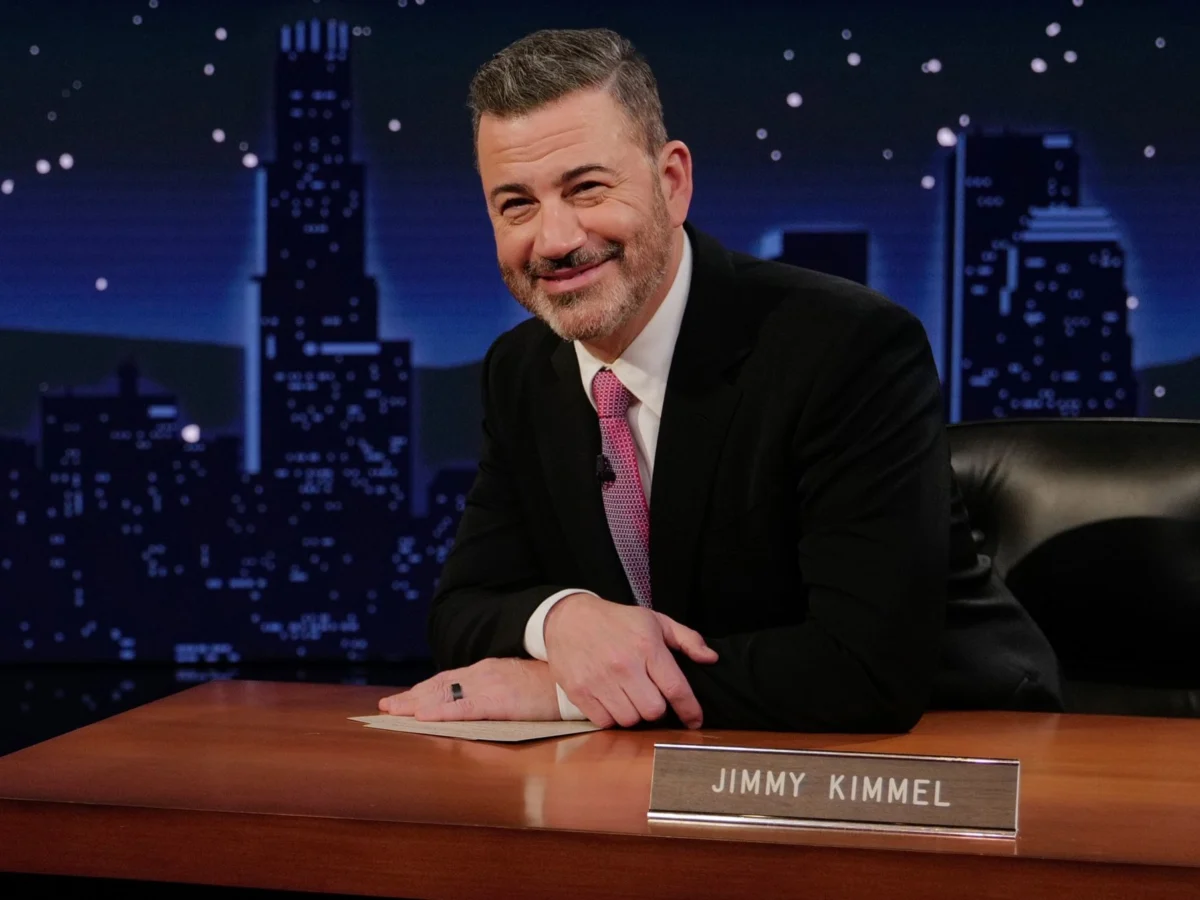
The incident began in mid-September last year when Jimmy Kimmel, during a broadcast of Jimmy Kimmel Live!, delivered a monologue referencing an assassination attempt involving Charlie Kirk, the founder of Turning Point USA. While the monologue was intended as satire, it drew immediate and sharp condemnation from conservative circles.
On September 17, FCC Chairman Brendan Carr, an appointee known for his assertive stance on broadcast content and his contributions to the "Project 2025" mandate, took to the airwaves to condemn the broadcast. During an interview with conservative podcaster Benny Johnson, Carr characterized the monologue as a "very, very serious issue" for Disney. He issued a blunt ultimatum to the media giant: “We can do this the easy way or the hard way.”
Carr’s comments were widely interpreted by industry analysts as a threat to Disney’s broadcast licenses. Under the Communications Act of 1934, the FCC has the authority to review station licenses based on the "public interest, convenience, and necessity." While the commission is generally barred from censoring specific content under Section 326 of the Act, the threat of a "hard way" approach suggested a willingness to use administrative hurdles or license renewal challenges as leverage.
Internal Correspondence: The Hadley-Carr Connection
Later that same day, Lark Hadley, whose office oversees enforcement for the West Coast—the very region where Jimmy Kimmel Live! is produced and broadcast—emailed Chairman Carr and FCC Chief of Staff Scott Delacourt. The email, carrying the subject line “personal note of support re Charlie Kirk ABC/Disney issue,” explicitly aligned a career enforcement official with the Chairman’s political rhetoric.
In the email, Hadley quoted Carr’s “easy way or the hard way” remark and expressed his own professional frustrations. Noting his background as a former broadcaster, Hadley wrote that the “absolute lack of accountability has always confused (and sickened) me.” He concluded the message with a direct offer of assistance: “Please, do not let up, and let me know if I can help in any way.”
The significance of Hadley’s involvement cannot be overstated. Unlike the Chairman, who is a political appointee, Hadley is a career civil servant. Career officials are expected to remain non-partisan and impartial, ensuring that enforcement actions are based on law and regulation rather than political preference. Furthermore, Hadley’s office holds direct enforcement authority over KABC-TV in Glendale, California, the origin station for Kimmel’s program. His offer to "help" in a campaign against a specific broadcaster in his own jurisdiction raises profound questions about the impartiality of the FCC’s enforcement wing.
The Economic Pressure: Nexstar, Sinclair, and Pending Mergers
The impact of Carr’s public threats was almost immediate, manifesting not through direct FCC fines, but through the reaction of major affiliate groups. Following Carr’s warnings, two of the nation’s largest television station owners, Nexstar Media Group and Sinclair Inc., opted to drop the specific broadcast of Jimmy Kimmel Live!.
This move by affiliates was particularly notable given the regulatory environment at the time. Both Nexstar and Sinclair had multibillion-dollar mergers and acquisitions pending before the FCC. Industry observers noted that for these companies, the risk of antagonizing the FCC Chairman—who holds significant sway over the approval of such deals—far outweighed the advertising revenue from a single late-night episode.
The refusal of these major affiliates to air the program created a "chilling effect" that eventually forced Disney to temporarily suspend Jimmy Kimmel Live!. This outcome demonstrated the Chairman’s ability to leverage the commission’s informal power to achieve results that might be legally unattainable through formal rulemaking or censorship.
Legal Standards and Ethical Concerns
The internal communications between Hadley and Carr appear to sit in tension with federal ethics rules. Specifically, 5 C.F.R. § 2635.101 outlines the basic obligation of public service, stating that employees shall act impartially and not give preferential treatment to any private organization or individual. Furthermore, it mandates that employees avoid any actions creating the appearance that they are violating the law or ethical standards.
Will Creeley, legal director at the Foundation for Individual Rights and Expression (FIRE), expressed alarm at the regional director’s enthusiasm for the Chairman’s tactics. “Just like Brendan Carr, they swore an oath to uphold the Constitution—and that includes the First Amendment, which bars the government from coercing private broadcasters into censoring dissent,” Creeley stated. He questioned the appropriateness of a taxpayer-funded public servant cheering on the perceived abuse of office.
The First Amendment generally protects broadcasters from government retaliation based on the viewpoint of their programming. While the FCC regulates "indecency" and "obscenity," political satire and commentary—even when offensive to some—are traditionally considered core protected speech. By suggesting that Disney face "the hard way" due to a monologue, critics argue the Chairman engaged in unconstitutional "jawboning"—the use of government pressure to compel private actors to censor speech.
Chronology of the Controversy
The following timeline outlines the rapid escalation of the conflict:
- Mid-September: Jimmy Kimmel delivers a monologue regarding Charlie Kirk on Jimmy Kimmel Live!.
- September 17 (Morning): Chairman Brendan Carr appears on The Benny Johnson Show, threatening Disney with regulatory consequences and the "hard way" approach.
- September 17 (Afternoon): Major station affiliates Nexstar and Sinclair announce they will not air the program, citing concerns over content and potential regulatory friction.
- September 17 (Evening): Lark Hadley sends an email to Carr and Delacourt offering "support" and assistance in the "ABC/Disney issue."
- September 18: ABC announces a temporary suspension of Jimmy Kimmel Live! to "evaluate production standards."
- Late September: The show returns to the air, but the incident is cited by free-speech advocates as a dangerous precedent for government interference in media.
- Present Day: FOIA-obtained emails reveal the internal coordination between the enforcement office and the Chairman’s office.
Broader Implications for Regulatory Independence
The revelation of Hadley’s email strikes at the heart of the "career vs. political" divide within federal agencies. The U.S. government relies on the "merit system," where career employees provide continuity and objective expertise regardless of which party occupies the White House or the Chairman’s seat. When career enforcement chiefs pledge services to a Chairman’s political "campaign" against a specific entity, the line between objective regulation and political retribution blurs.
This incident also highlights the evolving nature of the FCC. Historically, the commission has focused on technical standards, spectrum allocation, and broad public interest goals. However, under recent leadership, there has been a perceived shift toward using the commission’s platform to engage in the "culture wars."
The data regarding the FCC’s recent actions suggests an increase in the use of public statements to influence corporate behavior. While formal "Letters of Inquiry" (LOIs) remain the standard for enforcement, the use of "the bully pulpit" has become a primary tool. For companies like Disney, which operate in a highly regulated environment, even the hint of a license challenge can result in millions of dollars in lost market value and legal fees.
Official Responses and Silence
As of the publication of these findings, the FCC has remained largely silent on the specific content of the Hadley emails. Chairman Carr’s office did not respond to requests for comment regarding the propriety of his "hard way" remarks or his communication with the West Coast enforcement director.
Lark Hadley has also not issued a public statement. An ABC spokesperson declined to comment on whether the network felt specifically coerced by the FCC, though the temporary suspension of their flagship late-night program remains a matter of public record.
The Foundation for Individual Rights and Expression (FIRE) and other civil liberties groups are reportedly reviewing the emails to determine if they constitute evidence of a broader pattern of First Amendment violations. “This isn’t just about one late-night host,” said one legal analyst. “It’s about whether the person who holds the keys to the airwaves is allowed to use them as a weapon against people who tell jokes he doesn’t like.”
Analysis: The Future of Broadcast Content
The Hadley-Carr correspondence serves as a case study in the power of administrative oversight. In an era of deep political polarization, the independence of agencies like the FCC is under constant pressure. If career enforcement officials are encouraged to align themselves with the political agendas of their superiors, the "accountability" Hadley mentioned in his email may transform into a tool for selective enforcement.
For broadcasters, the takeaway is clear: the regulatory environment is becoming increasingly volatile. The "easy way" involves compliance with the implicit preferences of the commission’s leadership, while the "hard way" involves the risk of losing the legal right to broadcast. As this internal drama comes to light, the call for clearer boundaries between political rhetoric and enforcement action is likely to grow louder in the halls of Congress and the court of public opinion.