


The highly anticipated Indonesian action thriller Timur, directed by and starring martial arts superstar Iko Uwais, is scheduled for its direct-to-VOD release in the United States on April 7, 2026. This cinematic offering from Uwais Entertainment brings to the screen a harrowing story inspired by the real-life Mapenduma hostage crisis that gripped Indonesia in 1996. Following its initial theatrical run in Indonesia on December 18, 2025, the film is poised to introduce a wider international audience to a significant historical event through the lens of high-stakes action and personal drama, available on platforms such as iTunes and others.
Historical Context: The Mapenduma Hostage Crisis of 1996
The narrative backbone of Timur is drawn from one of Indonesia’s most prolonged and internationally scrutinized hostage situations. To fully appreciate the film’s thematic depth and the gravity of the mission depicted, it is crucial to understand the historical context of the Mapenduma hostage crisis.
Indonesia’s Papua region, comprising the western half of the island of New Guinea, has a complex history marked by political and social tensions, largely stemming from its integration into Indonesia in the 1960s. The Free Papua Movement (Organisasi Papua Merdeka, OPM) emerged as a separatist group advocating for the independence of West Papua. Throughout the latter half of the 20th century, the OPM engaged in various forms of resistance, including armed struggle, which occasionally resulted in high-profile incidents such as hostage-taking.
The Mapenduma crisis began on January 8, 1996, when a group of OPM militants, led by Kelly Kwalik, abducted 26 members of a scientific expedition in the remote Lorentz National Park, near the village of Mapenduma in the Jayawijaya Mountains of Irian Jaya (now Papua Province). The expedition, known as "Lorentz ’95," comprised Indonesian, British, Dutch, and German researchers and support staff who were conducting biological and ecological studies in the region. Among the hostages were 11 scientific researchers, including several Westerners, notably four Britons (Anna McIvor, Daniel Start, William Oates, Monica Cole) and one Dutchman (Mark van der Wal).
The kidnappers’ primary demand was the recognition of Papuan independence by the United Nations. This act immediately escalated into a major international incident, drawing global attention to the long-standing conflict in Papua. The Indonesian government, under then-President Suharto, initiated a multi-faceted response that involved both diplomatic efforts and military preparations.
Chronology of a Crisis

The crisis unfolded over several months, marked by intense negotiations and military maneuvers:
- January 8, 1996: OPM militants abduct members of the Lorentz ’95 expedition in Mapenduma.
- January – March 1996: Initial attempts to secure the hostages’ release involve negotiations, primarily facilitated by the International Committee of the Red Cross (ICRC). Dr. Andreas Mathar, an Indonesian Red Cross representative, played a crucial role in these early stages, acting as an intermediary and delivering supplies to the hostages. During this period, some non-researcher hostages were released, reducing the number to 11.
- March 1996: As negotiations stalled, the Indonesian military began preparing for a rescue operation. The elite special forces unit, Kopassus (Komando Pasukan Khusus), was tasked with planning and executing the mission. The operation was codenamed "Operation Sandera" (Hostage Operation) and was led by then-Lieutenant Colonel Prabowo Subianto, who would later become a prominent political figure in Indonesia.
- April 1996: The military intensified its reconnaissance efforts in the rugged and unforgiving terrain of the Jayawijaya Mountains. The logistical challenges were immense, given the dense jungle, high altitudes, and unpredictable weather conditions.
- May 15, 1996: After months of stalemate and intelligence gathering, Kopassus launched its decisive rescue operation. The exact details of the military engagement remain subject to some debate and various accounts, but it involved a direct confrontation with the OPM kidnappers. Tragically, during the rescue, two Indonesian hostages, Matheis Y. Wolas and Navy pilot Captain Irianto, were killed by the militants. The remaining nine hostages, including the five Westerners, were successfully freed.
- Post-Rescue: The operation was hailed as a success by the Indonesian government, though the loss of two lives underscored the inherent dangers. The incident further highlighted the complexities of the separatist conflict in Papua and the extreme conditions faced by both local communities and those working in the region.
This real-life drama, with its blend of international diplomacy, military strategy, and human endurance, provides a potent foundation for Timur.
The Cinematic Adaptation: Timur
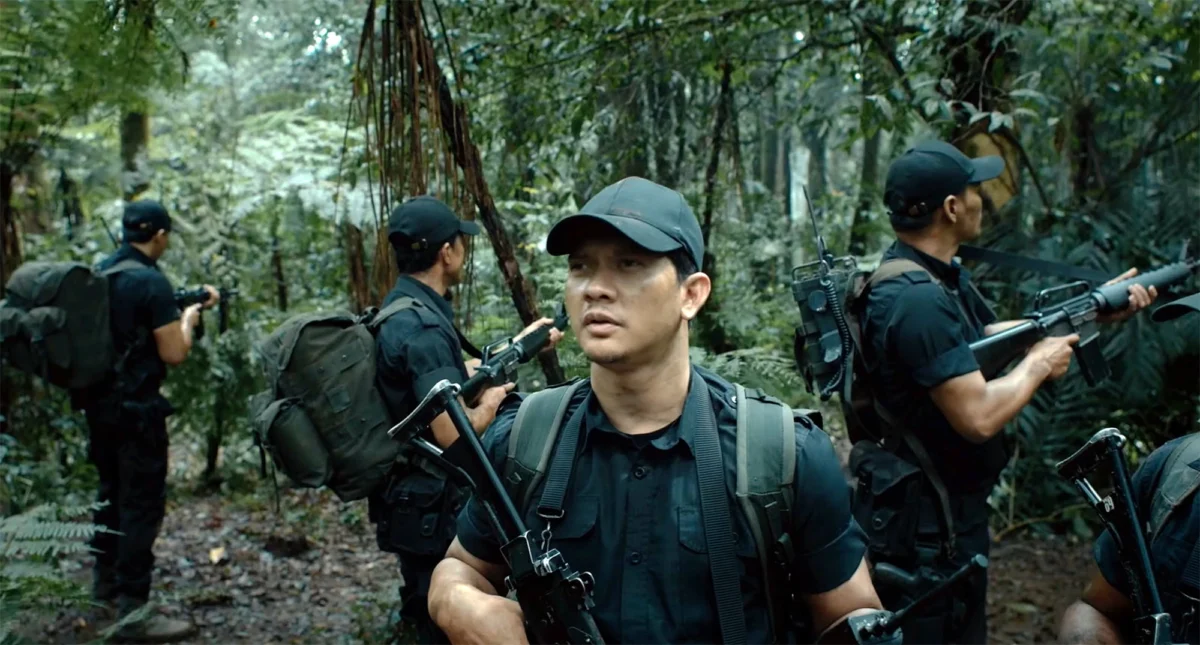
Iko Uwais’s Timur endeavors to translate the tension and brutality of this historical event into a compelling action thriller. Uwais not only takes on the directorial mantle for the first time but also stars as the titular character, Timur, a special army soldier tasked with leading the perilous rescue mission. The film is based on the Mapenduma hostage rescue operation, specifically focusing on the efforts to free the kidnapped researchers in the dense and dangerous Papuan jungle.
The film’s synopsis reveals a narrative layer that adds a deeply personal dimension to the high-stakes humanitarian mission. Timur’s dangerous assignment unexpectedly brings him back to his childhood home, a detail that transforms the rescue operation into a profound personal struggle. Accompanied by his best friend, Sila, Timur must navigate not only the immediate threats posed by the kidnappers and the unforgiving environment but also confront the ghosts of his past in the very place where he was raised. This narrative choice, penned by screenwriter Titien Wattimena, suggests that Timur aims to be more than just a relentless action flick; it seeks to explore themes of identity, sacrifice, and the emotional toll of conflict on individuals.
The choice to base the film on a real military incident carries inherent sensitivities. Adapting such an event requires careful handling to respect the historical facts, the victims, and the various parties involved, while also crafting a dramatic and engaging story. Uwais’s vision for Timur appears to blend the raw realism of a military operation with the intense, meticulously choreographed martial arts sequences for which he is globally renowned.
Iko Uwais: A Global Action Icon’s Directorial Debut
Iko Uwais’s career trajectory has been nothing short of meteoric. Discovered by director Gareth Evans, Uwais first captivated audiences in the 2009 Indonesian martial arts film Merantau. However, it was his starring role in The Raid: Redemption (2011) and its critically acclaimed sequel, The Raid 2 (2014), that cemented his status as a global action phenomenon. These films showcased his mastery of Pencak Silat, an Indonesian martial art, delivering some of the most visceral and innovative fight choreography seen in modern cinema.

His success quickly led to opportunities in Hollywood, allowing him to expand his repertoire and introduce his unique fighting style to a wider audience. He appeared in blockbusters like Star Wars: The Force Awakens (2015), Mile 22 (2018) alongside Mark Wahlberg, and Snake Eyes (2021), a spin-off from the G.I. Joe franchise. He further solidified his presence in the international action landscape with roles in Netflix’s Fistful of Vengeance (2022) and the ensemble action film The Expendables 4 (2023).
Timur marks a significant milestone in Uwais’s career: his feature directorial debut. This move signifies an artistic evolution, allowing him to not only perform the action but also shape the entire narrative and visual language of the film. It offers him greater creative control, enabling him to infuse the project with his personal vision for storytelling and action. His experience in front of the camera, working with acclaimed directors, undoubtedly provides him with a unique perspective to guide his own cast and crew. The film is produced by Ryan Santoso under Uwais Entertainment, underscoring Uwais’s commitment to developing and showcasing Indonesian talent and stories on a global platform.
The cast supporting Uwais includes a mix of established and emerging Indonesian actors: Jimmy Kobogau, Aufa Assagaf, Yasamin Jasem, Fanny Ghassani, Kiki Narendra, and Andri Mashadi. Their collective performances are expected to bring depth and authenticity to the challenging roles in this intense drama.
Visuals, Action, and Thematic Depth
The trailers released for Timur, including an early teaser and the official trailer, strongly indicate that the film will deliver the kind of brutal, high-octane action expected from an Iko Uwais project. The snippets reveal intense hand-to-hand combat sequences, often in claustrophobic jungle settings, punctuated by the visceral impact of Uwais’s signature martial arts. The cinematography captures the rugged beauty and inherent dangers of the Indonesian wilderness, making the environment itself a formidable antagonist. The production design and visual effects appear to prioritize realism, grounding the extraordinary action in a believable, albeit heightened, reality.
Beyond the action, the film’s premise suggests a thoughtful exploration of courage, leadership, and the moral complexities inherent in military operations. The personal arc of Timur, returning to his childhood home amidst such peril, promises to add a layer of emotional resonance that distinguishes it from purely spectacle-driven action films. It positions the film to resonate with audiences who appreciate character-driven narratives as much as expertly choreographed fight scenes.
The Significance of a VOD Release for International Cinema
The decision for Timur to debut direct-to-VOD in the US market on April 7, 2026, reflects evolving trends in global film distribution. For international films, particularly those from non-English speaking markets, VOD platforms offer an unparalleled opportunity for accessibility and reach. This model bypasses the often prohibitive costs and logistical challenges of traditional theatrical distribution in foreign markets, allowing films to quickly connect with niche audiences and fans of specific genres or actors.

For Timur, a VOD release ensures that Iko Uwais’s dedicated international fanbase, cultivated through his Raid films and Hollywood appearances, can easily access his latest work. It also provides a platform for general action movie enthusiasts to discover high-quality international cinema they might otherwise miss. This digital distribution strategy is crucial for expanding the global footprint of Indonesian cinema, showcasing its storytelling prowess, technical skill, and unique cultural perspectives to a broader audience.
Broader Implications and Cultural Impact
Timur stands as a significant cultural artifact for several reasons. Firstly, by dramatizing the Mapenduma hostage crisis, it serves as a cinematic remembrance of a pivotal event in Indonesian history. Such films play a vital role in historical memory, offering a medium through which past events can be understood, discussed, and reflected upon by new generations.
Secondly, it reinforces Iko Uwais’s position not just as an action star but as a burgeoning auteur. His move into directing signals a desire to contribute more comprehensively to the filmmaking process, potentially paving the way for other action performers to explore similar creative avenues. This artistic growth can only enrich the action genre, bringing fresh perspectives and innovative storytelling.
Finally, the international release of Timur contributes to Indonesia’s growing soft power. As Indonesian films continue to gain traction on the global stage, they introduce audiences to the country’s rich culture, diverse landscapes, and compelling narratives. This fosters greater cross-cultural understanding and appreciation, positioning Indonesia as a vibrant and dynamic force in the global entertainment industry.
In conclusion, Timur is more than just an action film; it is a historical dramatization, a directorial debut, and a testament to the enduring appeal of Indonesian storytelling and martial arts prowess. Its US VOD release on April 7, 2026, promises an intense, dramatic, and historically resonant cinematic experience that fans of Iko Uwais and high-quality action thrillers will not want to miss.