



IFC Films has officially unveiled a groundbreaking 6K restoration of Werner Herzog’s critically acclaimed documentary, Cave of Forgotten Dreams, slated for a limited theatrical re-release in April 2026, followed by a digital debut. This ambitious project breathes new life into Herzog’s profound exploration of France’s Chauvet Cave, offering audiences an unprecedented opportunity to experience the earliest known human artwork with enhanced clarity and immersion, particularly in IMAX 3D. The restoration, arriving 15 years after its initial premiere at the Toronto International Film Festival (TIFF) in 2010 and subsequent theatrical release in 2011, promises a revitalized cinematic journey into humanity’s distant past.
A Return to Ancient Art: The Significance of Chauvet Cave
At the heart of Cave of Forgotten Dreams lies the Chauvet Cave, a site of immense archaeological and anthropological significance. Discovered in 1994 in the Ardèche department of southern France, the cave houses some of the oldest and most remarkably preserved figurative cave paintings in the world, dating back over 30,000 to 32,000 years, to the Aurignacian period of the Upper Paleolithic era. Unlike other famous prehistoric sites, Chauvet Cave remained sealed by a rockfall for millennia, creating an almost pristine environment that protected its delicate artwork from the ravages of time and human interference. This natural sealing meant that when it was rediscovered, the air, rock formations, and paintings were largely untouched, presenting an invaluable window into the minds and artistic capabilities of early modern humans.
The paintings themselves are extraordinary, depicting a rich menagerie of prehistoric animals including mammoths, cave lions, rhinos, bears, horses, and various predators, often rendered with a remarkable sense of movement and three-dimensionality. Beyond the animals, abstract symbols and human handprints also adorn the cave walls, offering tantalizing clues about the rituals, beliefs, and daily lives of these ancient artists. The sheer sophistication of the artwork, challenging previous notions about the linear development of prehistoric art, instantly elevated Chauvet Cave to an unparalleled status among archaeological discoveries. Its designation as a UNESCO World Heritage site in 2014 underscored its universal value and the imperative for its protection.
Werner Herzog’s Vision: Capturing the Inaccessible

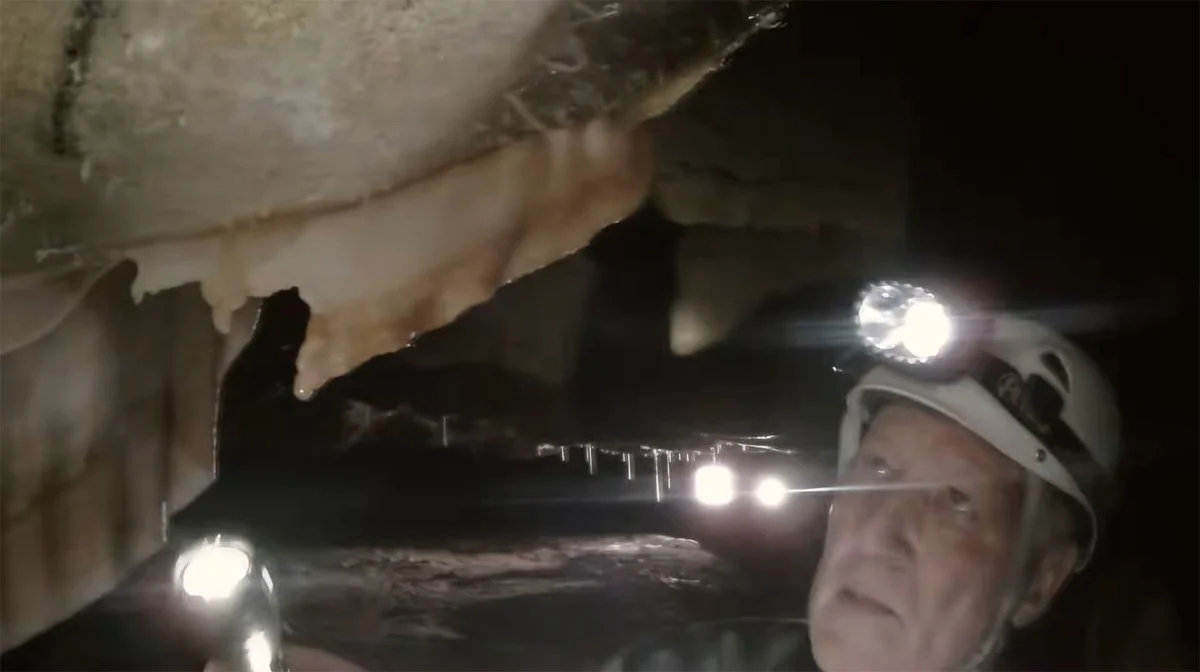
Werner Herzog, the prolific German auteur renowned for his distinctive documentary and fiction films, was granted an almost unimaginable privilege: access to film inside the highly restricted Chauvet Cave. Due to the extreme fragility of the site and the imperative to maintain its pristine condition, public access is strictly prohibited. Indeed, as Herzog himself noted, fewer people had entered Chauvet Cave at the time of filming than had walked on the moon. This exclusivity underscores the monumental challenge and unique opportunity presented to Herzog and his skeletal crew of just four individuals.
The conditions imposed by the French government for filming were stringent. Custom-built digital cameras, compact enough to navigate the cave’s confined spaces without disturbing the delicate environment, were employed. The crew was limited in terms of equipment, time, and even the amount of heat and light they could generate, all to minimize any potential impact on the cave’s microclimate and the ancient artwork. Herzog’s decision to film in 3D, a relatively nascent technology in documentary filmmaking at the time, was not a gimmick but a deliberate artistic choice. He sought to convey the profound sense of depth, scale, and spatial relationship that defines the cave, allowing viewers to experience its "otherworldly beauty" and the contours of its crystalline formations as if they were present. This innovative approach transformed the viewing experience, making the ancient art leap off the screen with a tactile presence.
The film, characterized by Herzog’s signature philosophical narration and contemplative style, delves beyond mere visual documentation. It explores themes of human consciousness, the origins of artistic expression, the ephemeral nature of existence, and our connection to the deep past. Herzog famously muses on the idea that "we are locked in history and they were not," highlighting a fundamental difference in temporal perception between modern humans and our ancient ancestors. The film premiered to widespread critical acclaim at TIFF in 2010, winning numerous awards and solidifying its place as one of Herzog’s most significant documentary achievements. Its initial theatrical run in 2011 resonated deeply with audiences and critics alike, earning praise for its breathtaking visuals and profound intellectual inquiry.
The Genesis of the 6K Restoration: A Technological Leap
The decision to undertake a 6K restoration of Cave of Forgotten Dreams reflects both the enduring cultural importance of the film and the rapid advancements in cinematic technology. Produced by James Stewart and Liane Kotler, with Paul Marengo serving as the Digital Restoration Artist and Murray Wren as the 3D Pablo Artist, this project is a meticulous endeavor to enhance every facet of the original film.
A 6K resolution signifies a picture composed of approximately 6,000 pixels horizontally, offering significantly more detail and clarity than the standard 2K or even 4K resolutions common in many contemporary films. For a documentary so reliant on the intricate details of ancient artwork and the subtle textures of a prehistoric environment, this upgrade is transformative. It allows for a sharper rendition of the delicate lines of the cave paintings, the shimmering quality of mineral deposits, and the subtle interplay of light and shadow that Herzog painstakingly captured. The restoration process likely involved a comprehensive digital cleaning of the original footage, color correction, and resolution upscaling, ensuring that the visual integrity of Herzog’s vision is not only preserved but elevated.

Furthermore, the enhancement for IMAX 3D represents a significant step beyond the original 3D presentation. IMAX, known for its superior image quality, immersive sound, and expansive screen formats, is particularly well-suited to convey the grandeur and depth of Chauvet Cave. The "3D Pablo Artist" role, likely referring to expertise with advanced post-production systems such as Blackmagic Design’s DaVinci Resolve (which includes the Pablo Rio suite), underscores the specialized technical skill required to optimize the stereoscopic images for IMAX’s demanding specifications. This involves meticulous alignment, depth adjustments, and color grading to ensure a seamless and breathtaking 3D experience that truly "immerses you deep inside the mysterious natural cathedral where art began." The goal is not merely to project a bigger image, but to create a more profound sense of presence and immersion, allowing viewers to feel closer than ever to one of humanity’s oldest artistic achievements.
Chronology of a Masterpiece and Its Rebirth
- December 18, 1994: Jean-Marie Chauvet and his team discover the Chauvet Cave in the Ardèche Valley, France.
- Late 1990s – 2000s: Strict preservation measures are implemented, severely limiting access to the cave.
- 2009: Werner Herzog is granted unprecedented access to film inside Chauvet Cave. Production begins with a small crew and custom digital 3D cameras under stringent conditions.
- September 13, 2010: Cave of Forgotten Dreams premieres at the Toronto International Film Festival, receiving widespread critical acclaim.
- April 29, 2011: The film receives a limited theatrical release in the United States, earning numerous awards and accolades.
- June 22, 2014: Chauvet Cave is inscribed as a UNESCO World Heritage site, recognizing its outstanding universal value.
- March 27, 2026: IFC Films announces the 6K restoration and IMAX 3D re-release, along with a new trailer and poster.
- April 15 & 19, 2026: Limited theatrical re-release of the 6K IMAX 3D version.
- April 21, 2026: Digital release of the restored film.
This timeline highlights the meticulous care taken with the cave itself, the significant effort Herzog undertook to document it, and now, the commitment of IFC Films to ensure its enduring legacy through advanced restoration.
Statements and Industry Reactions
While specific new statements from Werner Herzog regarding the 6K restoration have not yet been released, his consistent advocacy for the immersive power of cinema and his deep respect for the subjects of his films provide insight into his likely enthusiasm. Industry observers suggest that IFC Films’ decision to invest in such a high-fidelity restoration underscores their commitment to cinematic preservation and their belief in the timeless relevance of Herzog’s work. A representative from IFC Films, speaking on background, might emphasize the unique opportunity this restoration presents for a new generation of viewers to experience the film as Herzog originally intended, but with the added benefits of modern display technology.
The restoration team, including Digital Restoration Artist Paul Marengo and 3D Pablo Artist Murray Wren, would likely detail the technical challenges and immense satisfaction of working with such iconic material. Their work ensures that the intricate details of the prehistoric art, the subtle movements Herzog captured, and the overall atmospheric presence of the cave are rendered with unparalleled fidelity. Film critics and archaeologists who lauded the original release are expected to revisit the film with renewed interest, analyzing how the enhanced visual and auditory experience deepens its cultural and scientific impact. Initial reactions to the trailer have been overwhelmingly positive, with audiences expressing excitement for the opportunity to witness this cinematic marvel on the big screen, particularly in IMAX.

Broader Impact and Implications for Documentary Cinema
The re-release of Cave of Forgotten Dreams in a 6K IMAX 3D restoration carries significant implications across several domains. For documentary filmmaking, it sets a new benchmark for how classic works can be revisited and presented to contemporary audiences. As technology advances, the capacity to enhance and preserve cinematic masterpieces grows, ensuring their continued relevance and accessibility. This restoration highlights the enduring value of artistic and scientific documentaries, reaffirming their role not just as historical records, but as dynamic works of art capable of transcending their initial release.
For Werner Herzog’s prodigious legacy, this project further cements his status as a visionary filmmaker whose inquiries into the human condition remain profoundly relevant. His distinctive "ecstatic truth" approach, which seeks a deeper, poetic truth beyond mere facts, finds one of its purest expressions in Cave of Forgotten Dreams. The film stands as a testament to his unique ability to blend scientific exploration with philosophical introspection, creating cinema that is both intellectually stimulating and emotionally resonant. This restoration ensures that this pivotal work will continue to inspire and challenge audiences for decades to come, solidifying its place alongside other Herzog classics like Grizzly Man, Encounters at the End of the World, and Into the Abyss.
Beyond the cinematic realm, the film’s return underscores the ongoing importance of cultural preservation. By bringing the Chauvet Cave, an inaccessible treasure, to a global audience in such an immersive format, Herzog’s film serves as a powerful reminder of humanity’s shared heritage and the imperative to protect such irreplaceable sites. The ancient artwork within the cave speaks to a fundamental human urge for creation and meaning-making, a primal connection that transcends time and culture. The enhanced viewing experience offered by the 6K IMAX 3D restoration promises to forge an even deeper, more visceral connection between modern viewers and these echoes from our distant past. It is an opportunity to ponder the origins of art, consciousness, and what it means to be human, all within the breathtaking scope that only a fully restored, large-format presentation can provide. This re-release is not merely a cinematic event; it is a cultural imperative, inviting us once again into the "cave of forgotten dreams" to reflect on where we came from and what we carry forward.