




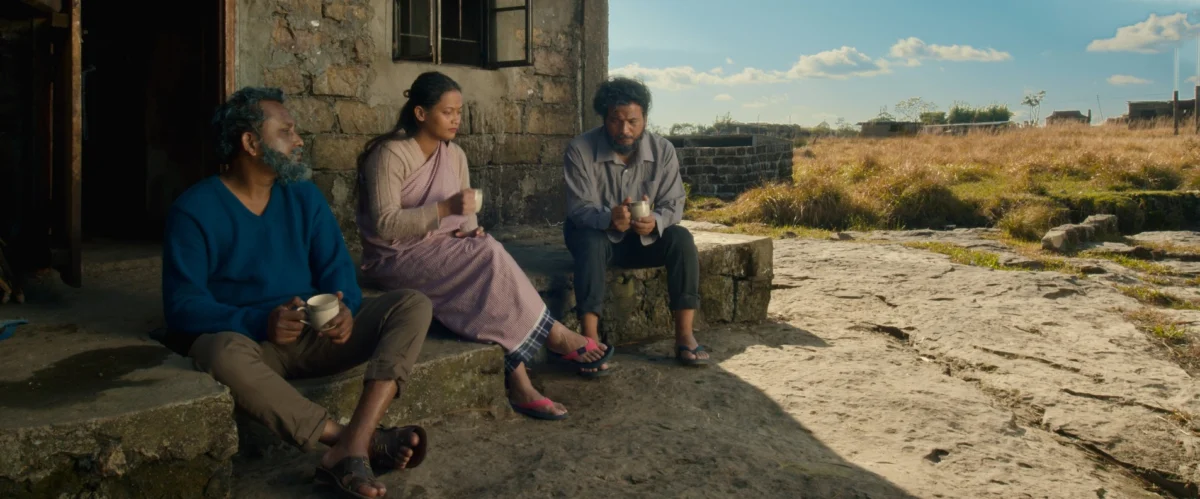
Filmmaker Pradip Kurbah’s latest cinematic offering, "Ha Lyngkha Bneng," also known internationally as "The Elysian Field," delves into the profound philosophy of communitarianism, presenting a future where the collective spirit of humanity is tested against the encroaching shadows of isolation and neglect. Released in 2025, the film, a poignant exploration of human resilience, has garnered significant critical acclaim, culminating in prestigious awards at the 47th Moscow International Film Festival. Kurbah, a director consistently celebrated for his empathetic and realistic portrayal of ordinary lives, particularly those of marginalized communities, continues his exploration of humanism with a narrative that is both deeply personal and universally resonant. His previous works, including the acclaimed "Iewduh" (2019) and "Onataah: Of the Earth" (2016), have consistently showcased themes of dignity, resilience, and the unspoken emotional landscapes of his characters. "Ha Lyngkha Bneng" takes this thematic thread and weaves it into a compelling, albeit stark, vision of a near future.
A Future Defined by Solitude and Memory
The narrative of "Ha Lyngkha Bneng" is set in the year 2047, within the confines of a small, remote Khasi village in Meghalaya. This village, once a vibrant hub of community life, now stands as a stark symbol of abandonment, its connection to the outside world reduced to a single, often infrequent, bus service. The film centers on the handful of remaining residents: Livingstone, Miss Helen, Maia, Friday, Complete, and Promise. These individuals navigate a ritualistic existence, their lives, memories, and very sense of self inextricably bound to the village’s diminishing physical and emotional landscape. The structures of homes persist, but the essence of "home" has long since departed, leaving behind a haunting echo of what once was.
The ruins of the village serve as a repository for countless stories, tales of lives lived and loves lost, now existing only in the spectral presence of their former inhabitants. Far removed from any semblance of modern progress, the reality for these last residents is painted with an almost absurd, dystopian brush. The film subtly underscores this isolation through everyday occurrences: a character’s admission of long-disused voting rights, another’s desperate struggle for a faint mobile signal, and the distant, almost irrelevant, sound of news bulletins detailing advancements in the state that hold no bearing on their immediate existence. This creates a profound sense of disconnect, where the barest essentials of life are a luxury, and time itself becomes the primary companion in their solitary lives. A particularly poignant scene depicts the male residents digging their own graves, a grim acknowledgment of their isolation and a pragmatic, albeit heartbreaking, preparation for the inevitable, underscoring the film’s exploration of life and death.
The Philosophy of Contrasts and Communitarianism
Kurbah masterfully employs a filmmaking style built upon a deliberate interplay of absurdities and stark contrasts, embedding these elements into the very fabric of the narrative to reflect the villagers’ uncertain existence. The story, set in a speculative future, is simultaneously deeply rooted in the collective memories and oral histories of the past. This temporal duality creates a rich tapestry of lived experience. Furthermore, a subtle undercurrent of sorrow is often interwoven with moments of gentle humor, offering fleeting respites from the pervasive melancholy. The film’s visual and thematic language consistently juxtaposes light and darkness, presence and absence, joy and sorrow, and most profoundly, life and death, presenting them as inescapable, coexisting realities within the village.
These inherent contrasts are amplified by the villagers’ communal rituals. Frequent power outages, predestined funerals, shared moments of simple joy, and small celebrations are not isolated events but rather embrace and intertwine, demonstrating how the inhabitants face their grief and their joys with a profound sense of gratitude. This shared experience is the bedrock of their enduring communitarian spirit. Kurbah suggests that these contrasts are not merely stylistic devices but elemental textures of life itself, inseparable from the endurance and intimacy forged by those who remain. This philosophy of shared existence, even in the face of profound loss and isolation, is the film’s beating heart.
Authenticity in Performance and Visual Storytelling
The cast of "Ha Lyngkha Bneng" features a significant number of non-professional actors, a deliberate choice that imbues their performances with an unparalleled lived-in authenticity. The sparse dialogue and limited conversational exchanges allow the characters’ emotions to surface organically, conveyed through subtle gestures, expressions, and silences. They are often quiet, occasionally humorous, perpetually tinged with sadness, yet always profoundly humane. This approach allows the audience to connect with their internal worlds on a deeper, more visceral level.
Cinematographer Pradip Daimary’s lenses capture the painterly stillness of Meghalaya’s verdant fields and the distant, lonely hills. This visual language is not merely aesthetic; it actively contributes to the film’s philosophical underpinnings. The natural landscape evolves into a visual metaphor for the enduring human drive to connect, much like the fields seamlessly merging with the distant hills on the horizon. The passage of time is subtly observed through the changing seasons, mirroring the gradual shifts in the villagers’ existence. A particularly poignant scene sees Maia gifting a yellow cap to every resident as a Christmas present, a simple act that radiates warmth and reinforces their shared humanity amidst their desolation.
A Microcosm of Existence
Despite its expansive visual scope, "Ha Lyngkha Bneng" succeeds in drawing audiences into an intimate and visceral flow of life. The film presents a small world, yet its emotional and thematic resonance extends far beyond the vast landscapes it portrays. At times, the village itself feels like an entire world, a self-contained universe where the fundamental aspects of human existence are laid bare.
Beyond its philosophical depths, the movie also scrutinizes the myriad absurdities of daily human existence. The subtle impact of even small amounts of alcohol, the repeated, futile attempts to fix an electric transformer, all serve as ironic markers of an incomplete routine and the pervasive monotony. The presence of a choir, often associated with solemn occasions, subtly foreshadows death, while the solitary bus acts as a symbolic liminal space, situated between the tangible and the metaphysical, suggesting the village exists on the cusp of multiple realities.
Political Undertones and Critical Reception
Kurbah’s critique of societal neglect and uneven development is woven into the narrative with considerable strategic force. "Ha Lyngkha Bneng" implicitly calls out the modern world’s prioritization of progress over basic human needs, as the villagers continue to grapple for essential amenities and services. However, this political commentary never overshadows the film’s profound humanistic core. The critique is delivered not through overt pronouncements but through the stark reality of the characters’ lives.
The film’s runtime has been identified as a potential area for improvement. While undeniably immersive and spiritually contemplative, a sharper editorial hand and a more immediate structural approach could have further enhanced its impact. Unlike Kurbah’s earlier works, such as "Iewduh," which incorporated secondary plotlines that added layers of tension, "Ha Lyngkha Bneng" maintains a purposefully unsophisticated narrative. Nevertheless, even within its lyrical expanse, the movie offers a profoundly rewarding experience. It serves as a powerful reminder that love, presence, memory, and solidarity are the most enduring measures of human life, especially for those worlds teetering on the brink of fading away.
Acclaim and International Recognition
The film’s journey has been marked by significant critical and audience appreciation. Following a special screening on February 28 at the Kelvin Gold Cinema Hall in Guwahati, Assam, "Ha Lyngkha Bneng" was subsequently screened from March 6 to March 11 at the Soso Tham Auditorium in Shillong, Meghalaya. This homecoming screening followed a highly successful international festival run.
The pinnacle of its international recognition came at the 47th Moscow International Film Festival in 2025. There, "Ha Lyngkha Bneng" achieved a remarkable triumph, securing the prestigious Golden St. George for Best Film, alongside an award for Best Director for Pradip Kurbah, and the NETPAC Award for Best Asian Film. These accolades underscore the film’s universal appeal and its profound impact on global audiences and critics alike. The awards highlight Kurbah’s distinct directorial vision and his ability to craft narratives that resonate deeply across cultural boundaries, celebrating the enduring spirit of community and humanity in a world increasingly defined by division and detachment.