



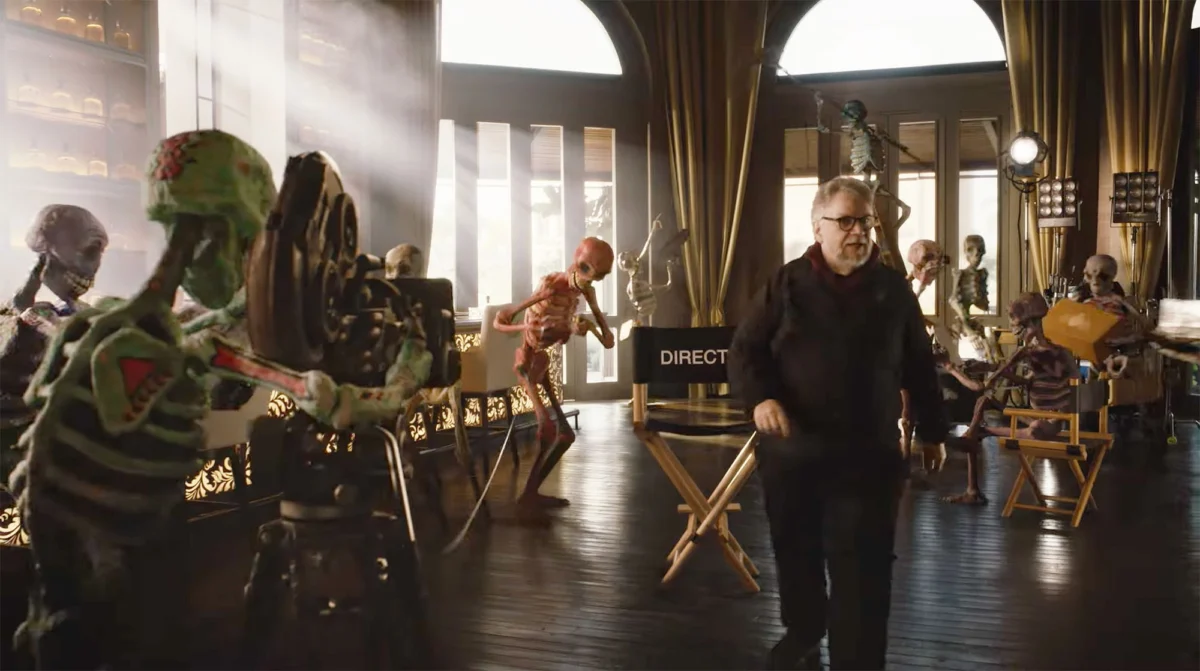
A 30-second cinematic short film titled "The Perfect Pour," meticulously crafted and directed by Academy Award-winning filmmaker Guillermo del Toro, was unveiled on March 18, 2026, marking a significant convergence of high art and luxury brand marketing. The commercial, produced for Patrón Tequila, features the renowned Mexican auteur not only behind the camera but also on screen, setting up a shot that subtly but powerfully conveys the brand’s dedication to craftsmanship and heritage. This collaboration exemplifies a growing trend where prominent directors lend their distinctive artistic vision to commercial projects, transforming brief advertisements into concise storytelling experiences.
The Vision Behind "The Perfect Pour": Artistry in a 30-Second Canvas
"The Perfect Pour" is more than a fleeting advertisement; it is a micro-narrative steeped in the aesthetic and thematic preoccupations characteristic of Guillermo del Toro’s extensive filmography. While the original article laments its brevity, wishing for more time with its evocative imagery of dancing skeletons and meticulous processes, its succinctness is precisely what makes it a masterclass in distilled storytelling. Del Toro, known for his fantastical worlds, intricate creature designs, and profound exploration of beauty within the macabre, imbues this commercial with a sense of wonder and reverence for the creative process.
The premise of the short is disarmingly simple: the perfect pour of Patrón Tequila. Yet, under del Toro’s direction, this mundane act is elevated into a ritual, a testament to the artistry involved in every step, from the cultivation of the agave to the final presentation. The commercial’s narrative, as described by Patrón, serves as "a quiet reminder that the beauty in true craftsmanship comes from the people & process behind how things are made." This statement directly aligns with del Toro’s consistent celebration of the unseen labor and passionate dedication that underpin any true creation, whether it be a fantastical creature in Pan’s Labyrinth or a finely distilled spirit.
The visual language of "The Perfect Pour" is instantly recognizable as del Toro’s. While specific details of the "dancing skeletons" are only briefly alluded to in the initial report, their presence suggests a playful yet profound engagement with themes of mortality, tradition, and the enduring spirit of Mexican culture, elements frequently woven into his feature films. The deliberate staging, the evocative lighting, and the meticulous attention to textural detail are all hallmarks of a director who understands that even the smallest frame can convey immense depth. The decision to feature del Toro himself on screen, orchestrating the scene, adds an meta-narrative layer, inviting viewers to witness the director’s own craftsmanship in creating the commercial, thereby mirroring the craftsmanship of the tequila itself.
A Masterful Collaboration: The Artisans of "The Perfect Pour"
The production of "The Perfect Pour" involved an assembly of world-class talent, predominantly from Mexico, reflecting Patrón Tequila’s roots and del Toro’s commitment to showcasing Mexican artistic excellence. Filmed at the historic Hacienda Patrón in Jalisco, the very heartland of tequila production, the commercial’s setting imbues it with an undeniable authenticity. This choice of location is not merely logistical but thematic, reinforcing the connection between the land, the people, and the product.

The crew list reads like a who’s who of del Toro’s frequent collaborators and highly acclaimed professionals:
- Guillermo Navarro (Cinematographer): A long-standing creative partner of del Toro, Navarro’s work on films like Pan’s Labyrinth (for which he won an Academy Award) and Cronos is celebrated for its exquisite visual storytelling and atmospheric depth. His involvement ensures that "The Perfect Pour" possesses a cinematic quality far exceeding typical commercial fare, employing sophisticated lighting and camera work to capture the essence of the tequila.
- Nathan Robitaille (Sound Designer): Known for his intricate soundscapes in films such as The Shape of Water and the upcoming Frankenstein (also with del Toro), Robitaille’s expertise suggests that the auditory experience of "The Perfect Pour" is as meticulously crafted as its visuals. The subtle sounds of liquid, ice, and perhaps even the implied music of the dancing skeletons would contribute significantly to the commercial’s immersive quality.
- Terry Notary (MOCAP Artist): A pioneer in performance capture, Notary’s work on blockbuster franchises like Avatar and Planet of the Apes brings unparalleled expertise in bringing digital characters to life with realistic movement and emotion. His involvement, especially in a commercial potentially featuring fantastical elements like dancing skeletons, underscores the high production value and the integration of cutting-edge technology with traditional artistry.
- Dennis Berardi (VFX Director): Another key creative behind The Shape of Water and the anticipated Frankenstein, Berardi’s visual effects prowess ensures that any fantastical elements within "The Perfect Pour" are seamlessly integrated and visually stunning, maintaining the magical realism that defines del Toro’s style.
- Guy Davis (Illustrator): Known for his concept art and designs for many of del Toro’s projects, including Pacific Rim and Crimson Peak, Davis’s distinctive aesthetic undoubtedly influenced the visual design of the commercial, from character concepts to set pieces.
- Karla Castañeda (Stop Motion Animator): A celebrated Mexican stop-motion animator, Castañeda’s inclusion is particularly significant given del Toro’s own recent triumph with his stop-motion Pinocchio. Her expertise would be invaluable in bringing any animated or puppet elements, such as the aforementioned skeletons, to life with a tactile, handcrafted charm.
This ensemble of talent, many of whom are intimately familiar with del Toro’s unique vision, speaks volumes about the project’s ambition. Patrón Tequila and del Toro clearly aimed to transcend the traditional commercial format, creating a piece that functions both as an effective advertisement and a genuine work of art, a short film in its own right. The emphasis on a Mexican-led crew further amplifies the commercial’s message of celebrating Mexican craftsmanship, making the production process itself a reflection of the brand’s core values.
Guillermo del Toro’s Artistic Signature in Commercial Storytelling
Guillermo del Toro’s decision to direct a commercial, while perhaps surprising to some, is entirely consistent with his artistic philosophy and career trajectory. Throughout his acclaimed career, from early works like Cronos and The Devil’s Backbone to Oscar-winning masterpieces like Pan’s Labyrinth and The Shape of Water, del Toro has consistently championed the art of creation, whether it be through practical effects, intricate set design, or the careful construction of narrative. His films are often described as love letters to craftsmanship, where every detail, from creature design to production design, is meticulously considered.
The themes present in "The Perfect Pour" — the beauty of process, the honor of heritage, and the subtle magic in human endeavor — resonate deeply with del Toro’s recurring motifs. His fascination with monsters and the marginalized often serves to highlight the hidden beauty and profound humanity within the unconventional. In the context of Patrón Tequila, this translates to celebrating the "monster" (the agave plant) transformed by careful human hands into a refined spirit. His work on Pinocchio, a testament to the painstaking art of stop-motion animation, further underscores his admiration for traditional, labor-intensive creative processes, a parallel easily drawn to the artisanal production of tequila.
For del Toro, a commercial project like "The Perfect Pour" might not just be a financial opportunity but also a creative sandbox. The constraints of a 30-second format challenge a director to convey a powerful message with extreme efficiency, honing their storytelling skills. It allows for experimentation with visual ideas or technical approaches that might later inform larger projects. His involvement in commercial work is not an anomaly but rather an extension of his diverse creative output, which includes filmmaking, writing, producing, and even curating exhibitions.
The Trend of Auteur Directors in Advertising
Guillermo del Toro is far from the first major director to venture into the world of commercials. This phenomenon has been steadily growing for decades, blurring the lines between high art and commercial enterprise. Iconic directors like Ridley Scott, known for Blade Runner and Alien, famously directed the groundbreaking "1984" Macintosh commercial. Martin Scorsese brought his distinctive gritty style to campaigns for various brands. Wes Anderson’s whimsical, symmetrical aesthetic has graced advertisements for Stella Artois and H&M. Sofia Coppola has frequently directed luxury campaigns for brands like Dior and Cartier, bringing her elegant, introspective touch to fashion and beauty. Spike Jonze, David Fincher, and Jean-Pierre Jeunet are also among the many who have crafted memorable commercials.

The motivations for these collaborations are multifaceted. For the directors, it can offer:
- Creative Freedom: Commercials, especially high-budget luxury campaigns, often grant directors significant creative latitude to experiment with visual styles, narrative structures, and technical innovations without the immense pressures of a feature film.
- Financial Incentive: Commercials can provide a substantial income boost, allowing directors to fund passion projects or simply enjoy a comfortable lifestyle between larger film productions.
- Honing Craft: The discipline of telling a compelling story in a very short timeframe can be an invaluable exercise in concise storytelling and visual communication.
- Brand Extension: For directors with a strong personal brand, commercial work can be another avenue to showcase their unique artistic voice to a broader audience.
For the brands, the benefits are equally compelling:
- Elevated Brand Image: Associating with an acclaimed director instantly confers prestige, sophistication, and cultural cachet upon the product. It transforms the commercial from mere advertising into a cultural event.
- Increased Engagement: A commercial directed by a recognizable auteur is more likely to capture attention, generate buzz, and be shared organically, especially in the digital age.
- Storytelling over Selling: These collaborations allow brands to move beyond direct product promotion to engage in deeper storytelling, connecting with consumers on an emotional or aspirational level. Patrón’s statement that "The Perfect Pour" is "not just a commercial, but a story that celebrates Mexican craftsmanship" perfectly encapsulates this objective.
- Distinctive Campaigns: In a crowded marketplace, a unique artistic vision helps a brand stand out from competitors.
Patrón Tequila’s Strategic Craftsmanship: Brand Identity and Marketing Evolution
Patrón Tequila has consistently positioned itself as a premium, handcrafted spirit, emphasizing its heritage, the quality of its agave, and the meticulous production process in Jalisco, Mexico. Founded in 1989 by John Paul DeJoria and Martin Crowley, Patrón revolutionized the tequila market by introducing a high-end product at a time when tequila was largely perceived as a party shot. Its distinctive hand-blown glass bottles and artisanal production methods quickly established it as a luxury brand.
In 2018, Bacardi Limited acquired Patrón Spirits International AG for an enterprise value of $5.1 billion, a move that solidified Patrón’s global presence and provided it with the resources of one of the world’s largest privately held spirits companies. Despite this corporate backing, Patrón has diligently maintained its commitment to its handcrafted identity and Mexican roots.
The decision to enlist Guillermo del Toro for "The Perfect Pour" is a strategic masterstroke that aligns perfectly with Patrón’s brand values. Del Toro, a proud Mexican artist, brings an inherent authenticity to the celebration of Mexican craftsmanship. His global recognition and artistic integrity lend immense credibility to Patrón’s claims of quality and heritage. The commercial is not just selling tequila; it’s selling a narrative of dedication, tradition, and artistic excellence. It’s an investment in brand equity that extends beyond immediate sales, fostering a deeper, more sophisticated connection with consumers who appreciate artistry and authenticity. This approach resonates strongly with luxury consumers who are increasingly seeking products with compelling backstories and ethical production values.
From Concept to Screen: The Production Journey and Industry Implications
While the original article does not provide a detailed chronology of "The Perfect Pour’s" production, one can infer a rigorous process. The involvement of such a high-caliber crew suggests a significant budget and a substantial pre-production phase for conceptualization, storyboarding, and design. Given del Toro’s reputation for meticulous planning and hands-on involvement, it’s likely he was deeply engaged from the initial concept development. Filming at Hacienda Patrón would have involved careful coordination to capture the essence of the location while integrating the commercial’s fantastical elements. Post-production, involving Navarro’s cinematography, Robitaille’s sound design, Berardi’s VFX, and Castañeda’s animation, would have been crucial in weaving together the various artistic components into a cohesive 30-second narrative.

The challenge of creating a "short film" within the constraints of a commercial is to convey depth and emotion in an incredibly condensed format. Del Toro’s genius lies in his ability to imbue even fleeting images with profound meaning. This approach exemplifies the evolving landscape of advertising, where traditional spots are being replaced by more engaging, story-driven content, often designed for digital platforms like YouTube, where "The Perfect Pour" debuted.
For the advertising industry, this collaboration reinforces several key implications:
- Premiumization of Content: Brands are increasingly willing to invest in premium content that stands out, understanding that a highly artistic commercial can generate more lasting impact than a conventional one.
- Influence of Digital Platforms: The rise of platforms like YouTube and social media means that commercials can be viewed and shared as standalone pieces of entertainment, making artistic merit even more critical.
- Blurred Lines: The distinction between commercial art and fine art continues to diminish, with directors finding creative expression in both realms.
Broader Cultural and Economic Impact
"The Perfect Pour" carries significant cultural and economic implications. For Mexican culture, it shines a global spotlight on Jalisco, the birthplace of tequila, and celebrates the rich tradition of craftsmanship that defines so many Mexican artisanal products. By associating a revered Mexican filmmaker with an iconic Mexican spirit, the commercial champions national heritage on an international stage. This can contribute to a broader appreciation for Mexican artistry and industry beyond its borders.
Economically, such high-profile collaborations reinforce the value proposition of luxury goods. In an increasingly competitive market, brands like Patrón must continuously innovate their marketing strategies to justify their premium pricing. Aligning with an artist of del Toro’s stature is a powerful way to communicate exclusivity, quality, and a commitment to cultural authenticity, which can translate into sustained brand loyalty and market share. The production itself, involving a large, skilled crew, also provides economic opportunities within the creative industries, particularly in Mexico.
Conclusion
Guillermo del Toro’s "The Perfect Pour" for Patrón Tequila is a compelling example of how artistic vision can elevate commercial advertising into a form of cinematic art. Released on March 18, 2026, this 30-second short film not only showcases the meticulous process behind a luxury spirit but also serves as a testament to the enduring power of craftsmanship, culture, and collaborative artistry. By bringing together a world-class Mexican-led crew and a director celebrated for his fantastical narratives and profound themes, Patrón Tequila has created a campaign that transcends mere product promotion, offering a thoughtful reflection on heritage and human endeavor. This initiative further solidifies the trend of auteur directors lending their distinctive voices to brand storytelling, marking a new era where the commercial realm becomes a legitimate canvas for artistic expression.