


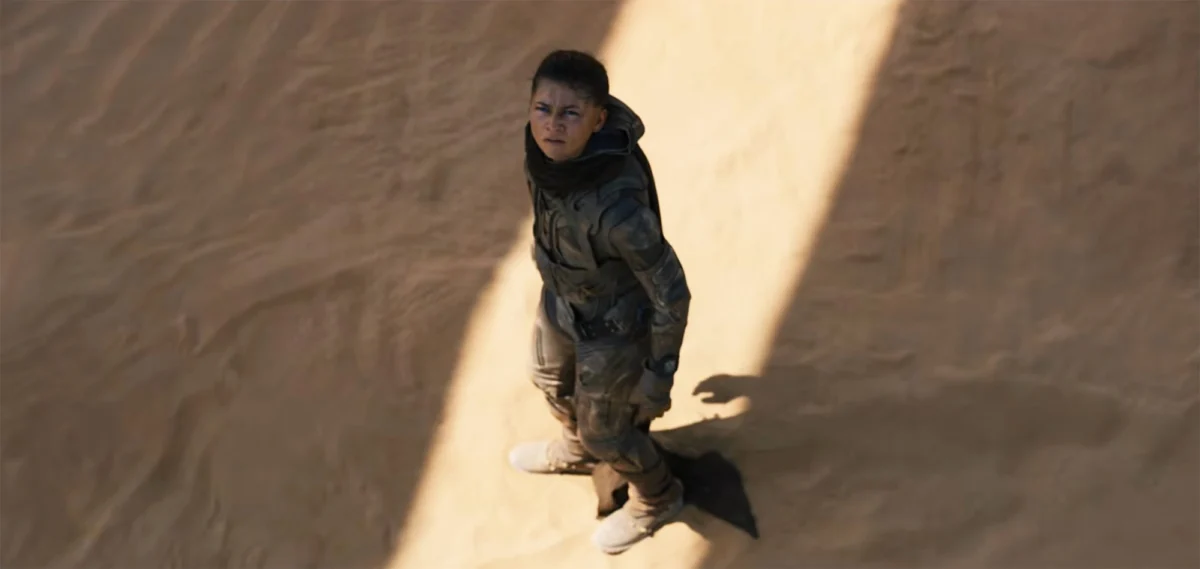
Warner Bros. has initiated an unprecedented early sales campaign for Denis Villeneuve’s highly anticipated Dune: Part Three, with the release of a new 30-second promotional trailer designed to herald the availability of IMAX 70mm tickets more than eight months ahead of its scheduled December 2026 debut. This strategic move underscores the studio’s confidence in the film’s monumental cinematic appeal and its commitment to premium viewing experiences for the epic conclusion to Villeneuve’s acclaimed trilogy. The trailer, featuring additional glimpses of footage not seen in previous teasers, amplifies the growing anticipation for a film described as even "darker, even more twisted, even more brutal" than its predecessors, as Paul Atreides grapples with the intricate tapestry of his burgeoning legacy.
Unprecedented Early Access: The IMAX 70mm Ticket Phenomenon
The decision to release IMAX 70mm tickets so far in advance for Dune: Part Three mirrors a growing trend in the industry, particularly for films designed to be experienced on the grandest scale. While the original article references a similar strategy for Christopher Nolan’s The Odyssey (presumably a fictional film or a misremembered title, given no major Nolan film with that title has employed such early ticketing), the approach for Dune: Part Three signifies a calculated effort by Warner Bros. and Legendary Pictures to capitalize on fan enthusiasm and secure premium format bookings long before general release. This early booking window, opening in April 2026 for a December 2026 release, is exceptionally long, even by blockbuster standards. For comparison, major tentpole films typically open their ticket sales a few weeks or, at most, a couple of months prior to their theatrical run. The early availability of tickets for Dune: Part Three suggests a belief that the demand for the purest cinematic experience—the unparalleled clarity and immersion of IMAX 70mm film—will be significant enough to justify this extended sales period. This strategy aims to build sustained hype, reward dedicated fans, and potentially lock in audience commitments amidst an increasingly competitive theatrical landscape.
The early ticket launch is not merely a marketing gimmick; it is a testament to the proven success and cultural impact of the Dune franchise under Villeneuve’s direction. Dune (2021), despite a hybrid theatrical and HBO Max release, garnered over $402 million globally, while Dune: Part Two (2024) soared to over $711 million worldwide, solidifying its place as a critical and commercial triumph. Both films received widespread acclaim for their breathtaking visuals, immersive soundscapes, and faithful yet innovative adaptations of Frank Herbert’s complex universe. The critical consensus praised Villeneuve’s meticulous craftsmanship, Hans Zimmer’s evocative score, and the ensemble cast’s powerful performances, cementing the Dune saga as a benchmark for contemporary sci-fi filmmaking.
The Pinnacle of Cinematic Immersion: Understanding IMAX 70mm
The emphasis on IMAX 70mm for Dune: Part Three is a critical component of its cinematic appeal. IMAX 70mm film projection offers a resolution and clarity unmatched by most digital formats. A standard 70mm film frame is approximately ten times larger than a 35mm frame, and IMAX further expands upon this with a larger negative area, resulting in an image that is significantly sharper, brighter, and more detailed. When projected onto massive IMAX screens—some reaching up to 100 feet wide and 75 feet high—the audience is enveloped in an unparalleled visual experience. The vertical orientation of the IMAX 70mm film strip allows for an expanded aspect ratio, revealing up to 40% more of the image than standard cinema presentations, particularly in scenes filmed with IMAX cameras.
The sound experience is equally transformative. IMAX theaters typically feature bespoke sound systems designed to deliver precise audio placement and powerful bass, creating an auditory landscape that complements the visuals perfectly. For a film like Dune, renowned for its intricate sound design and Zimmer’s expansive scores, the IMAX 70mm experience is considered by many filmmakers and cinephiles to be the definitive way to watch.

However, the availability of true IMAX 70mm projectors and screens is limited worldwide, making these tickets a premium commodity. The process of projecting 70mm film is also more complex and labor-intensive than digital projection, requiring specialized equipment and highly trained projectionists. This scarcity contributes to the allure and "event" status of a 70mm IMAX release, transforming a movie viewing into a truly immersive, almost pilgrimage-like experience for dedicated fans. The early ticket sales for Dune: Part Three specifically target this discerning audience, allowing them to plan their attendance at one of the few select venues capable of delivering this ultimate presentation.
Plotting the Messiah’s Path: Dune: Part Three and "Dune Messiah"
Dune: Part Three is based on Frank Herbert’s 1969 novel, "Dune Messiah," which serves as the direct sequel to the seminal "Dune." While the first two films covered the entirety of the first novel, Part Three will delve into the far more complex, morally ambiguous, and tragic narrative of Paul Atreides’ reign as Emperor. The original article’s synopsis succinctly captures the core dilemma: "As Emperor of the known universe, Paul possesses more power than a single man was ever meant to wield. Worshipped as a religious icon by the fanatical Fremen, Paul faces the enmity of the political houses he displaced when he assumed the throne—and a conspiracy conducted within his own sphere of influence. And even as House Atreides begins to crumble around him from the machinations of his enemies, the true threat to Paul comes to his lover, Chani, and the unborn heir to his family’s dynasty…"
"Dune Messiah" is a challenging adaptation due to its introspective nature, its focus on political intrigue, and its exploration of the burdens of prescience. Unlike the action-packed journey of self-discovery in Dune, "Dune Messiah" portrays Paul as a burdened figure, trapped by his own prophecies and the jihad he inadvertently unleashed. He is haunted by visions of future bloodshed and struggles to steer humanity away from an even darker destiny, even as he is revered as a messianic figure. The novel critiques the very concept of a charismatic leader and explores the dangers of blind faith.
Denis Villeneuve has consistently expressed his desire to complete Paul’s arc, stating that "Dune Messiah" offers a critical perspective on the hero’s journey, transforming it into a cautionary tale. The original article’s description of Part Three as "even darker, even more twisted, even more brutal" aligns perfectly with the thematic content of "Dune Messiah," which delves into themes of power, destiny, manipulation, and sacrifice on a cosmic scale. The film promises to explore the ethical dilemmas of leadership and the unintended consequences of grand schemes, presenting Paul not just as a hero, but as a figure grappling with the terrifying implications of his own actions and foresight.
A Stellar Ensemble Returns and New Faces Emerge
The star-studded cast that has become synonymous with Villeneuve’s Dune saga will largely return for Part Three, continuing to bring Herbert’s iconic characters to life. Timothée Chalamet reprises his role as Paul Atreides/Muad’Dib, whose transformation from a reluctant duke to a powerful, prescient emperor has been central to the narrative. Zendaya returns as Chani, Paul’s Fremen love interest, whose evolving role and potential as a mother to Paul’s heir will be pivotal. Rebecca Ferguson will once again portray Lady Jessica, Paul’s mother and a powerful Bene Gesserit, whose political maneuvering and personal sacrifices continue to shape the Atreides dynasty.
The article also confirms the return of several key figures, some of whom had ambiguous fates in the novels or were previously introduced:

- Jason Momoa as Duncan Idaho: While Duncan Idaho famously dies in the first Dune novel, his return is consistent with "Dune Messiah," where a ghola (clone) of Duncan, named Hayt, plays a significant role in Paul’s life. This confirms a major plot point for the adaptation.
- Florence Pugh as Princess Irulan: The daughter of the deposed Emperor Shaddam IV, Irulan’s role as Paul’s political wife and chronicler of his reign becomes increasingly important in "Dune Messiah."
- Anya Taylor-Joy as Alia Atreides: Paul’s younger sister, born with full adult consciousness due to the Spice, Alia’s burgeoning powers and unique perspective are crucial to the unfolding narrative.
- Javier Bardem as Stilgar: The leader of the Fremen who becomes a devoted follower of Paul, Stilgar’s unwavering faith and Paul’s manipulation of it are central themes.
- Charlotte Rampling as Gaius Helen Mohiam: The formidable Bene Gesserit Reverend Mother, whose influence continues to ripple through the political landscape.
New cast members confirmed include Robert Pattinson as Scytale, a Tleilaxu Face Dancer who is a key antagonist and master of disguise in "Dune Messiah," and Isaach De Bankolé as Farok, a character whose role in the intricate conspiracies remains to be fully revealed. The introduction of Nakoa-Wolf Momoa and Ida Brooke in unspecified roles hints at further expansion of the Dune universe or the introduction of new characters or deeper exploration of existing ones. This blend of established talent and fresh faces promises a dynamic and compelling ensemble performance under Villeneuve’s guidance.
Denis Villeneuve’s Vision: Completing the Trilogy
Acclaimed Quebecois filmmaker Denis Villeneuve has firmly established himself as a master of atmospheric, thought-provoking science fiction. His filmography, including Maelstrom, Polytechnique, Incendies, Prisoners, Enemy, Sicario, Arrival, and Blade Runner 2049, demonstrates a consistent ability to craft visually stunning narratives with deep emotional and philosophical resonance. His meticulous approach to world-building, character development, and thematic exploration has made him the ideal steward for Frank Herbert’s intricate universe.
Villeneuve’s commitment to adapting "Dune Messiah" stems from his belief that Paul Atreides’ story is fundamentally a tragic one, and that the original "Dune" novel alone does not provide the full scope of Herbert’s vision. He has often spoken about the "warning" embedded within Herbert’s work regarding charismatic leaders and the dangers of fanaticism. Dune: Part Three will allow him to fully explore this cautionary tale, delivering an ending that is both epic and deeply resonant, concluding what he envisions as a complete narrative arc for Paul. The screenplay, co-written by Villeneuve and Brian K. Vaughan, suggests a thoughtful and carefully constructed adaptation that respects the source material while translating its complexities for the screen. Vaughan, known for his acclaimed comic book work, brings a strong narrative sensibility to the project.
A Chronology of a Modern Sci-Fi Epic
The journey to Dune: Part Three has been a carefully orchestrated saga spanning decades for the original material and several years for the cinematic adaptation:
- 1965: Frank Herbert publishes Dune, the foundational novel that captivates readers and wins the Nebula Award for Best Novel and the Hugo Award.
- 1969: Herbert publishes Dune Messiah, the direct sequel that expands on Paul’s reign and the unforeseen consequences of his rise.
- 2021 (October 22): Dune: Part One is released in theaters and on HBO Max, receiving critical acclaim and commercial success, initiating Villeneuve’s vision.
- 2024 (March 1): Dune: Part Two premieres, building on the success of its predecessor, deepening the narrative, and further expanding the visual grandeur. It becomes a major box office hit.
- 2026 (April 6): Warner Bros. launches the new 30-second promo trailer and opens early ticket sales for Dune: Part Three in IMAX 70mm, signaling strong confidence in the film.
- 2026 (December 18): Dune: Part Three is set to debut worldwide, bringing Villeneuve’s ambitious trilogy to its conclusion.
This timeline showcases a deliberate and measured approach to bringing Herbert’s complex saga to the screen, allowing ample time for production, post-production, and strategic marketing. The gap between Part Two and Part Three is indicative of the extensive work required for a film of this scale and ambition, particularly one that promises to delve into even more intricate themes and narrative layers.
Strategic Implications and Market Impact

The early release of IMAX 70mm tickets for Dune: Part Three is a bold strategic move with several implications for the film industry and for Warner Bros./Legendary Pictures. Firstly, it leverages the immense goodwill and anticipation generated by the first two films. By offering premium tickets so far in advance, the studios are tapping into the most dedicated segment of the fanbase, those who prioritize the ultimate cinematic experience. This can lead to early revenue generation and a strong indicator of demand.
Secondly, it reinforces the perception of Dune: Part Three as a must-see event film, deserving of the most immersive format available. In an era where streaming services compete heavily with theatrical releases, studios are increasingly emphasizing the unique value proposition of the cinema experience, and premium large formats like IMAX 70mm are at the forefront of this strategy. This commitment to traditional film exhibition, particularly in an age dominated by digital, sends a powerful message about the film’s artistic integrity and its creators’ vision.
Thirdly, it allows for meticulous logistical planning for a global release. Coordinating IMAX 70mm prints and projection across a limited number of venues requires significant lead time. This early sales window enables theaters to better prepare for the influx of patrons and manage demand effectively.
The success of Dune: Part Three will undoubtedly have broader implications for the future of adult-oriented, big-budget science fiction. Its performance could further embolden studios to invest in ambitious, intellectually stimulating genre films that prioritize narrative depth and visual artistry over conventional blockbuster tropes.
Fan Anticipation and Cultural Resonance
The announcement of Dune: Part Three and the accompanying trailer and early ticket sales have ignited a fresh wave of excitement among fans worldwide. Social media platforms are abuzz with discussions about the new footage, the implications of the "Dune Messiah" adaptation, and the opportunity to secure prime seats for the IMAX 70mm experience. For many, Dune is more than just a film series; it is a cultural phenomenon that has captivated generations with its intricate world-building, philosophical depth, and timeless themes.
The trilogy’s exploration of ecological collapse, political machinations, religious fanaticism, and the nature of leadership resonates deeply with contemporary audiences. As Paul Atreides navigates the treacherous waters of his newfound power and confronts the grim realities of his prescient visions, viewers are invited to ponder complex questions about fate, free will, and the responsibility that comes with immense power. The consistent quality and artistic integrity of Villeneuve’s adaptations have elevated the Dune saga into a modern classic, cementing its place alongside other seminal sci-fi franchises.
With "December 18th, 2026" now firmly etched into the calendars of cinephiles, the countdown to the epic conclusion of Denis Villeneuve’s Dune trilogy has truly begun. The early availability of IMAX 70mm tickets is not just a commercial strategy; it is a declaration of intent, promising an unforgettable cinematic journey into the heart of Frank Herbert’s most profound and challenging narrative. The stage is set for a truly glorious and brutal culmination to the saga of Muad’Dib.