


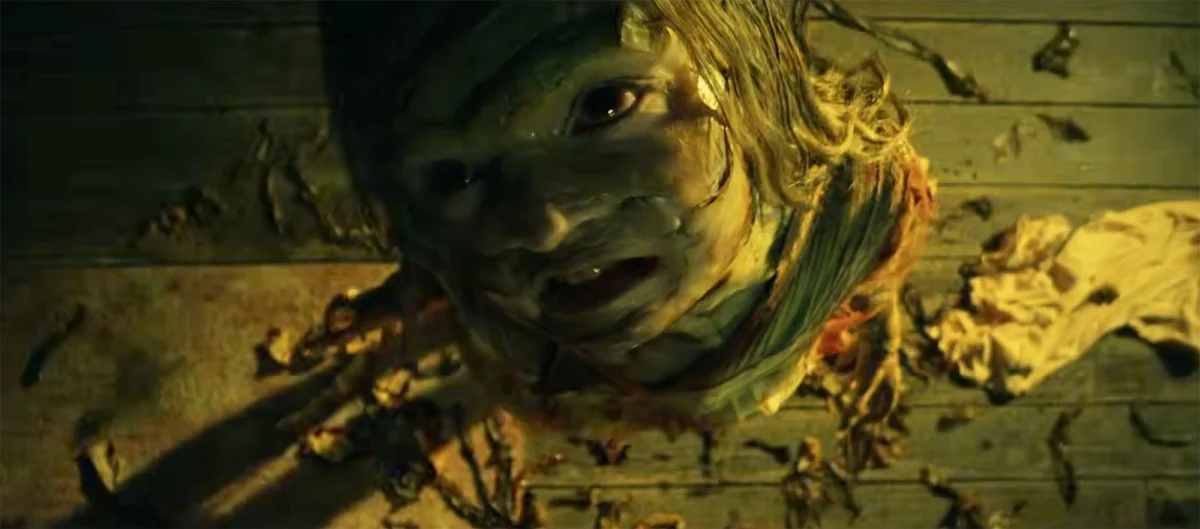
Warner Bros. and Blumhouse have launched a final "Tickets On Sale" promotional trailer and an accompanying IMAX poster for Lee Cronin’s The Mummy, intensifying anticipation for its theatrical debut on April 17th, 2026. The new footage serves as a visceral reminder of the film’s distinct horror vision, promising a departure from previous interpretations of the classic monster and a deep dive into the disturbing, body-horror-infused style that director Lee Cronin has cultivated in his acclaimed career. This latest marketing push aims to drive pre-sale ticket purchases as the film approaches its nationwide release in just a few weeks, positioning it as a significant entry in the spring horror calendar.
The narrative of Lee Cronin’s The Mummy centers on the chilling disappearance and even more terrifying return of a young girl. The official synopsis reveals a journalist’s daughter vanishes into the desert, leaving her family shattered. Eight years later, in a twist of fate that quickly devolves into a nightmare, she is inexplicably returned to them. However, what should be a moment of joyous reunion morphs into profound dread as the family discovers the returned daughter is not the child they lost but something profoundly altered – a "freaky mummy," somehow still alive and imbued with a malevolent presence. This premise alone sets the stage for a psychological horror that delves into themes of grief, identity, and the grotesque perversion of familial bonds.
The cast assembled to bring this chilling tale to life includes Jack Reynor, Laia Costa, May Calamawy, Natalie Grace, Verónica Falcón, and Emily Mitchell. Their collective performances are expected to anchor the film’s emotional weight while navigating the intense supernatural elements. Reynor, known for his roles in films like Midsommar and Glassland, brings a depth often associated with characters facing existential dread. Laia Costa, recognized for her work in Victoria and Life Itself, is poised to deliver a compelling portrayal of a parent grappling with an unimaginable horror. May Calamawy, widely celebrated for her role in Moon Knight, adds another layer of gravitas to the ensemble, suggesting a nuanced exploration of fear and resilience. The presence of such a talented cast underscores the project’s ambition to be more than just a creature feature, aiming for a potent blend of character-driven drama and relentless terror.
A Director’s Signature Style: From Folk Horror to Visceral Dread
Lee Cronin, the Irish filmmaker at the helm, has rapidly established himself as a prominent voice in contemporary horror cinema. His previous works, The Hole in the Ground (2019) and particularly Evil Dead Rise (2023), have garnered critical acclaim for their atmospheric tension, effective jump scares, and unsparing use of practical effects and gore. The Hole in the Ground explored themes of changelings and maternal paranoia through a lens of folk horror, demonstrating Cronin’s ability to craft slow-burn dread. Evil Dead Rise, on the other hand, was a full-throttle assault of demonic possession and extreme body horror, revitalizing a beloved franchise with a fresh, urban setting and a relentless pace that pushed boundaries.
The latest trailer for The Mummy unmistakably carries Cronin’s directorial fingerprints. Phrases like "depraved and terrifying" and references to "so many gross out horror moments" highlight a deliberate choice to lean into extreme, visceral horror. The comparison to Pet Sematary remixed with The Mummy is particularly insightful, suggesting a narrative that explores the violation of natural order and the horrifying consequences of bringing the dead back, combined with the classic monster mythology. Furthermore, the mention of "Evil Dead-esque gore" directly links this new interpretation to Cronin’s most recent success, signaling to audiences that this will be a relentlessly intense experience. This approach distinguishes Cronin’s The Mummy sharply from the more adventure-oriented or comedic takes on the character seen in past decades, firmly planting it in the realm of pure, R-rated horror.
The Enduring Legacy of The Mummy: A Historical Context

The character of the Mummy holds a venerable and complex place in cinematic history, dating back to the golden age of Universal Monsters. The original 1932 film, starring Boris Karloff, established the iconic image of Imhotep, an ancient Egyptian priest resurrected from his tomb to seek his lost love. This film, and its subsequent sequels, blended horror with romantic tragedy, setting a precedent for the creature’s screen presence. Later, Hammer Film Productions revived the character in the late 1950s with Christopher Lee, emphasizing gothic atmosphere and more pronounced horror elements, albeit still within a traditional monster movie framework.
The late 1990s saw a significant shift with Stephen Sommers’ The Mummy (1999) and its sequels, starring Brendan Fraser and Rachel Weisz. These films reimagined the Mummy as a swashbuckling adventure-horror spectacle, heavily influenced by Indiana Jones, and achieved massive commercial success, spawning a successful franchise. However, Universal’s more recent attempt to launch a shared "Dark Universe" with Tom Cruise’s The Mummy (2017) veered away from horror into action-adventure territory and largely failed to resonate with audiences or critics, effectively halting the ambitious cinematic universe plans.
Against this backdrop, Lee Cronin’s The Mummy marks a deliberate return to the character’s horror roots, eschewing the action-adventure elements that defined its recent past. By emphasizing the "freaky mummy" aspect and the psychological terror of a corrupted return, Cronin and Blumhouse are tapping into a different vein of the monster’s potential, one more aligned with contemporary horror tastes for visceral and psychological dread. The very title, "Lee Cronin’s The Mummy," is a statement of intent, signaling a distinct, auteur-driven vision rather than a studio-mandated franchise piece.
Blumhouse and Warner Bros.: A Strategic Partnership in Horror
The collaboration between Blumhouse Productions and Warner Bros. Pictures is a significant factor in the film’s development and distribution. Blumhouse, founded by Jason Blum, has revolutionized the horror genre with its highly successful model of producing low-budget, high-concept horror films that often yield massive returns. Their track record includes franchises like Paranormal Activity, Insidious, The Purge, and recent successes like M3GAN and Five Nights at Freddy’s. This model allows filmmakers significant creative freedom within defined budgetary constraints, fostering innovation and a strong focus on effective scares rather than expensive visual effects.
Warner Bros., a major studio with extensive distribution capabilities, benefits from Blumhouse’s expertise in delivering consistently profitable genre content. This partnership allows Warner Bros. to diversify its portfolio and tap into the lucrative horror market without incurring the high production costs typically associated with tentpole blockbusters. The involvement of James Wan, a celebrated horror director and producer (known for The Conjuring universe and Saw), alongside Jason Blum and John Keville as producers, further solidifies the film’s genre credentials and suggests a commitment to high-quality horror craftsmanship. This strategic alliance ensures that Lee Cronin’s The Mummy is not only backed by a proven horror powerhouse but also enjoys the broad reach of a major studio for its theatrical release.
Marketing and Release Strategy: Building Anticipation
The release of the "Tickets On Sale" trailer is a crucial step in the film’s marketing campaign, occurring just weeks before its April 17th release date. This timing is strategic, designed to capitalize on existing hype generated by earlier teasers and full trailers while providing a final, compelling push for pre-sales. In today’s competitive cinematic landscape, early ticket sales are increasingly vital, indicating audience interest and often influencing initial box office projections. The inclusion of an IMAX poster and the explicit mention of an IMAX release signal the studios’ confidence in the film’s visual impact and its potential to deliver a premium theatrical experience, encouraging audiences to see it on the biggest possible screen.

The marketing materials have consistently highlighted the film’s extreme horror elements, with the latest trailer continuing this trend by showcasing "freaky, disgusting" moments and emphasizing its "utterly depraved and terrifying" nature. This direct approach targets a specific segment of the horror audience that craves intense, uncompromised scares. However, it also raises the question posed in the original article: "Will audiences be into it? Or does it look too off-putting to watch at all?" This reflects a calculated risk by the filmmakers and studios, betting that the demand for boundary-pushing horror, especially from a director like Cronin, outweighs the potential for some viewers to find it too extreme.
The Broader Implications for the Horror Genre in 2026
The release of Lee Cronin’s The Mummy is poised to have several implications for the horror genre in 2026 and beyond. Firstly, it represents a continued trend of established horror properties being re-imagined through a contemporary, often more extreme, lens. This approach allows filmmakers to leverage brand recognition while delivering fresh, terrifying experiences that resonate with modern audiences. If successful, it could further encourage studios to greenlight more R-rated, director-driven horror remakes of classic monsters, potentially paving the way for new interpretations of Frankenstein, Dracula, or the Wolf Man that prioritize genuine scares over cinematic universe ambitions.
Secondly, the film will be a significant test for Lee Cronin as a director. Following the critical and commercial success of Evil Dead Rise, The Mummy presents an opportunity for him to solidify his position as a leading voice in horror. His ability to deliver a unique, terrifying vision for such an iconic monster will further define his directorial brand and could lead to even larger projects within the genre. For Blumhouse, it reinforces their model of empowering distinctive horror filmmakers and demonstrates their continued ability to revitalize classic concepts for a new generation.
Finally, the film’s box office performance will offer insights into the current appetite for extreme horror. In an era where "elevated horror" often receives critical accolades, there remains a robust market for more visceral, unpretentious scares. The success of films like Terrifier 2 and Evil Dead Rise indicates a strong audience base for uncompromising gore and intensity. Lee Cronin’s The Mummy, by explicitly leaning into these elements, will help gauge the sustained commercial viability of this subgenre. Its April release positions it well, avoiding the crowded summer blockbuster season and allowing it to dominate the horror conversation for its release window.
As the release date of April 17th, 2026, draws nearer, the final "Tickets On Sale" trailer serves as a potent last call for audiences seeking a genuinely terrifying cinematic experience. With Lee Cronin at the helm, backed by the genre prowess of Blumhouse and the distribution power of Warner Bros., Lee Cronin’s The Mummy is poised to deliver a unique, unsettling, and perhaps even polarizing, new chapter in the long and storied history of the cinematic Mummy.