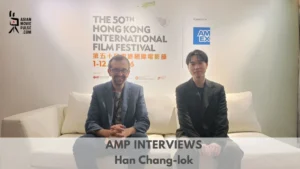



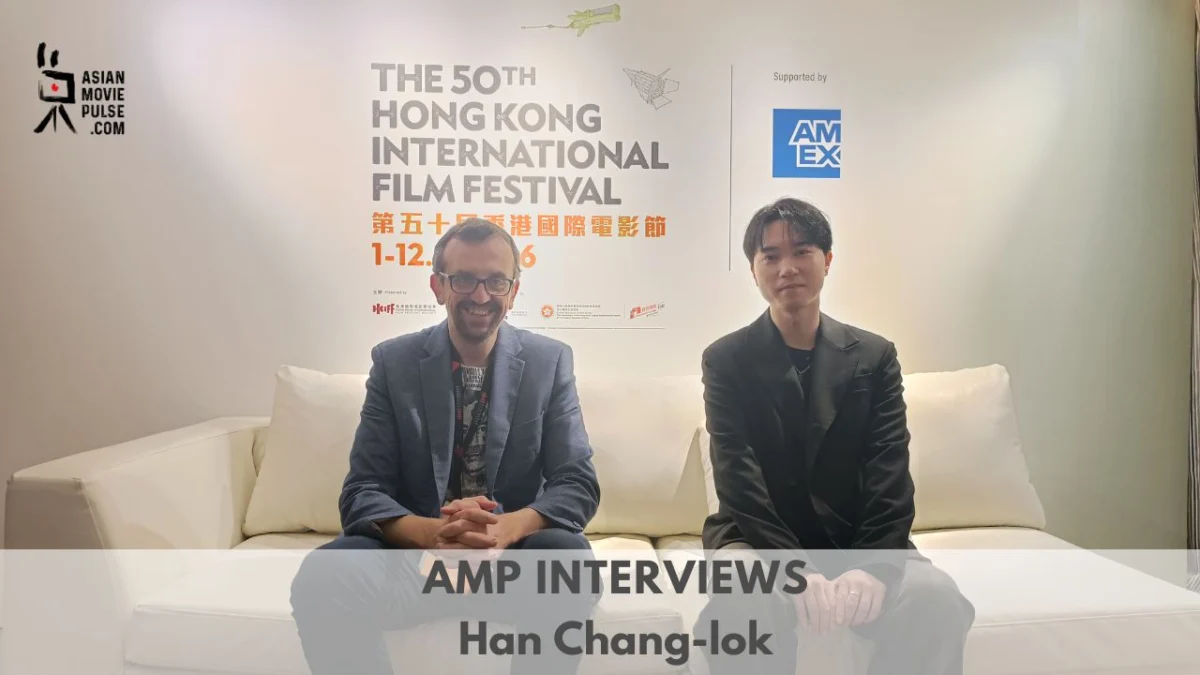
At the recent Hong Kong International Film Festival (HKIFF), a pivotal event in the Asian cinematic calendar that showcased a diverse array of global filmmaking from April 3rd to April 14th, 2024, Korean director Han Chang-lok unveiled his latest and most provocative work, "Funky Freaky Freaks." The film, a stark and unflinching exploration of adolescent violence, profound loneliness, and the deeply ingrained fissures within contemporary South Korean society, generated significant discussion following its screening. In a candid post-screening interview, Han Chang-lok elaborated on the genesis of his film, its distinctive and challenging aesthetic, and articulated his mounting concerns for both the current generation of young people and the trajectory of Korean cinema itself.
The Echoes of a Generational Chasm: Parents, Educators, and the Unseen
One of the initial and most pointed questions directed at Director Han revolved around the portrayal of parental and educational figures in "Funky Freaky Freaks." The film depicts adults, particularly parents and teachers, as largely absent or emotionally distant during the most critical and turbulent periods of their children’s lives. Han, however, framed this observation not as a simplistic indictment but as a manifestation of a profound generational disconnect, a widening chasm in understanding and experience.
He articulated a significant shift in the societal landscape between his own upbringing and the realities confronting today’s youth. "In my youth," Han explained, "physical discipline from parents and teachers was a common, albeit sometimes harsh, reality. That paradigm has shifted dramatically. Yet, the pressures, the emotional distance, these elements haven’t vanished; they have merely mutated into new forms." This evolution, he suggested, has created a vacuum where genuine connection and guidance ought to be.
Han emphasized his intention to illustrate how older generations often sidestep or fail to confront the complex issues faced by younger individuals. This avoidance, he posited, stems less from malicious intent and more from a pervasive lack of comprehension and an ingrained tendency towards deflection. "The gap in understanding," Han stated, "is at the very core of the emotional and moral breakdown we witness in the film’s teenagers." He characterized the situation as a multifaceted societal problem rather than a straightforward accusation, asserting that the film’s often brutal moments are strategically employed to compel audiences to confront realities that are frequently ignored or swept under the rug. This approach aligns with a growing body of sociological research in South Korea that highlights increasing parental anxiety and a perceived lack of effective communication channels between generations, particularly in rapidly urbanizing and highly competitive environments.
Real-World Tragedies as Creative Catalysts
The thematic bedrock of "Funky Freaky Freaks" was forged in the crucible of real-world crime reports. Han revealed that a particular incident—a violent act committed by teenagers in a village in Washington state—left an indelible mark on him. The sheer brutality of young people turning on each other spurred him to contemplate a Korean parallel, prompting a deep introspection into the simmering tensions within his own society.
"All of the key incidents and characters in the film were shaped by real crime news and documented cases of teenage violence," Han disclosed. His aim was to channel the unsettling realization that such extreme events, while seemingly distant, possess an uncomfortable proximity to lived reality. The film’s central characters, including the enigmatic Ji Suk and the vulnerable Yong Gi, are meticulously constructed upon this foundation of plausibility, drawing heavily from documented psychological profiles and behavioral patterns observed in actual cases. This grounding in documented reality lends the film an unsettling authenticity, prompting viewers to consider the societal conditions that might foster such destructive behavior. The trend of youth-related violence, while not new, has seen renewed attention in South Korea following several high-profile incidents in recent years, further amplifying the film’s resonance.
The Shadow of Abandonment: Fear as a Driving Force
When questioned about the complex dynamic between Ji-sook and Yong-gi—specifically, whether Ji-sook’s actions were purely manipulative or hinted at deeper, unacknowledged feelings—Han pointed towards a more profound psychological undercurrent. He described Ji-sook’s most pervasive and debilitating fear as abandonment, likening her emotional state to that of a child lost and disoriented in a vast, indifferent playground.
This overwhelming terror of solitude, Han elaborated, functions as a primal survival instinct that profoundly distorts her interpersonal relationships. Incapable of fully comprehending or authentically engaging with the emotional experiences of others, she resorts to manipulation and emotional cruelty as a means of maintaining control and safeguarding herself from perceived threats. "For me," Han explained, "this fear-driven behavior is not unique to Ji Suk. It is emblematic of many young people who grow up feeling unseen by adults and constantly subjected to the harsh judgments of their peers." This resonates with psychological studies that link social isolation and a lack of secure attachment in adolescence to maladaptive coping mechanisms and difficulties in forming healthy relationships.
Social Media: A Distorted Mirror Reflecting Insecurities
The pervasive influence of social media casts a significant and often detrimental shadow over "Funky Freaky Freaks," a theme that Director Han confronts with unvarnished honesty. He views these platforms as particularly perilous for children and adolescents, as they tend to amplify and externalize their inherent desires and insecurities.
"Social media," Han observed, "compels young users to live in a performative, often superficial, manner, fostering a constant cycle of comparison with others. This incessant benchmarking erodes their self-confidence and cultivates deep-seated frustration and resentment." He noted that in South Korea, there are already ongoing discussions and legislative initiatives aimed at regulating or mitigating the adverse impacts of such digital platforms, reflecting a national concern over their effects on youth mental health. According to a 2023 report by the Korea Communications Commission, over 80% of South Korean teenagers are active on social media, with significant percentages reporting feelings of anxiety and inadequacy stemming from online interactions.
For Han, this collective frustration is fertile ground for cinematic exploration. "Funky Freaky Freaks" eschews social media as mere background detail, instead presenting it as a toxic ecosystem that exacerbates every emotional vulnerability within its young protagonists. The film’s visual language often reflects the fragmented and hyperreal nature of online communication, further immersing the audience in this digital miasma.
Navigating the Intensity: Violence, Safety, and Young Talent
The film does not shy away from depicting scenes of intense and disturbing violence, leading to questions about Han’s approach to these moments and his collaboration with his young cast. He underscored that communication and the paramount importance of actor safety were non-negotiable priorities throughout the production.
"Before embarking on any physically demanding sequence," Han stated, "I ensured that all actors fully understood the nature of the scene and had given their explicit consent. Some of the fight sequences, including a particularly harrowing confrontation between Woo-joo and Yong-gi, were inherently dangerous. It was crucial to maintain constant vigilance, ensuring everyone’s safety and comfort." This meticulous attention to detail is vital, especially when working with young actors, where the potential for injury or psychological distress is amplified.
The casting process for "Funky Freaky Freaks" was described as extensive and rigorous, involving numerous meetings. The actor portraying Yong-gi, Joo Min-hyeong, was recommended by the cinematographer and ultimately selected after four to five rounds of auditions. Han’s casting philosophy prioritized finding performers who most closely embodied the characters he had envisioned, aiming for an authentic representation of contemporary youth rather than relying on established star power. A critical pre-production phase, spanning three weeks before principal photography commenced, was dedicated to intensive meetings and rehearsals designed to foster trust and open communication within the ensemble, laying a crucial groundwork for the intense emotional and physical demands of the film.
A Visual Symphony of Restlessness: Music Video Aesthetics and 90s Echoes
Visually, "Funky Freaky Freaks" is a departure from conventional filmmaking. The film embraces edgy cinematography, sequences imbued with the energy of music videos, frenetic editing rhythms, and even stark black and white passages. Han explained that these stylistic choices were deliberate attempts to capture the volatile essence of teenage energy and the pervasive sense of restlessness that characterizes adolescence.
His stylistic influences draw heavily from music videos and films of the 1990s, a decade he associates with heightened social anxiety and a palpable sense of impending change. "I recall the atmosphere around the year 2000," Han mused, "when pervasive rumors about the end of the world and an intensified competitive landscape created a tense, almost suffocating environment. To me, the mood of that era bears a striking resemblance to the present." This 90s sensibility, interwoven with the lyrical and introspective style of Japanese directors like Shunji Iwai, serves to effectively convey the frustration and urgency experienced by young people who feel trapped between overwhelming expectations and the precipice of collapse. This stylistic approach, while potentially jarring to some viewers, is a deliberate choice to mirror the chaotic and often overwhelming internal world of the film’s protagonists.
A Crossroads for Korean Cinema: Facing Challenges with Hope
When discussing the current state of the South Korean film industry, Han did not mask his apprehension. He characterized the period as challenging, marked by declining cinema attendance and a noticeable reduction in film production. The word "crisis" surfaced repeatedly as he reflected on the escalating difficulties in sustaining both film production and theatrical exhibition. This sentiment is echoed in industry reports, which have indicated a significant downturn in box office revenue and a consolidation of major distribution power in recent years.
Despite these considerable challenges, Han remains an optimist. He firmly believes that audiences still possess a deep love for cinema and that the communal experience of watching films together in a theater will ultimately endure. "I sincerely hope," he expressed, "that the industry will eventually find a path to recovery and discover new and innovative ways to connect with viewers." This enduring faith in the power of storytelling and the shared experience of cinema offers a glimmer of hope for the future of Korean filmmaking, a sector that has consistently produced critically acclaimed and globally recognized works.
Charting the Path Forward: New Narratives on the Horizon
Looking towards his own creative future, Han revealed that he is currently engaged in a project as a scriptwriter, though not as a director. The development of his next directorial endeavor is still in its nascent stages, a period of exploration as he searches for compelling ideas and shapes nascent concepts. Following a film as charged and confrontational as "Funky Freaky Freaks," his subsequent directorial work is certain to be met with considerable anticipation, particularly from those who perceive in his filmmaking a bold, albeit unsettling, reflection of contemporary youth and the societal forces that shape them. The exploration of complex, often uncomfortable, truths within Korean society suggests that Director Han Chang-lok will continue to be a significant voice in global cinema.