


Internal communications obtained via a Freedom of Information Act (FOIA) request have revealed that a senior Federal Communications Commission (FCC) official, tasked with overseeing the regulatory compliance of ABC-owned stations in California, privately offered to assist FCC Chairman Brendan Carr in a targeted campaign against the Walt Disney Company and late-night host Jimmy Kimmel. The correspondence, which surfaced during a period of heightened tension between the regulatory body and the media conglomerate, raises significant questions regarding the impartiality of career civil servants and the potential for the FCC’s enforcement apparatus to be leveraged as a tool for political retaliation.
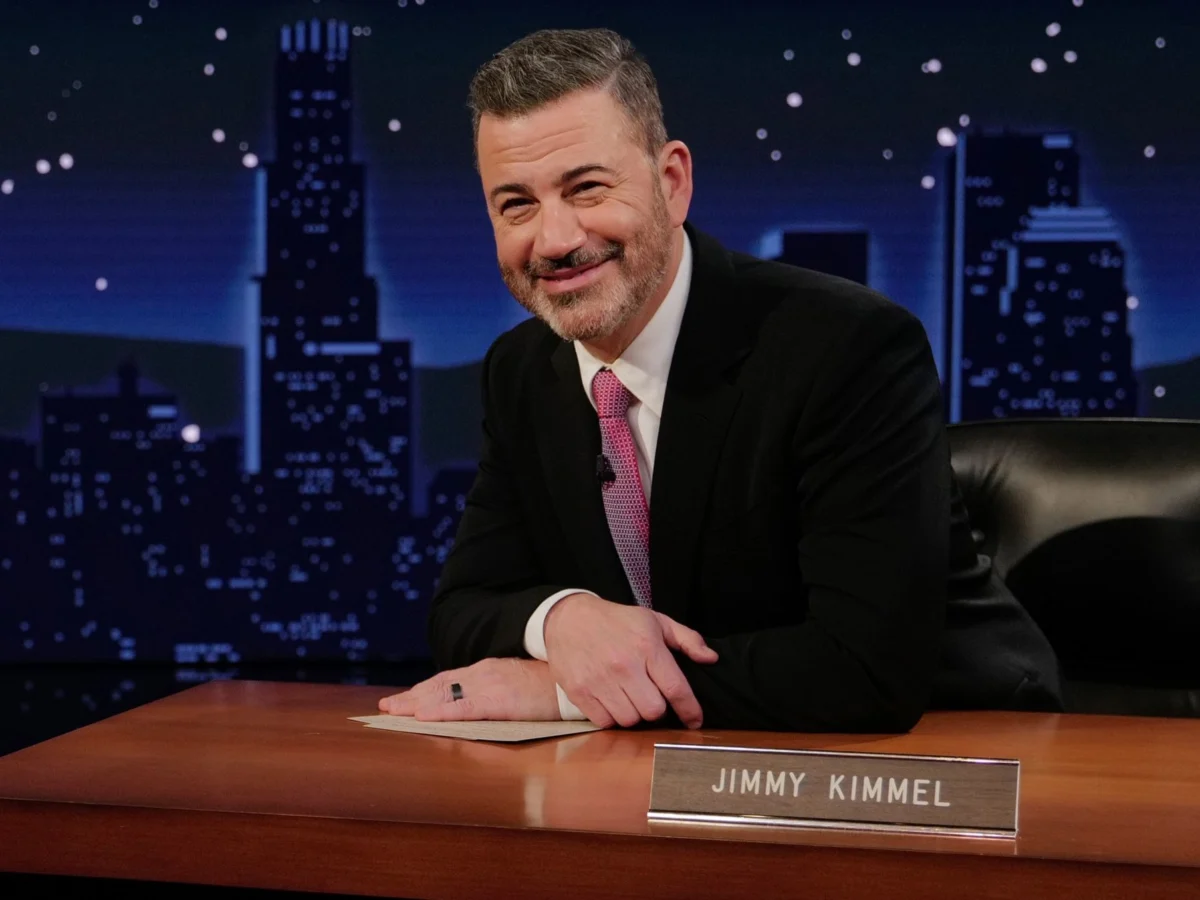
The controversy stems from an incident in September of last year, when Chairman Brendan Carr publicly threatened Disney with regulatory repercussions following a monologue on Jimmy Kimmel Live! that discussed a hypothetical scenario involving conservative activist Charlie Kirk. The newly released emails show that Lark Hadley, the FCC’s West Coast enforcement director, reached out to Carr and FCC Chief of Staff Scott Delacourt to express her personal support for the Chairman’s aggressive stance. The revelation of this internal alignment has prompted scrutiny from legal experts and free speech advocates who argue that such coordination undermines the constitutional protections afforded to broadcasters and violates the ethical standards of the federal civil service.
The Email Trail and Private Pledges of Support
On September 17, following a segment on Jimmy Kimmel Live! that sparked outrage in conservative media circles, Chairman Brendan Carr appeared on a podcast hosted by Benny Johnson. During the interview, Carr issued a stern warning to Disney, the parent company of ABC, stating, “This is a very, very serious issue right now for Disney. We can do this the easy way or the hard way.” The rhetoric was widely interpreted as a signal that the FCC might use its licensing and enforcement powers to penalize the network for the content of its programming.
Later that same day, Lark Hadley, whose role involves direct oversight of ABC-owned stations such as KABC-TV in Glendale, California, sent an email to Carr and Delacourt. The subject line of the email was “personal note of support re Charlie Kirk ABC/Disney issue.” In the message, Hadley quoted Carr’s “easy way or the hard way” remark and expressed her personal alignment with his position.
Hadley, a former broadcaster, wrote that the “absolute lack of accountability has always confused (and sickened) me.” She concluded the message with a direct offer of assistance, telling the Chairman and his Chief of Staff: “Please, do not let up, and let me know if I can help in any way.”
The offer of help is particularly notable because Hadley’s office holds jurisdiction over the physical broadcast facilities where Jimmy Kimmel Live! originates. While content complaints are typically handled at the FCC’s headquarters in Washington, D.C., regional enforcement directors like Hadley possess the authority to conduct inspections, issue fines, and monitor the technical and operational compliance of local stations. The suggestion that an enforcement chief would offer to “help” in a politically charged dispute against a broadcaster under their direct supervision suggests a departure from the traditional neutrality expected of career government employees.
Chronology of a Regulatory Confrontation
The timeline of events highlights the speed with which regulatory pressure translated into corporate action. The sequence began with a broadcast and culminated in the temporary suspension of one of late-night television’s most prominent programs.
- September 16: Jimmy Kimmel Live! airs a monologue discussing the political climate and mentions Charlie Kirk, the founder of Turning Point USA. The segment is criticized by conservative commentators who characterize the rhetoric as inciting violence.
- September 17 (Morning): FCC Chairman Brendan Carr begins a media tour, appearing on conservative platforms to denounce the broadcast. He suggests that the FCC has the authority to review the public interest obligations of Disney’s broadcast licenses.
- September 17 (Afternoon): Lark Hadley sends her private email to Carr, pledging her support and offering the services of her office to assist in the "issue."
- September 18: Major broadcast affiliate groups, including Nexstar Media Group and Sinclair Broadcast Group, reportedly express concern over the regulatory environment. Both companies have significant business interests and pending merger applications before the FCC.
- September 19: In an unprecedented move, several major affiliates refuse to air the scheduled broadcast of Jimmy Kimmel Live! Citing the potential for regulatory blowback, Disney announces a brief suspension of the show to "review internal standards."
- September 21: The show returns to the air, but the incident is solidified as a case study in "regulatory jawboning," where government officials use the threat of official action to compel private entities to censor speech.
The Role of ABC Affiliates and Pending Mergers
The effectiveness of Chairman Carr’s pressure campaign was amplified by the precarious position of ABC’s major affiliate partners. Nexstar and Sinclair, which together control a vast percentage of the local television market in the United States, were at the time navigating complex regulatory approvals for multibillion-dollar acquisitions and station transfers.
Industry analysts have noted that for these companies, the risk of offending a sitting FCC Chairman—who holds the power to delay or block mergers based on a “public interest” determination—outweighed the benefits of airing a single episode of a late-night talk show. The decision by these affiliates to drop the program effectively forced Disney’s hand, demonstrating how the FCC can exert influence indirectly by targeting the business partners of its primary critics.
The FCC’s "Public Interest" standard is a broad and often ill-defined mandate that allows the commission to evaluate whether a broadcaster is serving its community. While the First Amendment generally protects broadcasters from government censorship of specific viewpoints, the threat of a prolonged and expensive license challenge can serve as a powerful deterrent. In this instance, the alignment between Carr’s public rhetoric and Hadley’s private offer of enforcement assistance created a pincer movement that left Disney with few options but to temporarily retreat.
Ethical Standards and the Principle of Civil Service Neutrality
The revelation of Hadley’s email has raised concerns regarding the violation of federal ethics rules. Under the Standards of Ethical Conduct for Employees of the Executive Branch, government employees are prohibited from participating in matters where their impartiality could reasonably be questioned. Specifically, 5 C.F.R. § 2635.101(b)(8) states that employees shall act impartially and not give preferential treatment to any private organization or individual.
Furthermore, career civil servants are expected to remain insulated from the political agendas of appointed officials to ensure the continuity and fairness of government administration. Lark Hadley is a career employee, not a political appointee, which makes her proactive involvement in a chairman’s political campaign against a specific media entity a departure from standard operating procedure.
“It is highly irregular for a career enforcement chief to pledge their services to what appears to be a targeted retaliation effort,” says a former FCC attorney who requested anonymity to discuss internal agency culture. “The regional offices are supposed to be the ‘boots on the ground’ for technical compliance—tower safety, signal interference, and public file maintenance. When they start weighing in on the content of monologues and offering to ‘help’ the Chairman in a political fight, the line between regulation and intimidation becomes dangerously blurred.”
First Amendment Implications and Legal Critiques
The legal community has reacted with alarm to the coordination between Carr and Hadley. Will Creeley, the legal director at the Foundation for Individual Rights and Expression (FIRE), emphasized that the First Amendment exists precisely to prevent this type of government overreach.
“Regional directors like Lark Hadley have no business cheering on the FCC chairman’s regulatory threats against broadcasters that air views the administration doesn’t like,” Creeley stated. “Just like Brendan Carr, they swore an oath to uphold the Constitution—and that includes the First Amendment, which bars the government from coercing private broadcasters into censoring dissent.”
Creeley further noted the financial implications of such actions, pointing out that Hadley is a public servant funded by taxpayers. “Is it too much to ask for her not to sound so excited about the chairman abusing the power of his office? The use of the regulatory apparatus to settle political scores is a hallmark of authoritarianism, not a functioning democracy with a free press.”
Legal experts argue that the phrase “the easy way or the hard way” constitutes a form of “jawboning,” a practice where government officials use their platform to pressure private companies into taking actions that the government itself is constitutionally barred from performing directly. In this case, the FCC cannot legally ban Jimmy Kimmel from making jokes about political figures, but it can make life difficult for the company that employs him.
Broader Impact and the Future of Broadcast Regulation
The fallout from the Kimmel suspension and the subsequent exposure of internal FCC emails could have long-lasting implications for the relationship between the federal government and the media. If career officials are seen as partisan actors, the perceived legitimacy of the FCC’s enforcement actions may be permanently damaged.
This incident also highlights a growing trend of "weaponizing" the administrative state. As the FCC moves forward with various initiatives—ranging from net neutrality to media ownership rules—the independence of its regional offices remains a critical component of its mission. The discovery that a West Coast director felt comfortable offering "help" in a vendetta against a local station suggests a need for stricter internal firewalls and more robust oversight of communications between political appointees and career staff.
As of the time of this report, the FCC’s headquarters has not issued a formal statement regarding the Hadley emails, and Chairman Carr’s office has declined requests for comment. Disney and ABC have also remained largely silent, likely seeking to avoid further friction with a regulatory body that holds significant sway over their future business ventures.
The documents obtained via FOIA serve as a reminder of the power inherent in the federal bureaucracy and the ease with which that power can be directed toward silencing critics. For broadcasters across the country, the message sent by the FCC in this instance is clear: the "public interest" is increasingly being defined by those in power, and the "hard way" is a path that few companies can afford to take.