
The landscape of horror cinema has long been a battleground for pushing boundaries, and few films have courted controversy as enduringly as "Faces of Death." The 1978 mockumentary, which purported to showcase real-life death scenes, became a cultural touchstone for its visceral, albeit largely fabricated, content. Now, nearly half a century later, a new iteration emerges, not as a direct remake, but as a meta-commentary on the original’s legacy and the digital age’s insatiable appetite for the macabre. Directed by Daniel Goldhaber and co-written by Isa Mazzei, this latest "Faces of Death" delves into the disquieting reality of online content moderation and the blurring lines between manufactured horror and genuine atrocity in the internet era.
The film centers on Margot (Barbie Ferreira), a young woman whose job as a content moderator for Kino, a popular social video platform akin to TikTok, places her at the frontline of digital depravity. Her daily task involves sifting through a torrent of user-uploaded content, making split-second decisions on what violates the platform’s nebulous community guidelines. The arbitrary nature of these rules, where graphic violence is often permissible while seemingly innocuous content is flagged, mirrors the complexities and inconsistencies of real-world content moderation policies. As noted in numerous studies on online platforms, the sheer volume of content makes consistent and accurate moderation a monumental challenge, often relying on algorithms and human moderators operating under immense pressure with limited context.
The Digital Gauntlet: A Content Moderator’s Ordeal
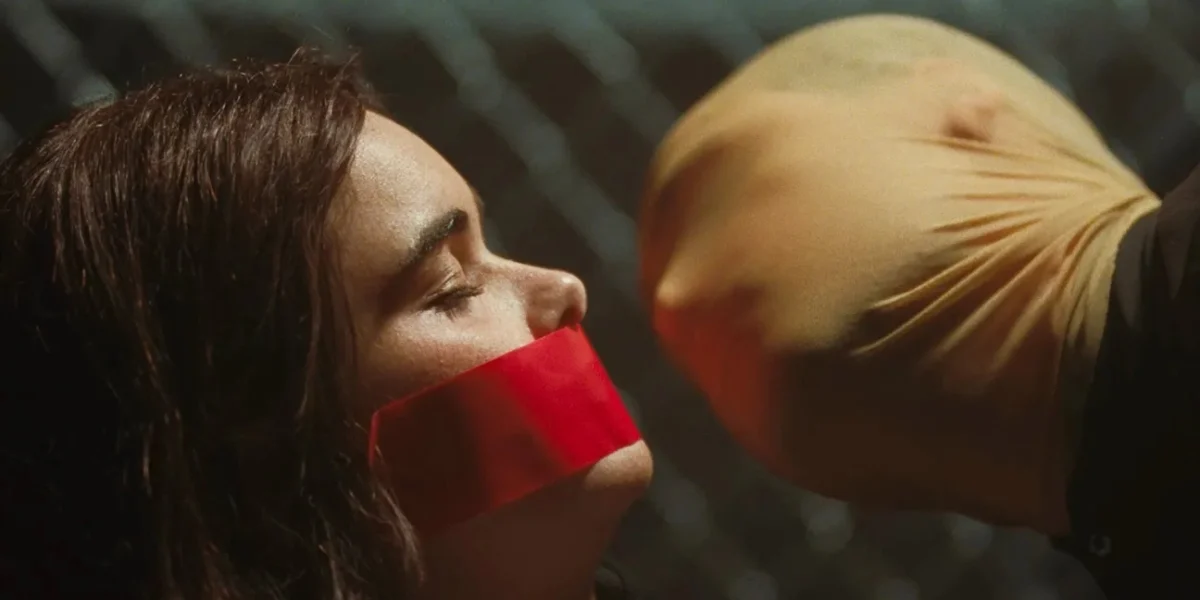
Margot’s routine is shattered when she encounters a disturbingly realistic video depicting what appears to be a genuine murder. The sophistication and brutality of the scene immediately raise alarms. Despite her unease, she is instructed by her manager, played by Jermaine Fowler, to allow the video to remain online, operating under the assumption that it is a fabrication, a common recourse for platforms grappling with potentially harmful content. This initial encounter sets a chilling precedent. As the film progresses, Margot finds herself increasingly inundated with similar videos, each more disturbing than the last, forcing her to confront the possibility that these are not staged productions but actual snuff films.
The narrative boldly reveals the truth early on: the videos are indeed real, and the perpetrator, Arthur (Dacre Montgomery), is meticulously staging his kills. The film eschews a traditional mystery format, instead opting to provide the audience with more information than Margot possesses. This dual narrative approach allows the audience to witness Arthur’s chilling preparations and execution of his crimes, which are disturbingly inspired by the death scenes depicted in the original 1978 "Faces of Death." This creative choice serves a dual purpose: it directly engages with the historical context of the original film, reintroducing its notoriety to a new generation of horror enthusiasts, and it amplifies the psychological tension by placing the audience in a position of foreknowledge.
A Legacy Reimagined: From Mockumentary to Meta-Horror
The original "Faces of Death," released in 1978, was a cultural phenomenon born from a potent cocktail of morbid curiosity and technological limitations. While it presented itself as a documentary exploring the finality of life, the vast majority of its gruesome sequences were staged, utilizing special effects, cadavers from medical schools, and cleverly edited footage. The film’s success was largely attributed to its ability to tap into a primal fear and fascination with death, amplified by the authoritative, albeit fictional, narration of a pathologist. In an era before the internet democratized access to explicit imagery, "Faces of Death" was a forbidden fruit, passed around in hushed tones and late-night screenings, solidifying its status as a notorious cult classic.
However, the advent of the internet has irrevocably altered the landscape of horror and the consumption of violent content. Platforms like YouTube, Reddit, and various dark web forums provide instant access to real-world violence, making the shock value of the original "Faces of Death" seem almost quaint. This contextual shift is precisely what the new film seeks to explore. It’s less a remake of the original’s narrative and more a reinterpretation of its cultural impact in the digital age. The film posits that in a world saturated with authentic, unfiltered horror, the very concept of manufactured shock, as pioneered by the original "Faces of Death," has become both obsolete and, paradoxically, more insidious.
The Killer’s Canvas: Arthur’s Twisted Artistry
Dacre Montgomery delivers a performance that is both chilling and captivating as Arthur, the film’s antagonist. He embodies a gleeful, almost theatrical wickedness, reveling in the terror his videos inflict upon viewers. His portrayal is a delicate balance of camp and malice, making Arthur a genuinely menacing presence. The film cleverly uses Arthur’s meticulously crafted kill scenes, which are reminiscent of the elaborate traps in the "Saw" franchise, to highlight the evolving nature of horror. These sequences, while visually striking, are executed in a surprisingly un-graphic manner, a deliberate choice that underscores the film’s thematic concerns about the desensitization of audiences.
Arthur’s methods are not born from abstract sadism but from a direct emulation of the original "Faces of Death" film. This connection is crucial, as it serves to reignite interest in the 1978 film and its historical role in shaping perceptions of death and horror. By having Arthur meticulously recreate iconic death scenes from the original, the film forces contemporary audiences to confront the progenitor of this kind of shock cinema, prompting reflection on how far we’ve come, or perhaps, how little we’ve truly evolved. The disguise Arthur employs, a simple yet effective mask, evokes the iconic imagery of Michael Myers from "Halloween," further embedding the film within the broader mythology of horror cinema.
The Moderator’s Maze: Margot’s Descent into Suspicion
In stark contrast to Arthur’s flamboyant menace, Margot’s storyline is characterized by a more internalized, psychological struggle. Her journey is a repetitive and predictable descent into paranoia as she grapples with the ethical implications of her job and the growing realization that the line between fiction and reality has become dangerously blurred. Like many contemporary horror protagonists, Margot is burdened by a traumatic past incident that resurfaces through flashbacks, adding another layer to her psychological turmoil. This narrative device, while common in the genre, feels somewhat perfunctory here, serving primarily to explain her heightened sensitivity and determination.
Barbie Ferreira imbues Margot with a palpable sense of stress and anxiety, effectively conveying the emotional toll of her job. However, the character’s agency is largely confined to playing amateur detective, navigating frustrating roadblocks as she attempts to uncover the truth behind the disturbing videos. The film reserves its most visceral and impactful moments for Margot’s eventual confrontation with the reality of Arthur’s crimes, suggesting that while her journey may be slow-burning, the payoff is intended to be intensely harrowing.
The Numbing Effect: Societal Desensitization in the Digital Age
Despite the compelling performances and the intriguing premise, the film falters in its execution as a suspenseful thriller. The absence of a genuine mystery surrounding Arthur’s identity or motives saps the narrative of much-needed tension. While the dual perspective approach, reminiscent of "The Silence of the Lambs," can be effective, it requires the film to maintain suspense through the uncertainty of the villain’s actions and the fate of his victims. In this instance, Arthur’s motivations are glossed over, and his victims are not sufficiently developed to elicit genuine sympathy, often portrayed as shallow archetypes, such as a vapid influencer played by Josie Totah, who is mockingly framed by the film.
The film’s most significant contribution lies in its exploration of the numbing effect of the internet on societal sensibilities. It raises critical questions about how the constant barrage of real-life horror, readily accessible with a few clicks, has diminished our capacity for genuine shock and emotional response. This is a timely and crucial conversation, especially when considering the broader implications of such desensitization. The ease with which atrocities can be witnessed online, and subsequently dismissed as "fake news" or mere digital content, can contribute to the normalization of violence and the erosion of empathy. This phenomenon can be extrapolated to explain the unsettling acceptance of extreme political violence, including acts of genocide, in certain contexts.
Furthermore, the film’s themes resonate with the growing skepticism fostered by AI-generated content and the pervasive nature of misinformation. The ability to dismiss any information that contradicts one’s worldview as "not real" has become a powerful tool for manipulation, a tactic readily exploited by political actors in an increasingly cynical society. "Faces of Death" effectively mirrors this fragmented and distrustful online landscape, constructing an accurate, albeit bleak, reflection of our digitally mediated reality.
A Film More Discussed Than Watched?
While "Faces of Death" presents a thought-provoking thesis about the digital age and its impact on our perception of reality and horror, it ultimately falls short of being a truly captivating cinematic experience. The film is, as the reviewer notes, "more exciting to talk about than actually to watch." This is a stark contrast to Goldhaber’s previous work, "How to Blow Up a Pipeline," which managed to explore daring political ideas with cinematic thrill and urgency. While "Faces of Death" is technically well-shot and slickly produced, it fails to capture the undeniable, albeit disturbing, spirit of the original film and translate it effectively for a 21st-century audience. The challenge of reinterpreting such a controversial and historically significant film is immense, and while this new iteration offers a unique conceptual framework, its narrative execution proves less impactful than its thematic ambitions. The film’s exploration of the internet’s desensitizing influence and the porous boundary between real and virtual violence is undeniably relevant, but its storytelling struggles to maintain the grip of true horror.