

Broadcast in 2009, the critically acclaimed TV anime series Eden of the East has recently found a wider audience with its availability on Crunchyroll and home video formats. This compelling blend of comedy and thriller offers a narrative that transcends its genre trappings, delving into profound themes rooted in the realities of modern existence. Crafted by director Kenji Kamiyama and produced by the renowned studio Production I.G, the series is celebrated for its sophisticated animation and intricate storytelling, making it a significant work for fans of the studio and its director, while also proving accessible to newcomers to the anime medium, particularly those seeking alternatives to more traditional fantasy or action-oriented fare.
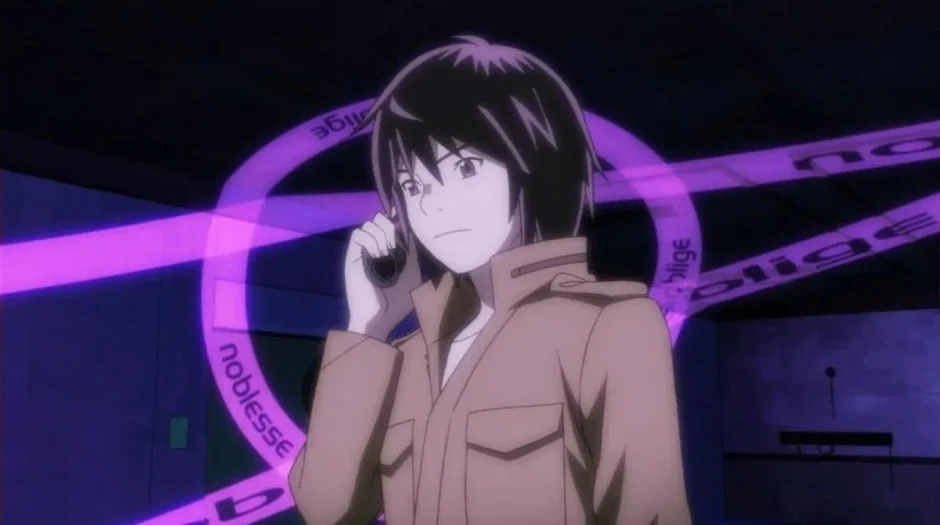
The series immediately signals its unique approach from its opening moments. Viewers are plunged into the disorienting experience of the protagonist, a naked young man jogging through Washington D.C. with no memory of his identity. His only guide is a mysterious female voice emanating from a mobile phone. This amnesiac premise, reminiscent of espionage thrillers like the Bourne series, is explicitly acknowledged by the hero himself, a meta-commentary that serves to bridge the gap between the fictional narrative and the audience’s expectations. The show’s distinctive end-title sequence, rendered in a stop-motion style, further encapsulates its adventurous and unconventional spirit.
A Game of Global Stakes and Societal Reflections
At its core, Eden of the East unfolds as a high-stakes game with the potential to reshape Japan’s future. The narrative weaves in elements of suspense akin to the cliffhangers found in 24, alongside a remarkably clever parody of Dawn of the Dead that stands as a testament to the series’ comedic prowess, notably achieved without the presence of actual zombies. Beyond its thrilling plot, the anime offers an optimistic portrayal of collaborative internet culture, presenting a vision of dissident solidarity that stands in stark contrast to the more fragmented depiction of social networking in films released around the same period, such as The Social Network. Furthermore, Eden of the East grapples with the unsettling societal attitudes in Japan following the 1995 Tokyo sarin attacks, a period marked by a relative absence of large-scale terrorism.
While this article primarily focuses on the original eleven-part television serial, it is essential to acknowledge the subsequent feature films, The King of Eden and Paradise Lost, which provide a conclusive arc to the story. Both films are accessible on Crunchyroll as continuations of the Eden of the East series. These cinematic entries shift in tone, leaning more towards character-driven, political, and mystery dramas rather than the comedy-thriller elements of the TV series. The transition from the serial to The King of Eden can be challenging for some viewers, with its shifts in pacing and thematic emphasis, though Paradise Lost offers a more cohesive, albeit deliberately non-traditional, conclusion that prompts deeper reflection.
The Vision of Director Kenji Kamiyama
An interview with director Kenji Kamiyama at Production I.G in 2010, shortly after the completion of Eden of the East, sheds significant light on the series’ genesis and thematic underpinnings. Kamiyama was already a respected figure in the anime industry, known for his direction of the critically acclaimed Ghost in the Shell: Stand Alone Complex television series. His earlier career included credits on seminal anime works such as Akira and Kiki’s Delivery Service, followed by a period working under director Mamoru Oshii as part of Production I.G’s "Team Oshii," where he honed his skills in writing and directing.

Kamiyama’s directorial trajectory includes the 2000 featurette Blood: The Last Vampire and the highly regarded Ghost in the Shell: Stand Alone Complex, which earned him widespread recognition and was often compared favorably to Mamoru Oshii’s original Ghost in the Shell film. Production I.G co-founder Mitsuhisa Ishikawa humorously noted the master-student dynamic between Oshii and Kamiyama, suggesting that the student had indeed surpassed the master. Kamiyama’s work prior to Eden of the East also includes the 2008 fantasy series Moribito: Guardian of the Spirit.
Genesis of Eden of the East and its "noitaminA" Context
The impetus for Eden of the East came from Fuji Television Network, which approached Kamiyama with a request for a series that mirrored the narrative strengths of live-action television dramas, akin to Ghost in the Shell: Stand Alone Complex. However, Fuji Television sought a departure from the established formula of Ghost in the Shell. This directive was closely tied to the network’s innovative late-night anime block, "noitaminA," which launched in 2005. This programming slot, an anagram of "Animation," was designed to showcase a diverse range of anime targeting a demographic typically aged late twenties to early thirties, with a significant female viewership.
Prior to Eden of the East, the "noitaminA" block had featured series like Nodame Cantabile, focusing on young pianists, and Honey and Clover, exploring the lives of art students. These titles, adapted from popular manga aimed at female audiences, influenced Fuji Television’s desire for a series with less emphasis on crime and weaponry than Stand Alone Complex. While Eden of the East itself did not shy away from suspense, its thematic concerns and character focus were tailored to resonate with the "noitaminA" demographic. It’s noteworthy that a few years later, "noitaminA" did broadcast Psycho-Pass, a dark future-crime series.
A Striking Opening and a Compelling Protagonist
The series commences with Saki Morimi, a recent college graduate visiting Washington D.C. Her trip takes an unexpected turn when she encounters a cheerful, amnesiac young man—Akira Takizawa—who is inexplicably naked and in possession of a gun and a specialized mobile phone. This phone connects him to "Juiz," a mysterious woman capable of providing him with seemingly anything he requires. Simultaneously, Tokyo is reeling from a series of missile attacks, though their impact is surprisingly minimal. Takizawa discovers he is not the only individual equipped with such a distinctive phone, setting the stage for a complex game involving multiple players.
Takizawa emerges as a captivating protagonist, exuding unwavering confidence and optimism even in bewildering and perilous circumstances. His character is explicitly modeled after Jason Bourne, a deliberate choice by Kamiyama to draw inspiration from The Bourne Identity (2002). "I also liked the idea of having a big mystery in which the hero is involved but he doesn’t know why, as used by Hitchcock. That was a good starting point for an original series, as I had to grip the viewer from the beginning," Kamiyama explained, highlighting his intention to create an immediate narrative hook.
Takizawa’s affinity for film, a recurring motif in Kamiyama’s work, serves as a bridge to his personal philosophy. Kamiyama stated, "I learned a lot about life and relationships from film. I wanted to put this passion into the character of Takizawa as well, and to convey a message to the young, who don’t watch movies as my generation did; to hint that there are interesting things you could learn in old films, in old things around you, that you didn’t know about."

Kamiyama also viewed the creation of a male lead like Takizawa as a significant challenge. He observed, "When women advanced in society and took on more leadership roles, and also got more purchasing power, they were pushed more and more as the main characters in fiction. Even in anime, you have more female characters than male. It’s difficult to create likeable and fascinating male characters nowadays." This observation, made in 2010, remains relevant in discussions about representation in media.
Thematic Depth: Societal Disconnect and Individual Agency
Takizawa’s character is intricately linked to Eden of the East‘s broader thematic concerns. Kamiyama reflected on his student days, recalling individuals who possessed remarkable leadership qualities but seemed to lose their spark upon entering society. This led him to question whether societal structures stifle individual potential. Takizawa, as a brilliant individual thrust into a complex "game of society," embodies the struggle to navigate and potentially reshape these mechanisms.
His startling naked introduction was a deliberate choice to signify a fresh start. "I wanted to show that he begins completely naked and then is able to change into a very active leader," Kamiyama stated. "You might say his introduction overlaps with the idea of a naked newborn baby, but the reason was to show he starts with nothing. He only has his initiative. The question is, can Takizawa go through society and remain himself? Is he somebody who people need, or who nobody needs, someone who society is going to reject? How is he going to act in the social environment?"
The series’ humor, a departure from Kamiyama’s previous works, was intentionally incorporated. "Eden was the first project in which I attempted humor. As a director, I wanted to challenge myself with a new style. I also had the female noitaminA audience in mind. I had this very serious story, but I wanted people to follow it without it getting too heavy," he explained.
To complement this tonal approach, Kamiyama enlisted the renowned artist Chica Umino to design the characters. Umino, celebrated for her work on the Honey and Clover manga, brought a distinctive style that contributed to the series’ lighter feel. Kamiyama noted, "I decided to use a ‘lighter’ character design to make the series easier to watch, and the match was very good." Umino’s influence is particularly evident in the depiction of Saki, whose childlike appearance echoes characters from her previous works.
The series’ grounded aesthetic is further enhanced by its use of real-world locations. Kamiyama stated, "Probably 50 per cent of what you see in the background art actually exists in the Tokyo area. I wanted Japanese people to reflect about their society, so I deliberately used existing places." Specific examples include the LaLaport Toyosu shopping mall, the United Cinema Toyosu, and the Breath coffee shop where Takizawa resides. Even the Hinode Pier ferry terminal and Pants’s house are based on real structures, lending an air of authenticity to the fictional world. The location for Juiz’s dwelling, the Harima Science Garden City in Hyogo Prefecture, notably served as the "birthplace" of the Tachikoma robots in Ghost in the Shell: Stand Alone Complex, with the Japanese voice actress for both Juiz and the Tachikoma being Sakiko Tamagawa, creating a subtle thematic link.

The "Change the World, or Die" Premise
Eden of the East‘s central conflict revolves around social alienation and the aspiration to enact societal change. Takizawa and his rivals are each endowed with 10 billion yen, tasked with transforming Japan, with the dire consequence of death if they deplete their funds. Kamiyama elaborated on this premise: "The basic idea is that you live in an abundant society, when you don’t really have great problems with money or fulfilling your basic needs. At the same time, Japanese people tend to have low self-esteem, but they don’t leave the society that they’re in. They say bad things about where they live, but they feel comfortable living inside it. The question in Eden was, if you had 10 billion yen and you could use it as you wanted, would you spend it on yourself or would you be able to think of using it to change your country?"
Kamiyama emphasized that the financial incentive was deliberately insufficient for a revolution, designed instead to highlight the importance of individual initiative. "10 billion yen is a lot of money for an individual, but the value of the money itself isn’t enough to change the country’s destiny. You need the initiative of the individual who is using the money."
The series also explores Saki’s struggles with conventional life and societal expectations, reflecting Kamiyama’s broader concern with individual agency. "At least in Japan, which is the society that I have experienced, you grow up and you enter society, you find a job but there is this lack of motivation, of being the protagonist of the situation you are in," he observed. "Since you were a child, everybody has said you are the center of their attention, but that’s because the society is based on consumerism, not because you can take decisions. With Eden, I wanted to explore how you could take decisions and realize yourself, to be a real protagonist in your story."
Eden of the East particularly addresses the plight of Japan’s "NEETs" (Not in Education, Employment, or Training). Kamiyama linked this phenomenon to a perceived societal malaise: "In the age before Japan saw economic growth, people did not anticipate that material wealth would lead to unhappiness. But in reality, people in modern Japan, especially the young, don’t really feel, ‘I am rich, so I’m happy.’ People measure happiness by comparing their own situations to those of others, and that is a deformed kind of happiness. Consequently, people cannot feel the motivation to work, and they can’t really reach contentment."
This societal condition, Kamiyama argued, fosters a desire for excitement, even if disruptive. "Because these people have no excitement or passion in their lives, their lives themselves become flat. So secretly, they start to wish that something exciting or surprising will happen, whether good or bad, so that they can feel that they are alive. If such an incident doesn’t do direct harm in an individual’s life, then anything might be acceptable." This sentiment is mirrored in the reactions of the Japanese youth in the series to the missile attacks, with some wishing for even more significant events.
Kamiyama drew inspiration from J.D. Salinger’s The Catcher in the Rye and the writings of Yukio Mishima, particularly the 1960 political assassination of Inejiro Asanuma by Otoya Yamaguchi. Kamiyama noted the shared patriotic fervor of both individuals, despite their opposing political affiliations, as symbolic of the era’s societal tensions. This complex portrayal of individuals perceived as terrorists, yet driven by a desire for good, influenced characters like "The Laughing Man" in Stand Alone Complex.

The influence of Kamiyama’s mentor, Mamoru Oshii, is also evident. Oshii’s Patlabor 2 (1993), which explored themes of societal complacency and the impact of "terror" attacks, predated 9/11 and is often seen as a precursor to Eden of the East‘s engagement with similar societal anxieties. While Kamiyama stated that Oshii wasn’t a direct inspiration for Eden of the East, he acknowledged that critics had observed thematic resonances between the two works.
Legacy and Thematic Continuations
The influence of Eden of the East extends beyond its immediate narrative. Production I.G’s collaboration with female artists, including Chica Umino for Eden and the CLAMP team for Blood-C (2011), was a strategic effort to broaden the studio’s appeal to a female audience, as stated by Mitsuhisa Ishikawa.
For viewers seeking thematic continuations, the 2024 anime Dead Dead Demons Dededede Destruction, animated by Production +h and based on Inio Asano’s manga, offers a compelling parallel. Set in a Tokyo under the shadow of an alien mothership and grappling with global instability, the series portrays a generation struggling with apathy and existential dread, mirroring Eden of the East‘s exploration of flattened lives and the search for meaning in a seemingly indifferent world.
Kenji Kamiyama has continued to direct diverse projects since Eden of the East, including the family-friendly Napping Princess (2017) and the CG sequel Ghost in the Shell: SAC_2045 (2020). His recent work includes directing segments of The Lord of the Rings: The War of the Rohirrim. While these projects showcase his continued engagement with complex narratives, Eden of the East remains a standout for its unique blend of social commentary, thrilling narrative, and personal vision.