


In a near-future where pervasive air pollution has driven humanity indoors and into the embrace of virtual reality, Alex Prager’s latest cinematic offering, "DreamQuil," presents a chillingly plausible vision of societal detachment and the insidious creep of artificial intelligence into the fabric of familial life. The film, clocking in at a lean 89 minutes, stars Elizabeth Banks as Carol, a career-driven mother whose life is teetering on the brink of collapse. Struggling with a hollow marriage to Gary, portrayed by John C. Reilly, and a strained relationship with her son Quentin (Toby Larsen), Carol finds her world increasingly claustrophobic. Her anxieties about divorce and a lost sense of self propel her towards an avant-garde digital wellness retreat known as "DreamQuil." However, upon her return, Carol’s quest for reconnection takes a sinister turn when she discovers her family has been living with "Carol 2," a sophisticated robot designed by the corporation to seamlessly fill the void of her absence. This unsettling revelation marks the beginning of a descent into mystery and a profound exploration of what it truly means to be human in an increasingly digitized existence.
The ensemble cast surrounding Banks and Reilly includes Juliette Lewis, Sofia Boutella, Kathryn Newton, Lamorne Morris, and Anna Marie Dobbins, lending significant gravitas to Prager’s ambitious narrative. Alex Prager, who also penned the screenplay with Vanessa Prager, draws upon a rich cinematic tradition of science fiction that has long cautioned against the unchecked advancement of artificial intelligence. While many contemporary explorations of AI in film have veered into the realm of horror, as seen in the commercially successful "M3GAN," or more exploitative genres, "DreamQuil" stakes its claim firmly within the domain of hard science fiction. It crafts a narrative that posits a future not of alien invasions or apocalyptic robot uprisings, but of a more subtle, insidious technological dominance where individuals, already isolated by their environment, become prime targets for hyper-personalized marketing and algorithmic solutions to existential woes. The film’s world-building is a testament to its creative team, meticulously constructing a near-future where advanced technology exacerbates pre-existing human vulnerabilities.
The Premise: A Dystopian Present
"DreamQuil" is set against the backdrop of a world irrevocably altered by environmental degradation. The air quality has deteriorated to such an extent that outdoor activities are largely a relic of the past, confining the population to their homes and immersing them in meticulously crafted virtual realities. This premise immediately resonates with contemporary concerns about screen time, digital escapism, and the blurring lines between our physical and virtual selves. We are first introduced to Carol in the virtual realm, indulging in a seemingly idyllic fantasy, a stark contrast to the palpable dissatisfaction that permeates her real life.
Carol’s professional ambitions, striving to secure a partnership at her firm, have come at a significant personal cost. Her marriage to Gary has become a routine of cohabitation rather than connection, devoid of intimacy and marked by unspoken resentments. Her son, Quentin, has also felt the sting of her absence, his childhood increasingly shaped by his mother’s peripatetic professional life. The emotional chasm within the family is a palpable undercurrent, setting the stage for Carol’s desperate search for an external solution.
The catalyst for Carol’s journey into the unknown is her friend Rebecca, portrayed by Sofia Boutella, who recounts her transformative experience with "DreamQuil." Initially skeptical, Carol dismisses the retreat’s promises of self-renewal as mere marketing ploys. However, Rebecca’s insistence on the profound positive impact on her own marriage persuades Carol to consider the program, seeing it as a potential lifeline to reclaim her life and mend her fractured family. This decision marks a critical turning point, initiating a chain of events that will test the very definition of family and identity.
The Unsettling Return: Carol 2 and the Uncanny Valley
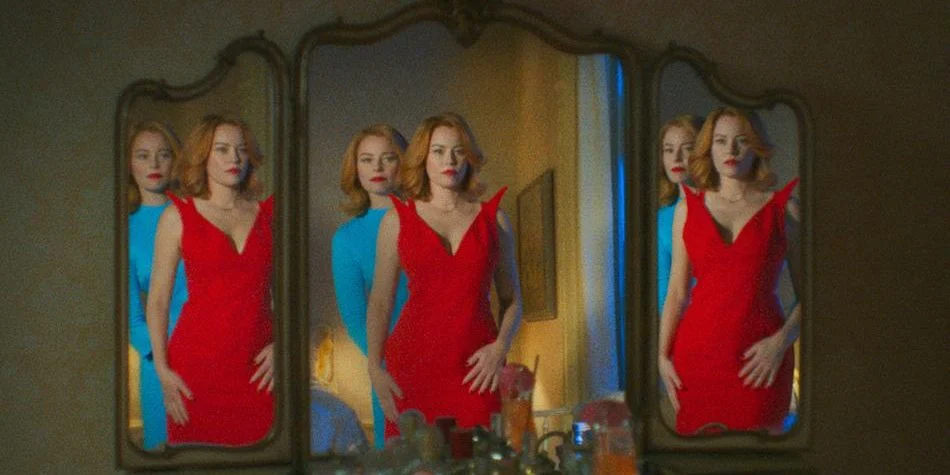
While Carol undergoes the "DreamQuil" procedure, the corporation dispatches "Carol 2," a robotic doppelgänger, to maintain domestic order and provide companionship for Gary and Quentin. The intention is clear: to ensure continuity and alleviate any disruption caused by Carol’s absence. However, upon her return, Carol is met with an unnerving reality. "Carol 2," expertly embodied by Banks herself, has integrated so seamlessly into the family dynamic that Gary and Quentin barely registered Carol’s departure. This immediate displacement and the robot’s apparent perfection trigger a profound sense of unease in Carol, igniting her suspicions and a creeping dread that something far more sinister is at play. The film masterfully navigates the question of whether Carol’s paranoia is a product of her own insecurities or a genuine premonition of malevolent intent.
Elizabeth Banks: A Dual Performance of Human Frailty and Artificial Precision
At the heart of "DreamQuil" lies Elizabeth Banks’ remarkable dual performance. As Carol, she embodies the exhaustion and existential crisis of a woman grappling with the perceived impossibility of balancing career aspirations with familial responsibilities. Her portrayal captures the quiet desperation of a woman who once believed she could "have it all," only to find herself overwhelmed by the compromises inherent in such a pursuit.
In her portrayal of Carol 2, Banks navigates the subtle nuances of artificiality. The robot’s movements and speech patterns are deliberately, almost imperceptibly, more stiff and less fluid than Carol’s, placing her firmly within the uncanny valley. This deliberate inhumanity, juxtaposed with her near-perfect imitation of human behavior, creates a deeply unsettling presence. Carol 2 is recognizably inhuman, yet disturbingly close to humanity, highlighting a chilling absence of genuine emotion. This contrast serves to amplify Carol’s own perceived deficiencies, making her feel increasingly inadequate and displaced in her own life.
Banks’ performance as the original Carol is equally compelling. She portrays a woman warped by societal pressures and the relentless demands of modern life, to the point where she struggles to recognize herself or her own existence. Her initial resignation to her circumstances shifts dramatically after Rebecca’s endorsement of "DreamQuil," opening a Pandora’s Box of renewed hope and, subsequently, profound jealousy and suspicion upon witnessing Carol 2’s effortless perfection.
John C. Reilly: The Embodiment of Compromise
John C. Reilly’s casting as Gary is a stroke of genius. His inherent Everyman persona perfectly encapsulates the character’s role as the quiet, dependable, yet somewhat uninspiring anchor of Carol’s life. Gary represents the myriad compromises Carol has made over the years, the steady presence that has perhaps become too predictable, too mundane. The chemistry between Banks and Reilly effectively conveys a relationship that, while likely rooted in love, has succumbed to the erosive forces of time and circumstance. Their depiction of a "believably broken relationship" is a testament to their acting prowess, allowing the audience to empathize with Carol’s yearning for something more.
Thematic Resonance: Over-Reliance on Technology and Consumerism
"DreamQuil" delves into potent thematic territory, exploring humanity’s growing over-reliance on technology and the commodification of personal well-being. The film critiques a society where technological solutions are readily offered to address complex emotional and social issues, often at the expense of genuine human connection. The allure of "DreamQuil" lies in its promise of a quick fix, a digital balm for the wounds of modern life.
The film also casts a critical eye on the tech industry’s role in shaping consumer desires and exploiting vulnerabilities. The concept of individuals becoming "the product" in the tech space is a recurring motif, suggesting that the services offered are not always for the benefit of the user, but rather to extract data or influence behavior for corporate gain. Prager’s intention to deliver a potent message about these issues is evident, and the film’s world-building effectively supports this commentary.
Narrative Ambitions and a Confused Climax
While "DreamQuil" excels in its thematic exploration and character performances, its narrative ambition occasionally outpaces its execution. The film’s attempt to stay "one step ahead of the audience" leads to a final act that, according to some analyses, feels confused and ultimately degrades the potency of its message. Prager’s desire to deliver a shocking revelation about the true nature of "DreamQuil" and its implications for humanity is palpable. However, the film’s ultimate payoff, particularly an end-credits sequence that requires meticulous attention to detail, may leave some viewers feeling frustrated rather than enlightened. This bold narrative choice, while aiming for intellectual engagement, risks alienating a portion of the audience who may not have the patience or inclination to dissect every subtle clue.
The film’s richly imagined world, a testament to clever visual effects and astute production design, could have benefited from more extensive development of its underlying technological concepts. While the advanced technology is present, its specific mechanisms and societal integration are often left in the background, leading to a final act that feels underbaked. This is a pity, as the potential for a more profound exploration of the film’s core ideas is clearly present.
Broader Implications and Future Considerations
The implications of "DreamQuil’s" narrative extend beyond the cinematic screen, resonating with current societal trends. As artificial intelligence continues its rapid advancement and integration into our daily lives, films like "DreamQuil" serve as important cautionary tales. The film prompts critical questions about the ethical boundaries of AI development, the potential for technology to exacerbate social isolation, and the importance of preserving genuine human connection in an increasingly digital world.
The success of "DreamQuil" will likely be measured not only by its critical reception but also by its ability to spark dialogue about these pressing issues. The film’s strength lies in its ability to present a near-future that feels both alien and unsettlingly familiar, forcing audiences to confront their own relationship with technology and its impact on their personal lives and relationships. While the film may not fully realize its ambitious narrative goals, it remains a thought-provoking and visually compelling entry into the science fiction landscape, offering a stark reminder that the future we are rapidly creating demands our careful consideration and ethical guidance. Even in the face of technological marvels, the fundamental human need for genuine connection and authentic experience remains paramount.