




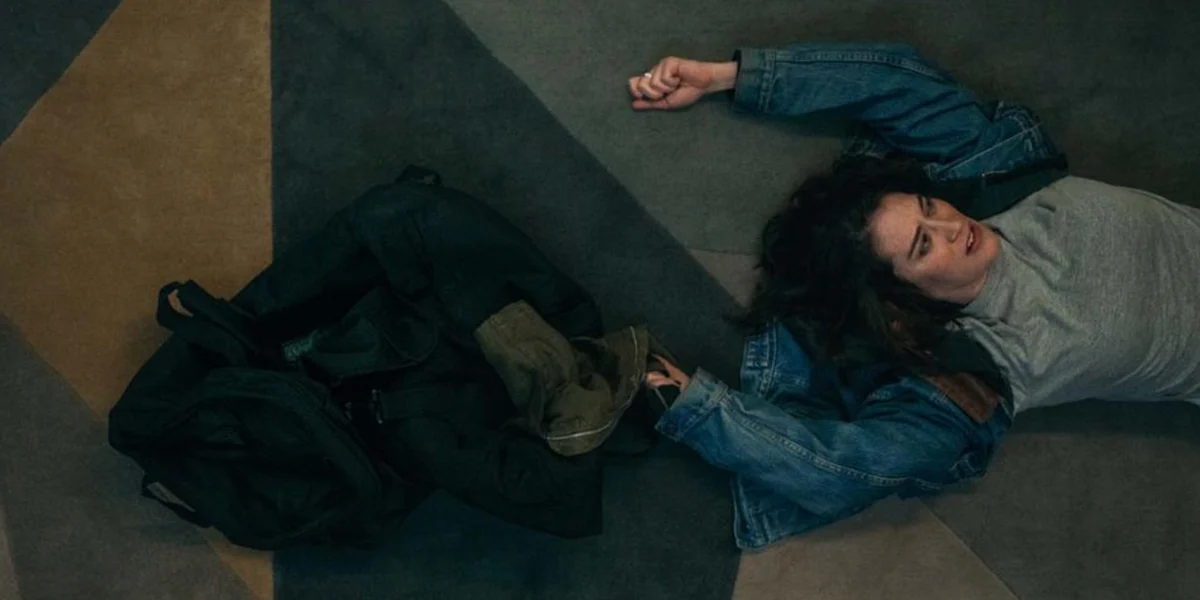
The latest offering from directors and writers Raviv Ullman and Greg Yagolnitzer, "Drag," presents a darkly comedic premise that, while ambitious in its concept, struggles to fully flesh out its 86-minute runtime. The film centers on two estranged sisters who embark on a rural home invasion in upstate New York, a plan that rapidly deteriorates when one sibling incapacitates herself with a debilitating back injury, transforming a simple robbery into a desperate, agonizing escape mission before the homeowner’s return. Featuring performances by Lizzy Caplan, Lucy DeVito, John Stamos, and Christine Ko, "Drag" attempts to leverage its unique comedic hook into a full-fledged feature, with mixed results.
The Genesis of a Grim Heist
The narrative of "Drag" is deceptively simple, designed to highlight the escalating chaos born from an unforeseen physical impediment. The story unfolds in the secluded, dimly lit landscape of upstate New York, a setting that amplifies the isolation and inherent vulnerability of the protagonists. The film opens with Lizzy Caplan’s character, identified in the credits as "Fuckup," enlisting her reluctant sister, played by Lucy DeVito, for a late-night burglary. The stated motive is a debt owed to Fuckup by the homeowner, framing the act as a reclamation of what is rightfully hers. However, the underlying tension between the sisters, characterized by a history of conflict and resentment, immediately casts a shadow over the endeavor, suggesting deeper emotional complexities driving their actions.
The initial stages of the heist, while fraught with sisterly discord, proceed with a degree of calculated risk. Fuckup, the more impulsive and perhaps desperate of the two, enters the residence while her sister acts as a lookout, a role that clearly weighs on DeVito’s character, who harbors palpable reservations about the entire enterprise. This uneasy alliance is shattered when a sudden, agonizing cry pierces the night. DeVito’s character, driven by a mixture of concern and a grudging sense of obligation, abandons her post to investigate. She discovers Fuckup in a state of extreme physical distress, immobilized by a severe back injury sustained on the second floor of the house, specifically within the confines of the master bathroom’s bathtub.
The Escalation of a Spinal Crisis
The immediate aftermath of Fuckup’s injury marks a critical turning point in the film. The initial friction between the sisters, which had been a source of some comedic tension, gives way to a more urgent and visceral struggle for survival. The dialogue, which had been characterized by sharp, unlikable barbs, sharpens into more pointed exchanges as the sisters confront the grim reality of their situation. The physical agony experienced by Fuckup, meticulously portrayed by Caplan, becomes a central element of the narrative. The film effectively uses this physical vulnerability to underscore the precariousness of their endeavor, transforming a planned criminal act into an involuntary endurance test.
The mechanics of moving an incapacitated adult, particularly one experiencing acute back pain, are inherently difficult and, as the film demonstrates, can quickly devolve into a series of painful and undignified maneuvers. The narrative focuses on the sisters’ arduous journey to evacuate the premises, navigating the confines of the house while Fuckup is, quite literally, dragged to safety. Each movement is a testament to the extreme discomfort and the escalating desperation of the situation. The filmmakers employ visual cues and pacing to emphasize the agonizing slowness of their progress, a deliberate choice designed to build suspense and highlight the physical toll of their predicament.
The Unexpected Return and Complicating Factors
As the sisters grapple with the immediate challenge of extracting Fuckup, an unforeseen complication arises: the premature return of the homeowner. John Stamos portrays the homeowner, an artist whose eccentricities and potentially volatile nature add another layer of peril to the already dire circumstances. His unexpected arrival throws the sisters’ escape plan into further disarray, forcing them to navigate not only their own physical limitations but also the constant threat of discovery. The tension is amplified by the fact that the homeowner arrives with a guest, played by Christine Ko, who quickly becomes incapacitated, allegedly due to being drugged by the homeowner. This development introduces a moral dilemma, as the sisters must now decide whether to prioritize their own escape or attempt to assist the unconscious guest, thereby increasing their risk of apprehension.
The introduction of Stamos’s character and his companion shifts the narrative focus, a decision that, while intended to inject further suspense, can also be seen as a point where the film’s pacing falters. The extended focus on the homeowner and his drugged guest, while featuring a compelling performance from Stamos, detracts from the core dynamic between the sisters. Stamos, in particular, delivers a performance that leverages a previously underutilized sense of menace and unhinged charisma, effectively stealing scenes and injecting a much-needed jolt of energy into the proceedings. His portrayal of an artist with peculiar tastes and a potentially dangerous disposition is a standout element, showcasing his capacity for a more complex and villainous on-screen persona.
Performances and Cinematic Choices
Despite the thematic and pacing challenges, the performances in "Drag" are a significant strength. Lizzy Caplan anchors the film with a raw and visceral portrayal of physical pain and emotional resilience. Her ability to convey the debilitating effects of a severe back injury, coupled with the underlying complexities of her character, is commendable. Lucy DeVito provides a solid counterpoint, embodying the exasperated and morally conflicted sister. The initial friction between the two, while at times grating, evolves into a more nuanced depiction of sibling dynamics under extreme duress.
John Stamos’s transformation into a captivatingly unsettling antagonist is a highlight. He imbues his character with a palpable sense of danger, a devilish charm that masks a darker undercurrent. His performance is a testament to his versatility and his ability to command the screen, even when the narrative shifts away from the central protagonists. Christine Ko, though given less to do, effectively conveys the vulnerability of her character in the precarious situation.
The directorial choices by Raviv Ullman and Greg Yagolnitzer are evident in the film’s visual language. They employ strategic camera work and editing to enhance the sense of disorientation and the agonizing pace of the sisters’ movements. The use of slow-motion and deliberate framing during moments of extreme physical exertion effectively amplifies the tension and underscores the severity of Fuckup’s injury. These cinematic techniques are particularly effective in generating crowd-pleasing moments, transforming individual scenes into memorable set pieces.
Analysis of the Premise and its Limitations
"Drag" thrives on its unique and inherently comedic premise: a heist gone wrong due to an inconvenient medical emergency. This concept, while strong enough to sustain a short sketch or a single act, stretches thin over the course of a feature film. The schematic nature of the plot, with characters lacking even basic identifying names beyond their functional descriptors, further emphasizes the reliance on the central gimmick. While this can be a deliberate stylistic choice, it also limits the depth and relatability of the characters, making it challenging for the audience to fully invest in their plight beyond the immediate absurdity of the situation.
The film’s exploration of sisterly relationships, while present, feels somewhat underdeveloped, overshadowed by the mechanics of the heist and the physical comedy of pain. The initial animosity between Fuckup and Sister, though a driving force, doesn’t fully blossom into a profound emotional arc. Their motivations, beyond the immediate circumstances, remain somewhat opaque, making their journey feel more like a series of escalating predicaments rather than a deeply personal narrative.
The decision to introduce a secondary plotline involving the homeowner and his drugged guest, while adding layers of tension and moral complexity, also dilutes the focus on the sisters. This narrative shift, while showcasing Stamos’s compelling performance, leaves less time for the exploration of the central characters and their evolving relationship. The film’s pacing, particularly in its latter half, can feel uneven as it attempts to balance these disparate narrative threads.
Broader Implications and the Landscape of Independent Cinema
"Drag" represents an interesting contribution to the landscape of independent cinema, where creative originality and unconventional premises often take precedence over massive budgets. The film’s success lies in its ability to generate humor and suspense from an unexpected source, demonstrating that compelling narratives can be crafted from seemingly mundane or even absurd situations. The embrace of a "B-movie" sensibility, characterized by its self-contained story and focused thrills, offers a refreshing alternative to formulaic blockbusters.
However, the film also highlights the challenges inherent in translating a high-concept premise into a feature-length narrative. The need to sustain audience engagement for over an hour requires more than just a clever hook; it necessitates robust character development, a well-paced plot, and a thematic resonance that extends beyond the initial setup. "Drag" excels in certain areas, particularly in its individual comedic and suspenseful moments, but it occasionally struggles to maintain momentum and depth across its entire runtime.
The film’s reliance on its cast, particularly Lizzy Caplan and John Stamos, to carry the weight of its narrative is a testament to their considerable talents. Their performances elevate the material, imbuing generic characters with personality and a compelling screen presence. This reliance, however, also underscores the script’s limitations in providing fully realized characters independent of the actors’ contributions.
In conclusion, "Drag" is a film that offers a unique and often entertaining cinematic experience, driven by a bold premise and strong performances. While its narrative structure and character development could benefit from further refinement, it remains an engaging exploration of how unexpected physical circumstances can derail even the most meticulously planned criminal endeavors, transforming a simple robbery into a desperate, agonizing, and ultimately memorable ordeal. The film’s success lies in its audacious concept and the committed performances of its cast, solidifying its place as an interesting, if imperfect, entry in the genre of comedic thrillers.