



A poignant new Japanese drama, Dog on the Moon, is slated for a nationwide theatrical release in Japan on April 24, 2026, promising audiences a profound exploration of loss, redemption, and the unexpected connections that can emerge from shared despair. Shibuya Production will be handling the distribution of this highly anticipated film, which marks a significant creative endeavor for its director, writer, and editor, Takeshi Yokoi. Yokoi, known for his distinctive approach to character-driven narratives, appears to be delving once more into the complexities of the human psyche, crafting a story that resonates with emotional depth and thematic resonance. The film’s title itself, Dog on the Moon, evokes a sense of solitary longing and an almost mythical quest for understanding, hinting at the film’s exploration of isolation and the search for meaning.
The Narrative Unfolds: A Convergence of Solitary Lives
At its core, Dog on the Moon weaves together the intersecting trajectories of three individuals whose lives are irrevocably altered by circumstance and a shared undercurrent of profound sadness. The narrative’s anchor is Higashijima, a former member of the yakuza underworld. His departure from that life is not a choice made out of ambition or a desire for a different path, but rather a consequence of overwhelming grief. The death of his beloved wife, a loss he internalizes as a personal failing, propels him into a state of detached existence. He drifts into an unfamiliar town, seeking solace in anonymity, his days marked by a quiet, almost stoic detachment. This carefully constructed solitude, however, is not destined to last.
His introspective journey takes an unforeseen turn with the arrival of Saori, a woman who possesses an uncanny ability to perceive the unspoken burdens that weigh upon him. Her intuitive understanding and gentle persistence draw him into her sphere of influence, suggesting a nascent connection that begins to chip away at his carefully erected defenses. Saori’s presence introduces a fragile possibility of change, a subtle invitation to re-engage with the world and with himself.
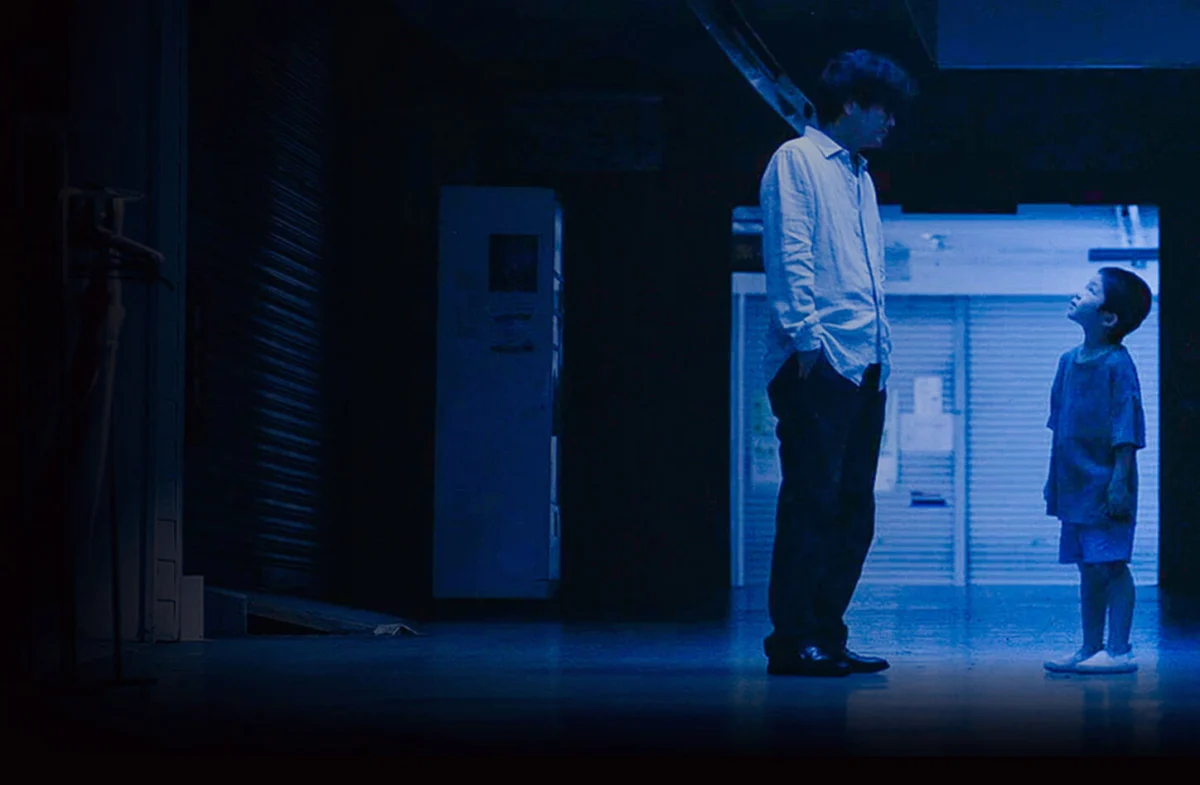
Simultaneously, the film introduces Minami, a man ensnared in the monotonous and soul-crushing routine of a criminal organization. His existence is characterized by a gnawing emptiness, a sense of being trapped in a cycle with no apparent escape. The relentless sameness of his days fuels a deep-seated yearning for disruption, for anything that might break the suffocating inertia of his life. It is this very longing that draws his attention to Higashijima. Intrigued by the former yakuza’s quiet intensity, Minami entrusts him with a responsibility that will prove to be the film’s pivotal turning point: the care of a mysterious young boy named Shogo.
The encounter with Shogo, a child who speaks in enigmatic pronouncements about a "dog on the moon," acts as the unexpected catalyst. This cryptic utterance, seemingly nonsensical, becomes the spark that ignites a chain reaction, gradually and profoundly reshaping the lives of all three central characters. The boy’s pronouncements, imbued with a childlike wonder and an unsettling wisdom, serve as a metaphorical bridge, connecting the hardened realities of Higashijima and Minami with a realm of possibility and perhaps even a touch of the surreal.
A Stellar Cast Embodies Complex Characters
The weight of Higashijima’s grief and his arduous path towards healing is entrusted to veteran actor Masato Hagiwara. Hagiwara, a seasoned performer with a distinguished career, is expected to deliver a nuanced portrayal of a man deeply scarred by loss, yet capable of revealing profound tenderness beneath a hardened exterior. His ability to convey complex emotions through subtle gestures and expressions will be crucial in bringing Higashijima’s internal struggles to life.
Motoki Fukami steps into the role of Minami, embodying a man caught in the agonizing space between resignation and a desperate yearning for something more. Fukami’s performance is anticipated to be characterized by a restrained yet volatile presence, reflecting the simmering discontent and hidden hopes of a character grappling with his circumstances.
Yuka Kurotani takes on the pivotal role of Saori, the woman whose empathy and intuition serve as a crucial connective force between Higashijima and Minami. Her character is likely to be the emotional linchpin of the narrative, offering a beacon of understanding and a potential pathway towards reconciliation and acceptance.
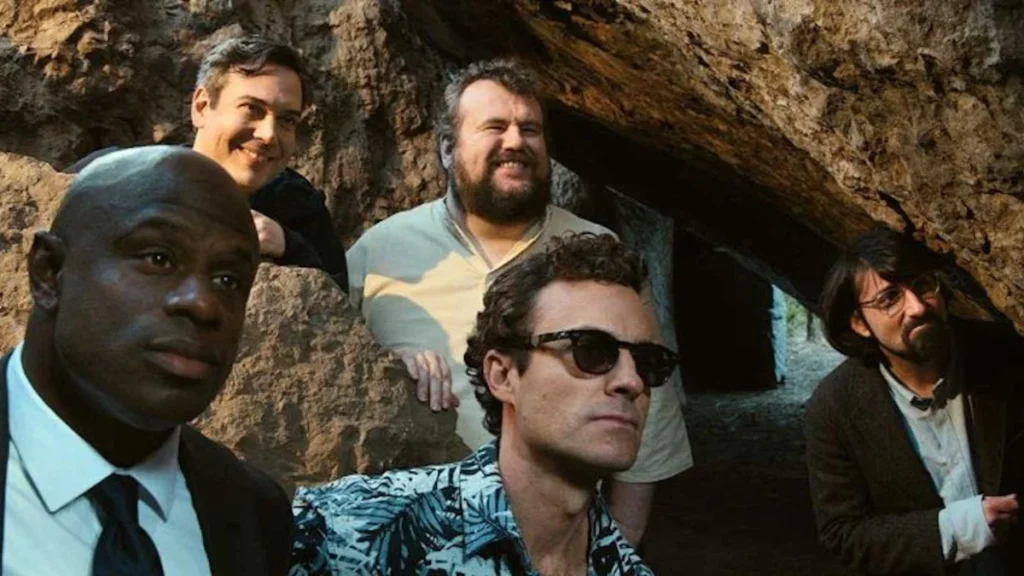
The supporting cast is equally impressive, featuring a roster of established and emerging talents. Sora Shibuya, Kiyosuke Yabe, Eriko Nakamura, Suzu Hirose, Hideko Hara, and Susumu Terajima are all set to lend their considerable acting prowess to Dog on the Moon, ensuring a rich tapestry of performances that will undoubtedly enhance the film’s overall impact. The inclusion of such a diverse and talented ensemble suggests a commitment to bringing every facet of this complex narrative to life with authenticity and depth.
Takeshi Yokoi: A Visionary Director’s Continued Exploration
Takeshi Yokoi’s involvement as director, writer, and editor underscores the singular vision driving Dog on the Moon. His career has consistently demonstrated a profound interest in character-driven storytelling, often focusing on individuals navigating significant emotional and existential challenges. This latest project appears to be a natural progression of his thematic preoccupations, promising an intimate and insightful look at the human condition.
Yokoi’s directorial style is often characterized by its meticulous attention to detail, its ability to build atmosphere, and its capacity to elicit powerful performances from his actors. As a writer, he is known for crafting intricate plots that unfold organically, allowing characters to develop and evolve in a believable manner. His editing, which he often handles himself, further refines the pacing and emotional rhythm of his films, ensuring a cohesive and impactful viewing experience.
The film’s setting in an "unfamiliar town" suggests an environment that is both a physical and psychological space for transformation. Such settings in Yokoi’s previous works have often served as microcosms, reflecting the internal landscapes of his characters. The deliberate choice of location, therefore, is likely to play a significant role in shaping the film’s mood and thematic resonance.
Context and Precedent: Yokoi’s Cinematic Landscape
To understand the potential impact of Dog on the Moon, it is beneficial to consider Takeshi Yokoi’s previous directorial contributions. While specific details of his filmography are not provided in the initial announcement, a director known for character-driven narratives typically builds a body of work that explores themes of isolation, redemption, familial bonds, and the search for meaning in a complex world. His films often eschew grand spectacle in favor of deeply personal journeys, focusing on the subtle shifts in human relationships and the quiet epiphanies that can redefine a life.
The choice to release Dog on the Moon in April 2026, nearly two years from the announcement, suggests a deliberate and unhurried production process. This extended timeline allows for meticulous pre-production, thoughtful filming, and a comprehensive post-production phase, including editing and sound design, which are crucial for Yokoi’s nuanced storytelling. Such a release strategy often indicates a studio’s confidence in the film’s artistic merit and its potential to resonate with audiences on a deeper level, rather than aiming for immediate commercial saturation.
Shibuya Production, as the distributor, is a key player in bringing Japanese cinema to a wider audience. Their involvement suggests a strategic approach to marketing and exhibition, aiming to ensure that Dog on the Moon reaches its intended viewers and garnishes the critical attention it deserves. The company’s track record in distributing independent and art-house films would be a relevant point of consideration for understanding their approach to this particular project.
Thematic Resonance and Potential Implications
The central theme of Dog on the Moon—the convergence of lives through shared despair and the fragile possibility of change—is a timeless and universal one. In an era often characterized by increasing societal fragmentation and individual isolation, stories that highlight human connection and the potential for transformation hold particular relevance. The film’s narrative arc, beginning with profound loss and culminating in a chain reaction of altered lives, suggests a journey from darkness towards a glimmer of hope.
The "dog on the moon" motif, while cryptic, likely serves as a powerful metaphor. It could represent a unattainable dream, a symbol of loneliness, or perhaps a beacon of hope in the vast expanse of the unknown. Its presence, delivered through the innocent yet profound words of Shogo, suggests that answers and solace can sometimes be found in the most unexpected of places, often through the perspective of those who are least burdened by cynicism.
The film’s exploration of the yakuza underworld, even as a backdrop for Higashijima’s past, adds a layer of gritty realism that will likely contrast with the more introspective and emotionally driven aspects of the narrative. This juxtaposition can create compelling dramatic tension, highlighting the struggle to escape the shadows of one’s past and find peace in a new reality.
The success of Dog on the Moon could have several implications for Japanese cinema. If it resonates with critics and audiences, it could further solidify Takeshi Yokoi’s reputation as a master of character-driven drama. It might also encourage more independent productions to focus on nuanced storytelling and emotional depth, potentially influencing trends in the industry. Furthermore, a strong international reception for Dog on the Moon could open doors for wider distribution of Japanese films that prioritize artistic integrity and profound human themes over conventional commercial appeal.
The careful construction of this narrative, with its emphasis on internal struggles and the quiet power of human connection, positions Dog on the Moon as a film that aims to linger in the minds of its viewers long after the credits have rolled. The release date of April 24, 2026, offers ample time for anticipation to build, and the film’s thematic richness suggests it is poised to be a significant entry in the Japanese cinematic landscape of the coming years.