



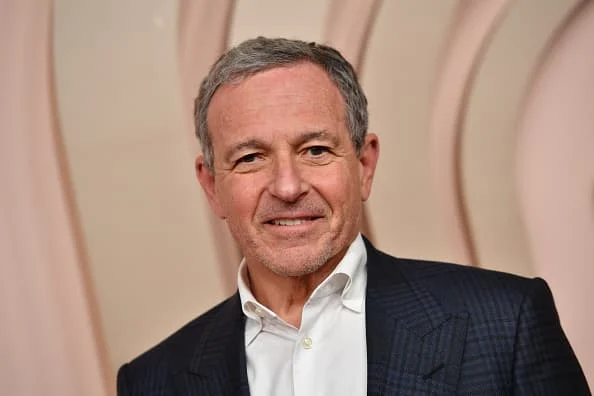
The Walt Disney Company stands at a pivotal crossroads as its Board of Directors prepares to finalize one of the most consequential leadership decisions in the entertainment conglomerate’s 100-year history. Following a period of intensive restructuring and a return to fiscal stability, the company is poised to name a successor to Chief Executive Officer Bob Iger. This move comes as Disney reports robust quarterly earnings that suggest the "fixing" phase of Iger’s second tenure has transitioned into a new era of aggressive growth.
During a comprehensive earnings call on Monday, Iger signaled that the foundation for his successor has been firmly laid. The announcement follows a turbulent period for the Burbank-based giant, which saw the brief and difficult tenure of Bob Chapek end in late 2022, prompting the board to recall Iger from retirement to stabilize the ship. Now, with the company’s "Experiences" division hitting record revenue milestones and its "Entertainment" segment showing renewed vigor at the box office, the board is expected to vote on the next leader this week, with an official announcement slated for the first quarter of 2026.
A Legacy of Stabilization: The Iger Restoration
When Bob Iger returned to the helm in November 2022, he inherited a company grappling with ballooning streaming losses, a demoralized creative workforce, and a stock price that had retreated to multi-year lows. His mandate was clear: restore the company’s creative spark, achieve profitability in the direct-to-consumer (DTC) segment, and devise a succession plan that would not repeat the errors of 2020.
"I think what is noteworthy is that when I came back three years ago, I had a tremendous amount that needed fixing," Iger remarked during Monday’s presentation to investors. He emphasized that his second term was not merely about crisis management but about "preparing a company for its future" and "taking steps to create opportunities for growth."
The financial data released this week supports Iger’s narrative of a successful turnaround. Disney surpassed Wall Street expectations for both revenue and earnings in its fiscal first quarter. Most notably, the company’s Experiences division—a massive portfolio encompassing theme parks, global resorts, and the Disney Cruise Line—surpassed $10 billion in quarterly revenue for the first time in history. This milestone is viewed by many industry analysts as a validation of the company’s decision to pivot capital toward physical assets and immersive storytelling.
The Succession Race: D’Amaro vs. Walden
The search for the next CEO has been a meticulous process led by James Gorman, the former CEO of Morgan Stanley, who joined the Disney board specifically to oversee this transition. While the board has remained tight-lipped, internal speculation and industry analysis have narrowed the field to two primary internal front-runners: Josh D’Amaro and Dana Walden.
Josh D’Amaro, the Chairman of Disney Experiences, has seen his stock rise significantly following the record-breaking performance of the parks and cruises. D’Amaro is credited with navigating the parks through the post-pandemic recovery and spearheading the ambitious $60 billion capital expenditure plan set to unfold over the next decade. His popularity among the "Disney faithful" and his track record of operational excellence make him a formidable candidate, particularly as the company leans more heavily on its theme parks as a primary profit engine.
On the other side of the ledger is Dana Walden, the Co-Chairman of Disney Entertainment. Walden, who came to Disney via the 21st Century Fox acquisition, oversees the company’s massive television and streaming apparatus. Her supporters point to her deep relationships with Hollywood’s creative elite and her success in revitalizing Disney’s content slate. In 2025, Disney reclaimed its dominance at the global box office, a feat attributed to the collaborative efforts of the entertainment leadership.
While Alan Bergman (Co-Chairman of Disney Entertainment) and Jimmy Pitaro (Chairman of ESPN) remain in the conversation, the momentum appears to have swung toward D’Amaro in recent months, fueled by the sheer fiscal weight of the Experiences division. However, a Disney spokesperson cautioned that "the board has not yet selected the next CEO" and that any final decision remains subject to a formal vote.
Financial Performance and Strategic Reorientation
The quarterly report provided a granular look at Disney’s diverse business units, revealing a company that is successfully diversifying its revenue streams to offset the secular decline of linear television.
The Power of Experiences
The Experiences segment remains the "crown jewel" of the Disney portfolio. With $10 billion in quarterly revenue, the division is benefiting from increased per-guest spending at domestic parks and a surge in international attendance. Iger noted he is "very, very bullish" on this segment, highlighting the upcoming development of a new theme park and resort in Abu Dhabi. Furthermore, the Disney Cruise Line is in a phase of unprecedented expansion, with several new ships scheduled to launch by 2031, targeting the high-margin family vacation market.
Entertainment and the Streaming Pivot
Disney’s Entertainment segment, which includes Disney+, Hulu, and traditional TV networks, saw a 7% revenue increase. While the company has stopped breaking out specific subscriber growth numbers each quarter—a move mirroring Netflix’s recent strategy shift—it provided guidance indicating confidence in the long-term profitability of streaming. The focus has moved from raw subscriber counts to Average Revenue Per User (ARPU) and churn reduction. The integration of Hulu into the Disney+ app and the upcoming launch of a standalone ESPN streaming service are central to this strategy.
The Box Office Resurgence
After a lackluster 2023 and 2024, Disney’s film studios returned to form in 2025. Leadership pointed to a robust slate of sequels and original IP that have resonated with global audiences. Iger reflected on the struggle, stating, "Looking back just a few years when our movie business was suffering… it’s clear that the future of both of those businesses… is also bright and it’s going to grow."
A Timeline of Leadership Transitions
To understand the weight of the current board meeting, one must look at the timeline of Disney’s leadership over the past decade:
- 2005–2020: Bob Iger serves as CEO, overseeing the acquisitions of Pixar, Marvel, Lucasfilm, and 21st Century Fox.
- February 2020: Bob Chapek is named CEO just weeks before the COVID-19 pandemic shutters theme parks globally.
- 2020–2022: Chapek’s tenure is marked by public relations challenges, a reorganization that stripped creative leads of budgetary power, and a public feud with talent.
- November 2022: The board fires Chapek and reinstates Iger on a two-year contract (later extended to 2026).
- 2023–2024: Iger implements cost-cutting measures totaling over $7.5 billion and returns creative control to studio heads.
- Early 2026: The board convenes to vote on a successor, aiming for a handover that ensures continuity.
Market Implications and Analyst Outlook
Wall Street has reacted with cautious optimism to the news of the impending vote. Analysts suggest that the market craves certainty. The "Iger premium"—the boost in stock value associated with his leadership—is expected to be replaced by a "stability premium" if the board selects a candidate who can demonstrate a long-term commitment to the current growth strategy.
"In a world that changes as much as it does… trying to preserve the status quo was a mistake," Iger said, referencing the previous transition. This statement is seen as a directive to the incoming CEO to remain agile. The next leader will face the daunting task of navigating the "cord-cutting" phenomenon that continues to erode the value of Disney’s traditional cable assets, such as ABC and Disney Channel, while scaling the DTC business to match the historical margins of linear TV.
Furthermore, the $60 billion investment in parks is a high-stakes bet on the physical world. While it offers a "moat" against digital-only competitors like Netflix or Amazon, it leaves Disney vulnerable to global economic downturns or geopolitical instability that could affect international travel.
Conclusion: A "Good Hand" for the Next Leader
As Bob Iger prepares to step away for the second time, he remains adamant that the company is in its strongest position in years. By addressing the structural deficiencies of the Chapek era and doubling down on high-performing assets, Iger believes he is leaving his successor with a "good hand."
The upcoming board vote is more than a change in personnel; it is a signal of Disney’s intent for the next decade. Whether the board chooses the operational expertise of Josh D’Amaro or the creative and media savvy of Dana Walden, the mandate will be the same: evolve the Disney brand for a digital-first audience without losing the "magic" that has defined the company for a century. With record revenues in hand and a clear path toward future expansion, the stage is set for a transition that Disney hopes will be as seamless as it is transformative.