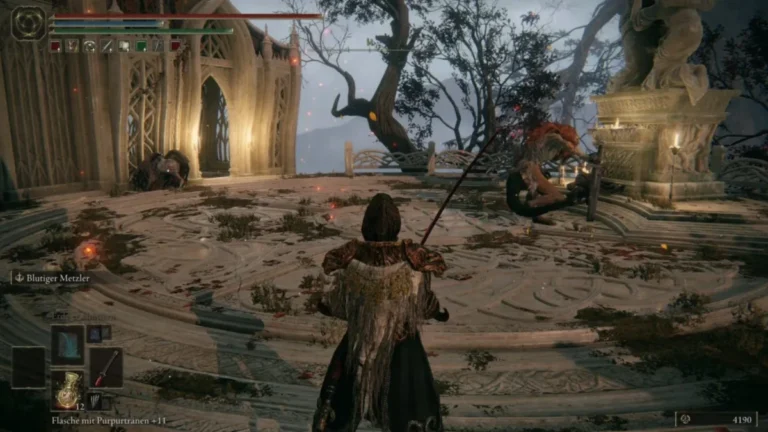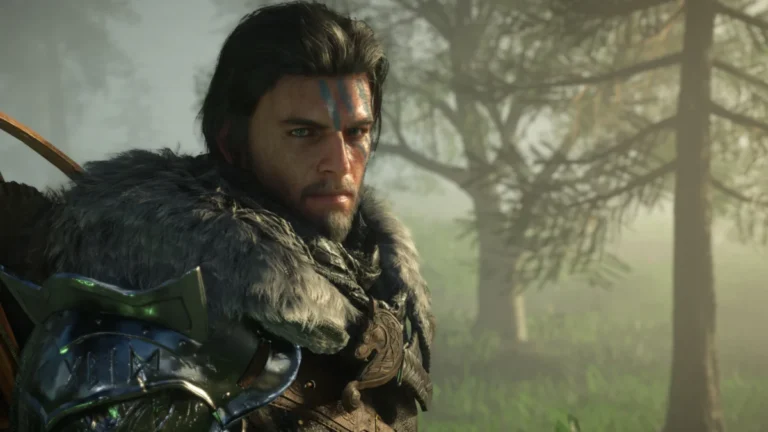




Pearl Abyss has officially confirmed that its highly anticipated open-world action RPG, Crimson Desert, has surpassed three million copies sold worldwide within its first week of release. This milestone comes shortly after the South Korean developer celebrated reaching the two-million-sale mark less than 24 hours after the game’s global debut. The additional one million units sold between Friday and Monday afternoon signal sustained momentum for the title, which represents a significant strategic pivot for a studio previously best known for its long-running massively multiplayer online (MMO) hit, Black Desert Online.
The rapid commercial success of Crimson Desert places it among the most successful premium launches for a South Korean gaming studio to date. While the game has faced a series of technical hurdles and mixed user feedback regarding its control schemes, the sheer volume of sales suggests that the years of anticipation fueled by high-fidelity trailers and the pedigree of the BlackSpace Engine have successfully translated into a massive day-one audience.
From MMO Prequel to Standalone Epic: The Development Journey
The path to three million sales has been a long and transformative one for Pearl Abyss. Originally announced at G-Star 2019, Crimson Desert was initially conceived as a prequel to Black Desert Online. However, as development progressed, the studio made the ambitious decision to pivot the project into a narrative-driven, single-player experience with integrated multiplayer elements. This shift was intended to broaden the game’s appeal to Western audiences and console players who favor cinematic storytelling over the traditional grind associated with Korean MMOs.
Central to the game’s identity is the BlackSpace Engine, a proprietary technology developed by Pearl Abyss specifically to handle high-fidelity environments, complex physics-based combat, and seamless transitions between exploration and cinematic sequences. The development period was marked by several high-profile delays, with the studio opting to refine the game’s complex "mercenary" systems and environmental interactions. The result is the world of Pywel, a vast continent divided by warring factions, where players take on the role of Macduff, a mercenary leader navigating a landscape of political intrigue and mythical threats.
Launch Week Chronology: A Turbulent but Profitable Debut
The launch of Crimson Desert was characterized by extreme highs and logistical lows. On the first day of release, the game saw an immediate surge in player counts across Steam, PlayStation 5, and the Xbox ecosystem. Within 24 hours, Pearl Abyss reported two million units sold, a figure that exceeded many analyst expectations and sent a strong signal to the global market regarding the viability of high-budget Korean single-player titles.
However, the launch was not without significant friction. Players on PC utilizing the Xbox App reported a critical error where the game refused to launch or triggered an infinite loop of updates. Furthermore, some users encountered a massive 120GB "day-one" patch that strained servers and delayed entry into the game for those with slower internet connections.

On the console front, performance on the base PlayStation 5 model became a point of contention. While the game’s visual fidelity was praised, reports of frame rate instability and "clunky" input response times began to circulate on social media and gaming forums. Despite these technical grievances, the momentum did not stall. By Friday, the game maintained its position at the top of several global sales charts, ultimately crossing the three-million-unit threshold by Monday afternoon.
Technical Challenges and the "Control Scheme" Controversy
While the sales figures are undeniably impressive, the user reception has been polarized by specific design choices and technical shortcomings. One of the most prominent complaints during the launch week involved the game’s intricate control system. Pearl Abyss designed Crimson Desert with a heavy emphasis on physics and "weighty" combat, which some players interpreted as unresponsive or sluggish.
Reports emerged of a significant number of players requesting refunds on Steam and other digital storefronts, citing an inability to adapt to the unconventional button mapping and the character’s momentum-based movement. Pearl Abyss’s PR and Marketing Director, Will Powers, acknowledged these frustrations in a public statement, thanking the community for their "amazing launch week" while assuring them that the team is prioritizing feedback.
In response to the outcry, the developers released a comprehensive "1.0003" patch on Monday. This update specifically targeted quality-of-life improvements, including the addition of customizable keyboard shortcuts and adjustments to the sensitivity of the mercenary combat mechanics. The patch also addressed several "blocker" bugs that had prevented progress in certain main story quests, particularly those involving the game’s complex horse-taming and fishing minigames.
Supporting Data: Global Market Performance and Player Engagement
The three million sales figure is particularly noteworthy when compared to other major releases in the same genre. For context, while it has not yet reached the stratospheric heights of titles like Black Myth: Wukong, it has outperformed several established Western franchises in their respective launch windows. Data from SteamDB indicated a peak concurrent player count that rivaled top-tier AAA releases, suggesting that the game’s reach extends far beyond the traditional Korean market.
Geographic sales data indicates strong performance in North America and Europe, markets that Pearl Abyss has been aggressively targeting through high-profile appearances at events like Gamescom and The Game Awards. The studio’s decision to include localized voice acting and culturally nuanced storytelling appears to have paid off in these regions.
Internally, player engagement metrics show a fascination with the game’s secondary systems. Despite the complaints regarding combat controls, the game’s "living world" features—such as the ability to interact with stray cats, engage in detailed cooking, and manage a mercenary company—have become viral sensations on platforms like TikTok and X (formerly Twitter). These "lifestyle" elements of the RPG have provided a buffer against the more technical criticisms, fostering a dedicated community of players who are willing to wait for further optimization.

Official Responses and Corporate Strategy
The success of Crimson Desert is a pivotal moment for Pearl Abyss as a corporate entity. The company’s stock has historically been tied to the performance of the Black Desert franchise. By successfully launching a new IP that moves away from the "service-based" MMO model toward a "premium" single-player model, the studio has diversified its revenue streams and demonstrated its capability as a global publisher.
Will Powers’ recent communications emphasized a "long-term commitment" to the title. "To everyone who has stepped into Pywel and shared this journey with us, thank you," the development team stated in a press release. "We are continuing to make the game better with all of your feedback."
Industry analysts suggest that the three million sales milestone will likely greenlight future content for the Crimson Desert universe. There is already speculation regarding potential story expansions or the eventual activation of the "multiplayer" components that were teased during earlier stages of development. For Pearl Abyss, the goal is now to convert this initial sales burst into long-term player retention through consistent patching and content updates.
Broader Impact and Industry Implications
The commercial triumph of Crimson Desert, following the success of Shift Up’s Stellar Blade and Neowiz’s Lies of P, signals a major shift in the global gaming hierarchy. South Korean developers are no longer confined to the mobile and MMO sectors; they are now formidable competitors in the AAA single-player space, a domain long dominated by Japanese and Western studios.
This "Korean Wave" in gaming is characterized by high technical ambition and a willingness to iterate on established genres. Crimson Desert’s use of a proprietary engine rather than industry standards like Unreal Engine 5 demonstrates a level of technical independence that is becoming increasingly rare in the industry. While this independence has led to some of the launch-day optimization issues, it also gives the game a distinct visual and mechanical identity that sets it apart from its contemporaries.
As Pearl Abyss moves into the second week of release, the focus will shift from raw sales numbers to technical stability. If the studio can successfully resolve the performance issues on PlayStation 5 and refine the control scheme to satisfy the broader player base, Crimson Desert is poised to become one of the defining RPGs of the current console generation. For now, the three million units sold serve as a testament to the power of high-concept marketing and the global hunger for new, ambitious open-world experiences.
With more patches on the horizon and a community that remains deeply engaged despite the initial friction, the journey through Pywel is only just beginning. Players are encouraged to keep an eye on official channels for further updates, as the studio has promised a transparent roadmap for the remainder of the year, focusing on both technical refinement and the expansion of the game’s rich, mercenary-led narrative.