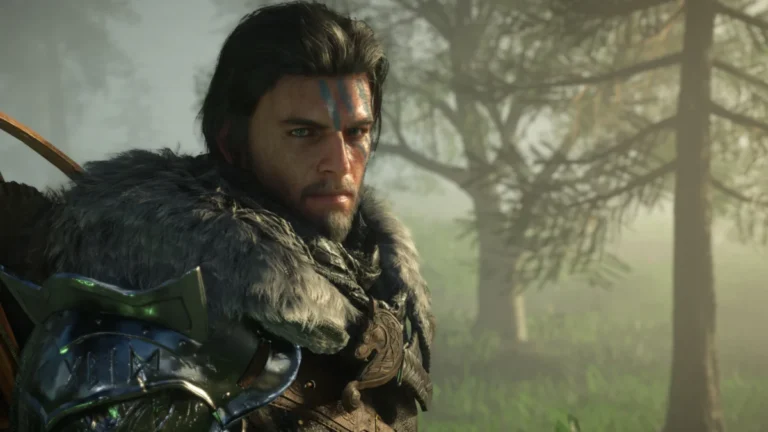



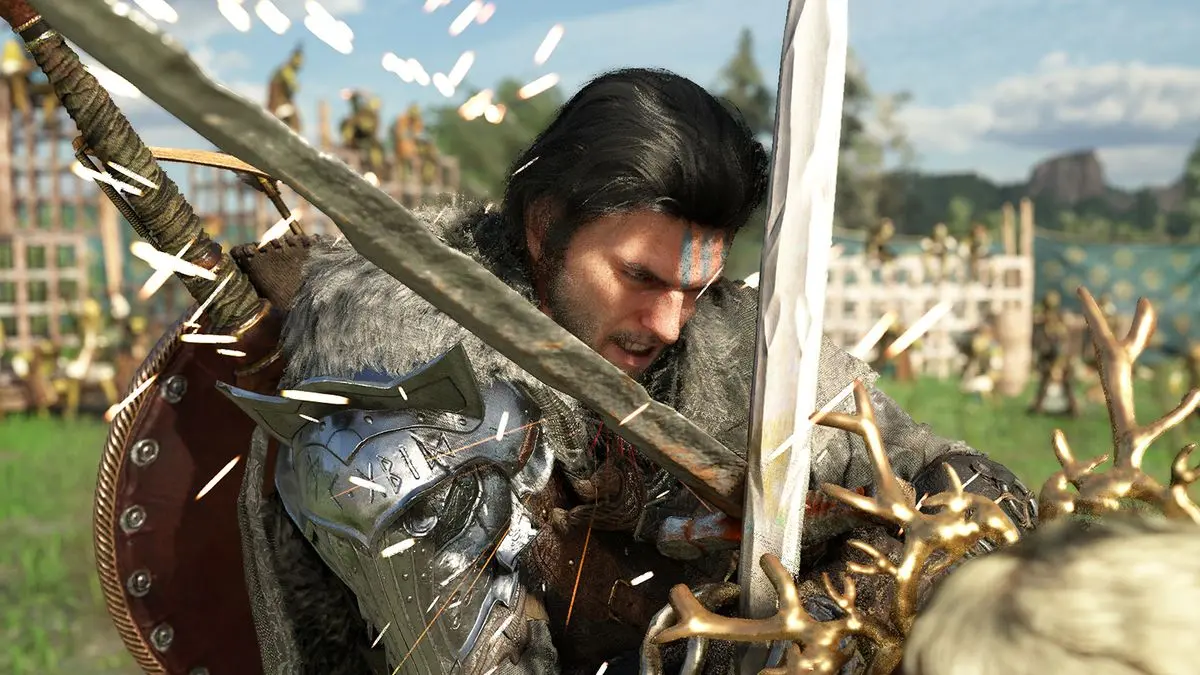
Pearl Abyss, the South Korean developer behind the global phenomenon Black Desert Online, has reached a significant commercial milestone with its latest release, Crimson Desert, surpassing 3 million copies sold. Despite this financial success and a series of substantial post-launch patches aimed at stabilizing the experience, new insights from the game’s lead voice actor and internal reports suggest a development cycle characterized by shifting priorities, narrative inconsistency, and late-stage creative pivots. Alec Newman, the veteran actor who provided the voice and performance for the protagonist Kliff, recently shared his experiences during the production of the open-world epic, revealing a project that struggled to find its identity for years before eventually reaching the market.
Newman, whose recent work includes a BAFTA-winning performance in Still Wakes the Deep and the role of Adam Smasher in Cyberpunk 2077, spoke candidly on the Friends Per Second podcast regarding the unconventional nature of the Crimson Desert recording sessions. His testimony provides a rare glimpse into the "black box" of AAA game development, where high-fidelity visuals and complex mechanics often outpaced the foundational storytelling. According to Newman, the creative direction for Kliff and the world of Pywel remained fluid long after production had commenced, leading to significant confusion for the talent tasked with bringing the characters to life.
The Paradox of Commercial Success and Critical Narrative Failure
The commercial performance of Crimson Desert—3 million units sold across multiple platforms—stands in stark contrast to the critical reception of its storytelling. While the game has been lauded for its technical prowess, visceral combat, and the sheer density of its open world, critics have frequently pointed to a "fatally undercooked" narrative structure. Reviewers noted that while individual moments of action were world-class, the connective tissue of the plot often felt disjointed or incomplete.
Alec Newman’s remarks appear to validate these critiques. He described a process where he was recording lines for nearly two years before the development team informed him that they were only then beginning to record "in earnest." Newman recounted his frustration at the time, questioning what the previous years of work represented if the core of the character had not yet been established. He noted that the developers frequently "changed the goalposts," providing him with conceptual "cards" of various regions in the world of Pywel without explaining how those locations or the events within them integrated into a cohesive story arc.
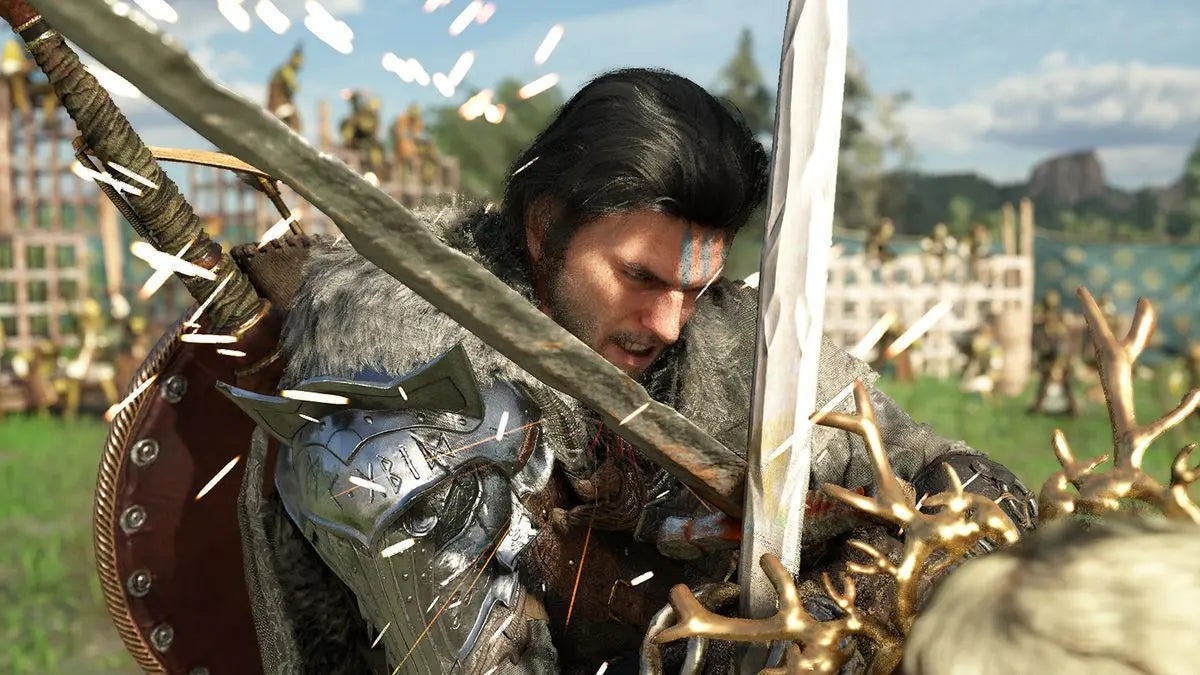
This lack of narrative clarity reportedly forced Newman to repeatedly ask the production team for context on the character’s motivations and the overall plot. "I kept just saying, ‘Yes, but what is happening?’" Newman remarked, highlighting a disconnect between the technical implementation of the game and its creative writing.
Chronology of Development: From MMO to Single-Player Epic
To understand the turbulence described by Newman, it is necessary to examine the long and winding timeline of Crimson Desert’s development. Initially announced in 2019, the project was originally conceived as a prequel to Black Desert Online, intended to be a next-generation Massively Multiplayer Online (MMO) game. However, as development progressed, Pearl Abyss made the strategic decision to pivot the project into a single-player, open-world action-RPG.
This transition, which took place around 2020, necessitated a complete overhaul of the game’s systems. The shift from a player-driven MMO economy and social structure to a narrative-driven single-player experience placed immense pressure on the writing team to create a compelling protagonist and a linear-yet-expansive story.
- 2019: Crimson Desert is officially revealed at G-Star as an MMO prequel to Black Desert.
- 2020: The game is re-introduced at The Game Awards as a single-player action-adventure title, showcasing the proprietary BlackSpace Engine.
- 2021-2022: The game suffers multiple delays as the studio moves away from its MMO roots. Internal reports suggest the "hodgepodge" of features—ranging from dragon riding to complex physics-based puzzles—began to bloat the project.
- 2023: Marketing intensifies, focusing on Kliff and the Greymane mercenaries, yet voice recording for core story elements is reportedly still in flux.
- 2024: The game launches to strong sales but mixed narrative reviews, followed by Alec Newman’s public comments on the disorganized recording process.
Internal Turmoil and Leadership Dynamics
The confusion experienced by the voice cast aligns with anonymous reports from sources close to the development team at Pearl Abyss. These reports suggest that Crimson Desert’s development was plagued by internal power struggles and a leadership style that often ignored feedback from mid-level designers and writers. According to these claims, key story elements and gameplay features were not finalized until the final months before the game’s release.
One of the most significant revelations from Newman’s interview was the late development of the "Greymanes," the mercenary group that serves as the emotional core of the game. Newman noted that it was only after two and a half years of recording that the developers decided they wanted the theme of "family" and the bond between Kliff and his comrades to resonate with the player.

"I don’t want to say they started panicking," Newman said, "but they were like, ‘Oh yeah, we really want this. We really want Kliff to care about his comrades,’ and I said, ‘Well, he does, but you haven’t written that monologue.’" This suggests that the emotional stakes of the game were retrofitted onto existing gameplay sequences rather than being built into the game’s foundation.
The "Stoic" Protagonist and the 150-Hour Hurdle
A recurring criticism of Crimson Desert involves its protagonist, Kliff. While his design and combat animations are highly praised, players have often found him to be an impenetrable character. Newman, a Scotsman playing a character designed with a "stoic" archetype, expressed the difficulty of maintaining player engagement over a 100-plus hour experience with a character who rarely shows vulnerability or emotion.
Newman argued that the opportunities to flesh out Kliff as a human being were "fewer than they could have been." He noted the inherent challenge in playing a character who "doesn’t give anything away ever" for the duration of a massive RPG. While Newman expressed gratitude for the role and the game’s commercial success, his comments suggest a missed opportunity to create a more nuanced lead character, hampered by a script that prioritized a "tough guy" exterior over narrative depth.
Technical Ambition vs. Narrative Cohesion
The development of Crimson Desert was also a showcase for the BlackSpace Engine, Pearl Abyss’s proprietary technology. The engine allows for unprecedented levels of environmental destruction, weather effects, and character fidelity. However, industry analysts suggest that the focus on pushing technical boundaries may have come at the expense of narrative coherence.
In the pursuit of creating a "everything-and-the-kitchen-sink" experience, the developers incorporated mechanics inspired by various genres—survival, puzzle-solving, grand-scale warfare, and monster taming. Integrating these disparate elements into a single-player story requires a rigid narrative framework, which, according to Newman’s testimony, was largely absent for much of the production. The result was a game that felt like a collection of impressive technical demos rather than a unified story.

Market Impact and the Future of Pearl Abyss
Despite the internal hurdles, the 3 million copies sold represent a major victory for Pearl Abyss as it seeks to diversify its portfolio beyond the Black Desert franchise. The game’s success has regained investor confidence, which had fluctuated during the long periods of silence and delays during development.
The studio is currently in a "hot fix" phase, releasing frequent patches to address technical issues and quest bugs identified by the player base. While these patches can fix performance and broken mechanics, the fundamental issues with the story and character development—the "fatally undercooked" elements mentioned by critics—are much harder to rectify post-launch.
The experience of Crimson Desert serves as a case study for the burgeoning South Korean AAA console market. Following the success of titles like Lies of P and Stellar Blade, Crimson Desert confirms that Korean studios can compete on a global stage in terms of production value and sales. However, the testimony of Alec Newman highlights a potential area for growth: the need for a more disciplined approach to narrative development and creative leadership.
As Pearl Abyss moves forward, the lessons learned from the chaotic development of Crimson Desert will likely shape its future projects. For Alec Newman and the players who have spent hundreds of hours in Pywel, the game remains a testament to what can be achieved through sheer technical ambition, even when the "goalposts" of the story are constantly in motion.