


The gaming industry is currently witnessing a significant shift in the landscape of high-budget, "AAA" productions, with South Korean developers increasingly moving away from their traditional stronghold in the Massively Multiplayer Online (MMO) market toward ambitious, single-player action-RPGs. At the forefront of this transition is Pearl Abyss, the studio behind the global success of Black Desert Online, which is currently preparing for the release of its most ambitious project to date: Crimson Desert. While initially conceived as a prequel to its predecessor, Crimson Desert has evolved into a standalone epic that seeks to merge the technical fidelity of modern hardware with a "maximalist" approach to game design. Set in the vast, multi-biome continent of Pywel, the game follows the story of Kliff, a mercenary leader navigating a world that is as mechanically dense as it is visually spectacular. However, as early hands-on impressions and technical analyses emerge, the title presents a complex dichotomy between its staggering technical achievements and a perceived lack of narrative soul, raising questions about the sustainability of the "everything-and-the-kitchen-sink" philosophy in modern game development.
The Architectural Foundation of Pywel: A Technical Overview
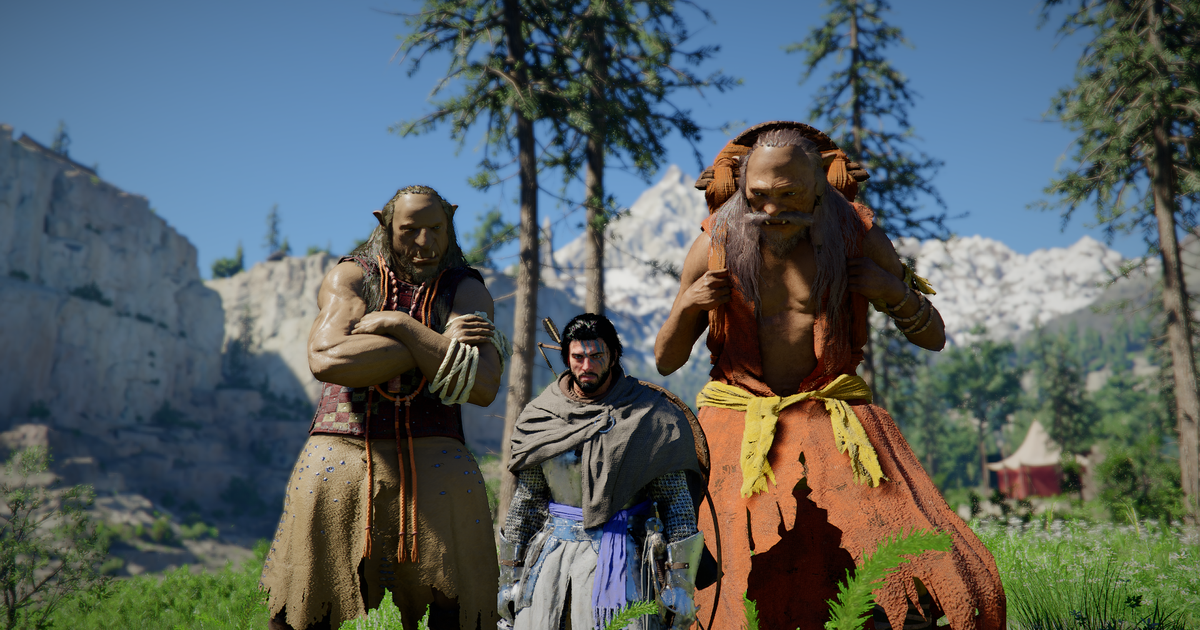
Crimson Desert’s primary draw is its sheer scale and the fidelity of its world-building. Developed on Pearl Abyss’s proprietary BlackSpace Engine, the game attempts to push the boundaries of environmental rendering. The world of Pywel is segmented into distinct geographical regions, ranging from the bucolic, agricultural heartlands of Hernand to the frozen peaks of Scholastone and the dense, swampy marshes of the south. The visual presentation is characterized by a high degree of environmental interactivity; wildflower meadows react to wind currents, and the lighting system utilizes advanced global illumination to create "heavenly" vistas that have drawn comparisons to the most acclaimed titles in the genre.
However, this level of fidelity comes with significant technical overhead. Early builds of the game have revealed a unique approach to data streaming, necessitating a series of three distinct loading sequences before the player enters the world. These sequences transition the player from a standard shader-loading bar to a surreal, geometric realm, eventually leading the protagonist, Kliff, through a "celestial" gateway into the game world proper. This triple-loading structure suggests a highly demanding engine that requires substantial pre-caching to maintain its seamless open-world experience once the player is inside.
Chronology of Development: From MMO to Single-Player Epic
The development history of Crimson Desert is a reflection of the changing tides in the South Korean gaming sector. To understand the current state of the project, one must look at the timeline of its evolution:
- November 2019: Crimson Desert is officially announced at G-Star, Pearl Abyss’s flagship event. At this stage, it is marketed as a "next-generation MMORPG" and a prequel to Black Desert Online.
- December 2020: During the Game Awards, a significant shift is revealed. Pearl Abyss announces that the game has transitioned from an MMO to a single-player, open-world action-adventure game with integrated multiplayer elements.
- 2021–2022: The game suffers several delays as the studio works to refine the "BlackSpace Engine" and expand the scope of the single-player campaign. Pearl Abyss cites the need to deliver a "deeper, more enriching experience" as the reason for the extended timeline.
- August 2023: A massive gameplay trailer at Gamescom showcases a dizzying array of mechanics, including sky-diving, dragon-riding, and environmental destruction, signaling the game’s "maximalist" direction.
- 2024: Hands-on previews are made available to international press, revealing a game that spans 50 to 100 hours of content, depending on the player’s engagement with side activities.
This pivot from MMO to single-player is significant. It reflects a strategic move by Pearl Abyss to compete on the global stage alongside Western and Japanese giants like CD Projekt Red and FromSoftware. By focusing on a central protagonist, Kliff, the developers aim to provide a more curated narrative experience while retaining the "grind" and resource-management systems that made their previous titles commercially successful.

Mechanical Complexity and the "Maximalist" Design Philosophy
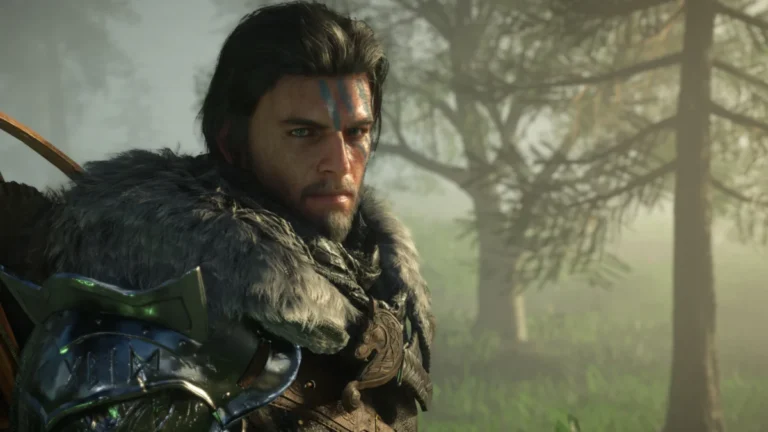
Crimson Desert is perhaps most notable for its refusal to leave any modern gaming mechanic on the cutting room floor. The game’s protagonist, Kliff, is equipped with a suite of supernatural and physical abilities that draw clear inspiration from various industry leaders. The "Axiom Force" functions as a versatile grappling hook and manipulation tool, echoing the "Ultra Hand" mechanics seen in recent Legend of Zelda titles. Additionally, Kliff possesses the ability to transform into a feathered, bird-like creature for aerial traversal, a mechanic that complements the game’s focus on verticality and exploration.
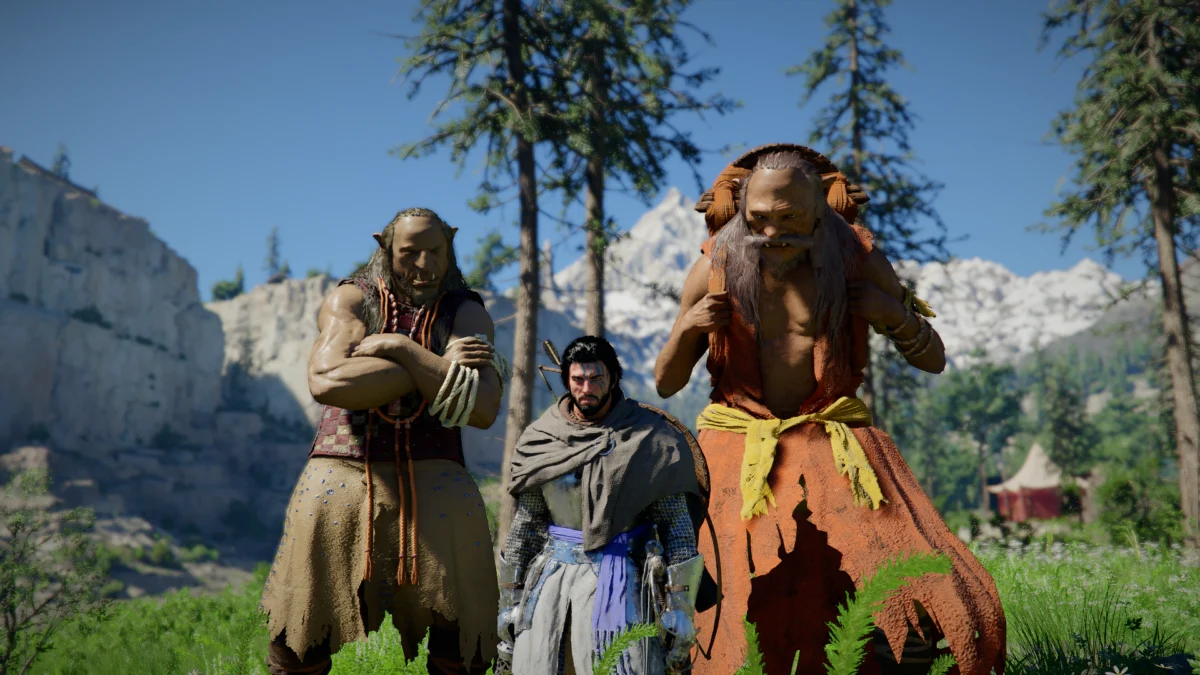
The combat system is a hybrid of traditional hack-and-slash and technical fighting games. Utilizing a combination of melee weaponry and taekwondo-inspired martial arts, the combat features "hit-stops" and meticulous motion-capture that give strikes a sense of weight and impact. Interestingly, the game employs a "mimicry" system for character progression. Rather than traditional skill trees, Kliff and his companions—the gunslinger Damiane and the bruiser Oongka—learn new combat maneuvers and world knowledge by observing enemies or interacting with the environment. For example, an evasive roll or a specific kick must be witnessed in the field before it can be mastered by the player.
Beyond combat, the game incorporates an exhaustive list of secondary systems:

- Life Skills: Fishing, beekeeping, husbandry, and agricultural tasks.
- Camp Management: Expanding and managing the "Greymane" mercenary camp.
- Traversal: Horse taming and "drifting" mechanics, alongside dragon riding.
- Crafting: Deep resource harvesting and gear customization.
- Environmental Puzzles: Breath of the Wild-style cooking and physics-based challenges.
Narrative Tone and Characterization
Despite the technical prowess on display, the narrative and character writing in Crimson Desert have become a point of contention among early critics. The story centers on the "Greymanes," a disbanded group of mercenaries seeking to reunite after a crushing defeat by a rival faction known as the Black Bears. The dialogue is notably abrasive, utilizing frequent profanity in an apparent attempt to ground the high-fantasy setting in a "gritty" realism reminiscent of HBO’s Game of Thrones.
Critics have noted that while the world is "pristinely rendered," the characters often feel like "vanilla avatars" rather than lived-in personalities. The protagonist, Kliff, follows the archetype of the brooding, rugged hero, yet early reports suggest a lack of the idiosyncratic charm found in characters like Geralt of Rivia from The Witcher series. This "tonal dissonance"—the gap between the beautiful, "heavenly" environments and the harsh, often crude dialogue—suggests a game still searching for its unique narrative identity amidst its many influences.
Supporting Data: The Economic and Industry Context
The stakes for Crimson Desert are exceptionally high for Pearl Abyss. As of 2024, the studio’s financial health remains closely tied to the aging but still profitable Black Desert Online, which has generated over $2 billion in lifetime revenue. However, as the MMO market becomes increasingly saturated, Pearl Abyss has looked to Crimson Desert to diversify its portfolio.

Market analysts suggest that the success of Crimson Desert is crucial for Pearl Abyss’s stock valuation on the KOSPI (Korean Under-Price Index). The game represents a massive capital investment, with development costs estimated to be among the highest in South Korean history. The decision to include "attention-devouring" mechanics—such as percentage-based bandit clearing and extensive resource grinding—is seen as a strategy to maximize player retention, a metric that is becoming increasingly vital in the "attention economy" of modern gaming.
Official Responses and Strategic Outlook
Pearl Abyss has remained steadfast in its vision for Crimson Desert as a "prestige" title. In various developer interviews and press releases, the studio has emphasized that the game is designed to be a "living world" where the player’s curiosity is the primary driver of the experience. Regarding the complexity of the mechanics, the developers have stated that the goal was to create a "biblically gluttonous" experience where players never run out of things to do.
In response to concerns about the game’s performance and loading times, the studio has pointed to the capabilities of the BlackSpace Engine, noting that the engine was built specifically to handle the "unprecedented density" of Pywel’s environments. They have also indicated that the single-player campaign is just the beginning, with potential for further expansion into the world through post-launch content.

Broader Impact and Implications for the Genre
Crimson Desert serves as a bellwether for the future of the open-world genre. It represents a trend toward "maximalism," where the value of a game is measured by the sheer volume of its systems and the fidelity of its graphics. If successful, it could validate the South Korean model of applying MMO-scale development resources to single-player experiences.
However, the game also highlights the risks of this approach. By attempting to incorporate mechanics from The Witcher, Dragon’s Dogma, Devil May Cry, and The Legend of Zelda, Crimson Desert risks a loss of focus. The "cardboard taste" mentioned by some early reviewers—a metaphor for a lack of distinct flavor despite a wealth of content—is the primary hurdle the game must overcome before its final release.
As the industry moves toward 2025, Crimson Desert stands as a monumental technical achievement. Whether it can transcend its role as a "prestige take on mobile-style grinding" to become a truly soulful addition to the fantasy canon remains to be seen. For now, it remains a fascinating, chaotic, and visually arresting example of what happens when a developer attempts to build an entire world, and every possible activity within it, from the ground up.