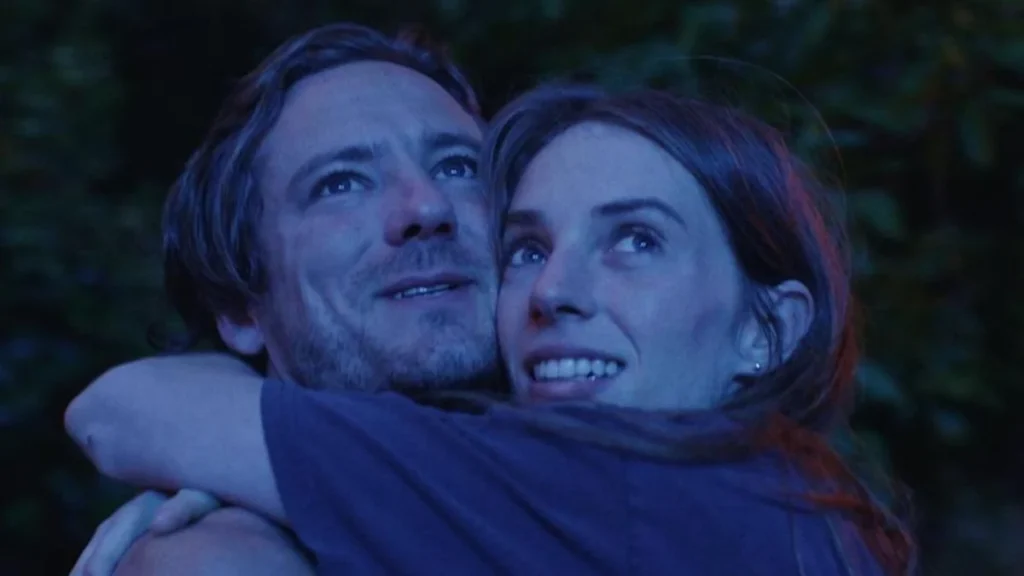


The 2025 edition of CPH:DOX, the Copenhagen International Documentary Film Festival, has solidified its reputation as a premier global forum where cinematic artistry intersects with urgent geopolitical discourse. Opening with the world premiere of Facing War, directed by Tommy Gulliksen, the festival immediately established a tone of high-stakes political mediation. The film, which tracks the final year of NATO Secretary General Jens Stoltenberg’s tenure against the backdrop of the Russo-Ukrainian war, arrived at a moment of profound international anxiety. With the shifting landscape of American foreign policy and the re-emergence of isolationist rhetoric in the West, Facing War functioned as more than a biographical study; it served as a real-time observation of the fraying edges of European security alliances. While some initial critical responses suggested the film maintained a degree of diplomatic caution regarding the inner workings of political lobbying, its inclusion as the festival’s centerpiece underscored CPH:DOX’s commitment to addressing the most pressing conflicts of the modern era.
The Evolution of the Conflict Narrative: Artistry in the Trenches
A recurring theme in this year’s programming was the refinement of the "war documentary," moving away from the purely informational toward a more elevated, aesthetic register. Pieter-Jan De Pue’s Mariinka represents the pinnacle of this shift. De Pue, known for his visually arresting 2016 work The Land of the Enlightened, which focused on child soldiers in Afghanistan, spent over a decade documenting the Donbas region. Mariinka focuses on the titular city—a location that has been on the frontlines of the Russia-Ukraine conflict since 2014 and was ultimately occupied following a full-scale offensive in 2024.
The film distinguishes itself through its technical methodology. Eschewing the lightweight digital cameras typical of modern conflict reporting, De Pue utilized 16mm film. This choice imposed physical limitations on the production but resulted in a visual texture that grants a profound dignity to its subjects. The use of celluloid provides a visceral contrast between the warmth of human skin in close-ups and the stark, cold reality of active combat. By following orphaned children and young paramedics like Natascha, whose lyrical narration guides the viewer, Mariinka avoids the "poverty porn" often associated with war-torn regions. Instead, it offers a poetic, multi-layered portrait of a society in a state of perpetual trauma, demonstrating how the medium of film can elevate the documentation of suffering into a permanent cultural record.
New Methodologies: Improvised Fiction and Cultural Rites
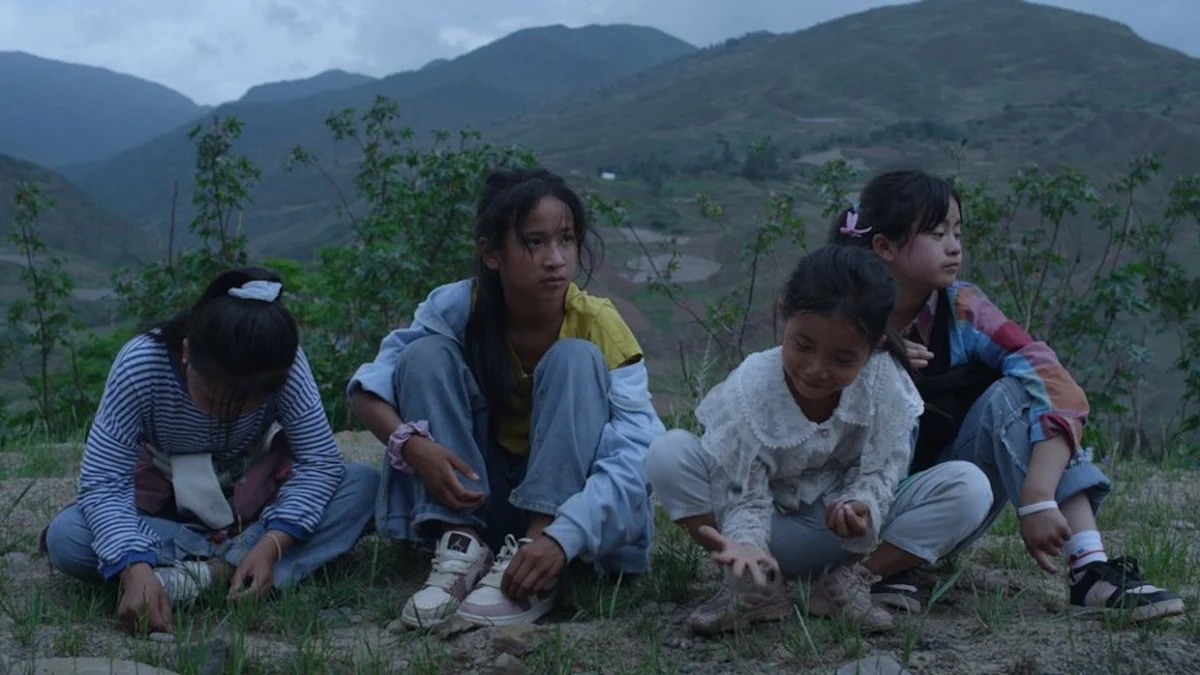
The festival’s top honor, the DOX:AWARD, was bestowed upon Whispers in May, directed by Chinese filmmaker Dongnan Chen. The film signals a burgeoning trend in the documentary world: the use of "improvised fiction" to capture truths that traditional observational methods might miss. Set in the Liangshan Mountains, the film follows fourteen-year-old Qihuo and her friends as they navigate the transition into womanhood within a landscape marked by economic migration and traditional patriarchal structures.
The narrative framework—a road trip in search of a traditional skirt to mark the first menstruation—allows Chen to explore the psychological interiority of her subjects. The film’s structure is enriched by the inclusion of still illustrations and voiceovers detailing the oral myths of the region, specifically the legend of Coqotamat. This blending of folklore with the harsh realities of contemporary China—where parents are often distant migrant laborers communicating only via mobile phones—creates a complex dialogue between the past and the present. The jury’s decision to award Whispers in May highlights a growing appreciation for documentaries that prioritize character-driven intimacy and stylistic experimentation over traditional investigative formats.
The Digital Frontier: Surveillance and the Borderless Machine
While some films looked at the human cost of physical warfare, Kenya-Jade Pinto’s debut, The Sandbox, turned its lens toward the invisible infrastructure of global control. The film provides a comprehensive exposure of the "global surveillance machine," documenting how technologies such as drones, thermal imaging, AI, and robotics are being beta-tested on migrant populations. Pinto’s work suggests that the borders of privileged states have become laboratory environments for defense contractors and tech firms.
The Sandbox operates on a massive geographic scale, tracing the development and deployment of these technologies across North America, Europe, and Africa. Formally, the film mirrors the "inhuman gaze" it critiques, frequently utilizing high-altitude drone footage and thermal heat maps to illustrate how human beings are reduced to data points. This clinical perspective is balanced by ground-level testimonies from survivors and volunteers. The film’s broader implication is clear: as governments seek to perfect the "smart border," the fundamental rights of the individual are being systematically eroded. The Sandbox serves as a chilling reminder that the tools developed to manage migration are often precursors to broader domestic surveillance.

Forensic Aesthetics and the Recovery of Memory
The intersection of technology and human rights was further explored in Manuel Correa’s Atlas of Disappearance. A member of the Forensic Architecture research agency, Correa spent eight years investigating the legacy of the Franco dictatorship in Spain. The film documents the efforts of families to locate the remains of "disappeared" relatives, navigating a bureaucratic landscape that has long sought to suppress the truth.
Correa employs "forensic aesthetics," using 3D reconstructions and digital mapping of sealed mausoleums to provide evidence where physical access is denied. This methodology transforms the documentary from a mere narrative into a legal and historical tool. By weaving together archival fragments and state-of-the-art computer modeling, Atlas of Disappearance demonstrates how filmmakers can act as forensic investigators. The film posits that bones and digital data are substances from which truth cannot be fully erased, offering a new avenue for transitional justice in post-authoritarian societies.
From Utopia to Reality: The Case of Christiania
In a selection dominated by global crises, Karl Friis Forchhammer’s Christiania provided a localized but equally complex study of social organization. The film examines the history of the Danish freetown, an anarchist enclave founded in 1971 in a former military barracks. Rather than producing a purely nostalgic retrospective, Forchhammer analyzes Christiania as a "lived contradiction."
The film utilizes a wealth of archival footage, supplemented by animated sequences, to tell the story of the community’s evolution from a radical democratic experiment to a site of modern conflict involving drug-related violence and state pressure. By focusing on figures like the legendary bear Rikke and the internal debates over open dialogue, the film questions the limits of total tolerance. In the context of the 2025 festival, Christiania served as a cautionary tale about the fragility of utopian visions in an increasingly polarized world. It suggests that even the most well-intentioned social experiments must eventually confront the realities of human nature and external political forces.
Chronology of Themes and Festival Impact
The 2025 CPH:DOX program followed a deliberate arc, beginning with the macro-politics of NATO and ending with the micro-politics of communal living and individual memory.
- Opening Phase: Geopolitical urgency (Facing War) and the evolution of conflict imagery (Mariinka).
- Mid-Festival Focus: The rise of technological surveillance and the use of film as a forensic tool (The Sandbox, Atlas of Disappearance).
- Award and Recognition: The validation of hybrid storytelling and cultural intimacy (Whispers in May).
- Closing Reflections: Domestic social structures and the tension between idealism and reality (Christiania).
Data from the festival organizers indicates a continued rise in the submission of "hybrid" films—those blending documentary and fictional techniques—reflecting a shift in how filmmakers approach the concept of "truth." Furthermore, the 2025 edition saw an increased collaboration between filmmakers and research institutions, as evidenced by the Forensic Architecture involvement, suggesting that the future of the medium may lie in its ability to generate actionable data and legal evidence.
Implications for the Documentary Industry
The 2025 edition of CPH:DOX has demonstrated that the documentary genre is no longer confined to the role of the passive observer. Whether through the 16mm lens of Pieter-Jan De Pue or the digital reconstructions of Manuel Correa, filmmakers are actively shaping the historical record and challenging state narratives. The festival’s emphasis on "aesthetic ambition" suggests that for a documentary to be effective in 2025, it must possess a visual language that rivals narrative cinema.
The selection also underscores a growing skepticism toward technological progress. From the "smart borders" in The Sandbox to the digital excavation in Atlas of Disappearance, technology is presented as a double-edged sword—capable of both oppression and liberation. As the world enters an era of increased geopolitical instability and rapid technological change, the films showcased at CPH:DOX 2025 provide a vital framework for understanding the human experience within these shifting structures. The festival remains a crucial barometer for the state of global documentary, proving that the marriage of art and politics is not only possible but necessary for the survival of the democratic discourse.